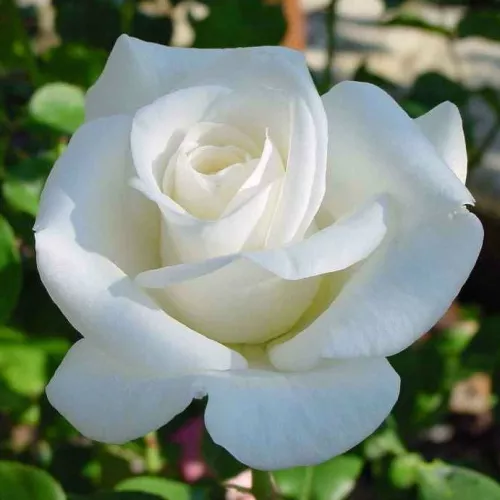
Uniform white base colour with a slight ivory tint. - hybrid tea rose - mild, softly scented rose - slightly sweet character
– Elegant Pascali® blooms in pure snow-white.
– Classic high-centred form ideal for cutting.
– Reliable remontant flowering through the season.
– Mild, softly sweet fragrance for close spaces.
– Proven award-winner, including World’s Favourite Rose.
– Special feature: Excellent show rose with top-tier exhibition pedigree and historic gold medals worldwide.
Vibrant garden scene – Clear professional advice
pharmaROSA® ORIGINAL 2-litre own-root potted rose
18,70 £
Unfortunately, we are currently unable to ship to the United Kingdom; we only deliver to countries within the European Union. For more information, please contact us!
5(10327)
PASCALI® – white hybrid tea rose – LENip
For those who want a classic rose that simply performs, Pascali® brings reliable elegance and calm structure to small and medium gardens without demanding complicated care. Its tall, upright habit and snow-white blooms echo traditional British front gardens, while coping well with brisk, rain-laden winds common in exposed and coastal plots. Large, high-centred flowers on long stems offer excellent cutting potential for the house, and the remontant flowering ensures repeated displays through summer. Medium maintenance needs, combined with good resilience to key rose diseases, support easy-going gardens where you can focus on enjoying the view rather than constant intervention. As an own-root plant, Pascali® builds a long-lived, balanced bush that regenerates reliably and keeps its shape over many seasons. In its first years it steadily deepens its root system, then pushes stronger shoots, and by the third season you enjoy its full display with confident, abundant flowering in borders, beds and cottage-style mixes.
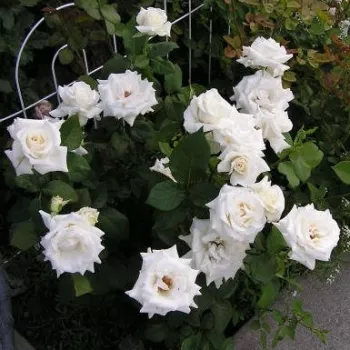
Pascali® in full bloom, showing its large white hybrid tea flowers.
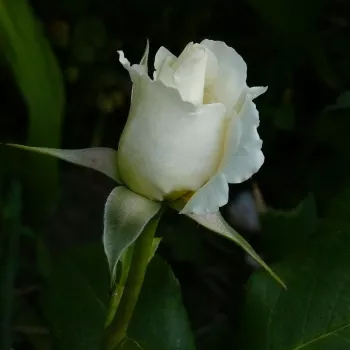
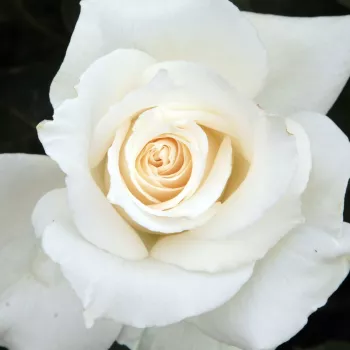
Closed bud of Pascali®, a white hybrid tea rose.
Usage options
Target area
Reasoning
Front garden focal point
The tall, upright form and pristine white, high‑centred flowers create a clear visual focus beside a path, gate or front door. Its medium maintenance needs suit busy owners who still want a smart, traditional welcome at the front of the house, especially beginners.
Flower bed centrepiece
Planted as a solitary specimen in a small bed, Pascali®’s repeat flowering and clean lines provide season-long structure that works with low-maintenance perennials or evergreens. Own-root growth helps it settle and perform consistently for many years, pleasing homeowners.
Small group planting (1–3 roses)
Groups of two or three Pascali® create a simple but impressive white accent in narrow borders or near patios. Identical height and form make it easy to achieve symmetry without complex planning, ideal for those wanting reliable impact with minimal experimentation, including novices.
Mixed cottage border
The pure white blooms pair effortlessly with pastel perennials and classic cottage plants, softening fences and walls while keeping the scene tidy rather than overgrown. Its remontant flowering threads white through the display all summer, appealing to aesthetically minded gardeners.
Cutting patch or cutting corner
Long, straight stems with fully double, high‑centred blooms make Pascali® excellent for cutting, giving you vase-quality flowers without needing a dedicated professional cutting garden. A few bushes in a sunny corner offer dependable stems for the house, suiting practical families.
Formal row or loose hedge
Planted at the recommended spacing, Pascali® forms an upright, coherent line that frames paths or separates garden areas. Once established on its own roots it builds a robust woody base, supporting long-term shape with only basic annual pruning, attractive to time-pressed owners.
Sunny terrace or large container
In a 40–50 litre or larger container, its vertical habit and moderate spread are easy to accommodate on patios or roof terraces. Regular watering keeps the plant healthy during warm spells, while the white flowers brighten tight urban spaces, ideal for compact-city-space residents.
Exposed or open-site planting
The upright, well-anchored growth on its own roots helps the plant stand steadily in open sites where breezes are common, while the flowers hold their form well even in mixed weather. This makes it a reassuring choice for more windswept gardens and coastal-leaning locations.
Styling ideas
Classic frontage – Line a short front path with Pascali® and low box or dwarf lavender for a clean white-and-green entrance – for lovers of traditional British front gardens.
Cottage white – Combine Pascali® with soft pink lupins and blue catmint to weave its white flowers through a relaxed cottage mix – for those who value romantic, informal borders.
Monochrome calm – Plant a small group against dark green shrubs to create a serene white focal point that looks refined by day and dusk – for homeowners seeking a simple, composed look.
Patio feature – Grow a single Pascali® in a 50‑litre terracotta container with trailing thyme at the base to brighten a terrace without complex maintenance – for busy urban balcony and patio users.
Cutting corner – Devote a sunny corner bed to several Pascali® plants with filler foliage such as bupleurum for ready-made arrangements – for practical gardeners who enjoy home-cut flowers.
Technical cultivar profile
Property
Data
Name and registration
Hybrid tea rose, registered as LENip, marketed as Pascali® hybrid tea rose LENip; ARS exhibition name Pascali; hybrid tea group and commercial type for garden and cutting use.
Origin and breeding
Bred by Louis Lens in Belgium from ‘Queen Elizabeth’ × ‘White Butterfly’, introduced and registered in 1963 by Lens Roses, representing classic mid‑20th‑century hybrid tea breeding.
Awards and recognition
Highly decorated hybrid tea, including RNRS Certificate of Merit, The Hague Gold Medal, Portland Gold Medal, AARS Award, and induction as World’s Favourite Rose in the Rose Hall of Fame.
Growth and structural characteristics
Upright, medium-tall bush reaching about 95–125 cm high and 75–105 cm wide, with moderately dense, slightly glossy dark green foliage and moderate prickliness on the stems.
Flower morphology
Large, high‑centred, fully double blooms with 26–39 petals, borne mostly singly on stems; classic pointed buds give a cut‑rose look, with abundant repeat flowering through the season.
Colour data and phenology
Uniform white with a soft ivory tint; creamy bases in newly opened flowers, holding clear snow‑white tones in sun before gently ageing to pale beige, maintaining a refined, luminous appearance.
Fragrance and aroma
Mild, slightly sweet rose fragrance that is noticeable nearby yet never overpowering, adding a gentle sensory layer suitable for seating areas and paths without dominating other scents.
Hip characteristics
Occasional small hips, ellipsoidal and orange‑red, about 10–14 mm in diameter, forming discreet ornamental accents without significantly affecting overall flowering or garden performance.
Resistance and winter hardiness
Good winter hardiness to around −21 to −18 °C (RHS H7), with resistance to powdery mildew and black spot, and medium susceptibility to rust, best managed with basic, regular care.
Horticultural recommendations
Performs best in sunny positions with well‑drained soil; plant 55–100 cm apart depending on use, water regularly in dry spells, and deadhead to maintain flowering and overall neatness.
Pascali® Hybrid tea rose LENip offers elegant white blooms, strong upright structure and long-lived own-root reliability, making it a thoughtful choice if you want a classic rose that quietly earns its place over time.
Detailed product attributes
Product Identification Data
Product Name:
PASCALI® – white hybrid tea rose - Lens
Product Type:
pharmaROSA® ORIGINAL - 2-litre own-root potted rose
Competition and Show Awards:
RNRS Certificate of Merit (1963); The Hague – Gold Medal (1963); Portland Gold Medal (1967); All-America Rose Selections Award (1969); Rose Hall of Fame – World’s Favourite Rose (1991)
Pollinator Attraction:
Double, 26–39‑petalled flowers attract pollinators only to a limited extent because the double bloom form reduces stamen accessibility, diminishing their appeal to pollinating insects.
Pollinator-Friendly Rating:
Double (26–39 petalled) flowers partially cover the stamens, so its pollinator-friendliness is limited; primarily an ornamental variety.
Our product is a rose grown with pharmaROSA®’s unique cultivation technology!
2-litre, own-root, potted rose.
With a shoot system appropriate to the season.
With a root system that thoroughly permeates the growing medium.
Quality compliant with the requirements of the E.N.A. (European Nurserystock Association).
Supplied in unique packaging that prevents damage.
Can be planted during frost-free periods.
True-to-variety rose bush with a unique identifier.
The pharmaROSA® own-root potted rose is a well-rooted plant that supports reliable establishment when planted and cared for properly, so it can be planted whenever the soil is not frozen.
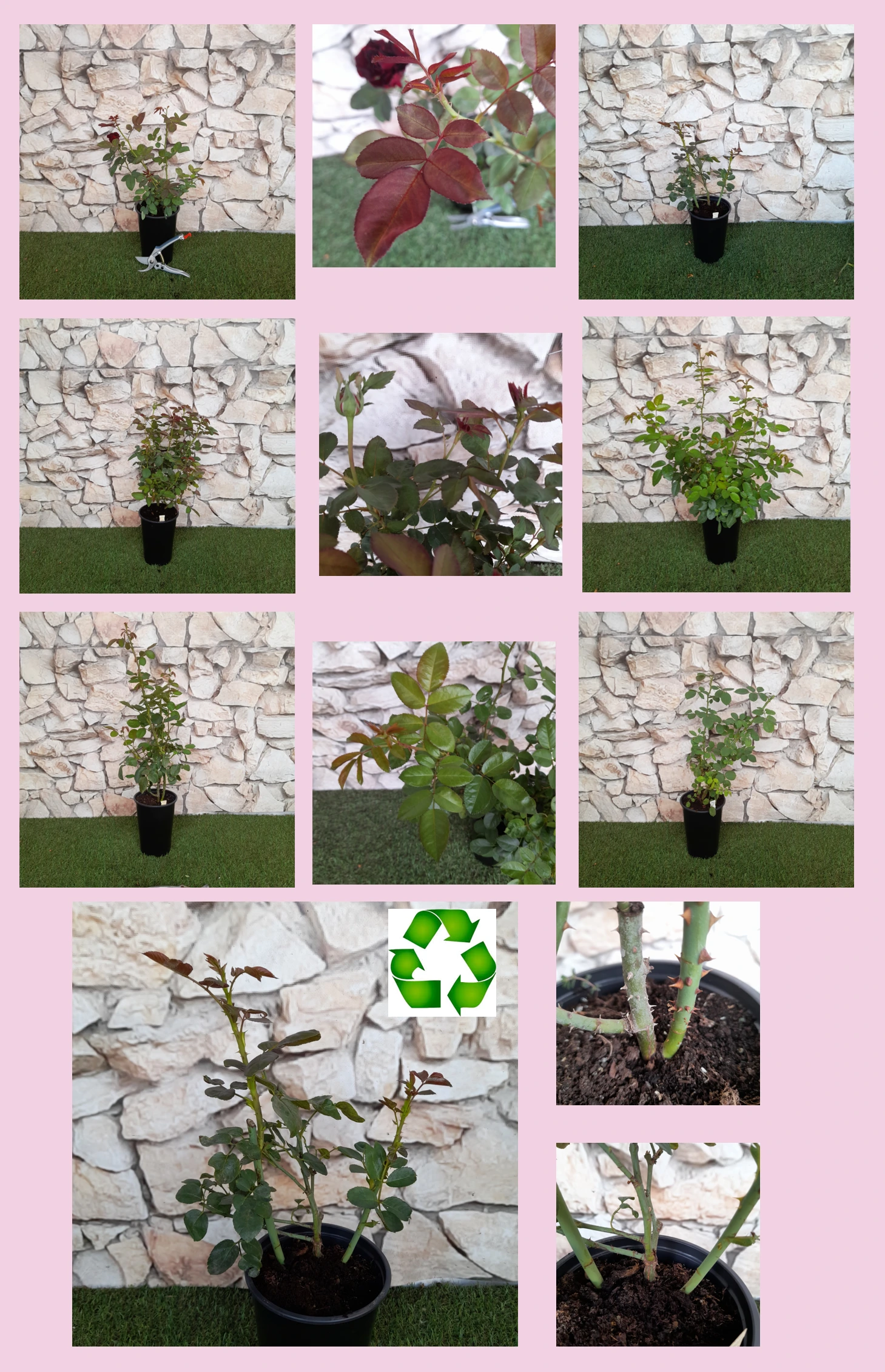
Crop overview: several varieties and growth stages in a short crop section.Shoot system: intensive growth of fresh basal shoots on a young plant.Root system: demonstration of a vigorous root system permeating the growing medium, by removing the pot.Balance: mature plant with root system and shoots in harmony with each other.
Information about the videos
The video series is not a “seasonal showcase”; it illustrates the essence of pharmaROSA® own-root cultivation in a tangible way: how the plant is built up, what the root system is like and how the shoot system regenerates. The recordings were therefore made at different times and with plants at various stages of development, so mixed foliage levels and differing stages of growth may appear in the videos. They are not a ‘sample’ of the batch dispatched, but a visual explanation of how the technology works. The current condition of the rose available to order — typical for the given period and similar to what you can expect to receive in the parcel — is shown in the upper part of the product page.
Pages for private customers Garden roses for the family garden, with minimal care → ORIGINAL® Premium garden roses – instant impact, a truly showpiece garden → EXTRA® Pages for professionals and private customers Roses for public spaces – large areas, sustainable maintenance → NATURAL® Roses for projects – hedge and row planting, fast implementation → RAPID® For professional partners only Production – propagation material for garden roses, wholesale → NEONATAL®
Company details
PharmaRosa Ltd. Company registration number: 01-09-717479 VAT number: 13075314-2-43 Plant health registration no.: HU130721 Bank account (IBAN): HU85117631891388688400000000 BIC (SWIFT): OTPVHUHB Bank name: OTP Bank Nyrt.