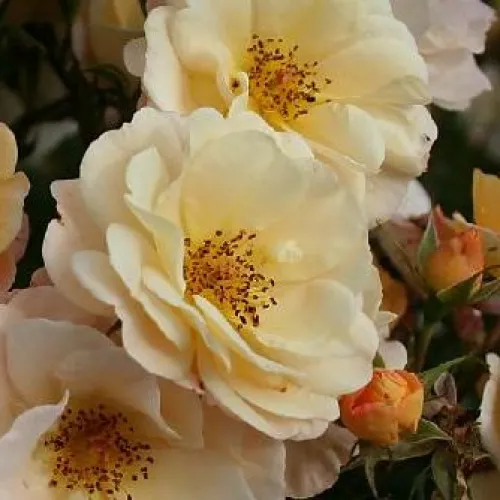
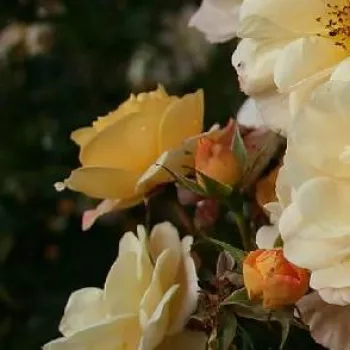
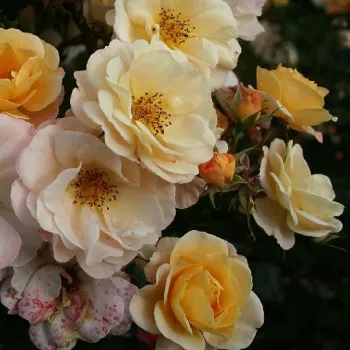
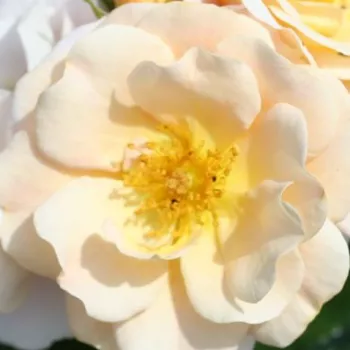
Soft, translucent pink petals with a subtle, warm yellowish inner shade. The outer surfaces gradually lighten. - climber, climbing rose - mild, restrained-scented rose - delicate, airy character
– Soft pastel flowers with elegant colour change.
– Reliable repeat flowering through the season.
– Dense, glossy foliage on balanced climber.
– Very good resistance to major rose diseases.
– Hardy to around –20 °C, suited to UK winters.
– Special feature: Multi-medal winner, including Le Roeulx Merit certificate.
Balanced arrangement – Uniform growth
pharmaROSA® ORIGINAL 2-litre own-root potted rose
18,40 £
Unfortunately, we are currently unable to ship to the United Kingdom; we only deliver to countries within the European Union. For more information, please contact us!
3(4740)
Pas de Deux Courtyard® climbing rose – pale pink-yellow elegance for easy walls and pergolas
This refined Courtyard® climber brings grace and balance to everyday gardens, dressing walls, fences or arches with softly shaded pastel blooms. Its semi-double flowers repeat all season, giving months of colour with only modest attention, while the healthy, glossy foliage underlines its dependable vitality. Bred for strong disease resistance, it copes well with typical British conditions, even where heavy soils need thoughtful drainage and occasional wind exposure. As an own-root plant it develops long-term stability, regenerating well from the base and forming a well-filled framework over the years. In its first year it concentrates on roots, in the second on building shoots, and from the third season onwards you can expect its full ornamental value and a mature, climbing presence.
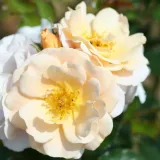
Pas de Deux in side-by-side opening stages, from pale pink-yellow to soft powder pink.
Pas de Deux shows a flat, semi-double bloom with softly layered petals.
Usage options
Target area
Reasoning
House wall or sunny courtyard facade
Ideal where you want a graceful climber that quickly clothes a wall without overwhelming the space. Its moderate height suits typical two-storey houses, while glossy foliage and pastel blooms give a soft, welcoming look. Own-root vigour builds a stable, long-lived framework with little pruning complexity, suiting homeowners who want a reliable backdrop rather than a show plant to fuss over – busy urban gardeners
Pergola, arch or walkthrough structure
The balanced, even growth means stems can be easily tied along a pergola or arch, creating a light, airy roof of flowers rather than a heavy thicket. The repeat flowering habit gives intermittent flushes throughout summer, enhancing everyday use of seating areas and garden paths. Moderate prickliness makes training manageable with gloves and basic care – hobby pergola owners
Small front garden with classic cottage character
Perfect for narrow front gardens where you want vertical colour but must keep paths and neighbours’ access clear. Its medium-sized, semi-double blooms provide a traditional cottage feel without becoming too blowsy, and the good disease resistance reduces unsightly foliage in high-visibility spots. A simple annual tidy and light tying-in are usually enough – aesthetics-focused beginners
Container-grown climber on terrace or balcony
Performs well in a large container of at least 40–50 litres with a sturdy obelisk or trellis, offering vertical interest where ground planting is limited. Own-root growth adapts gradually to the restricted soil volume, and the moderate height remains proportionate to modest outdoor spaces. Regular watering and a yearly feed generally suffice to keep it flowering – small-space gardeners
Mixed border with shrubs and perennials
The calm, pale pink-yellow tones blend effortlessly with herbaceous plantings, weaving through shrubs or a fence at the back of a border. Clustered flowers over dense foliage provide soft structure rather than harsh lines, and the uniform habit helps maintain a tidy border outline. Limited hip formation keeps the look clean into autumn – informal border planners
Low-maintenance family side garden or boundary fence
Its reliable disease resistance and moderate self-cleaning reduce the need for frequent deadheading along boundaries or side returns that are visited less often. The climber form lends height without taking up much ground, useful where play areas or bins share space. Routine tying-in once or twice a year keeps it orderly without specialist knowledge – time-poor families
Partially shaded aspect with morning or late-afternoon sun
Suited to positions that receive only part-day sun, where some climbers struggle to flower well. This variety continues to produce good flushes in such conditions, and the soft colouring reads beautifully in cooler light. It is also comfortable with typical British humidity when basic airflow is provided, even where clay soils require attention to surface drainage – shade-challenged plots
Small group of 2–3 climbers to frame a seating area
Using a short run of two or three plants allows you to repeat its balanced form and delicate colouring around a patio or seating nook. The remontant flowering brings several waves of interest through the season, while own-root durability underpins a long-lived planting that matures steadily rather than demanding frequent replacement. Care is mostly limited to tying-in and a simple spring prune – long-term planners
Styling ideas
Cottage Archway – Train Pas de Deux over a narrow arch with lavender and catmint at the base for a soft, traditional entrance – ideal for cottage-style front-garden owners
Courtyard Screen – Use it on a trellised wall with terracotta pots of herbs beneath to create a fragrant, easy-care privacy screen – suited to urban terrace and patio gardeners
Pastel Pergola – Pair its pale blooms with white clematis and pale foxgloves along a pergola for a calm, romantic walkway – for those planning gentle evening seating areas
Modern Fence Line – Combine with grasses and low evergreens along a contemporary slatted fence to soften lines without losing structure – attractive to design-conscious family gardens
Container Column – Grow one plant in a 50-litre pot with an obelisk, underplanted with chives and compact spurge for texture and colour – perfect for balcony and small-courtyard users
Technical cultivar profile
Parameter
Data
Name and registration
Pas de Deux Courtyard® (POUlhult), exhibition large-flowered climbing rose, ARS exhibition name Pas de Deux, pharmaROSA® ORIGINAL 2-litre own-root potted format for garden use.
Origin and breeding
Bred by Mogens Nyegaard Olesen for Poulsen Roser A/S, Denmark, before 2003; registered 2003 with subsequent introduction after 2003, parentage not disclosed by the breeder.
Awards and recognition
Merit certificate at Le Roeulx Rose Competition in 1999 and a total of seven medals gained at various international rose trials, confirming strong garden and exhibition value.
Growth and structural characteristics
Climbing habit with dense, mid-green glossy foliage; height around 180–270 cm and spread 100–160 cm, moderately thorny stems, suitable for training on walls, arches, pergolas and tall supports.
Flower morphology
Semi-double, flat, cluster-flowering medium blooms with approximately 13–25 petals, producing repeat remontant flushes; second flowering is also abundant when basic nutrition and moisture are provided.
Colour data and phenology
Pale pink-yellow blend: creamy yellow buds with pink veil, opening to pastel pink with warm yellow centre, then powder-pink before fading almost white; ARS LY, RHS 62D outer, 8C inner.
Fragrance and aroma
Delicate, airy fragrance of mild intensity, restrained rather than overpowering; semi-double form offers only moderate pollinator attraction, with limited access to nectar and pollen sources.
Hip characteristics
Hip set is generally sparse due to semi-double bloom form; when present, small globular orange-red hips about 9–12 mm in diameter appear, giving light late-season interest without clutter.
Resistance and winter hardiness
Very good resistance to powdery mildew, black spot and rust; hardy approximately to -21 to -18 °C (USDA 6b, RHS H7, Swedish zone 3), tolerates heat if watered in prolonged dry spells.
Horticultural recommendations
Low-maintenance climber for walls, pergolas and large containers; plant 140–150 cm apart or 250 cm as specimen, ensure support and basic tying-in, favour well-drained soil and regular watering in drought.
Pas de Deux Courtyard® offers repeat pastel flowering, reliable disease resistance and adaptable climbing growth on a durable own-root framework, making it a thoughtful choice for long-lived, low-effort vertical interest in the family garden.
Detailed product attributes
Product Identification Data
Product Name:
PAS DE DEUX – pale pink-yellow climbing rose - Olesen
Product Type:
pharmaROSA® ORIGINAL - 2-litre own-root potted rose
Pollinator Attraction:
Semi-double flowers are moderately attractive to pollinators because the partially filled bloom form reduces stamen accessibility, limiting pollinators' ability to reach nectar and pollen.
Pollinator-Friendly Rating:
Its semi-double flowers mean its pollinator-friendliness is limited; it attracts few pollinators.
Hip Comment:
Hip formation is expected to be limited because of the double flowers; occasionally spherical orange-red hips 9–12 mm in diameter may form.
Our product is a rose grown with pharmaROSA®’s unique cultivation technology!
2-litre, own-root, potted rose.
With a shoot system appropriate to the season.
With a root system that thoroughly permeates the growing medium.
Quality compliant with the requirements of the E.N.A. (European Nurserystock Association).
Supplied in unique packaging that prevents damage.
Can be planted during frost-free periods.
True-to-variety rose bush with a unique identifier.
The pharmaROSA® own-root potted rose is a well-rooted plant that supports reliable establishment when planted and cared for properly, so it can be planted whenever the soil is not frozen.
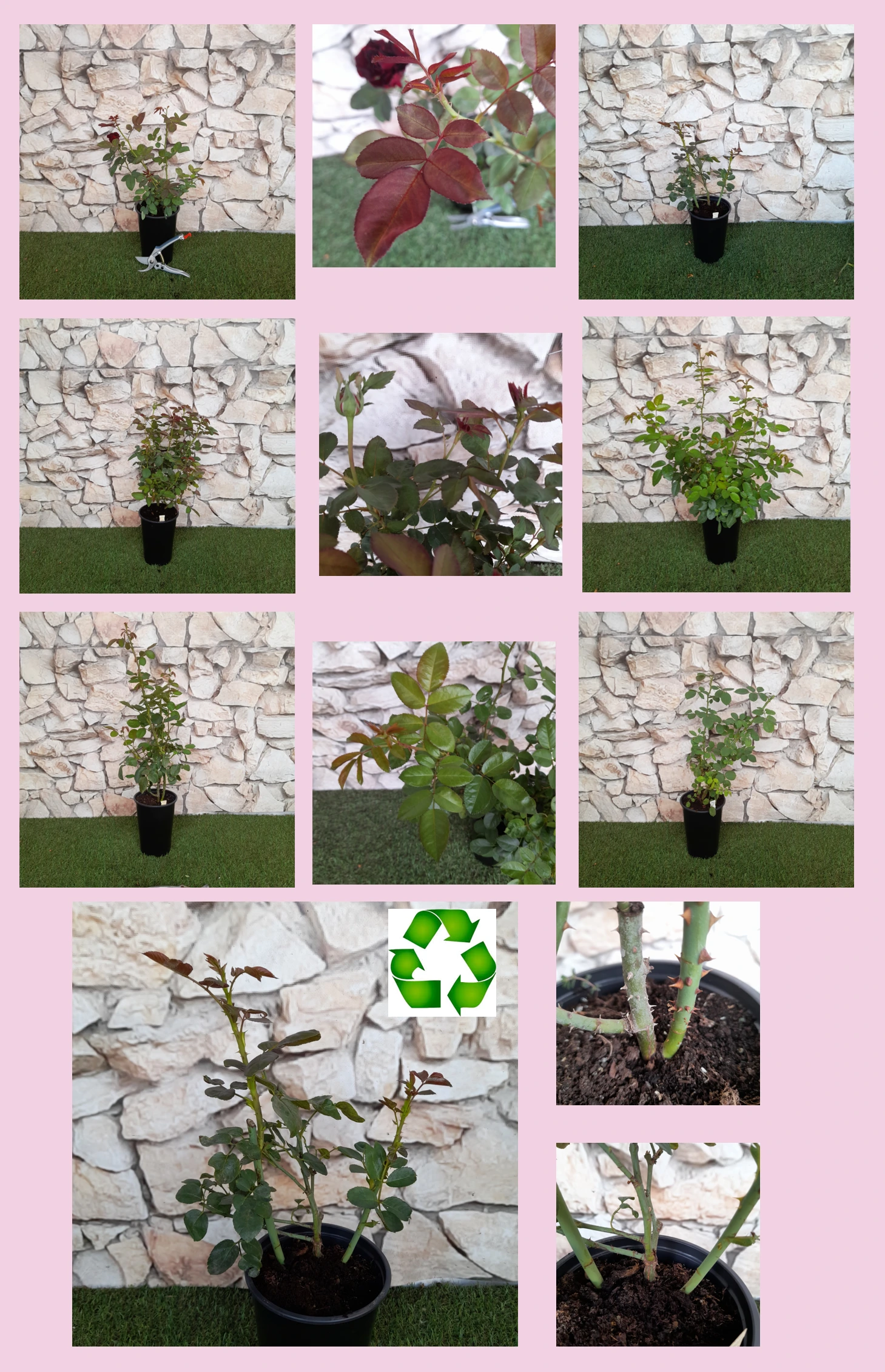
Crop overview: several varieties and growth stages in a short crop section.Shoot system: intensive growth of fresh basal shoots on a young plant.Root system: demonstration of a vigorous root system permeating the growing medium, by removing the pot.Balance: mature plant with root system and shoots in harmony with each other.
Information about the videos
The video series is not a “seasonal showcase”; it illustrates the essence of pharmaROSA® own-root cultivation in a tangible way: how the plant is built up, what the root system is like and how the shoot system regenerates. The recordings were therefore made at different times and with plants at various stages of development, so mixed foliage levels and differing stages of growth may appear in the videos. They are not a ‘sample’ of the batch dispatched, but a visual explanation of how the technology works. The current condition of the rose available to order — typical for the given period and similar to what you can expect to receive in the parcel — is shown in the upper part of the product page.
Pages for private customers Garden roses for the family garden, with minimal care → ORIGINAL® Premium garden roses – instant impact, a truly showpiece garden → EXTRA® Pages for professionals and private customers Roses for public spaces – large areas, sustainable maintenance → NATURAL® Roses for projects – hedge and row planting, fast implementation → RAPID® For professional partners only Production – propagation material for garden roses, wholesale → NEONATAL®
Company details
PharmaRosa Ltd. Company registration number: 01-09-717479 VAT number: 13075314-2-43 Plant health registration no.: HU130721 Bank account (IBAN): HU85117631891388688400000000 BIC (SWIFT): OTPVHUHB Bank name: OTP Bank Nyrt.