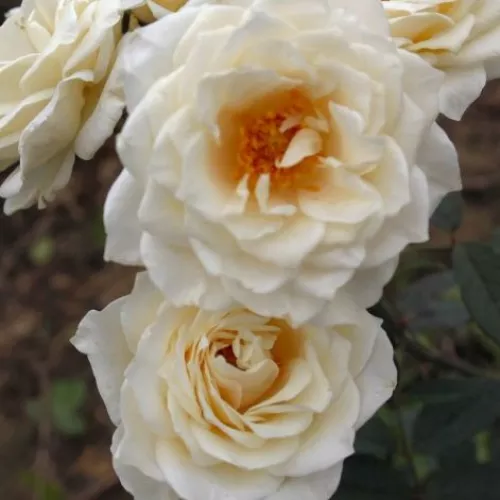
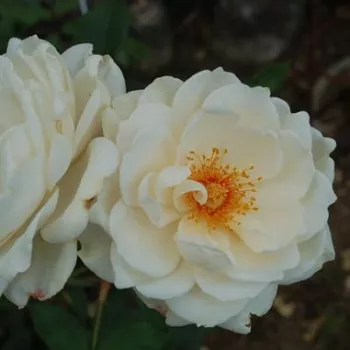
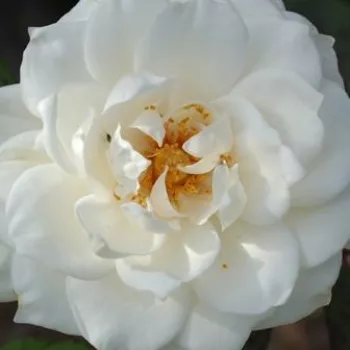
ORGANDIE – cream floribunda bedding rose – Scarman
Cream blooms of ORGANDIE bring a soft, luminous highlight to small British gardens, combining floribunda reliability with a naturally upright, bushy habit that stays tidy in front borders and around paths. Its semi-double flowers are generously scented, making everyday passages by the front door or patio subtly perfumed, while the open centres remain pollinator-friendly throughout the season. Repeat-flowering clusters keep the plant in near-continuous colour, and the own-root form offers reassuringly long-term stability and the ability to regenerate if pruned hard or cut back by winter. In typical UK conditions – including wetter, wind-exposed spots where good drainage is important for healthy root development – it settles well and, over the first three years, moves from quiet establishment to a full, settled ornamental presence.
Usage options
| Target area | Reasoning |
|---|
| Front-garden focal shrub |
The upright, bushy structure and 100–140 cm height give clear form without overwhelming a modest front garden, while the cream clusters sit comfortably with brickwork, gravel and traditional paving. Strong, lasting fragrance adds everyday enjoyment as you pass the gate or drive, with minimal shaping beyond a yearly tidy – ideal for busy homeowners |
| Small mixed border in a family garden |
Moderately dense, grey-green foliage and steady repeat flowering help ORGANDIE hold its place among perennials and small shrubs, providing a calm, pale anchor colour that works with most cottage-style palettes. The own-root structure matures into a balanced, long-lived bush, giving a dependable backbone to borders without demanding specialist pruning from beginner gardeners |
| Compact cottage-style rose group (3–5 plants) |
Planted in a loose group, the uniform cream tone and semi-double blooms create a gently romantic cottage look that remains neat rather than blowsy. Recommended spacings allow air to move, supporting moderate disease resistance in damper regions and keeping upkeep straightforward. Over time, the bushes knit together into an even, cohesive display for cottage-garden lovers |
| Near seating areas, paths and entrances |
The strong, enduring scent means each flush of flowers is as enjoyable up close as it is from the window, making this cultivar well suited near benches, paths, and patios. Medium maintenance needs mainly involve occasional pest or disease checks and deadheading, staying realistic for those without elaborate routines but who still value atmosphere for scent-focused owners |
| Pollinator-friendly family garden corner |
Semi-double, cup-shaped blooms with accessible stamens are welcoming to bees and other beneficial insects, while still presenting enough petals for a decorative effect. Regular repeat flowering extends feeding opportunities across the main season, so one or several plants can support a more wildlife-conscious layout without compromising on visual refinement for eco-aware families |
| Lightly structured informal hedge or row |
Using the recommended hedge spacing, the variety’s upright, moderately thorny canes form a soft, semi-formal line that helps define boundaries between lawn, drive, or neighbour, yet remains permeable and garden-friendly. The own-root base encourages steady regeneration after pruning, allowing you to refresh the hedge over the years without complex techniques, making it suitable for practical planners |
| Large containers and statement pots |
In a 40–50 litre or larger container, ORGANDIE’s controlled spread and upright habit make it easy to manage on patios and terraces, provided watering and feeding are consistent. Its root system adapts well to the pot environment, maintaining shape and bloom quality over time, which is particularly helpful on paved, courtyard plots where ground-planting is limited for urban gardeners |
| Wind-exposed or open-plot planting |
The robust bush form and moderate height respond well to staking only when young, later standing steadily in open, breezier sites common to many suburban and coastal gardens, provided soil is reasonably well-drained to avoid waterlogging around the roots. This practical resilience suits those seeking a reliable structural rose for low-intervention owners |
Styling ideas
- Soft-cream entrance frame – Flank a front path with two ORGANDIE bushes underplanted with low lavender or catmint to echo the grey-green foliage and fragrance – ideal for scent-conscious homeowners seeking a welcoming approach.
- Cottage trio – Plant three ORGANDIE roses in a triangle among foxgloves and hardy geraniums to create a light, layered cottage effect that stays visually calm and easy to maintain – suited to beginners building their first mixed border.
- Patio centrepiece – Use a single ORGANDIE in a 50-litre clay pot with trailing thyme and white bacopa to combine strong fragrance, soft colour and simple care on sunlit terraces – perfect for small, paved urban gardens.
- Family wildlife corner – Group ORGANDIE with pollinator-friendly herbs such as rosemary and chives to provide nectar-rich flowers and structure in one spot – appealing to families who want wildlife interest without complex planting plans.
- Light boundary ribbon – Create a loose hedge of ORGANDIE along a drive or path, pairing with low ornamental grasses for movement and a clean line of cream colour – good for owners wanting gentle structure rather than rigid formality.
Technical cultivar profile
| Property | Data |
|---|
| Name and registration |
Floribunda bedding rose marketed as ORGANDIE – cream floribunda bedding rose – Scarman; exhibition floribunda for garden and cutting use, with ARS exhibition name ORGANDIE. |
| Origin and breeding |
Bred by John Scarman in Germany around 2007 and introduced through Landhaus Ettenbühl; parentage is undocumented, but selection emphasises bedding use and reliable repeat flowering. |
| Growth and structural characteristics |
Medium-sized upright, bushy shrub typically 100–140 cm high and 80–120 cm wide, moderately thorny, with slightly glossy grey-green foliage giving a tidy, moderately dense overall appearance in beds and borders. |
| Flower morphology |
Semi-double, cup-shaped blooms with 13–25 petals held mainly in clusters on floribunda-style trusses; medium flower size around 1.5–2.75 inches, with generous repeat flowering and abundant secondary flushes. |
| Colour data and phenology |
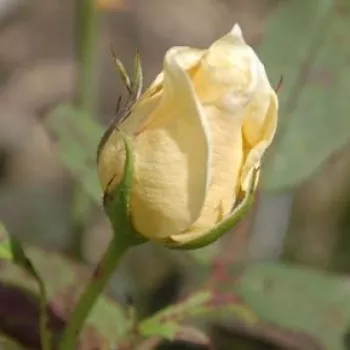
Warm cream overall tone with ARS white code; RHS 8C to 4D from outer to inner petals, opening pastel lemon-yellow and fading through buttery cream to near-white while retaining good colour stability on the bush. |
| Fragrance and aroma |
Strong, long-lasting scent of unspecified character; perfume is clearly noticeable at close range and persists well over the life of each bloom, supporting use near seating areas, entrances and frequently used paths. |
| Hip characteristics |
Produces moderate quantities of small, ovoid hips 6–10 mm in diameter, orange-red in colour; autumn hips have decorative value, adding fine-textured seasonal interest where spent blooms are not fully deadheaded. |
| Resistance and winter hardiness |
Winter-hardy to approximately –21 to –18 °C (RHS H7; USDA Zone 6b; Swedish Zone 3); disease tolerance is moderate for powdery mildew, black spot and rust, needing occasional monitoring and timely basic treatments. |
| Horticultural recommendations |
Prefers a sunny, well-drained site with regular feeding to support repeat bloom; space 90–100 cm for hedging or mass planting and up to 180 cm as a specimen, with seasonal pest and disease checks and light annual pruning. |
ORGANDIE – cream floribunda bedding rose – Scarman offers strong fragrance, reliable repeat flowering and adaptable bushy growth on a long-lived own-root plant, making it a considerate choice for those planning a lasting, easy-going garden feature.