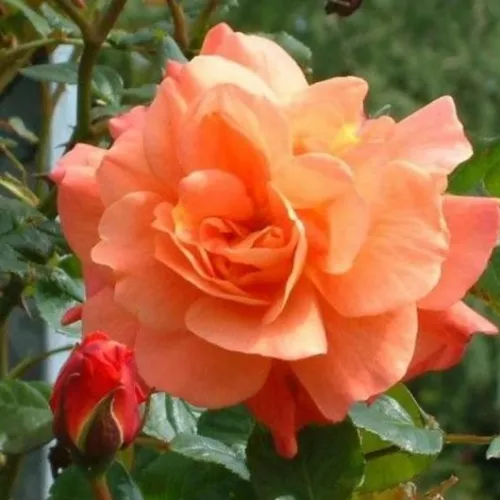
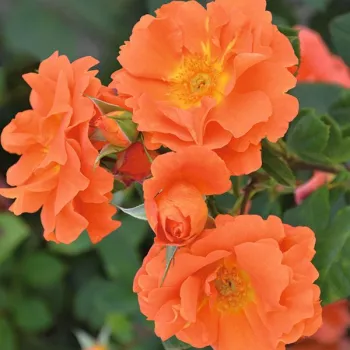
ORANGE DAWN – orange climbing rose – Warner
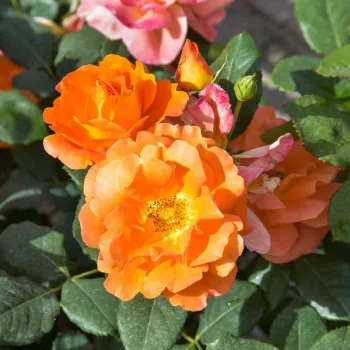
Orange blooms bring a soft, glowing dawn tone to walls, arches and pergolas, creating a welcoming focal point that suits traditional brick and cottage-style front gardens, even where wind and rain are frequent near exposed or coastal homes. As a container-grown, own-root plant, it settles in steadily, building roots in the first year, strong shoots in the second, and by the third season shows its full ornamental impact with tall, flowered canes. Repeat flowering clusters appear through summer, with a light citrus hint to the scent that works well beside frequently used paths and sitting areas while keeping care needs manageable for busy householders.
Usage options
| Target area | Reasoning |
|---|
| Front-garden rose arch over a path |
Trained over a simple arch, its medium-sized, double, orange blooms repeat well, giving a soft, uplifting entrance feature without demanding intensive pruning knowledge, ideal for making a tidy, welcoming approach for the beginner. |
| Climbing rose on a sunny house wall |
With a height of 2–3 m and moderate spread, it clothes a wall in colour while tolerating reflected heat and brief dry spells when watered in longer droughts, offering a dependable vertical accent for the busy homeowner. |
| Pergola or seating-area frame |
Clustered, cupped flowers and mid-green foliage give a gentle, enclosing feel above benches or small pergolas, and the mild citrus fragrance stays unobtrusive, making a relaxing frame for the comfort-seeking family. |
| Small group planting along a boundary |
Planted 1.4–1.5 m apart, several plants can form a loose, flowering screen that matures gradually, allowing flexible pruning style while the own-root habit supports long-term regeneration for the cautious planner. |
| Cottage-style bed with classic shrubs |
Its clear orange tones contrast well with box and blue-flowering shrubs, and the remontant character provides repeat colour through the season with only basic deadheading, suiting the style-conscious gardener. |
| Large container near the front door |
In a stable 40–50 litre pot with a simple support, it can decorate a doorway or courtyard, benefiting from easy watering access while keeping growth contained and manageable for the space-limited urbanite. |
| Partially shaded side passage or alley |
Its suitability for partial shade allows reliable flowering where sun is limited for part of the day, such as east- or west-facing side paths, giving colour where few climbers thrive for the practical owner. |
| Coastal or exposed garden structure |
On pergolas or fences in variable weather it copes with blustery, rain-prone conditions when planted in well-drained soil, maintaining a stable, long-lived framework that rewards the patient enthusiast. |
Styling ideas
- Cottage Archway – Train ORANGE DAWN over a narrow arch, underplant with lavender and dwarf box to echo classic cottage gardens – ideal for romantic style-lovers seeking easy structure.
- Warm Welcome Wall – Cover a sunny brick wall and pair with terracotta pots of herbs to emphasise its orange glow – suitable for homeowners wanting coordinated front façades.
- Soft Sunset Pergola – Let its clusters drape from a modest pergola, combined with blue ceanothus nearby for contrast – perfect for families creating a relaxed seating nook.
- Courtyard Column – Grow it in a 40–50 litre container with a slim obelisk, adding seasonal bedding at the base – useful for urban gardeners with paved spaces.
- Boundary Accent – Repeat plant along a low fence, mixing with airy annuals like bupleurum for lightness – best for beginners wanting a simple, flowering boundary.
Technical cultivar profile
| Parameter | Data |
|---|
| Name and registration |
Climbing rose cultivar CHEworangedawn, marketed as Orange Dawn Climbing rose CHEworangedawn; large-flowered climber for garden use on supports and trained structures. |
| Origin and breeding |
Bred by Christopher H. Warner in the United Kingdom from ‘Dawn Chorus’ × unknown seedling; registered 2006 and introduced 2007 via Rosen-Union e.G. in Germany. |
| Awards and recognition |
Awarded Certificate of Merit at New Zealand Rose Trials 2006 and named Best Climber at the Hamilton New Zealand Rose Trials in 2011, confirming reliable garden performance. |
| Growth and structural characteristics |
Vigorous climber reaching 200–300 cm in height with 120–200 cm spread, moderately thorny canes and mid-green, slightly glossy foliage of medium density suitable for arches and walls. |
| Flower morphology |
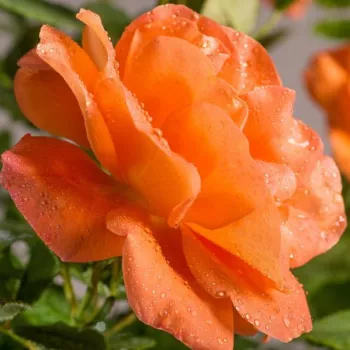
Large, double flowers with 26–39 petals carried mainly in clusters; cupped, rounded form with remontant habit and particularly generous second flush under average garden care. |
| Colour data and phenology |
Clear orange base with ARS OB, RHS 34A outer and 31B inner; buds deep orange, blooms opening to vivid orange then softening slightly, colour holding moderately in strong sun. |
| Fragrance and aroma |
Subtle, mild fragrance with an orange-peel, citrus character; noticeable at close range without overwhelming nearby seating areas, suitable for everyday family garden settings. |
| Hip characteristics |
Hip set generally low due to double flowers; occasional small spherical hips 8–12 mm across may appear, coloured orange-red and adding discreet late-season interest. |
| Resistance and winter hardiness |
Hardy to approximately −26 to −23 °C (RHS H7, USDA 5b, Swedish zone 4); medium resistance to black spot, mildew and rust, benefits from routine monitoring and basic protection. |
| Horticultural recommendations |
Best on supports such as arches, pergolas, walls or espaliers; plant 140–150 cm apart, provide watering in prolonged droughts, and prune flexibly to maintain desired structure and flowering. |
ORANGE DAWN Climbing rose CHEworangedawn offers repeat orange blooms, reliable height for arches and walls, and long-term stability from its own-root form; a thoughtful choice if you prefer beauty with manageable care.