Hybrid tea rose

52-811-1
52-811-2

Ophelia™

Hybrid tea rose

- – William Paul

Pastel pink petals with a subtly warm, peachy mid‑tone. - hybrid tea rose - strong, long-lasting scented rose - slightly sweet aroma

– Strong, long-lasting fragrance for cutting
– Elegant pale pink blooms with peachy tones
– Reliable remontant flowering through the season
– Upright, bushy habit for beds and specimens
– Good hardiness and disease resistance overall
Special feature: Classic 1912 Hybrid Tea beloved as an exhibition-quality cut flower rose.
Balanced growth habit – Biodiversity
Ophelia™
pharmaROSA® ORIGINAL 2-litre own-root potted rose
21,00 £
Unfortunately, we are currently unable to ship to the United Kingdom; we only deliver to countries within the European Union. For more information, please contact us!
3.5 (5155)
facebook   twitter

OPHELIA™ – pale pink hybrid tea rose - Paul

Timeless and classically formed, OPHELIA™ brings a soft, pastel-pink elegance to modest front gardens and cottage-style borders, with upright, bushy growth that fits neatly into small beds and along paths. Its remontant flowering gives repeat blooms through summer, ideal for fragrant cut stems and graceful specimen planting. On its own roots it establishes steadily for long-term longevity, forming a balanced bush that matures reliably over several seasons. In typical British conditions it responds well to regular watering and copes with breezy, wetter spells near coasts, provided the soil drains freely and avoids prolonged waterlogging. The double flowers hold their colour beautifully, lightening gently in strong sun yet remaining refined in cooler weather, while moderate disease resistance supports easy-going care for busy or less experienced gardeners.


Usage options

Target area Reasoning
Front garden focal bush by the entrance OPHELIA™’s upright, bushy habit stays compact enough for a small front garden, giving a clear, elegant presence without overwhelming the space. Its classical hybrid tea form looks refined beside paths or drives, welcoming visitors with soft, pastel tones and a composed outline that is easy to keep tidy with light annual pruning for beginners.
Small mixed cottage bed with perennials The pastel pink, warm-peach blooms blend gently with traditional cottage companions such as lavender, hardy geraniums and soft grasses, adding structure among looser perennials. Moderately dense foliage provides a calm green backdrop, while repeat flowers bring continuity of colour through summer without complex pruning, well suited to the relaxed style preferred by homeowners.
Cutting corner for home-arranged flowers As a classic exhibition-quality hybrid tea, OPHELIA™ offers well-shaped, medium-sized blooms on straight stems, ideal for vases and small arrangements. The strong, long-lasting scent adds value indoors, while remontant flowering ensures new buds follow earlier cuts. Simple spacing and regular deadheading are sufficient to keep stems coming, pleasing creative but time-limited gardeners.
Specimen rose in a feature bed Planted as a single specimen at the recommended wider spacing, OPHELIA™ forms a balanced, upright bush that showcases its perfectly cupped flowers from all sides. The slightly glossy foliage frames the blooms attractively, and the plant’s own-root character supports a stable, long-lived structure that responds well to straightforward winter pruning, reassuring cautious beginners.
Row planting along a path or driveway Regular spacing in a row creates a low, formal edging with consistent height and shape, ideal for smart front-of-house planting. Moderate disease resistance helps the line remain presentable with a simple yearly prune and occasional health checks, so households can enjoy a classic rose avenue effect without intensive care, suiting busy families.
Small rose bed in a family back garden In a dedicated rose bed, OPHELIA™’s moderate maintenance needs fit typical family routines—regular watering in dry spells and seasonal feeding are usually sufficient for good performance. Own-root growth gradually builds a resilient framework, supporting reliable flowering year after year and allowing the plant to recover well from harsher pruning by practical owners.
Large patio container by a seating area Grown in a generous container of at least 40–50 litres, OPHELIA™ brings its fragrance close to seating or a sunny terrace. Good drainage and regular watering allow it to cope with warm, breezy positions while still flowering freely. Its upright habit makes efficient use of limited space, offering a refined rose experience for compact-city-garden residents.
Mixed shrub and foliage border Among shrubs and evergreens, OPHELIA™ supplies vertical accents and pastel highlights without dominating the planting. It works especially well where soils are improved to avoid prolonged saturation, helping roots anchor and perform reliably through Britain’s wetter spells. Over time, own-root growth creates a settled, harmonious presence valued by style-conscious starters.

Styling ideas

  • Cottage-Path Charm – line OPHELIA™ along a path with lavender and catmint, letting the pastel blooms and scent frame your approach – ideal for romantic front-garden enthusiasts.
  • Pastel Feature Bed – combine OPHELIA™ with pale foxgloves, soft pink salvias and silvery foliage for a calm, coordinated palette – perfect for homeowners seeking gentle, unified colour.
  • Elegant Entrance Pair – plant two bushes symmetrically by a doorway or gate, underplanted with low evergreen groundcovers for year-round structure – suited to those who like formal yet simple layouts.
  • Cutting-and-Tea Corner – dedicate a sunny corner to OPHELIA™ with repeat-flowering roses and a small bench, so you can cut scented stems and sit among them – appealing to lovers of homegrown bouquets.
  • Patio Showcase Pot – place OPHELIA™ in a large terracotta container with trailing thyme and small grasses at the base, bringing fragrance and form to compact terraces – ideal for balcony and courtyard gardeners.

Technical cultivar profile
Parameter Data
Name and registration OPHELIA™ is a hybrid tea rose marketed as a pale pink cut-flower and garden variety; an unregistered cultivar with the exhibition name ‘Ophelia’ in hybrid tea groups.
Origin and breeding Bred by William Paul & Son in Waltham Cross, United Kingdom, from an ‘Antoine Rivoire’ seedling; introduced in 1912 and historically valued as a classic hybrid tea rose.
Growth and structural characteristics Upright, bushy plants reach about 80–110 cm in height and 50–70 cm spread, with moderately dense, slightly glossy medium to dark green foliage and moderate prickliness on the stems.
Flower morphology Medium-sized, double, cupped blooms with 26–39 petals are mainly borne singly on stems; remontant habit gives a plentiful second flush when deadheaded during the flowering season.
Colour data and phenology Pastel pale-pink flowers with a soft peach mid-tone; outer petals RHS 65C, inner 11D; colour lightens in strong sun, remaining richer in cooler periods and fading to creamy-beige as blooms age.
Fragrance and aroma Strong, long-lasting fragrance with a slightly sweet character; designed primarily as an ornamental and cut-flower rose, with double blooms that limit access for pollinating insects.
Hip characteristics Hip set is generally low due to fully double flowers; when present, hips are small, spherical fruits around 8–12 mm in diameter, ripening to a clear orange-red colour late in the season.
Resistance and winter hardiness Hardy to approximately −26 to −23 °C (RHS H7, USDA 5b, Swedish Zone 4); overall disease resistance moderate, showing resistance to powdery mildew and black spot, with moderate rust susceptibility.
Horticultural recommendations Best in sunny, well-drained positions with regular watering and feeding; suitable for beds, specimen planting, low hedges and cutting; moderate maintenance including some pest, disease and deadheading work.

OPHELIA™ offers compact bushy growth, scented pastel blooms and dependable repeat flowering on a long-lived own-root plant, making it a thoughtful choice for relaxed yet elegant gardens.

Detailed product attributes

Product Identification Data

Product Name: OPHELIA™ – pale pink hybrid tea rose - Paul
Product Type: pharmaROSA® ORIGINAL - 2-litre own-root potted rose
Cultivar Authenticity: Verified:25.03.2025
Cultivar Quality Rating: premium bronze
Item Number: [572] 52-811 (14.02.2026) pharmarosa.co.uk

Name and Registration

Meaning of Cultivar Name: The name is a feminine given name.
Cultivar Synonym: Climbing Ophelia’; ‘Clg. Ophelia’
Current Trade Name: Ophelia™ Hybrid tea rose Paul
Rose Group: Hybrid Tea
Commercial Type: hybrid tea rose
Commercial Group: Hybrid tea rose
Exhibition Category: cut flower; exhibition tea hybrid
Collection: Hybrid tea rose

Origin and Breeding

Initial Distributor: William Paul & Son (United Kingdom, 1912)
Registration Year: unregistered variety
Breeder: William Paul
Breeding Company / Institution: William Paul & Son (Waltham Cross, United Kingdom)
Breeding Year: -, 1912
Parentage: 'Antoine Rivoire' seedling

Growth and Structural Characteristics

Height: 2.6-3.6ft (80-110 cm)
Spread: 1.6-2.3ft (50-70 cm)
Growth Habit: upright, bushy
Foliage: The variety’s foliage is moderately dense. The leaves have a slightly glossy surface and range from medium to dark green.
Prickliness: moderately thorny
Self-Cleaning Description: Most of the spent blooms remain on the plant and require subsequent deadheading.
Self-Cleaning Intensity: self-cleaning: weak

Flower Morphology

Petal Count: 26-39
Flower Fullness: double-flowered
Flower Shape: cup-shaped
Flower Size: M (1,5-2,75 in)
Inflorescence Type: solitary
Colour Code: ARS code: lp RHS code: 65C (outer), 11D (inner)
Repeat Flowering: Remontant, with a plentiful second flowering.

Colour Data and Phenology

Colour: pale-pink
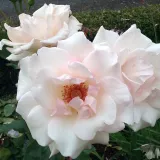
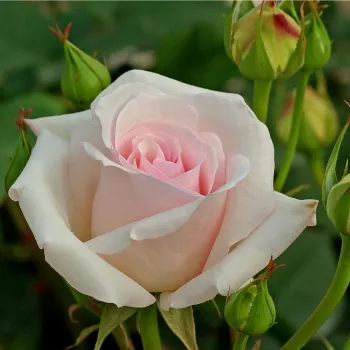
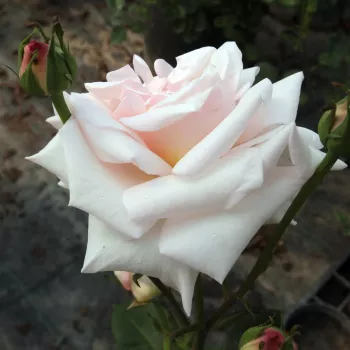
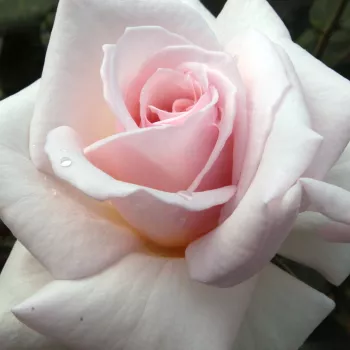
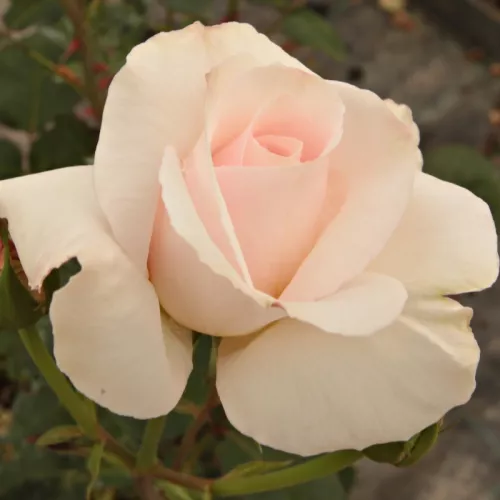
Flower Colour Description: Pastel pink petals with a subtly warm, peachy mid‑tone.
Closed Bud: Delicate powder-pink bud with a soft creamy-yellow base shade.
Newly Opened Flower: The outer petal edges are pale pink, their inner surfaces silky with a creamy-yellow sheen.
Full Bloom: Evenly pale pink with a delicate salmon‑coloured wash in the centre.
Before Fading: The pink fades to a creamy-beige, very pale tone.
Colour Fading Description: In strong sunlight it lightens; in cooler weather its colour remains richer.

Fragrance and Aroma

Fragrance Strength: strong, long-lasting scented rose
Fragrance Character: slightly sweet aroma
Pollinator Attraction: The variety is poorly attractive to pollinators because its fully double flower form conceals the stamens, limiting pollinator access to nectar and pollen.
Pollinator-Friendly Rating: Double-flowered variety that largely conceals its stamens, so it attracts pollinators only to a limited extent and is mainly ornamental.

Hip Characteristics

Hip Shape: spherical
Hip Colour: orange-red
Hip Comment: Hip formation is expected to be limited due to the double flowers; the fruits are spherical rose hips 8–12 mm in diameter and orange-red in colour.

Resistance and Hardiness

Hardiness (°C): -26–-23 °C
Heat and Drought Tolerance Description: Performs satisfactorily in warm conditions but will not tolerate prolonged drought and requires regular watering.
Disease Resistance: moderate
  • powdery mildew – resistant
  • black spot – resistant
  • rust – moderate

Horticultural Recommendations

Recommended Planting Distance: Mass planting: 55 cm, hedging: 45 cm, as a specimen: 90 cm
Planting Density: in square planting 3,3 plants/m², in hexagonal arrangement 3,8 plants/m²
Partial Shade Tolerance: Best suited to a sunny position
Maintenance Requirement: Maintenance requirement moderate; occasionally requires pest and disease control.
Primary Uses: cut flower, flower bed, specimen plant

Comments

Strengths: Balanced growth habit – Biodiversity
Companion Plants: Artemisia schmidtiana 'Nana' - dwarf silver‑mound wormwood Euonymus fortunei 'Minimus' - small‑leaved groundcover wintercreeper Lonicera pileata - evergreen groundcover dwarf honeysuckle
Comment: -
OPHELIA™ – pale pink hybrid tea rose - Paul
Pastel pink petals with a subtly warm, peachy mid‑tone. - hybrid tea rose - strong, long-lasting scented rose - slightly sweet aroma
The rose webshop. - pale-pink - hybrid tea rose - Ophelia™ - (2.6-3.6ft (80-110 cm))
Inflorescence: solitary Height: 2.6-3.6ft (80-110 cm) Flower shape: cup-shaped Winter hardiness: 5b pale-pink - William Paul & Son (United Kingdom, 1912) hybrid tea rose - Flower size: !- Flower size: !- - Height: 2.6-3.6ft (80-110 cm) Height: 2.6-3.6ft (80-110 cm) - Flower fullness: double-flowered Ophelia™ - Roses in the garden | pharmaROSA® Original - premium bronze William Paul

We showcase the external appearance of the roses available for online purchase from our webshop.


Which product type is right for you?


Information

In what condition do we dispatch the rose from our online webshop?

Let us ask ourselves the question: What would I like to use the rose for?
Flower? – Location? – Screening? – Fragrance? – Height? – Breeder? – Rose hip?

Rose purchasing information
Methods of payment – Delivery charges – Delivery – Complaints handling

Care guide

Our product is a rose grown with pharmaROSA®’s unique cultivation technology!

2-litre, own-root, potted rose.
With a shoot system appropriate to the season.
With a root system that thoroughly permeates the growing medium.
Quality compliant with the requirements of the E.N.A. (European Nurserystock Association).
Supplied in unique packaging that prevents damage.
Can be planted during frost-free periods.

True-to-variety rose bush with a unique identifier.

The pharmaROSA® own-root potted rose is a well-rooted plant that supports reliable establishment when planted and cared for properly, so it can be planted whenever the soil is not frozen.


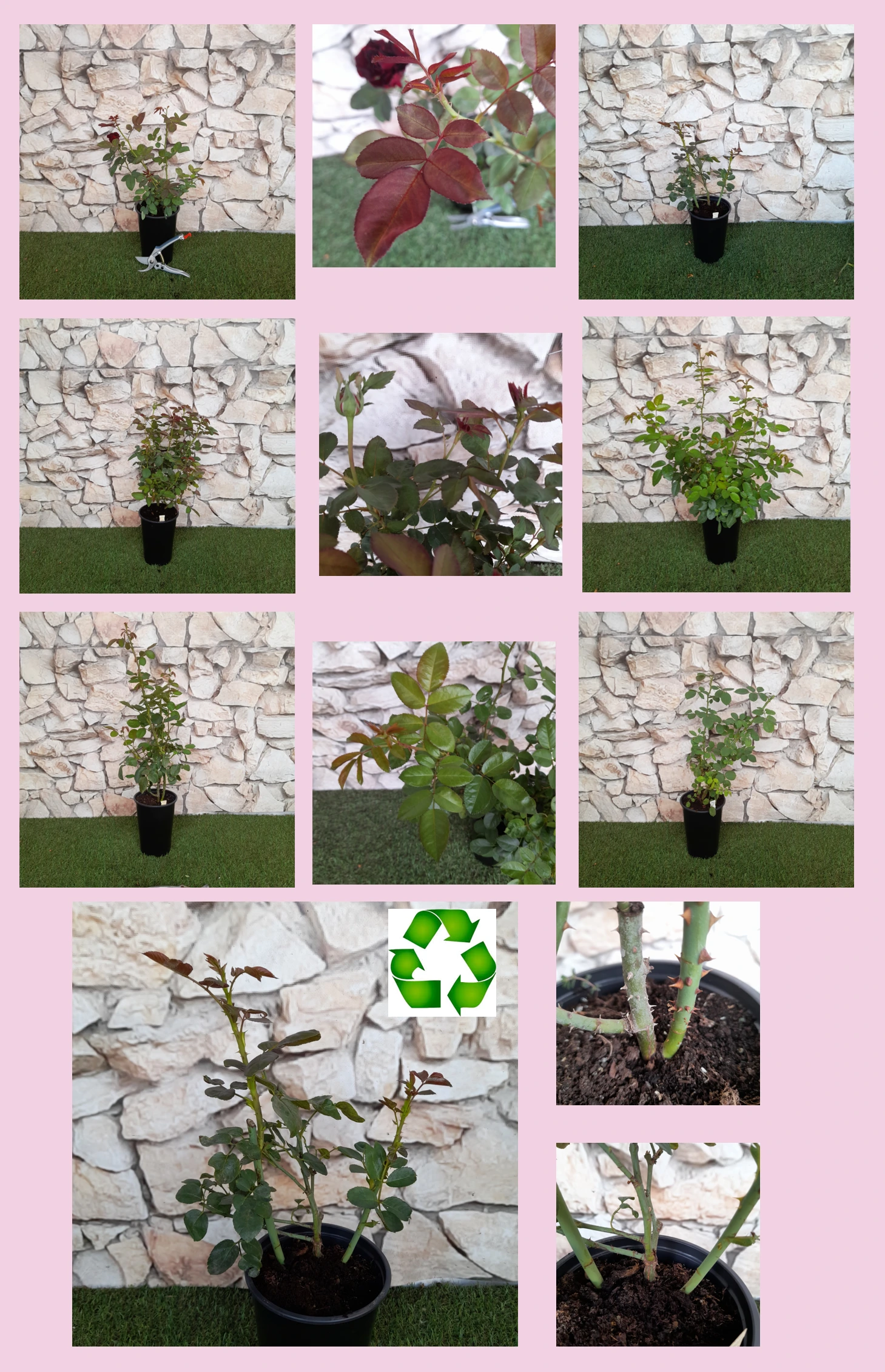
Crop overview: several varieties and growth stages in a short crop section.
Shoot system: intensive growth of fresh basal shoots on a young plant.
Root system: demonstration of a vigorous root system permeating the growing medium, by removing the pot.
Balance: mature plant with root system and shoots in harmony with each other.

Information about the videos
The video series is not a “seasonal showcase”; it illustrates the essence of pharmaROSA® own-root cultivation in a tangible way: how the plant is built up, what the root system is like and how the shoot system regenerates. The recordings were therefore made at different times and with plants at various stages of development, so mixed foliage levels and differing stages of growth may appear in the videos. They are not a ‘sample’ of the batch dispatched, but a visual explanation of how the technology works. The current condition of the rose available to order — typical for the given period and similar to what you can expect to receive in the parcel — is shown in the upper part of the product page.

pharmarosa.dkpharmarosa.compharmarosa.co.ukpharmarosa.atpharmarosa.bgpharmarosa.plpharmarosa.hrpharmarosa.sipharmarosa.grpharmarosa.czpharmarosa.itpharmarosa.depharmarosa.skpharmarosa.frpharmarosa.bepharmarosa.lupharmarosa.ropharmarosa.espharmarosa.nlpharmarosa.iepharmarosa.ltpharmarosa.sepharmarosa.lvpharmarosa.eepharmarosa.fipharmarosa.rupharmarosa.pt

Product types

Pages for private customers
Garden roses for the family garden, with minimal care  → ORIGINAL®
Premium garden roses – instant impact, a truly showpiece garden  → EXTRA®
Pages for professionals and private customers
Roses for public spaces – large areas, sustainable maintenance  → NATURAL®
Roses for projects – hedge and row planting, fast implementation  → RAPID®
For professional partners only
Production – propagation material for garden roses, wholesale  → NEONATAL®

Company details

PharmaRosa Ltd.
Company registration number: 01-09-717479
VAT number: 13075314-2-43
Plant health registration no.: HU130721
Bank account (IBAN):
HU85117631891388688400000000
BIC (SWIFT): OTPVHUHB
Bank name: OTP Bank Nyrt.