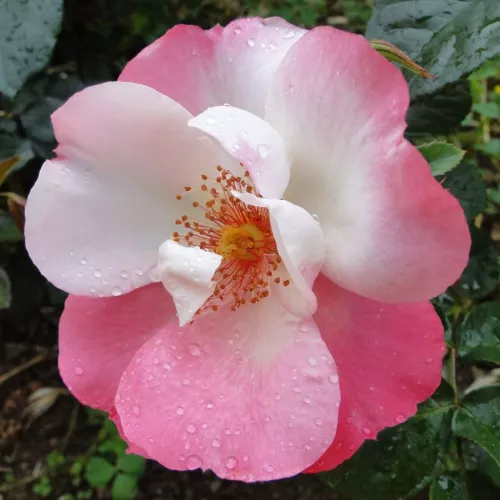
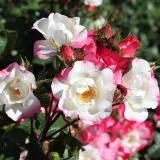
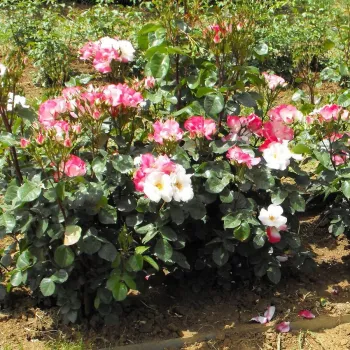
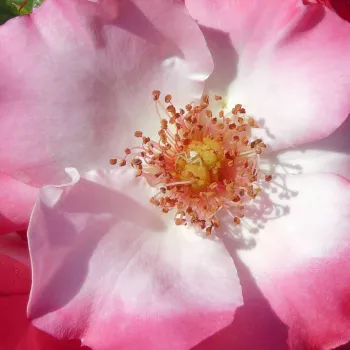
The petals' base colour is milky white, which gradually turns pink in sunlight. - floribunda rose for flower beds - mild, discreetly scented rose - rosy character
– Dúsan virágzó, hosszan ismétlődő virágzás
– Lenyűgöző fehérből rózsaszínbe játszó színek
– Kompakt, felálló bokor ágyásokba és edénybe
– Finoman rosy karakterű illat
– Aranydíjas floribunda a La Tacita versenyen
– Kiemelt tulajdonság: Nyitott, egyszerű virágai kifejezetten vonzzák a beporzó rovarokat.
Climate-conscious choice – Season-spanning
pharmaROSA® ORIGINAL 2-litre own-root potted rose
21,20 £
Unfortunately, we are currently unable to ship to the United Kingdom; we only deliver to countries within the European Union. For more information, please contact us!
3(3518)
OCCHI DI FATA – white-pink bedding floribunda rose - Barni
Colour shifts gently from milky white to deeper pink on each bloom, bringing a light, airy touch to small British front gardens and cottage-style beds. With its compact, upright habit and dark green foliage, it fits neatly into modest borders or near a path where you can enjoy its remontant flowering over a long season. The single, open flowers are bee-friendly, offering easily reached stamens that attract pollinators while remaining pleasantly discreet in scent for seating areas. As an own-root plant, it settles steadily and builds a long-lived, balanced bush, gradually strengthening from roots in year one to shoots in year two, with full ornamental value by year three. Even in breezier gardens it holds its blooms nicely, coping well with coastal conditions and summer sunlight when given regular watering in prolonged dry spells.
Occhi di Fata showing its white-to-pink bloom stage.
Usage options
Target area
Reasoning
Front garden bed by the entrance path
The compact, upright shrub shape stays within 60–85 cm, so it will not sprawl onto paths or overwhelm a modest front bed. This makes it ideal for a tidy, welcoming approach to the front door in an average UK plot, with structure that is easy to manage for the busy home gardener.
Small mixed border with perennials
The white to pink colour shift blends well with cottage-garden favourites such as wallflowers, salvias or hardy geraniums, adding movement without clashing. Its medium-sized, cup-shaped flowers nestle among perennials, giving gentle contrast through the season for the style-conscious beginner.
Pollinator-friendly family garden corner
The single blooms with exposed stamens encourage visits from bees, supporting a more wildlife-friendly garden without complicated planting schemes. Regular flushes of flowers offer a reliable nectar and pollen source across the main season for the nature-loving family.
Small grouping in a bed or low hedge
Planted 40–65 cm apart, several plants form a coherent, low line of colour ideal for defining edges or separating lawn from borders. The consistent height and dense foliage create a soft, informal hedge effect suited to relaxed front gardens for the cottage-rose enthusiast.
Decorative container on patio or terrace
The moderate height and bushy habit make it suitable for a large container of at least 40–50 litres, where roots have space to develop. In a roomy pot with good drainage and feeding, it flowers freely and is easy to tend close to the house for the balcony-and-patio gardener.
Season-long colour focus in a small garden
The remontant character, with a strong second flush, ensures repeat flowering from early summer onwards, helping a small garden look lively without repeated replanting. Spent blooms can be deadheaded in moments, keeping the display fresh for the time-pressed homeowner.
Coastal or wind-exposed suburban sites
The relatively low, compact framework anchors well, reducing wind rock and helping the plant cope in breezier, more open locations near the coast where weather can be changeable and bright. With shelter from extremes, it provides steady colour for the coastal gardener.
Long-term feature shrub in a settled border
As an own-root rose, it develops its natural bush shape in situ, regenerating well from the base after pruning and building a durable framework over the years. With regular plant protection and care, this supports stable ornamental value for the long-view garden planner.
Styling ideas
Cottage-border glow – Combine with wallflowers, catmint and soft grasses for a relaxed, shifting tapestry of colour that highlights its white-to-pink blooms – ideal for cottage-style admirers.
Entrance symmetry – Plant a pair in identical pots by the front door, using dark evergreen box or euonymus behind to frame its compact, upright form – perfect for neat, formal-leaning homeowners.
Pollinator ribbon – Run a short line of plants along a sunny fence, interplanted with lavender and verbena, to create a seasonal insect corridor – suited to wildlife-focused family gardens.
Soft sunset palette – Match its milky white and pink shades with pale apricot roses and cream foxgloves to form a gentle, evening-friendly view from the patio – for colour-harmonising beginners.
Four-season structure – Underplant with spring bulbs and partner with Cornus ‘Midwinter Fire’ for winter stems, so its compact summer flowers sit in a bed that looks considered year-round – appealing to all-season planners.
Technical cultivar profile
Parameter
Data
Name and registration
Floribunda bed rose, collection Le Farfalle; registered as BARfata, marketed as Occhi di Fata. Exhibition floribunda / bush rose, ARS exhibition name Occhi di Fata.
Origin and breeding
Bred by Enrico Barni, Rose Barni, Pistoia, Italy. Parentage not published. Introduced and registered in 2004, representing contemporary Italian floribunda breeding.
Awards and recognition
Gold medal, first prize in the Floribunda category at La Tacita International Trials for New Roses in 2009, confirming its ornamental and garden performance merits.
Growth and structural characteristics
Upright, compact shrub reaching about 60–85 cm in height and 50–75 cm spread. Dense, dark green, slightly glossy foliage with moderate prickles; suitable for beds, borders and low hedging.
Flower morphology
Single, cup-shaped flowers opening flat, generally 5–12 petals and medium size. Carried in clusters that repeat well, with an abundant second flush and reliable remontant habit in suitable conditions.
Colour data and phenology
Milky-white base with pink intensifying in sunlight; ARS WB, RHS 155C outer, 70A inner. Blooms darken to deep crimson-pink before ageing, offering a clear, vivid gradient across each flowering phase.
Fragrance and aroma
Mild rosy fragrance described as discreet and unobtrusive, pleasant at close range without dominating surrounding planting. Suitable for seating areas where strong scent may be overwhelming.
Hip characteristics
Produces moderate quantities of small, spherical hips, around 8–12 mm in diameter, coloured orange-red. Can add an additional, subtle decorative element in late season if spent blooms are not removed.
Resistance and winter hardiness
Hardy to approximately −21 to −18 °C (RHS H7, USDA 6b, Swedish zone 3). Disease sensitivity requires regular plant protection, especially for rust, with medium susceptibility to mildew and black spot.
Horticultural recommendations
Best in sunny positions with fertile, well-drained soil and consistent moisture. Recommended spacings: 40 cm for bedding, 35 cm hedging, 65 cm specimens. Suitable for groups, mixed borders and large containers.
Occhi di Fata offers compact structure, season-long flowering and pollinator-friendly single blooms on a resilient own-root plant, making it a thoughtful long-term choice for your garden.
Detailed product attributes
Product Identification Data
Product Name:
OCCHI DI FATA – white-pink bedding floribunda rose - Barni
Product Type:
pharmaROSA® ORIGINAL - 2-litre own-root potted rose
Flower Colour Description:
The petals' base colour is milky white, which gradually turns pink in sunlight.
Closed Bud:
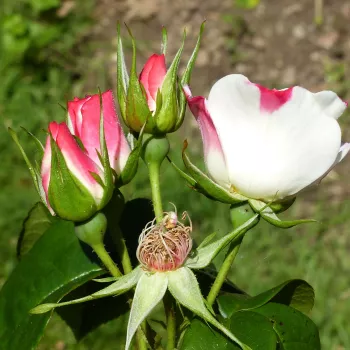
Milky-white bud tip with a delicate pale pink tint.
Newly Opened Flower:
Pure white interior with a delicate veil of pale pink along the edge.
Full Bloom:
Against a white background a mid‑pink rim and inner zone are visible, the even, vivid colour gradient is clearly seen and displays progressively deepening pink tones.
Before Fading:
The entire flower darkens to a deep crimson-pink, the white base almost completely disappearing.
Colour Fading Description:
In sunlight the white petals change to a darker pink–crimson shade; there is no data on significant fading.
Our product is a rose grown with pharmaROSA®’s unique cultivation technology!
2-litre, own-root, potted rose.
With a shoot system appropriate to the season.
With a root system that thoroughly permeates the growing medium.
Quality compliant with the requirements of the E.N.A. (European Nurserystock Association).
Supplied in unique packaging that prevents damage.
Can be planted during frost-free periods.
True-to-variety rose bush with a unique identifier.
The pharmaROSA® own-root potted rose is a well-rooted plant that supports reliable establishment when planted and cared for properly, so it can be planted whenever the soil is not frozen.
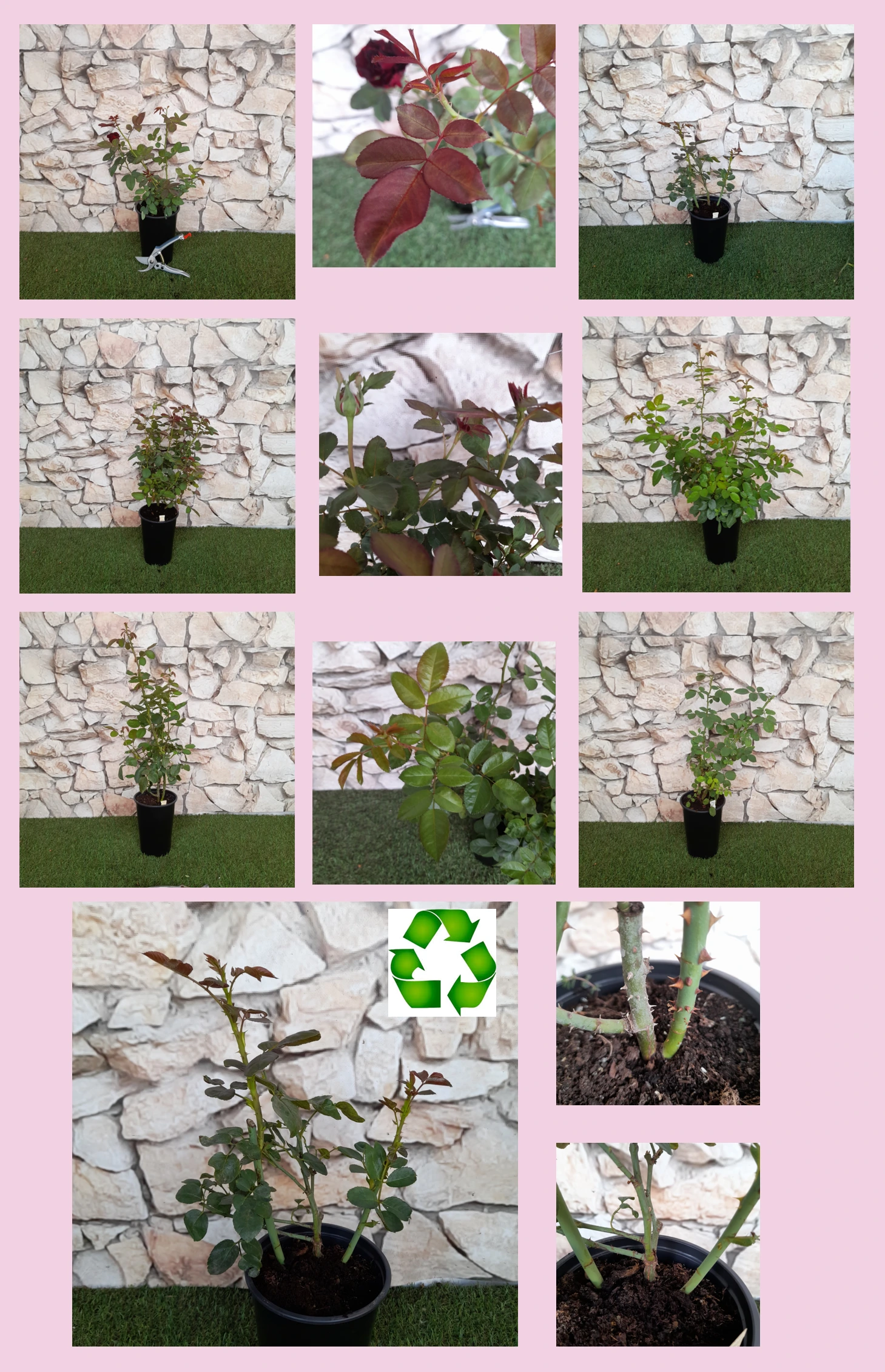
Crop overview: several varieties and growth stages in a short crop section.Shoot system: intensive growth of fresh basal shoots on a young plant.Root system: demonstration of a vigorous root system permeating the growing medium, by removing the pot.Balance: mature plant with root system and shoots in harmony with each other.
Information about the videos
The video series is not a “seasonal showcase”; it illustrates the essence of pharmaROSA® own-root cultivation in a tangible way: how the plant is built up, what the root system is like and how the shoot system regenerates. The recordings were therefore made at different times and with plants at various stages of development, so mixed foliage levels and differing stages of growth may appear in the videos. They are not a ‘sample’ of the batch dispatched, but a visual explanation of how the technology works. The current condition of the rose available to order — typical for the given period and similar to what you can expect to receive in the parcel — is shown in the upper part of the product page.
Pages for private customers Garden roses for the family garden, with minimal care → ORIGINAL® Premium garden roses – instant impact, a truly showpiece garden → EXTRA® Pages for professionals and private customers Roses for public spaces – large areas, sustainable maintenance → NATURAL® Roses for projects – hedge and row planting, fast implementation → RAPID® For professional partners only Production – propagation material for garden roses, wholesale → NEONATAL®
Company details
PharmaRosa Ltd. Company registration number: 01-09-717479 VAT number: 13075314-2-43 Plant health registration no.: HU130721 Bank account (IBAN): HU85117631891388688400000000 BIC (SWIFT): OTPVHUHB Bank name: OTP Bank Nyrt.