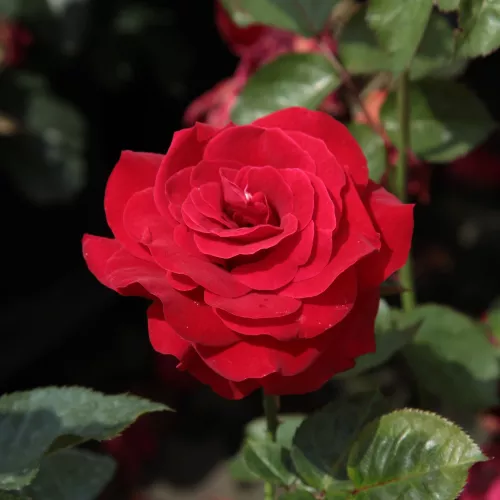
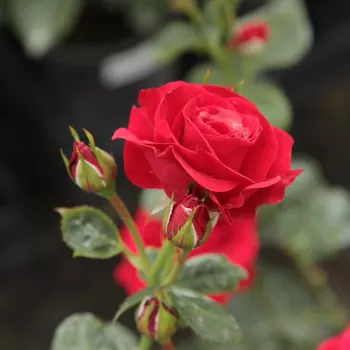
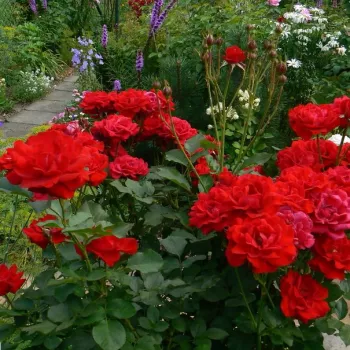
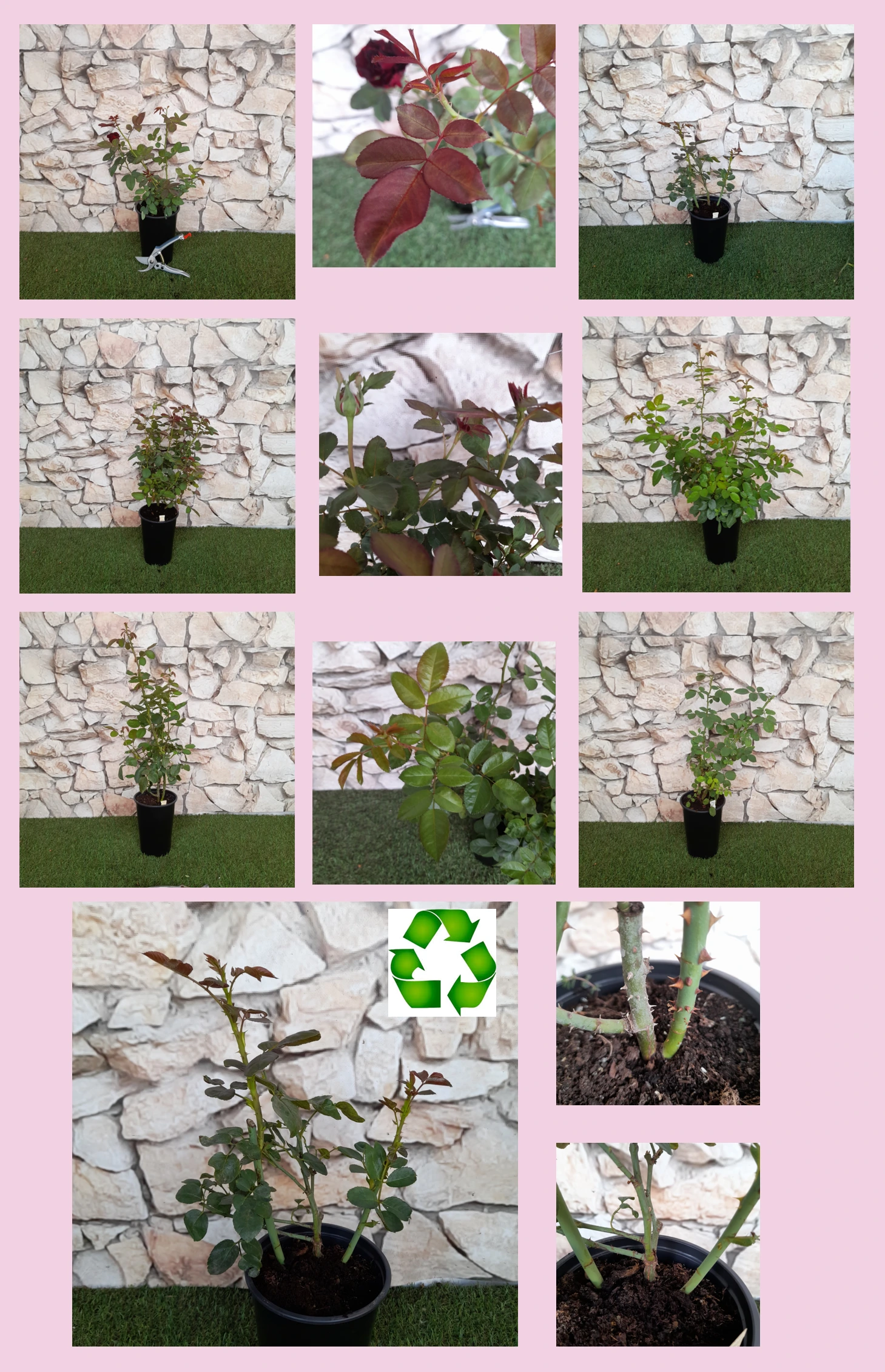
Nina Weibull® Floribunda POULSEN® – dark red bedding rose
Effortless to live with and strikingly red, Nina Weibull® is a classic floribunda that gives you a bushy, compact shrub smothered in blooms from early summer to autumn. Its semi-double clusters open wide for easy bee access, bringing a naturally wildlife-friendly feel to small beds, front gardens and around-the-house borders. As an own-root plant it develops into a stable, long-lived bush that regenerates well after harsh winters and pruning, rewarding patient gardeners as roots, then shoots, then full display mature over three seasons. Perfect for typical British gardens where you want reliable colour even in spots facing brisk coastal winds and weather exposure, it needs only basic care to keep the dark green, glossy foliage and velvety flowers looking tidy. Use it in low, repeating drifts for structure, or as a single, richly coloured highlight beside paths and driveways where you pass every day.
Usage options
| Target area |
Reasoning |
| Front garden bed along the pavement |
The bushy, compact habit and 80–110 cm height create a neat, uniform line of deep red colour that reads well from the street without overpowering a small space. Reliable repeat flowering keeps the frontage presentable with modest deadheading, a reassuring choice for busy homeowners and beginners. |
| Around-the-house foundation planting |
Nina Weibull® forms a dense, glossy green shrub that covers bare soil and softens hard edges along walls and paths. Own-root growth builds a durable framework that responds well to periodic rejuvenation pruning, offering a long-lived, low-fuss backbone for typical family-house borders and hobby-gardeners. |
| Small mixed cottage-style border |
The semi-double clusters and deep red colour sit beautifully among perennials and grasses, while self-cleaning flowers reduce the need for constant deadheading. Its medium maintenance fits gardeners who want traditional cottage charm without intensive rose grooming, appealing strongly to cottage-style enthusiasts. |
| Pollinator-friendly family garden corner |
The open, semi-double blooms with accessible stamens attract bees reliably across the season, adding movement and life to play-adjacent beds without heavy fragrance. Leaving some hips for autumn interest still supports natural renewal, making it ideal for wildlife-aware families and nature-lovers. |
| Small groups in lawn islands or parklet beds |
Planted in groups of 3–5, its even height and bushy structure knit together quickly to form a solid block of colour. Good self-cleaning and medium disease resistance mean less frequent intervention where routine maintenance is limited, suiting shared urban greens and community-gardeners. |
| Low informal hedge or boundary marker |
With recommended spacings from 35–40 cm, Nina Weibull® builds a continuous, chest-high line ideal for informal hedging. Own-root resilience and strong framework branching help it withstand pruning and weather, providing a long-term, living boundary solution for practical yet style-conscious homeowners. |
| Large container on patio or roof terrace |
Its compact, upright habit performs well in a 40–50 litre container where drainage can be controlled on heavy-clay sites. Regular watering and feeding keep the clusters coming, giving long-season colour for urban patios and balconies with limited ground space, perfect for time-pressed city-gardeners. |
| Coastal or exposed suburban garden |
Good heat and cold tolerance, plus a sturdy, bushy framework, help this rose cope with exposed suburban plots and breezier gardens where shelter is limited, supporting dependable colour even where wind and rain can be challenging for other shrubs, reassuring less-experienced garden-owners. |
Styling ideas
- Classic-front-border – Repeat in a single row along the front fence, underplant with low lavender or catmint to echo cottage gardens while keeping lines clean – ideal for tidy frontage-focused homeowners.
- Cottage-mix-drift – Plant in a loose triangle with Iris germanica and feather reed grass ‘Karl Foerster’ for layered height and movement – for those who like relaxed, textural cottage-style planting.
- Wildlife-ribbon – Run a curving band of roses through the lawn, interspersed with pollinator-friendly verbena and alliums to support bees – suited to nature-conscious families wanting wildlife interest.
- Patio-centrepiece – Grow one plant in a 50 litre terracotta pot, surround the rim with trailing thyme or lobelia for contrast and easy care – perfect for balcony and patio users with limited soil.
- Parklet-block – Use 5–7 plants in a rectangular bed to form a solid mass of dark red, backed by ornamental grasses for long-season structure – best for shared, low-maintenance communal spaces.
Technical cultivar profile
| Property |
Data |
| Name and registration |
Floribunda bed rose, shrub habit; registered as POUlwei and marketed as Nina Weibull® Floribunda POULSEN®, a dark red floribunda suitable for bedding and border use in family gardens. |
| Origin and breeding |
Bred by Svend Poulsen (Poulsen Roser A/S) in Denmark before 1961 from ‘Fanal’ × ‘Masquerade’; introduced and registered in 1961, now a well-proven, widely grown classic floribunda. |
| Awards and recognition |
Recognised at the Belfast Rose Trials with the RJ Frizzell Award for Most Fragrant Rose in 2007, reflecting long-term horticultural appreciation and trusted performance in public evaluation. |
| Growth and structural characteristics |
Bushy, compact shrub 80–110 cm tall with 50–70 cm spread, moderately thorny stems and dense, glossy dark green foliage creating a full, uniform outline suitable for mass planting or edging. |
| Flower morphology |
Semi-double, cupped clusters with 17–25 petals per bloom, medium flower size (around 1.5–2.75 inches), remontant habit with abundant first and second flushes, and good natural self-cleaning. |
| Colour data and phenology |
Deep, velvety dark red (ARS DR; RHS 53A outer, 53B inner) that keeps its intensity in light, shifting towards wine-red tones as blooms mature, with no significant fading through the flowering period. |
| Fragrance and aroma |
Very weak, discreet rosy fragrance mainly appreciable at close range, ensuring visual impact and pollinator value without dominating nearby seating or windows in compact family garden settings. |
| Hip characteristics |
If spent blooms are left, it forms moderate numbers of bright red spherical hips, about 8–12 mm across, adding autumn interest and supporting a more naturalistic, wildlife-friendly garden style. |
| Resistance and winter hardiness |
Hardy to approximately -34 to -32 °C (RHS H7, USDA 4a, Swedish zone 5) with medium resistance to black spot, powdery mildew and rust; benefits from standard, preventive care in humid seasons. |
| Horticultural recommendations |
Best in full sun with well-drained soil; medium maintenance with occasional plant protection. Space 35–65 cm depending on use; suitable for beds, borders, hedging, mass and urban plantings. |
Nina Weibull® offers compact, bushy growth, generous repeat flowering and bee-friendly blooms on a durable own-root framework, making it a dependable choice for long-lasting colour in everyday gardens; consider it where you want reliable structure and charm.