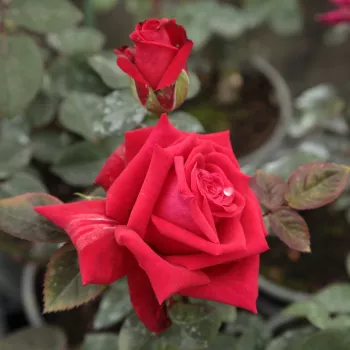
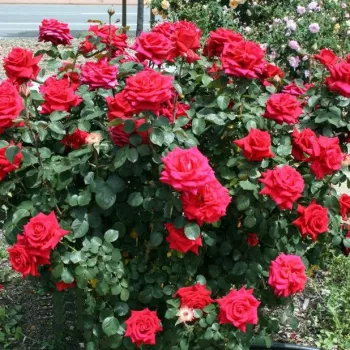
Vivid, rich scarlet-red hue with a subtle velvety depth. - hybrid tea rose - scentless rose - no noticeable fragrance
– Intensely scarlet, colour-stable blooms for beds
– Classic high-centred flowers ideal for cutting
– Reliable remontant flowering through the season
– Compact, bushy habit suits small gardens
– Proven performance with multiple trial awards
– Special feature: Named in honour of the British National Trust, linking garden beauty with heritage conservation.
Sophisticated garden style – Illustrated with real photographs
pharmaROSA® ORIGINAL 2-litre own-root potted rose
18,70 £
Unfortunately, we are currently unable to ship to the United Kingdom; we only deliver to countries within the European Union. For more information, please contact us!
4.5(6629)
National Trust – scarlet hybrid tea rose – McGredy
Scarlet blooms on compact, bushy growth give National Trust a refined, upright presence that suits classic British front gardens, even where wind and rain test planting schemes along exposed streets. The large, high‑centred flowers are bred for cutting, so You can enjoy velvety, colour‑fast stems indoors as well as in beds and borders. As a premium, own‑root plant it settles in reliably and matures steadily, building strong roots and a lasting framework that rewards regular deadheading with abundant remontant flowering year after year, while its recognised trial‑ground awards reassure You of long‑term garden performance. Given reasonable care, it copes well with typical UK conditions on heavy or chalky soils when drainage is managed, suiting those who value structured beds and a smart, tidy front‑of‑house look without complicated rose collections, and it also thrives in generous containers of 40–50 litres on patios where a single well‑placed plant can make an elegant, heritage‑inspired focal point.
National Trust shows a high-centred, pointed bloom form typical of a hybrid tea rose.
National Trust with medium-density, glossy dark green leaves.
Usage options
Target area
Reasoning
Front garden focal bush
Its bushy, compact habit and vivid scarlet, high-centred blooms create a formal yet welcoming focal point beside the front door or along paths, bringing structure without dominating a modest-sized plot – ideal for the style-conscious beginner.
Small formal bed in classic layout
Planted in groups at the recommended spacing, National Trust forms an even, upright planting line with repeat flowering and stable colour, giving a traditional hybrid tea look well suited to edged, rectangular beds in family gardens – reassuring for planners of neat front gardens.
Cut-flower row in the ornamental garden
Large, pointed buds and long, straight stems make this variety particularly good for cutting, so a short border row allows You to harvest exhibition-style blooms for the house without spoiling the overall garden display – appreciated by home flower arrangers.
Mixed cottage-style border accent
The intense scarlet tones stand out among perennials and shrubs, while the compact size helps it sit comfortably between cottage-garden companions without crowding them, supporting relaxed but deliberate compositions – attractive to lovers of characterful cottage displays.
Feature rose in a large patio container
In a 40–50 litre container with good drainage, its upright, bushy form and reliable repeat flowering make a strong structural statement on terraces or paved front gardens where soil is limited, giving flexible placement options – convenient for urban balcony and patio gardeners.
Structured edging along paths or driveways
Regular planting at hedge spacing creates a low, formal edging that guides the eye and defines routes, with scarlet blooms providing seasonal emphasis while the dark foliage holds the line when not in flower – suitable for order-loving householders.
Rose bed in exposed or breezy sites
Its compact, bushy frame and sturdy stems support the flowers in typical British gusts, giving a composed appearance even where coastal or roadside winds challenge looser varieties, helping maintain a tidy look – helpful for gardeners in open, windy positions.
Long-term own-root rose feature
As an own-root plant, it builds its shape gradually in situ, regenerating well from the base and avoiding graft-related ageing issues, so a single bush can anchor a design for many years with consistent form and colour – reassuring for time-pressed family gardeners.
Styling ideas
Heritage Formality – Plant three in a triangle by the front path, underplant with low box or Ilex crenata balls for a National Trust-inspired entrance – for admirers of traditional, well-kept front gardens.
Cottage Contrast – Mix single plants with pale pink roses, Anemone ‘Fantasy Belle’ and airy grasses so the scarlet flowers read as vibrant notes in a soft tapestry – for those who enjoy romantic but structured cottage borders.
Patio Statement – Place one bush in a 50-litre terracotta pot by French doors, combining trailing ivy and seasonal bedding at the base to frame the velvety blooms – for homeowners wanting a strong focal point with minimal planting complexity.
Cutting Corner – Dedicate a short, sunny strip with three to five plants in a row, edged with lavender, to provide straight-stemmed blooms for vases through summer – for enthusiastic home florists who like reliable, garden-grown stems.
Driveway Rhythm – Repeat individual bushes along a drive, alternating with small evergreen shrubs to create a measured pattern of scarlet accents and year-round foliage – for planners seeking orderly structure with seasonal colour highlights.
Technical cultivar profile
Parameter
Data
Name and registration
Hybrid tea rose, registered and marketed as National Trust; exhibition-quality, high-centred blooms classified within the Hybrid Tea group, suitable for both garden display and cut-flower use.
Origin and breeding
Bred by Samuel Darragh McGredy IV from ‘Evelyn Fison’ × ‘King of Hearts’; introduced by Samuel McGredy & Son, Northern Ireland, in 1970 as a scarlet hybrid tea honouring the British National Trust.
Awards and recognition
Recognised in European trials: Belfast Certificate of Merit and RNRS Trial Ground Certificate in 1969, followed by a Silver Medal at the Kortrijk / Courtrai Rose Trials in 1970 for garden and exhibition performance.
Growth and structural characteristics
Compact, bushy shrub reaching 80–100 cm in height and 60–80 cm spread, with medium-density, glossy dark green foliage and moderate prickliness, giving a tidy, upright outline in beds, borders and containers.
Flower morphology
Very double, large flowers with over 40 petals, borne mainly singly on stems; classic high-centred, pointed-budded hybrid tea form with strong remontant habit, providing a generous second flush in suitable conditions.
Colour data and phenology
Rich, velvety scarlet flowers (RHS 53A outer, 46A inner) open bright and colour-stable, with only slight mellowing to deep ruby red before fading, maintaining intensity from bud to full bloom through the flowering season.
Fragrance and aroma
Classed as scentless, with no noticeable fragrance in garden or cut stems; selected primarily for colour, flower form and performance rather than perfume, suiting those who prioritise visual rather than aromatic effect.
Hip characteristics
Very double flowers limit hip set; occasional small, ovoid orange-red hips of about 10–14 mm may form, but they are sparse and of minor ornamental impact compared with the primary floral display.
Resistance and winter hardiness
Rated to around -21 to -18 °C (RHS H7, USDA 6b; Swedish Zone 3) with moderate resistance to black spot, powdery mildew and rust, best supported by good air circulation and standard UK rose care routines.
Horticultural recommendations
Prefers sunny sites with well-drained soil; ideal for beds, edging, front gardens, containers and cutting. Plant at 50–90 cm depending on use, water and feed regularly, and deadhead to sustain repeat flowering through the season.
National Trust offers compact structure, vivid scarlet blooms and reliable repeat flowering on a long-lived own-root framework, making it a refined yet practical choice for those planning a lasting feature rose.
Detailed product attributes
Product Identification Data
Product Name:
NATIONAL TRUST – scarlet hybrid tea rose - McGredy
Product Type:
pharmaROSA® ORIGINAL - 2-litre own-root potted rose
Competition and Show Awards:
Belfast Certificate of Merit (Belfast Rose Trials) (1969); RNRS Trial Ground Certificate (Royal National Rose Society Trials) (1969); Kortrijk / Courtrai Silver Medal (Courtrai Rose Trials) (1970)
Closed Bud:
Dark scarlet red, with a tone that deepens towards the tip.
Newly Opened Flower:
Bright, pure scarlet-red surface with a subtly matt, velvety effect.
Full Bloom:
Colour-stable, intense scarlet red, with a slightly darker edge on the outer petal whorl.
Before Fading:
The colour only fades slightly, mellowing to a deep ruby red.
Colour Fading Description:
During opening the scarlet-red hue remains predominantly; unchanged until full bloom, it only slightly fades before senescence, mellowing into a deep ruby red.
Hip Comment:
Rose hip formation is expected to be sparse due to the double flowers; occasionally produced, 10–14 mm in diameter, ovoid, orange‑red hips.
Our product is a rose grown with pharmaROSA®’s unique cultivation technology!
2-litre, own-root, potted rose.
With a shoot system appropriate to the season.
With a root system that thoroughly permeates the growing medium.
Quality compliant with the requirements of the E.N.A. (European Nurserystock Association).
Supplied in unique packaging that prevents damage.
Can be planted during frost-free periods.
True-to-variety rose bush with a unique identifier.
The pharmaROSA® own-root potted rose is a well-rooted plant that supports reliable establishment when planted and cared for properly, so it can be planted whenever the soil is not frozen.
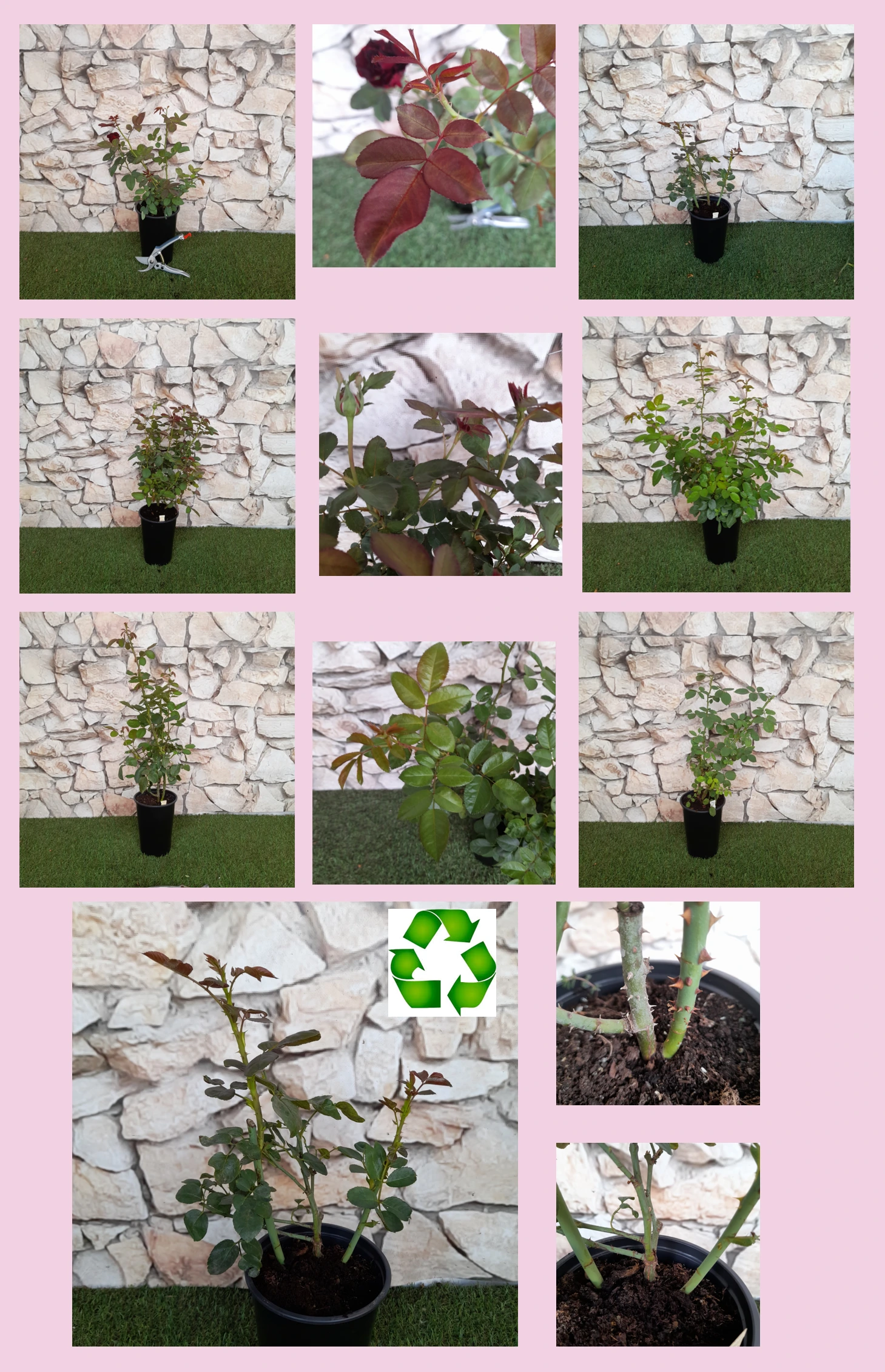
Crop overview: several varieties and growth stages in a short crop section.Shoot system: intensive growth of fresh basal shoots on a young plant.Root system: demonstration of a vigorous root system permeating the growing medium, by removing the pot.Balance: mature plant with root system and shoots in harmony with each other.
Information about the videos
The video series is not a “seasonal showcase”; it illustrates the essence of pharmaROSA® own-root cultivation in a tangible way: how the plant is built up, what the root system is like and how the shoot system regenerates. The recordings were therefore made at different times and with plants at various stages of development, so mixed foliage levels and differing stages of growth may appear in the videos. They are not a ‘sample’ of the batch dispatched, but a visual explanation of how the technology works. The current condition of the rose available to order — typical for the given period and similar to what you can expect to receive in the parcel — is shown in the upper part of the product page.
Pages for private customers Garden roses for the family garden, with minimal care → ORIGINAL® Premium garden roses – instant impact, a truly showpiece garden → EXTRA® Pages for professionals and private customers Roses for public spaces – large areas, sustainable maintenance → NATURAL® Roses for projects – hedge and row planting, fast implementation → RAPID® For professional partners only Production – propagation material for garden roses, wholesale → NEONATAL®
Company details
PharmaRosa Ltd. Company registration number: 01-09-717479 VAT number: 13075314-2-43 Plant health registration no.: HU130721 Bank account (IBAN): HU85117631891388688400000000 BIC (SWIFT): OTPVHUHB Bank name: OTP Bank Nyrt.