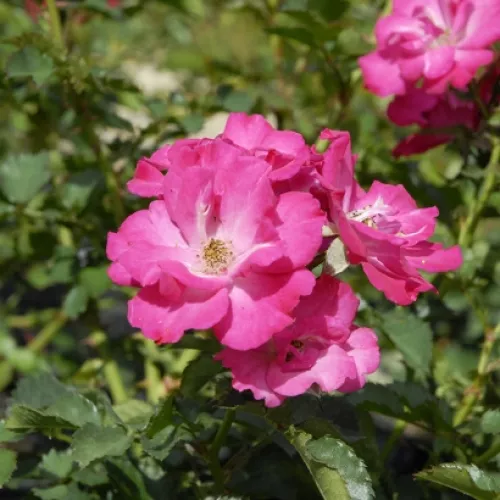
MYRIAM, COURIR POUR ELLES – pink park rose – Rateau
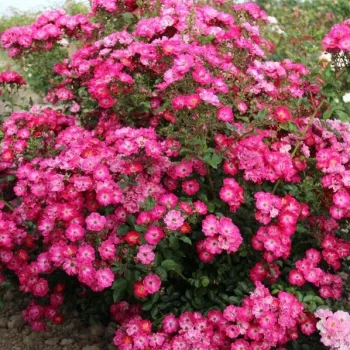
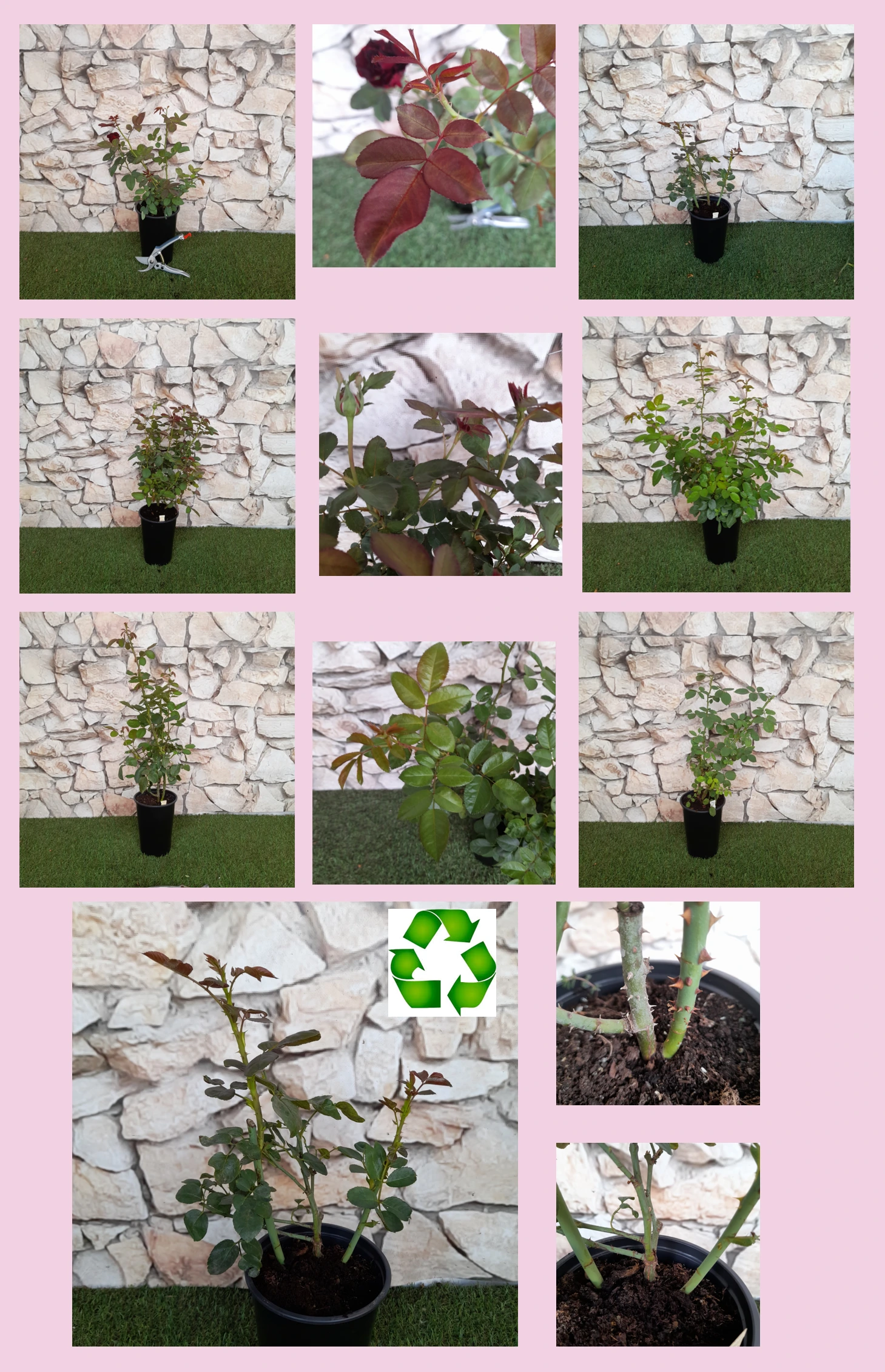
This elegant shrub rose combines uniform growth with a naturally spreading habit, creating low, flowing drifts of vivid pink across beds and borders. Its semi‑double blooms appear in generous clusters, then fall cleanly thanks to good self-cleaning, so the bush stays neat with minimal deadheading. Once settled, it offers reliable remontant flowering through summer, even in periods of moderate drought and heat typical of many British gardens, while coping well with breezier, more exposed sites. As an own‑root plant it develops a balanced, medium‑sized framework that matures steadily over several seasons, building from establishing roots in the first year to fuller shoots in the second and strong ornamental value by the third season.
Usage options
| Target area | Reasoning |
|---|
| Front garden bedding strip |
The compact, spreading shrub shape fills narrow front borders evenly, giving a tidy, uniform line of colour along paths, drives and low walls. Semi‑double clusters read clearly from the street, while self‑cleaning flowers reduce time spent grooming in busy family driveways, suiting beginners. |
| Small cottage‑style rose group |
Planted in groups of 3–5, the consistent height and width of each bush create soft mounds that sit comfortably among perennials and cottage favourites. The uniform habit avoids gaps and awkward mismatches, so even informal schemes look intentional and balanced for style-conscious owners. |
| Mixed border with perennials |
The naturally spreading frame allows this rose to knit between perennials without dominating, while repeating flowering brings splashes of bright pink between waves of other plants. Its restrained stature fits typical UK side borders where space is limited yet long-season colour is valued by homeowners. |
| Low, flowing park or hedge line |
Uniform growth makes it straightforward to plan low, continuous linear plantings along paths or boundaries. With regular protection against leaf disease, a simple trimming once a year keeps the line coherent, avoiding awkward gaps and bulges that can spoil larger, public or shared schemes for planners. |
| Near patios and seating areas |
The bushy, mid-height habit sits comfortably beside terraces without blocking light or views, while the generous clusters of small blooms give a soft, relaxed feel. Self-cleaning flowers drop neatly, meaning fewer spent heads to pick over after weekends, ideal for busy households. |
| Urban courtyard containers |
In large containers from 40–50 litres, the rose forms a rounded, spreading shrub that dresses paved spaces with reliable colour. Good heat and moderate drought tolerance help it cope with warm, reflective courtyards; consistent shape simplifies layout decisions for city-dwellers. |
| Sunny beds in exposed gardens |
The dense foliage and spreading form help anchor planting visually in breezier gardens, where lower shrubs often fare better than tall, wind-rocked roses. It continues to flower in warm spells with modest watering support in typical British conditions with periodic coastal-type winds for coastal gardeners. |
| Specimen shrub in small lawn |
As a solitary feature at 1.8 m spacing, it develops a rounded, evenly branched silhouette that reads as a clear focal point without becoming overbearing in modest gardens. The balanced structure suits those wanting one dependable, showy shrub over many years for families. |
Styling ideas
- Cottage-ribbon – Edge a front path with a short run of these shrubs interplanted with Baby’s breath and hardy geraniums for a loose cottage ribbon of pink and white – ideal for romantic cottage‑garden enthusiasts.
- Pastel-drift – Combine with pale grasses and soft-yellow perennials to let the vivid pink clusters float above a muted base, creating a gentle drift of colour – perfect for calm, low‑fuss family borders.
- Urban-focus – Place one rose in a 50‑litre container flanked by two compact box balls to form a simple, structured focal point on a terrace – suited to design-conscious city gardeners.
- Park-edge – Use a loose, low line of these roses mixed with airy umbellifers to soften the edge of lawns or shared green spaces – good for residents wanting easy structure with seasonal interest.
- Colour-weave – Weave the shrubs through an existing mixed border, repeating them every few metres so their uniform growth links separate sections into one coherent picture – helpful for gardeners updating established plots gradually.
Technical cultivar profile
| Parameter | Data |
|---|
| Name and registration |
Shrub rose, commercial type park rose; registered as EVElubis, marketed as Myriam, Courir pour Elles – pink park rose, confirmed authentic and supplied on its own roots. |
| Origin and breeding |
Bred in France by Jérôme Rateau for EVE – André Eve Nurseries and Rose Gardens; breeding work completed 2008, introduced to the market in 2016. |
| Growth and structural characteristics |
Medium shrub 80–120 cm high and 90–130 cm wide, with a rounded, spreading habit, dense medium‑green slightly glossy foliage and moderate prickliness on the shoots. |
| Flower morphology |
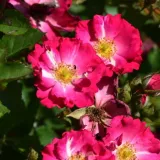
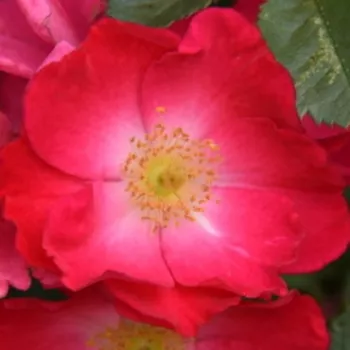
Semi-double, flat flowers with 13–25 petals, borne in clusters of small blooms around 0.5–1.5 inches, remontant with a notably abundant second flush in suitable conditions. |
| Colour data and phenology |
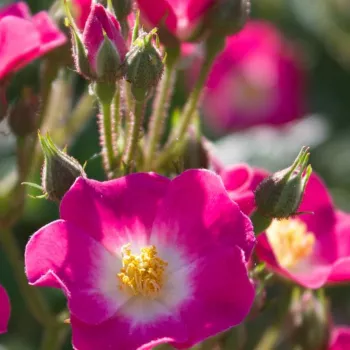
Pure vivid fuchsia pink, ARS code DP, RHS 66A outer and 66B inner; buds dark fuchsia, colour moderately fades to paler cyclamen-pink with lighter margins as the blooms age. |
| Fragrance and aroma |
Very weakly scented rose with barely noticeable fragrance; chosen primarily for colour impact and structural effect in borders rather than for perfume-led planting schemes. |
| Hip characteristics |
Limited hip set due to flower form and self-cleaning; occasional small, bright red, ellipsoidal hips 6–12 mm in diameter may develop in late season on well-managed plants. |
| Resistance and winter hardiness |
Hardy to approximately −32 to −29 °C (USDA 4b, RHS H7, Sweden Zon 5); disease-prone foliage, very susceptible to powdery mildew, black spot and rust, needs regular protection. |
| Horticultural recommendations |
Suited to beds, parks, containers and urban areas; allow 90–100 cm for group plantings or 180 cm as a specimen; demands consistent plant protection and balanced feeding for best display. |
MYRIAM, COURIR POUR ELLES – pink park rose – offers uniform spreading growth, showy clustered flowering and reliable heat tolerance on a long-lived own-root framework, making it a thoughtful choice if you value structured colour with steady development.