MOZART'S LADY – pink park rose - Scarman
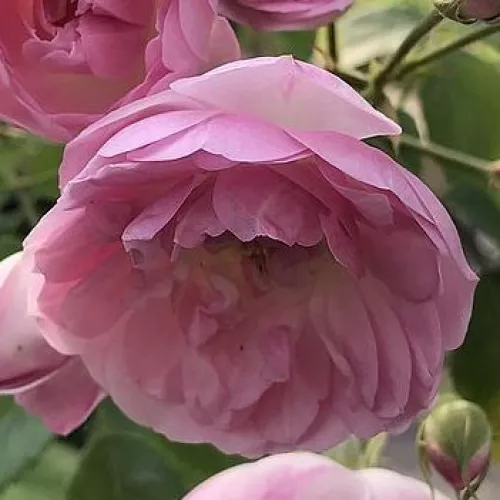
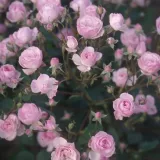
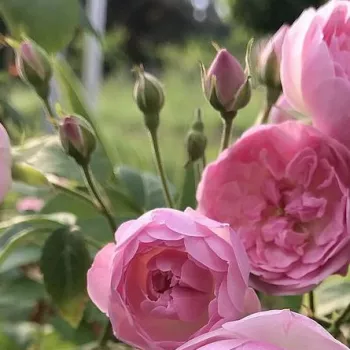
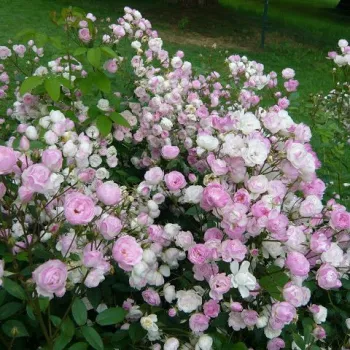
This refined Hybrid Moschata shrub rose offers elegant, small, ball-shaped blooms in soft pink clusters that repeat generously through the season, bringing a romantic cottage feel to modest front gardens and borders. Its upright habit and light, glossy foliage create a naturally graceful outline that works beautifully as a specimen, loose hedge or informal backdrop, even where gardens are exposed to brisk winds and need good anchoring in changeable British weather. Medium maintenance means you gain a reliably floriferous display with only occasional plant protection and simple pruning, while the rose’s good heat tolerance and partial shade suitability make it highly adaptable to typical UK plots, whether south-facing or tucked between buildings. In containers of at least 40–50 litres it forms a tidy, upright shrub, while in the ground its own-root structure develops into a durable, long-lived plant that recovers well from hard pruning and everyday family wear. As the root system strengthens, you can expect a natural progression from steady establishment to fuller branching and finally a mature, balanced shrub that shows its best flowering and shape by about the third year. The modest prickliness and moderate height make it reassuringly family-friendly around paths, play areas and frequently used garden spaces.
Usage options
| Target area | Reasoning |
|---|
| Front garden feature shrub |
The upright, moderately dense habit and small, double flowers give a refined yet welcoming look close to the front door without overwhelming a modest plot. It forms a neat presence with light green foliage that suits traditional or modern façades in typical British streets. Ideal for homeowners seeking elegant. |
| Cottage-style mixed border |
Clusters of soft pink, pompon-like blooms repeat all season, blending naturally with perennials and creating a romantic, layered effect in cottage borders. The medium maintenance level suits relaxed planting schemes where you want reliable flowering without fussy care or complex pruning regimes. Well suited to gardeners who appreciate romantic. |
| Loose flowering hedge or boundary line |
With a height of around 110–160 cm and planting distances near 90–100 cm, it builds a visually connected line that remains light and airy. This structure works well for defining paths, drives or front boundaries, giving floral interest while still allowing views through, rather than forming a solid screen. Recommended for those prioritising graceful. |
| Small group planting in family gardens |
Planting 1–5 specimens together creates a rounded, floriferous focus that looks considered but not formal. Adaptable to borders or lawn islands, it fits the scale of average family gardens and offers colour from compact, cluster-flowered heads that read clearly from windows and seating areas. A good choice for anyone wanting floriferous. |
| Containers on patios and terraces |
In large pots from 40–50 litres upwards, the moderate height and upright structure remain in proportion, giving a manageable, vertical accent on patios or balconies. Its tolerance of partial shade allows flexible placement, and watering is straightforward compared with more demanding roses in smaller containers. Best for balcony and terrace owners favouring adaptable. |
| Long-term structural planting |
As an own-root shrub, the plant builds a strong framework over the years and responds well to rejuvenating cuts, rather than relying on grafted unions. This makes it a sound long-term choice for stable colour in established beds where you want shrubs to mature into their space and keep performing reliably. Suitable for planners who value durable. |
| Wind-exposed or open sites |
The relatively robust, upright framework and moderate spread help it stand securely in open, breezy gardens, supporting clusters of flowers without collapse. This allows you to use it confidently in front gardens and corner plots that catch weather, while still achieving a soft, ornamental effect over several seasons. Practical for households needing balanced. |
| Near paths and family seating areas |
The variety is only slightly thorny, so it is more comfortable beside paths, benches and play spaces than heavily armed shrub roses. Combined with its modest fragrance and neat height, this makes it easy to live with in busy gardens that children and guests move through frequently, with less risk of snagging. Especially apt for gardens seeking family-friendly. |
Styling ideas
- COTTAGE HARMONY – Combine with soft mauve nepeta and white foxgloves in a mixed border to echo the rose’s gentle clusters – for lovers of romantic, traditional cottage scenes.
- FRONT-DOOR ACCENT – Flank a path or doorway with two shrubs underplanted with low heuchera to frame the entrance neatly – for homeowners wanting an elegant but undemanding welcome.
- LIGHT HEDGE – Plant a loose row along a drive, interspersed with airy ornamental grasses, to create a graceful boundary that still lets light and views through – for those preferring soft structure over solid fencing.
- PATIO SHOWCASE – Grow a single plant in a 50–60 litre terracotta pot with trailing campanula over the rim to turn a small terrace into a floriferous focal point – for balcony and patio gardeners with limited space.
- FAMILY CORNER – Place near a seating area with low-prickled companions such as hardy geraniums to provide colour without harsh thorns – for families seeking a calm, child-friendly relaxation spot.
Technical cultivar profile
| Characteristic | Data |
|---|
| Name and registration |
Hybrid Moschata shrub sold as MOZART'S LADY – pink park rose - Scarman, in the Park – shrub rose group; ARS exhibition name Mozart’s Lady; positioned mainly as a garden and cut-flower park rose. |
| Origin and breeding |
Bred by John Scarman in Germany, 2003, from ‘The Lady Scarman’ × ‘Mozart’ (Lambert, 1936); introduced to the market in the early 2000s, with detailed launch records only partially available. |
| Growth and structural characteristics |
Upright shrub 110–160 cm high and 80–130 cm wide, moderately dense, slightly thorny; light green, slightly glossy foliage; suited to borders, hedging or specimen use with a naturally tidy outline. |
| Flower morphology |
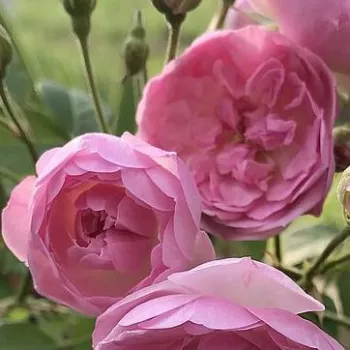
Small, very double, ball to pompon-shaped blooms (0.5–1.5 in) in clusters; over 40 petals per flower; remontant with an abundant second flush, providing a fine-textured but conspicuous display. |
| Colour data and phenology |
Delicate pale pink (RHS 65C–65D) that fades towards porcelain-white at the edges; colour lightens more quickly in strong sun, giving soft, pastel clusters that change gently over the flowering period. |
| Fragrance and aroma |
Very weak, barely perceptible scent with a delicately sweet character; primarily valued for its visual effect rather than fragrance, suiting seating areas where strong perfume is not desired. |
| Hip characteristics |
Rosehip set is generally low because of the very double blooms; occasional small, spherical orange-red hips 6–10 mm may form, adding subtle late-season interest without heavy fruiting. |
| Resistance and winter hardiness |
Hardy to about −21 to −18 °C (RHS H7, Swedish Zone 3, USDA 6b); good heat tolerance with watering in prolonged drought; disease resistance moderate overall, with good black spot resistance. |
| Horticultural recommendations |
Suited to borders, hedges, containers, fences, obelisks and as a specimen; spacing around 90–180 cm; medium maintenance with occasional plant protection; tolerates partial shade in typical UK gardens. |
MOZART'S LADY offers elegant repeat flowering, adaptable upright growth and a durable own-root structure that settles in for long-term beauty, making it a considered choice for gardeners planning their next rose.