Park & shrub rose

40-102-1
40-102-2

Mozart's Lady

Park - shrub rose

- – John Scarman

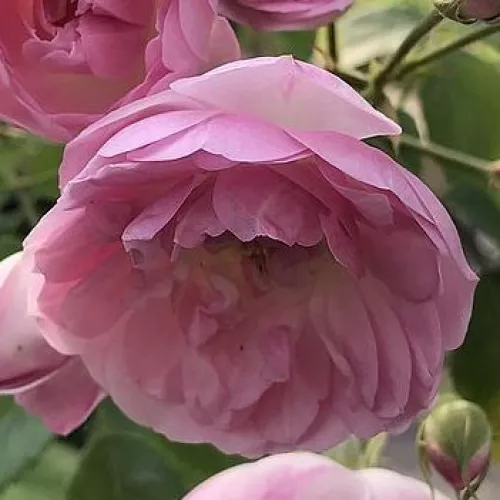
Delicate, pure pale pink shade that gradually lightens towards the outer edge of the petals. - park rose - very weak, barely noticeable scented rose - delicately sweet character

– Abundant, remontant flowering in flushes.
– Compact upright shrub for borders and hedges.
– Delicate pale pink blooms, ball to pompon shaped.
– Good heat tolerance, suited to warmer spots.
– Moderate disease resistance, black spot resistant.
Special feature: Evocative Hybrid Moschata cross of ‘The Lady Scarman’ and ‘Mozart’.
In harmony with nature – Supported by real photographs
Mozart's Lady
pharmaROSA® ORIGINAL 2-litre own-root potted rose
21,00 £
Unfortunately, we are currently unable to ship to the United Kingdom; we only deliver to countries within the European Union. For more information, please contact us!
3 (3237)
facebook   twitter

MOZART'S LADY – pink park rose - Scarman

This refined Hybrid Moschata shrub rose offers elegant, small, ball-shaped blooms in soft pink clusters that repeat generously through the season, bringing a romantic cottage feel to modest front gardens and borders. Its upright habit and light, glossy foliage create a naturally graceful outline that works beautifully as a specimen, loose hedge or informal backdrop, even where gardens are exposed to brisk winds and need good anchoring in changeable British weather. Medium maintenance means you gain a reliably floriferous display with only occasional plant protection and simple pruning, while the rose’s good heat tolerance and partial shade suitability make it highly adaptable to typical UK plots, whether south-facing or tucked between buildings. In containers of at least 40–50 litres it forms a tidy, upright shrub, while in the ground its own-root structure develops into a durable, long-lived plant that recovers well from hard pruning and everyday family wear. As the root system strengthens, you can expect a natural progression from steady establishment to fuller branching and finally a mature, balanced shrub that shows its best flowering and shape by about the third year. The modest prickliness and moderate height make it reassuringly family-friendly around paths, play areas and frequently used garden spaces.


Usage options

Target areaReasoning
Front garden feature shrub The upright, moderately dense habit and small, double flowers give a refined yet welcoming look close to the front door without overwhelming a modest plot. It forms a neat presence with light green foliage that suits traditional or modern façades in typical British streets. Ideal for homeowners seeking elegant.
Cottage-style mixed border Clusters of soft pink, pompon-like blooms repeat all season, blending naturally with perennials and creating a romantic, layered effect in cottage borders. The medium maintenance level suits relaxed planting schemes where you want reliable flowering without fussy care or complex pruning regimes. Well suited to gardeners who appreciate romantic.
Loose flowering hedge or boundary line With a height of around 110–160 cm and planting distances near 90–100 cm, it builds a visually connected line that remains light and airy. This structure works well for defining paths, drives or front boundaries, giving floral interest while still allowing views through, rather than forming a solid screen. Recommended for those prioritising graceful.
Small group planting in family gardens Planting 1–5 specimens together creates a rounded, floriferous focus that looks considered but not formal. Adaptable to borders or lawn islands, it fits the scale of average family gardens and offers colour from compact, cluster-flowered heads that read clearly from windows and seating areas. A good choice for anyone wanting floriferous.
Containers on patios and terraces In large pots from 40–50 litres upwards, the moderate height and upright structure remain in proportion, giving a manageable, vertical accent on patios or balconies. Its tolerance of partial shade allows flexible placement, and watering is straightforward compared with more demanding roses in smaller containers. Best for balcony and terrace owners favouring adaptable.
Long-term structural planting As an own-root shrub, the plant builds a strong framework over the years and responds well to rejuvenating cuts, rather than relying on grafted unions. This makes it a sound long-term choice for stable colour in established beds where you want shrubs to mature into their space and keep performing reliably. Suitable for planners who value durable.
Wind-exposed or open sites The relatively robust, upright framework and moderate spread help it stand securely in open, breezy gardens, supporting clusters of flowers without collapse. This allows you to use it confidently in front gardens and corner plots that catch weather, while still achieving a soft, ornamental effect over several seasons. Practical for households needing balanced.
Near paths and family seating areas The variety is only slightly thorny, so it is more comfortable beside paths, benches and play spaces than heavily armed shrub roses. Combined with its modest fragrance and neat height, this makes it easy to live with in busy gardens that children and guests move through frequently, with less risk of snagging. Especially apt for gardens seeking family-friendly.

Styling ideas

  • COTTAGE HARMONY – Combine with soft mauve nepeta and white foxgloves in a mixed border to echo the rose’s gentle clusters – for lovers of romantic, traditional cottage scenes.
  • FRONT-DOOR ACCENT – Flank a path or doorway with two shrubs underplanted with low heuchera to frame the entrance neatly – for homeowners wanting an elegant but undemanding welcome.
  • LIGHT HEDGE – Plant a loose row along a drive, interspersed with airy ornamental grasses, to create a graceful boundary that still lets light and views through – for those preferring soft structure over solid fencing.
  • PATIO SHOWCASE – Grow a single plant in a 50–60 litre terracotta pot with trailing campanula over the rim to turn a small terrace into a floriferous focal point – for balcony and patio gardeners with limited space.
  • FAMILY CORNER – Place near a seating area with low-prickled companions such as hardy geraniums to provide colour without harsh thorns – for families seeking a calm, child-friendly relaxation spot.

Technical cultivar profile
CharacteristicData
Name and registration Hybrid Moschata shrub sold as MOZART'S LADY – pink park rose - Scarman, in the Park – shrub rose group; ARS exhibition name Mozart’s Lady; positioned mainly as a garden and cut-flower park rose.
Origin and breeding Bred by John Scarman in Germany, 2003, from ‘The Lady Scarman’ × ‘Mozart’ (Lambert, 1936); introduced to the market in the early 2000s, with detailed launch records only partially available.
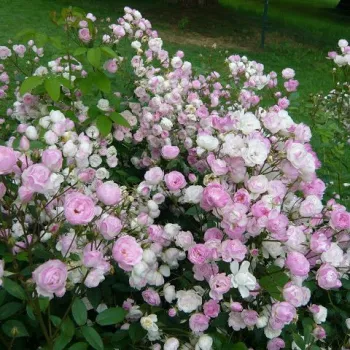
Growth and structural characteristics Upright shrub 110–160 cm high and 80–130 cm wide, moderately dense, slightly thorny; light green, slightly glossy foliage; suited to borders, hedging or specimen use with a naturally tidy outline.
Flower morphology Small, very double, ball to pompon-shaped blooms (0.5–1.5 in) in clusters; over 40 petals per flower; remontant with an abundant second flush, providing a fine-textured but conspicuous display.
Colour data and phenology Delicate pale pink (RHS 65C–65D) that fades towards porcelain-white at the edges; colour lightens more quickly in strong sun, giving soft, pastel clusters that change gently over the flowering period.
Fragrance and aroma Very weak, barely perceptible scent with a delicately sweet character; primarily valued for its visual effect rather than fragrance, suiting seating areas where strong perfume is not desired.
Hip characteristics Rosehip set is generally low because of the very double blooms; occasional small, spherical orange-red hips 6–10 mm may form, adding subtle late-season interest without heavy fruiting.
Resistance and winter hardiness Hardy to about −21 to −18 °C (RHS H7, Swedish Zone 3, USDA 6b); good heat tolerance with watering in prolonged drought; disease resistance moderate overall, with good black spot resistance.
Horticultural recommendations Suited to borders, hedges, containers, fences, obelisks and as a specimen; spacing around 90–180 cm; medium maintenance with occasional plant protection; tolerates partial shade in typical UK gardens.

MOZART'S LADY offers elegant repeat flowering, adaptable upright growth and a durable own-root structure that settles in for long-term beauty, making it a considered choice for gardeners planning their next rose.
Detailed product attributes

Product Identification Data

Product Name: MOZART'S LADY – pink park rose - Scarman
Product Type: pharmaROSA® ORIGINAL - 2-litre own-root potted rose
Cultivar Authenticity: Verified:15.11.2025
Cultivar Quality Rating: premium bronze
Item Number: [1160] 40-102 (14.02.2026) pharmarosa.co.uk

Name and Registration

Meaning of Cultivar Name: The name "Mozart hölgye" pays tribute to Wolfgang A. Mozart and a woman associated with him.
Original Trade Name: Mozart’s Lady
Current Trade Name: Mozart's Lady Park - shrub rose Scarman
Rose Group: Hybrid Moschata
Commercial Type: park rose
Commercial Group: Park - shrub rose
Exhibition Category: cut flower; shrub rose
Collection: Park - shrub rose

Origin and Breeding

Introduction Year: Data not available
Breeder: John Scarman
Breeding Company / Institution: unknown / no data
Breeding Year: Germany, 2003
Parentage: ‘The Lady Scarman’ × ‘Mozart’ (Lambert, 1936)

Growth and Structural Characteristics

Height: 3.6-5.2ft (110-160 cm)
Spread: 2.6-4.3ft (80-130 cm)
Growth Habit: upright
Foliage: The variety's foliage is moderately dense, with leaves that have a slightly glossy surface and a light green hue.
Prickliness: slightly thorny
Self-Cleaning Description: No data available on self-cleaning.
Self-Cleaning Intensity: No data on self‑cleaning strength.

Flower Morphology

Flower Fullness: very double-flowered
Flower Shape: ball, pompon
Flower Size: S (0,5-1,5 in)
Inflorescence Type: cluster-flowered
Colour Code: ARS code: MPk RHS code: 65C (outer), 65D (inner)
Repeat Flowering: Remontant with an abundant second flowering.

Colour Data and Phenology

Colour: pink
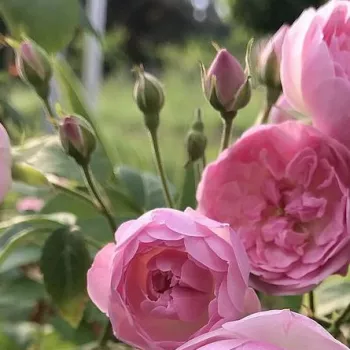
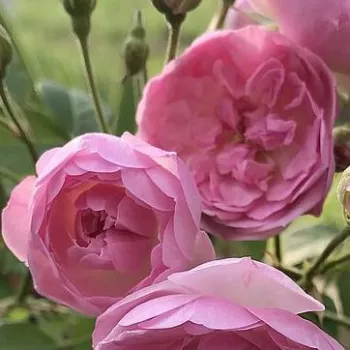
Flower Colour Description: Delicate, pure pale pink shade that gradually lightens towards the outer edge of the petals.
Closed Bud: Soft pastel pink with a slight silvery tinge.
Newly Opened Flower: Uniform, translucent pink, with a subtle deeper tone on the central petals.
Full Bloom: Light pink, fading to almost porcelain-white towards the petal edges.
Before Fading: An almost white hue with a barely perceptible pink blush at the petal tips.
Colour Fading Description: Gradually fades from pink to white; lightens quickly in strong sunlight.

Fragrance and Aroma

Fragrance Strength: very weak, barely noticeable scented rose
Fragrance Character: delicately sweet character
Pollinator Attraction: Its very double, camellia‑like blooms are of low attractiveness to pollinators because the full (double) flower form conceals the reproductive organs and makes the stamens largely inaccessible.
Pollinator-Friendly Rating: Highly double, camellia-like flowers mean its pollinator-friendliness is limited; primarily ornamental.

Hip Characteristics

Hip Shape: spherical
Hip Colour: orange-red
Hip Comment: Rosehip formation is expected to be minimal due to the double flowers; occasionally spherical, orange‑red rosehips 6–10 mm in diameter may appear.

Resistance and Hardiness

Hardiness (°C): -21–-18 °C
Heat and Drought Tolerance Description: Tolerates heat well; requires irrigation during prolonged drought.
Disease Resistance: moderate
  • powdery mildew – moderate
  • black spot – resistant
  • rust – moderate

Horticultural Recommendations

Recommended Planting Distance: for mass planting 100 cm, for hedging 90 cm, as a specimen 180 cm
Planting Density: square planting 1,0 plants/m², hexagonal arrangement 1,2 plants/m²
Partial Shade Tolerance: suitable for partial shade
Maintenance Requirement: Maintenance requirement medium; requires occasional plant protection.
Primary Uses: border,container,fence,obelisk,cut flower,specimen plant

Comments

Strengths: In harmony with nature – Supported by real photographs
Companion Plants: Ampelopsis aconitifolia 'Seattle' - variegated porcelain vine Heuchera species - coral bells Lonicera japonica - Japanese honeysuckle
Comment: -
MOZART'S LADY – pink park rose - Scarman
Delicate, pure pale pink shade that gradually lightens towards the outer edge of the petals. - park rose - very weak, barely noticeable scented rose - delicately sweet character
Rose Shopping Online - pink - park rose - Mozart's Lady - (3.6-5.2ft (110-160 cm))
Inflorescence: cluster-flowered Height: 3.6-5.2ft (110-160 cm) Flower shape: ball, pompon Winter hardiness: 6b pink - - park rose - Flower size: !- Flower size: !- - Height: 3.6-5.2ft (110-160 cm) Height: 3.6-5.2ft (110-160 cm) - Flower fullness: very double-flowered Mozart's Lady - Roses in the garden | pharmaROSA® Original - premium bronze John Scarman

We showcase the external appearance of the roses available for online purchase from our webshop.


Which product type is right for you?


Information

In what condition do we dispatch the rose from our online webshop?

Let us ask ourselves the question: What would I like to use the rose for?
Flower? – Location? – Screening? – Fragrance? – Height? – Breeder? – Rose hip?

Rose purchasing information
Methods of payment – Delivery charges – Delivery – Complaints handling

Care guide

Our product is a rose grown with pharmaROSA®’s unique cultivation technology!

2-litre, own-root, potted rose.

With a shoot system appropriate to the season.
With a root system that thoroughly permeates the growing medium.
Quality compliant with the requirements of the E.N.A. (European Nurserystock Association).
Supplied in unique packaging that prevents damage.

Can be planted during frost-free periods.

True-to-variety rose bush with a unique identifier.

The pharmaROSA® own-root potted rose is a well-rooted plant that supports reliable establishment when planted and cared for properly, so it can be planted whenever the soil is not frozen.


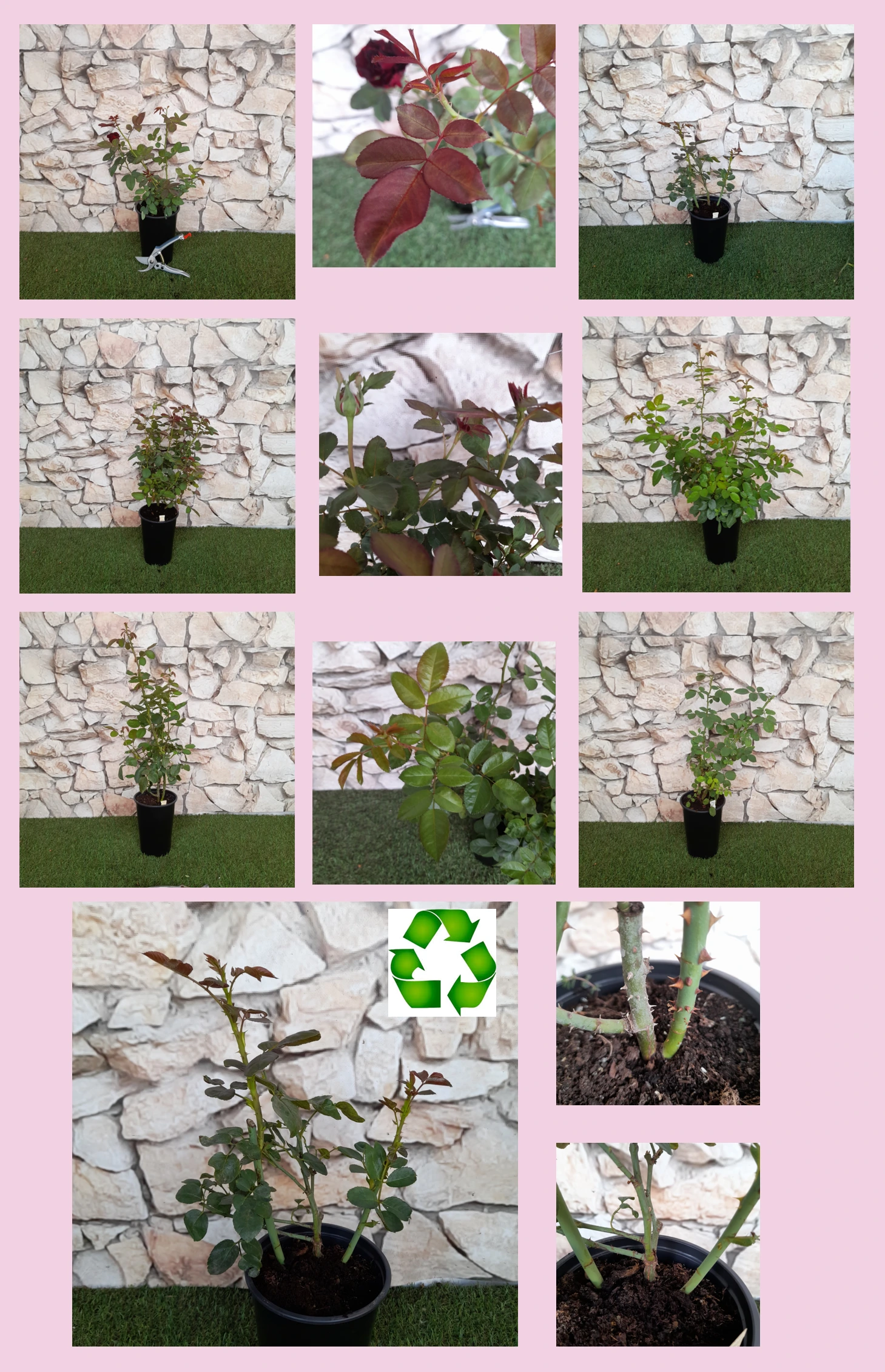
Crop overview: several varieties and growth stages in a short crop section.
Shoot system: intensive growth of fresh basal shoots on a young plant.
Root system: demonstration of a vigorous root system permeating the growing medium, by removing the pot.
Balance: mature plant with root system and shoots in harmony with each other.

Information about the videos
The video series is not a “seasonal showcase”; it illustrates the essence of pharmaROSA® own-root cultivation in a tangible way: how the plant is built up, what the root system is like and how the shoot system regenerates. The recordings were therefore made at different times and with plants at various stages of development, so mixed foliage levels and differing stages of growth may appear in the videos. They are not a ‘sample’ of the batch dispatched, but a visual explanation of how the technology works. The current condition of the rose available to order — typical for the given period and similar to what you can expect to receive in the parcel — is shown in the upper part of the product page.

pharmarosa.ptpharmarosa.hupharmarosa.dkdenisarose.frfrancescarose.itkimrose.nlpharmarosa.skpharmarosa.atpharmarosa.co.ukpharmarosa.czpharmarosa.depharmarosa.ropharmarosa.sipharmarosa.hrpharmarosa.grpharmarosa.bepharmarosa.iepharmarosa.espharmarosa.plpharmarosa.lupharmarosa.bgpharmarosa.ltpharmarosa.sepharmarosa.lvpharmarosa.eepharmarosa.fipharmarosa.ru

Product types

Pages for private customers
Garden roses for the family garden, with minimal care  → ORIGINAL®
Premium garden roses – instant impact, a truly showpiece garden  → EXTRA®
Pages for professionals and private customers
Roses for public spaces – large areas, sustainable maintenance  → NATURAL®
Roses for projects – hedge and row planting, fast implementation  → RAPID®
For professional partners only
Production – propagation material for garden roses, wholesale  → NEONATAL®

Company details

PharmaRosa Ltd.
Company registration number: 01-09-717479
VAT number: 13075314-2-43
Plant health registration no.: HU130721
Bank account (IBAN):
HU85117631891388688400000000
BIC (SWIFT): OTPVHUHB
Bank name: OTP Bank Nyrt.