MOZART – pink-white park rose - Lambert
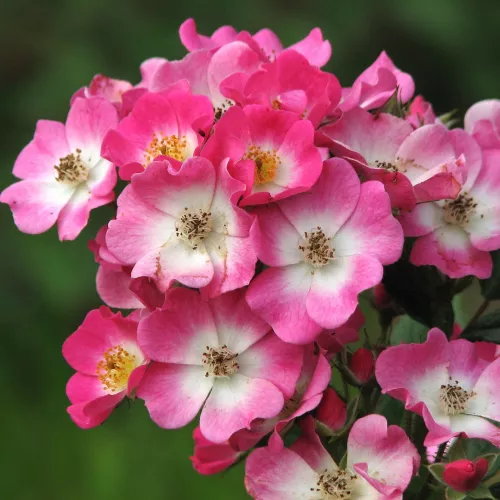
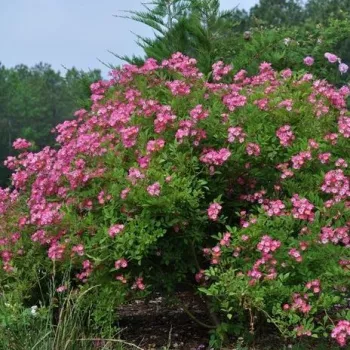
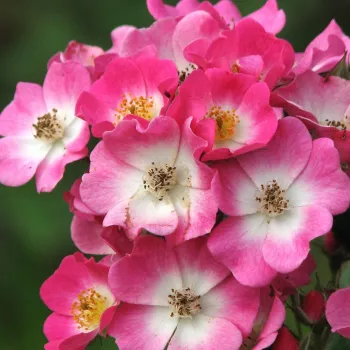
With its airy clusters of pink and white blooms, MOZART creates a relaxed, cottage atmosphere that suits classic British front gardens and informal family borders. This upright shrub forms a generous, rounded structure, flowering freely through summer with a dependable second flush that keeps the garden looking lively without demanding complicated care. The single flowers are rich in accessible stamens, making the rose exceptionally pollinator friendly and ideal for gardeners who value bees and natural garden life. Its H7 hardiness and strong framework give reassuring long-term reliability, even in exposed gardens where wind and weather test plants over many years. As an own-root rose, MOZART matures steadily, building a stable, well-branched shrub that recovers well from pruning and supports a long ornamental lifespan. In a typical planting, you can expect roots to settle in the first year, strong new shoots in the second, and full, easy-care impact from around the third season onwards. It copes well with typical UK conditions, including heavier soils, provided planting allows for steady drainage, and is equally at home as a specimen, hedge, or mixed border partner in family gardens that need beauty without fuss.
Usage options
| Target area |
Reasoning |
| Front garden focal shrub |
MOZART’s tall, upright habit and lightly arching stems build a graceful, visible outline that stands out from the pavement without overpowering smaller spaces. The abundant flower clusters give a long season of colour with minimal dead-heading, creating a welcoming, well-kept impression for front‑garden owners. |
| Informal cottage-style border |
The soft pink-and-white bicolour flowers fit naturally among perennials and grasses, echoing classic cottage planting. Its relaxed, lightly airy structure weaves between other plants rather than forming a rigid wall, ideal where you want traditional charm but still need a tidy, manageable border for cottage‑style gardeners. |
| Low-maintenance flowering hedge |
Planted at recommended hedge spacing, MOZART knits into a light, flowering screen that needs only basic annual trimming to keep its line. The shrub form thickens steadily from the base, and own-root growth helps the hedge rejuvenate after pruning, supporting a long-lived, dependable boundary for busy homeowners. |
| Family garden backdrop planting |
Height and spread make this variety ideal for the back of a small bed or along a fence, providing a soft, flowery background to lawns and play areas. The single blooms clean reasonably well on their own, so the shrub stays presentable even if you do not keep up with every spent truss, suiting time‑pressed families. |
| Pollinator-friendly mixed planting |
The open, single flowers with exposed stamens are particularly attractive to bees and other beneficial insects, supporting a more vibrant garden ecosystem. By combining MOZART with nectar-rich perennials, you create a long-season food source without extra work, which is especially rewarding for wildlife‑minded gardeners. |
| Part-shade side garden or passage |
This shrub tolerates partial shade, so it fits well in narrower side gardens or between houses where sun is limited for part of the day. It still produces good flowering in these spots, adding colour and structure where many roses would struggle, giving more design flexibility to urban plot owners. |
| Container or large pot near the house |
In a substantial container of at least 40–50 litres, MOZART forms an elegant, upright shrub that brings colour closer to doors, patios, or seating areas. Own-root growth stabilises the plant over time, while moderate maintenance needs keep care straightforward for balcony‑and‑patio gardeners. |
| Robust long-term landscape planting |
With proven garden merit and strong winter hardiness, this shrub performs reliably year after year in everyday British conditions, provided the soil offers decent drainage rather than remaining waterlogged in heavy rain. Its enduring frame and steady flowering rhythm make planning easier for long‑term planners. |
Styling ideas
- Classic hedge rhythm – repeat MOZART along a front boundary with low box or lavender at its feet for a soft, traditional frame to the house – ideal for lovers of orderly yet romantic entrances.
- Cottage layer mix – place MOZART at the mid–back of a border with foxgloves, geraniums, and astrantia to create a relaxed, tiered cottage feel – perfect for those seeking gentle structure without strict formality.
- Pollinator corridor – combine MOZART with salvia, catmint, and verbena to form a long-season insect pathway – well suited to gardeners keen to support bees and butterflies in small urban plots.
- Patio statement pot – grow a single shrub in a 50-litre terracotta container, underplanting with trailing thyme or lobelia for a simple but showy accent – a good choice for patios where ground planting is limited.
- Naturalistic sweep – use loose drifts of MOZART interspersed with ornamental grasses and globe thistles for a light, meadow-inspired effect – appealing to gardeners who enjoy a relaxed, contemporary take on classic shrubs.
Technical cultivar profile
| Characteristic |
Data |
| Name and registration |
MOZART – park shrub rose from the Lambert collection, classic shrub exhibition class; unregistered cultivar name but widely traded and recognised under this established commercial designation. |
| Origin and breeding |
Bred by Peter Lambert, Germany, around 1936 from ‘Robin Hood’ × ‘Rote Pharisäer’; introduced by Peter Lambert in 1937 and now valued as a classic shrub rose for gardens and parks. |
| Awards and recognition |
Holds the RHS Award of Garden Merit (1993) and the American Rose Society Best Classic Shrub titles (1999, 2000), confirming durable ornamental value and reliable garden performance. |
| Growth and structural characteristics |
Upright shrub 140–200 cm tall and 130–190 cm wide, moderately thorny, with mid-green, slightly glossy foliage and corymbose flowering clusters; forms a well-branched, gently arching framework over time. |
| Flower morphology |
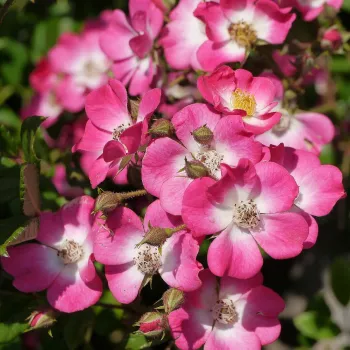
Single, flat blooms with 5–12 petals, small in size yet carried in generous clusters; remontant with a notably abundant second flush, maintaining a lively, scattered display through the main season. |
| Colour data and phenology |
Vivid crimson-pink outer petals with a clear white eye (RHS 68A, 155D); buds dark crimson-pink, fading to softer pink-lilac in sun while centres remain white, giving an attractive two-tone effect on the shrub. |
| Fragrance and aroma |
Light, muscat-like perfume with a mild, subtle character; not overpowering, but adds a gentle scented note around paths and seating areas when plants are grown in groups or near regular walkways. |
| Hip characteristics |
Produces moderate numbers of small, spherical, orange-red hips about 6–10 mm across in autumn, adding extra seasonal interest and supporting wildlife-friendly planting schemes. |
| Resistance and winter hardiness |
Hardy to approximately -26 to -23 °C (RHS H7, USDA 5b, Swedish Zone 4); disease resistance is medium for black spot, powdery mildew and rust, needing occasional monitoring and timely basic care. |
| Horticultural recommendations |
Best in well-drained soil with regular moisture; medium maintenance with some dead-heading and renewal pruning. Suitable for beds, hedges, specimen use and urban green spaces, including partial shade positions. |
MOZART offers relaxed cottage charm, dependable long-season colour and pollinator-friendly single blooms on a durable own-root shrub, making it a thoughtful choice for easy-going, long-lived planting in family gardens.