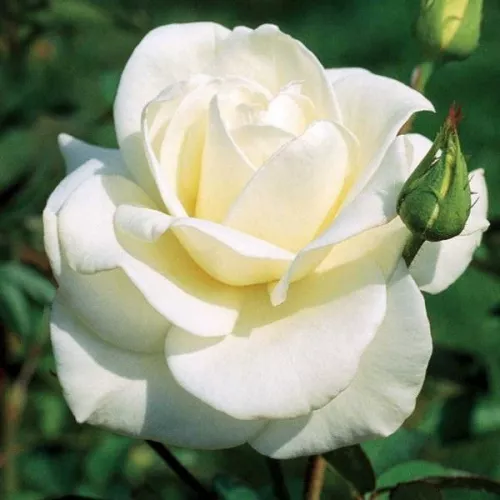
The open flower is a bright, pure white shade. A pinkish tone is barely detectable. - flowerbed grandiflora rose - medium-strength, well-scented rose - softly harmonious character
– Large, pure white blooms in elegant clusters.
– Reliable remontant flowering with plentiful repeats.
– Medium-strength, harmonious classic fragrance.
– Robust disease resistance for easier care.
– Hardy to H7, suitable for colder gardens.
– Special feature: Excellent for cutting, producing long, upright stems with showy blooms.
Climate-conscious choice – Customer-centric focus
pharmaROSA® ORIGINAL 2-litre own-root potted rose
18,20 £
Unfortunately, we are currently unable to ship to the United Kingdom; we only deliver to countries within the European Union. For more information, please contact us!
5(7710)
MOUNT SHASTA – white grandiflora bedding rose – Swim & Weeks
With its luminous white blooms and reliable performance, MOUNT SHASTA is an easy-going grandiflora that brings a clean, classic look to beds and borders without demanding expert care. Bred from ‘Queen Elizabeth’ and ‘Blanche Mallerin’, it forms an upright, moderately leafy bush that fits comfortably into typical British front gardens, coping well even where wind and rain are frequent and soils demand good drainage. Large, cupped, cluster-borne flowers open from softly pink-tinted buds to generous semi-double heads, offering a pleasantly fragrant presence and a plentiful second flush in summer. On its own roots it matures steadily into a stable, long-lived shrub, capable of gentle regeneration after harder pruning or weather damage. Disease resistant foliage helps keep the plant tidy with minimal spraying in ordinary family-garden conditions, while the long, straight stems provide elegant cut-flowers for the house. Given space to develop, this rose forms a balanced, upright structure, easy to integrate into cottage-style mixes or formal layouts, and it repays basic watering and feeding with season-long flowering.
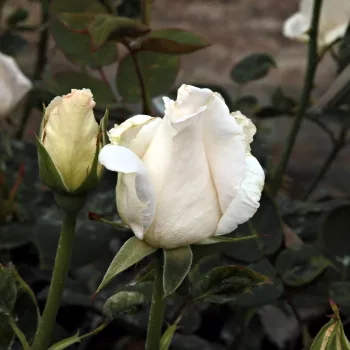
Mount Shasta rose in closed bud stage, showing a pale pearly pink bud with a pink centre.
Mount Shasta shows large, cupped, semi-double white blooms in clusters.
Usage options
Target area
Reasoning
Front garden feature rose
Planted as a single specimen by a path or entrance, MOUNT SHASTA’s upright habit and clear white flowers give a neat, welcoming presence with surprisingly little effort. Reliable disease resistance keeps foliage presentable between light annual trims, ideal for busy beginners.
Small bed in classic white scheme
In a modest front or side bed, a group of 3–5 plants at the recommended spacing creates a cohesive, all-white display that reads as intentional and tidy. The dependable repeat flowering means the bed stays interesting through summer for style-conscious homeowners.
Mixed cottage-style border
Among perennials and grasses, the rose’s clear white clusters act as a visual anchor without overpowering companion plants. Moderately thorny, upright growth keeps it from flopping into paths, which suits informal cottage borders managed by relaxed gardeners.
Cutting patch or kitchen-garden edge
Large, cupped blooms on strong stems make this rose well suited to casual cutting for indoor vases. Because it repeats freely, you can harvest flowers without leaving the plant bare, a reassuring trait for home flower arrangers.
Neighbour-friendly boundary or low hedge
Planted in a row at hedge spacing, the uniform height and upright structure form a soft, floral boundary that remains airy rather than oppressive. Its moderate prickliness is enough to discourage trampling yet manageable for family households.
Low-maintenance family corner
In family gardens where time is short, this rose’s strong disease resistance means fewer treatments and less worry about unsightly leaves. Occasional deadheading and a simple winter prune are normally enough to maintain good display for time-poor owners.
Own-root long-term planting
As an own-root shrub it builds a secure framework over several seasons, responding well to harder renewal pruning if ever neglected. This more forgiving growth pattern suits evolving small gardens planned by long-view gardeners.
Raised bed on heavier soils
In areas with heavier ground, set into a raised or improved bed, its upright habit and strong root system cope well with typical British wet spells and breezier sites, even where good drainage has to be created, reassuring for challenging-plot owners.
Styling ideas
Pathway focus – Place a single MOUNT SHASTA near the front gate, underplanted with low blue fescue, for a clean white focal point – ideal for homeowners wanting easy daily impact.
White-on-white – Group 3 roses in a small bed with dwarf irises and pale gravel mulch to emphasise the clear white blooms – suitable for those favouring a minimalist palette.
Cottage mix – Thread plants through a cottage border with low daylilies and airy perennials, using the upright structure as a white anchor – appealing to relaxed, cottage-style gardeners.
Cutting row – Line a sunny veg-plot edge with a short row, leaving access for picking long stems for vases – perfect for keen home florists who like regular bunches.
Raised elegance – Plant in a 40–50 litre terrace container or raised bed, pairing with silver foliage and lavender for a refined, low-spray display – suited to busy urban balcony and patio owners.
Technical cultivar profile
Parameter
Data
Name and registration
Grandiflora, hybrid tea type bed rose marketed as MOUNT SHASTA – white grandiflora bedding rose – Swim & Weeks; exhibition name Mount Shasta; part of the flowerbed rose collection.
Origin and breeding
Bred in the United States by Herbert C. Swim and Orville L. Weeks, Weeks Roses; cross of ‘Queen Elizabeth’ × ‘Blanche Mallerin’; introduced and registered in 1963 by Conard-Pyle.
Growth and structural characteristics
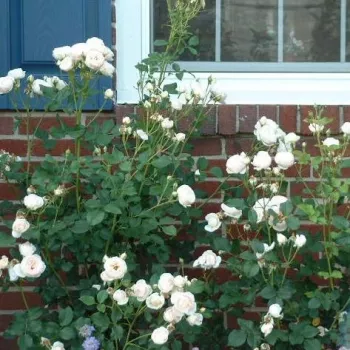
Upright, moderately thorny shrub, 90–130 cm tall and 80–120 cm wide, with moderately dense, slightly glossy grey-green foliage; spent blooms often need manual removal for best appearance.
Flower morphology
Very large, cupped, semi-double flowers in clusters, typically 13–25 petals; remontant habit with a good second flush, providing substantial mid-season display on established plants.
Colour data and phenology
Buds pearly pink with greenish edges; newly opened blooms ivory with a faint pink flush; open flowers bright white, later matt white with a light cream veil; good colour holding in sun.
Fragrance and aroma
Moderate, well-balanced scent with a softly harmonious character, noticeable at close range but not overpowering; suitable for seating areas and for cutting where a gentle perfume is desired.
Hip characteristics
Produces moderate numbers of ovoid, orange-red hips, about 10–14 mm diameter; ornamental in late season, though typically secondary to the main use as a cut and bedding rose.
Resistance and winter hardiness
Shows good resistance to powdery mildew, black spot and rust in typical garden conditions; hardy to approximately -21 to -18 °C (RHS H7, USDA 6b, Swedish zone 3), suitable for most UK climates.
Horticultural recommendations
Best in full sun with well-drained soil; recommended distances: 65 cm for mass beds, 60 cm for hedging, 100 cm as specimen; allow 2.4–2.7 plants/m² according to layout for balanced coverage.
MOUNT SHASTA offers reliable flowering, strong disease resistance and elegant cut blooms on a long-lived own-root shrub, making it a thoughtful choice if you seek a quietly dependable white rose.
Detailed product attributes
Product Identification Data
Product Name:
MOUNT SHASTA – white grandiflora bedding rose - Swim & Weeks
Product Type:
pharmaROSA® ORIGINAL - 2-litre own-root potted rose
Pollinator Attraction:
Semi-double flowers (13–25 petals) with partially obscured stamens offer reduced access to pollen and nectar, so they only moderately attract pollinators.
Pollinator-Friendly Rating:
Its semi-double (13–25-petalled) flowers are moderately attractive to pollinators, so it is only partially pollinator-friendly.
Our product is a rose grown with pharmaROSA®’s unique cultivation technology!
2-litre, own-root, potted rose.
With a shoot system appropriate to the season.
With a root system that thoroughly permeates the growing medium.
Quality compliant with the requirements of the E.N.A. (European Nurserystock Association).
Supplied in unique packaging that prevents damage.
Can be planted during frost-free periods.
True-to-variety rose bush with a unique identifier.
The pharmaROSA® own-root potted rose is a well-rooted plant that supports reliable establishment when planted and cared for properly, so it can be planted whenever the soil is not frozen.
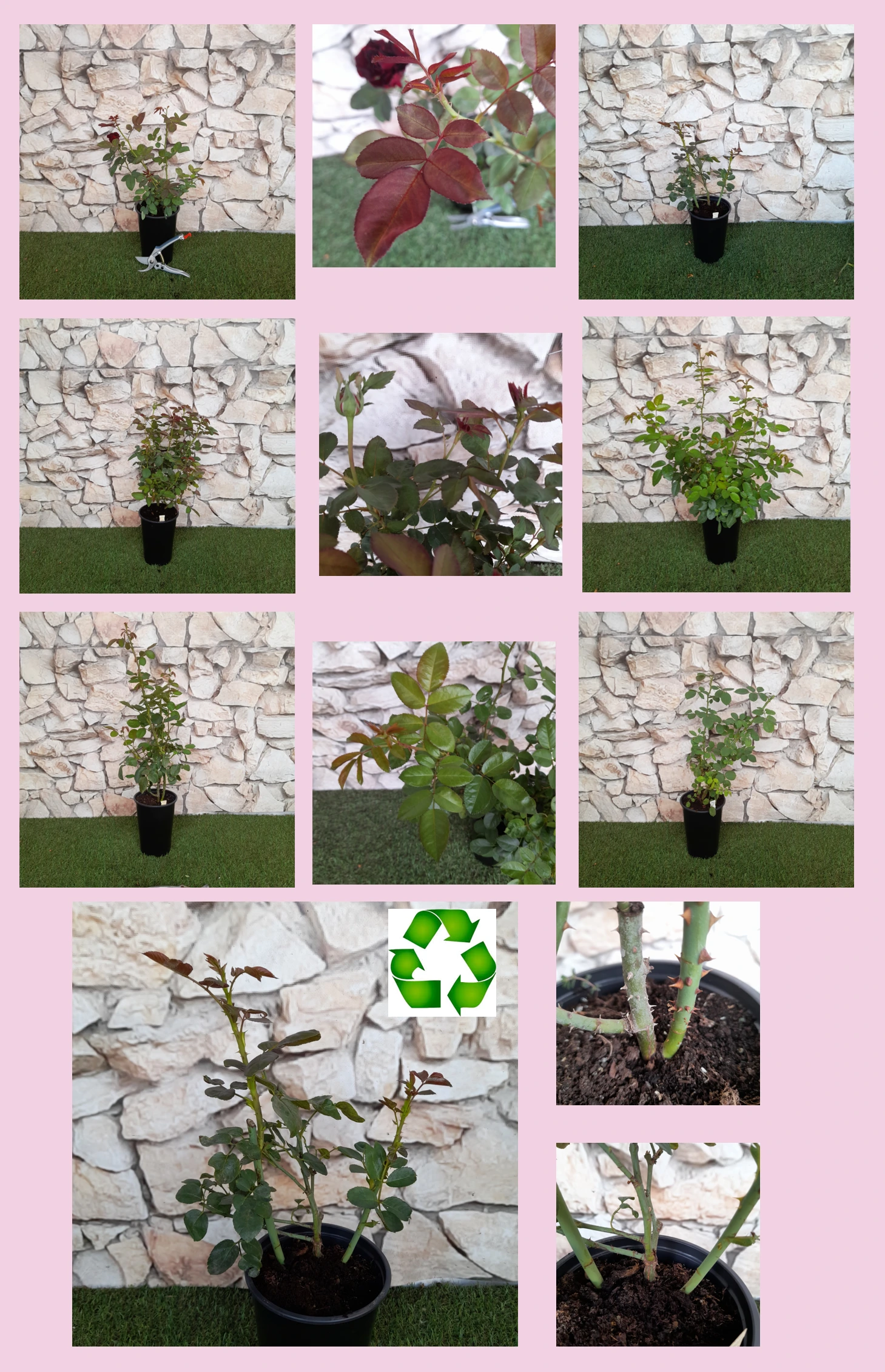
Crop overview: several varieties and growth stages in a short crop section.Shoot system: intensive growth of fresh basal shoots on a young plant.Root system: demonstration of a vigorous root system permeating the growing medium, by removing the pot.Balance: mature plant with root system and shoots in harmony with each other.
Information about the videos
The video series is not a “seasonal showcase”; it illustrates the essence of pharmaROSA® own-root cultivation in a tangible way: how the plant is built up, what the root system is like and how the shoot system regenerates. The recordings were therefore made at different times and with plants at various stages of development, so mixed foliage levels and differing stages of growth may appear in the videos. They are not a ‘sample’ of the batch dispatched, but a visual explanation of how the technology works. The current condition of the rose available to order — typical for the given period and similar to what you can expect to receive in the parcel — is shown in the upper part of the product page.
Pages for private customers Garden roses for the family garden, with minimal care → ORIGINAL® Premium garden roses – instant impact, a truly showpiece garden → EXTRA® Pages for professionals and private customers Roses for public spaces – large areas, sustainable maintenance → NATURAL® Roses for projects – hedge and row planting, fast implementation → RAPID® For professional partners only Production – propagation material for garden roses, wholesale → NEONATAL®
Company details
PharmaRosa Ltd. Company registration number: 01-09-717479 VAT number: 13075314-2-43 Plant health registration no.: HU130721 Bank account (IBAN): HU85117631891388688400000000 BIC (SWIFT): OTPVHUHB Bank name: OTP Bank Nyrt.