Moonsprite – cream-yellow bedding floribunda rose
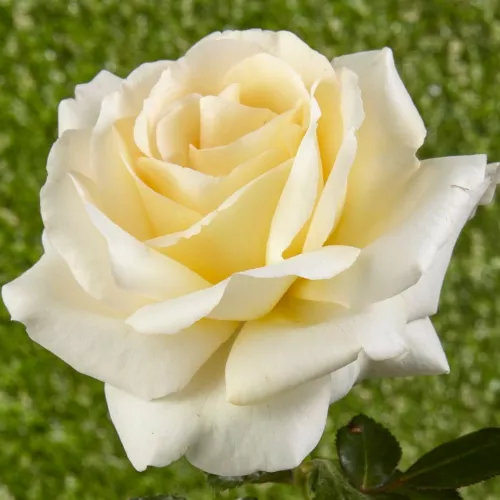
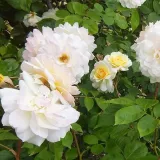
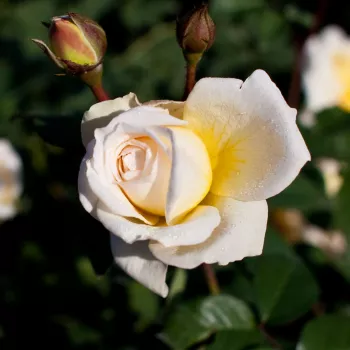
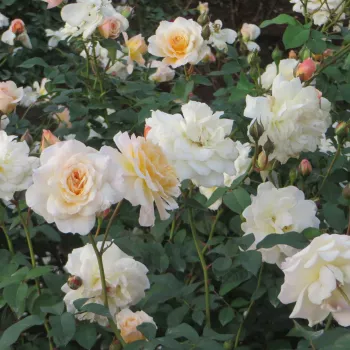
Moonlit borders and classic cottage-style front gardens suit Moonsprite perfectly, its compact habit and medium height giving balanced structure in small family plots even where strong winds and rain demand good plant anchoring. Clusters of cup-shaped blooms open in a rich buttery cream-yellow that softens to near white, creating a gentle, romantic glow against dark foliage all summer with a generous second flush. The flowers carry a surprisingly strong, fresh citrus fragrance, adding an uplifting note near paths, doorways and seating areas without demanding complex care. On its own roots it settles steadily, building a durable, well-shaped bush that responds well to simple pruning over the years, and with patient, regular watering and feeding you see roots establish in the first season, confident top growth in the second, and full ornamental value by the third, making Moonsprite a reassuringly reliable, long-lived and manageable choice for tidy, low-fuss beds in everyday gardens.
Usage options
| Target area |
Reasoning |
| Front garden feature bed by the entrance |
Moonsprite’s compact, bushy structure and medium height create a well-defined, tidy presence beside a path or front door without overwhelming a small space. The creamy-yellow clusters age to soft white, giving a refined, welcoming look that remains attractive even as flowers fade. Self-cleaning is moderate, so only occasional deadheading is needed to keep the plant neat, ideal for those who want a smart entrance with limited time for upkeep. Perfect for style-conscious beginners. |
| Small cottage-style mixed border |
The floribunda habit produces repeated flushes of medium-sized, cup-shaped blooms that weave naturally among perennials and grasses, echoing traditional cottage gardens in a manageable form. Its moderate spread of around 60–85 cm fits comfortably in mixed borders without crowding companions. With basic feeding and seasonal pruning, Moonsprite flowers reliably from early summer onwards, offering steady colour without elaborate care routines. Well suited to relaxed cottage-plan homeowners. |
| Low bedding groups in front of taller shrubs |
Planted in groups of three to five, Moonsprite forms a coherent, low bedding line in front of taller evergreens or flowering shrubs, softening their base and providing a long season of light-toned colour. Recommended spacings make it simple to achieve a full but not overcrowded effect. Own-root growth builds into a stable, long-lived stand that can be refreshed with straightforward pruning rather than frequent replacement. A practical option for busy families. |
| Edging along garden paths and drives |
The bushy, moderately dense foliage and frequent flowering give clear definition to paths and drives while keeping maintenance manageable. Occasional deadheading and a light yearly prune are usually enough to retain shape and flowering performance. On its own roots, Moonsprite adapts well to typical British soils and settles into a durable edging that does not require expert attention. A reassuring choice for time-pressed urban gardeners. |
| Urban and coastal family gardens |
Moonsprite copes well with exposed, breezy positions where compact growth and a sound root system help the plant stand firm through wet, windy spells common in many UK neighbourhoods. Its moderate disease resistance, particularly good black spot tolerance, supports low-chemical, easy-care planting schemes when combined with decent air circulation. A good fit for design-aware but practical city and coastal owners. |
| Simple rose hedge or low divider |
Using the closer hedge spacing, Moonsprite can form a low, informal dividing line between lawn and border or around a seating area. The repeat-flowering clusters provide soft colour and scent through summer, while the moderate prickliness offers gentle deterrence without creating an impenetrable barrier. Own-root plants respond well to renewal pruning, so older hedging can be rejuvenated rather than replaced. Ideal for long-term planning planners. |
| Large containers on patios and terraces |
In a well-drained pot of at least 40–50 litres, Moonsprite becomes a compact patio focal point, giving creamy-yellow clusters and citrus fragrance close to seating areas. Container culture allows easy control of soil and watering in regions with heavier clay, reducing worry about drainage. With an annual feed and simple winter prune, it continues to perform attractively for many years. A strong candidate for low-fuss patio-rose enthusiasts. |
| Low-input breathable garden schemes |
Moonsprite’s moderate disease resistance, particularly against black spot, and its steady own-root growth suit planting plans aiming for reduced spraying and simpler, “breathable” borders. Combined with airy grasses and drought-tolerant perennials, it contributes structure and repeat flowering as long as it receives regular watering during dry spells, as it will not tolerate extended drought without support. A sound option for environmentally aware households. |
Styling ideas
- Cottage Glow – combine Moonsprite with soft pink campion, catmint and salvias for a pastel, free-flowering cottage strip by the front path – ideal for lovers of traditional charm with limited time.
- Moonlit Border – set small groups of Moonsprite in front of dark evergreens to highlight the creamy-yellow clusters and strong fragrance near entrances – suited to homeowners seeking evening garden atmosphere.
- Soft Hedge – plant a loose line along a lawn edge, interspersed with low ornamental grasses, to create a gentle boundary that remains attractive with simple annual pruning – perfect for practical family gardens.
- Patio Focus – grow a single plant in a 50-litre terracotta pot with trailing thyme or lobelia at the rim for colour and scent by a seating area – a good solution for small urban terraces and balconies.
- Breathable Mix – weave Moonsprite among airy grasses and blue-flowering shrubs such as English bluebeard to create a low-chemical, light-toned planting – appealing to environmentally conscious, design-minded gardeners.
Technical cultivar profile
| Parameter |
Data |
| Name and registration |
Floribunda bedding rose; registered cultivar name ‘Moonsprite’, current trade name “Moonsprite Bedding rose Moonsprite”; American Rose Society exhibition name Moonsprite; unregistered in formal registries. |
| Origin and breeding |
Bred by Herbert C. Swim (Armstrong Nurseries, California, USA) from ‘Sutter’s Gold’ × ‘Ondine’; introduced in 1956 in the United States as a bedding floribunda for garden and landscape use. |
| Awards and recognition |
Recognised mid‑century for garden and exhibition value, including a gold medal at Baden-Baden (1955) and a gold medal in Rome (1956), confirming its ornamental quality and stable performance. |
| Growth and structural characteristics |
Bushy shrub reaching around 80–105 cm high and 60–85 cm wide, with moderately dense, dark green, slightly glossy foliage and moderate prickles; clusters build an even, balanced bedding presence over time. |
| Flower morphology |
Medium-sized, very double, cup-shaped blooms with over 40 petals, borne in clusters on floribunda-style trusses; remontant habit with a particularly generous second flush, offering prolonged seasonal display. |
| Colour data and phenology |
Cream-yellow flowers, RHS 11D outer and 12C inner; buds open buttery yellow, then soften to cream and finally near white with a faint sheen; colour retention is weak but creates subtle tonal changes as blooms age. |
| Fragrance and aroma |
Strong, distinctive scent with a full, fresh citrus character, noticeable in still air and ideal for planting near paths or seating; highly double flowers are ornamental rather than aimed at pollinator support. |
| Hip characteristics |
Occasional spherical hips, approximately 8–12 mm in diameter, colouring orange-red; they add a modest seasonal interest but are not a major ornamental feature compared with the repeat-flowering display. |
| Resistance and winter hardiness |
Moderate overall disease resistance with good black spot tolerance and moderate response to mildew and rust; hardy to about −21 to −18 °C (RHS H7, Swedish Zone 3, USDA 6b), suitable for most UK regions. |
| Horticultural recommendations |
Best in full sun with well-drained soil; plant 40–75 cm apart depending on use. Requires regular watering in dry spells, plus simple annual pruning and occasional deadheading for tidy, long-lasting garden performance. |
Moonsprite offers compact, reliable flowering, refined creamy-yellow colour and strong citrus fragrance on a durable own-root framework, making it a thoughtful choice for those planning a long-lived yet easy-going rose planting.