MISS PIGGY – apricot-yellow hybrid tea rose – Voorn
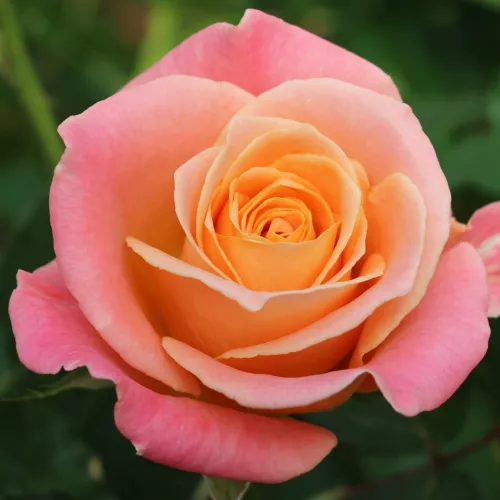
This hybrid tea brings a touch of glamour to everyday gardens, combining sumptuous, cut-flower style blooms with practical, reliable performance. Its upright, compact habit suits smaller front gardens and neat borders, while the dense foliage and almost thornless stems make it especially family friendly around paths and seating areas. Strong, classic rose fragrance adds romance to cottage-style schemes, and its remontant nature ensures repeat flushes from early summer onwards with only basic deadheading. On its own roots it settles steadily and withstands typical British wet spells and breeze by benefiting from good drainage in heavier soils and exposed spots, offering longevity and dependable ornamental value. Expect roots to establish in the first year, fuller shoots and flowering in the second, and the rose reaching its full garden presence by the third for lasting impact.
Usage options
| Target area | Reasoning |
|---|
| Front garden focal point |
The tall, upright habit and high‑centred flowers make a striking vertical accent beside a front path or doorway, while the dark green foliage forms a tidy backdrop. Strong fragrance greets you as you pass, giving beginners an impressive yet manageable feature plant, especially for the style-conscious beginner. |
| Small mixed border in a family garden |
Its compact spread fits neatly into narrow borders with perennials such as meadow sage and lady’s mantle, adding peach‑pink colour and form without overwhelming the space. Consistent, remontant flowering rewards simple routine care, ideal where you want long seasons of interest with few tasks for the busy homeowner. |
| Cottage-style planting with classic partners |
The warm peach and pink tones blend beautifully with soft blues, creams and dusky purples in relaxed cottage schemes, echoing traditional cut‑rose charm. Dense foliage and strong stems support the blooms, giving structure among looser perennials and ornamental grasses for the cottage-garden lover. |
| Cutting patch or cutting corner |
High‑centred, pointed buds and long, nearly thornless stems are ideal for vases and arrangements, offering a homegrown replacement for florist blooms. Regular cutting naturally encourages fresh growth and further flowering, suiting gardeners who enjoy bringing flowers indoors, including the home flower-arranger. |
| Low-maintenance rose bed for beginners |
Good resistance to black spot, mildew and rust, together with moderate water needs, keeps chemical interventions and complex routines to a minimum. Own‑root growth provides steady recovery after pruning or weather damage, providing reassurance for those wanting a “plant and enjoy” approach, particularly the first-time rose owner. |
| Specimen in a large container |
When planted in a generously sized container of at least 40–50 litres with quality compost, its upright form and fragrant blooms create a movable highlight on terraces or patios. This makes it easy to enjoy and look after close to the house, an advantage for the balcony-and-patio gardener. |
| Structured planting along paths or drives |
Regular spacing along a drive or path creates a refined, almost formal line of colour and scent, while the compact habit keeps growth within bounds. The plant’s adaptability on its own roots supports a long‑lived, balanced row with only annual pruning for the order-loving planner. |
| Weather-resilient family border |
This variety copes well in typical British summers when given reasonable drainage, making it useful where beds meet heavier soil and occasional wind exposure, provided the site is not waterlogged. Strong foliage and sturdy stems help maintain an attractive outline for the practical family gardener. |
Styling ideas
- Doorway-Drama – Plant as a single specimen in a narrow bed by the front door, underplanted with low lady’s mantle to catch fallen petals – ideal for homeowners seeking a refined welcome.
- Cottage-Blend – Combine with meadow sage, foxgloves and soft pink campanulas for a layered cottage border that repeats flowering through summer – perfect for romantic cottage-garden enthusiasts.
- Pastel-Patio – Grow one plant in a 50‑litre terracotta pot with trailing thyme and soft grey foliage for an elegant yet easy patio feature – suited to balcony and small-terrace gardeners.
- Cutting-Row – Line out several plants in a sunny strip, spacing evenly for straight, accessible stems that supply fragrant blooms for the house – aimed at keen home florists.
- Family-Frame – Use in pairs to frame a bench or play-lawn corner, relying on the almost thornless stems and compact habit to stay child-friendly – designed for young-family garden owners.
Technical cultivar profile
| Name and registration |
MISS PIGGY – apricot-yellow hybrid tea rose – Voorn; hybrid tea rose for garden and cutting use, derived from Lex+ breeding, recognised under the American Rose Society exhibition name ‘Miss Piggy’. |
| Origin and breeding |
Bred by Lex Voorn of Lex+ in Germany, with parentage undisclosed; introduced and registered in 2010 as a modern hybrid tea rose suited to both ornamental plantings and quality cut-flower production. |
| Awards and recognition |
Recipient of the Fleur Première – Best New Variety award at Horti Fair, Amsterdam, in 2010, reflecting its strong commercial potential as a cut-flower type with refined form and colour. |
| Growth and structural characteristics |
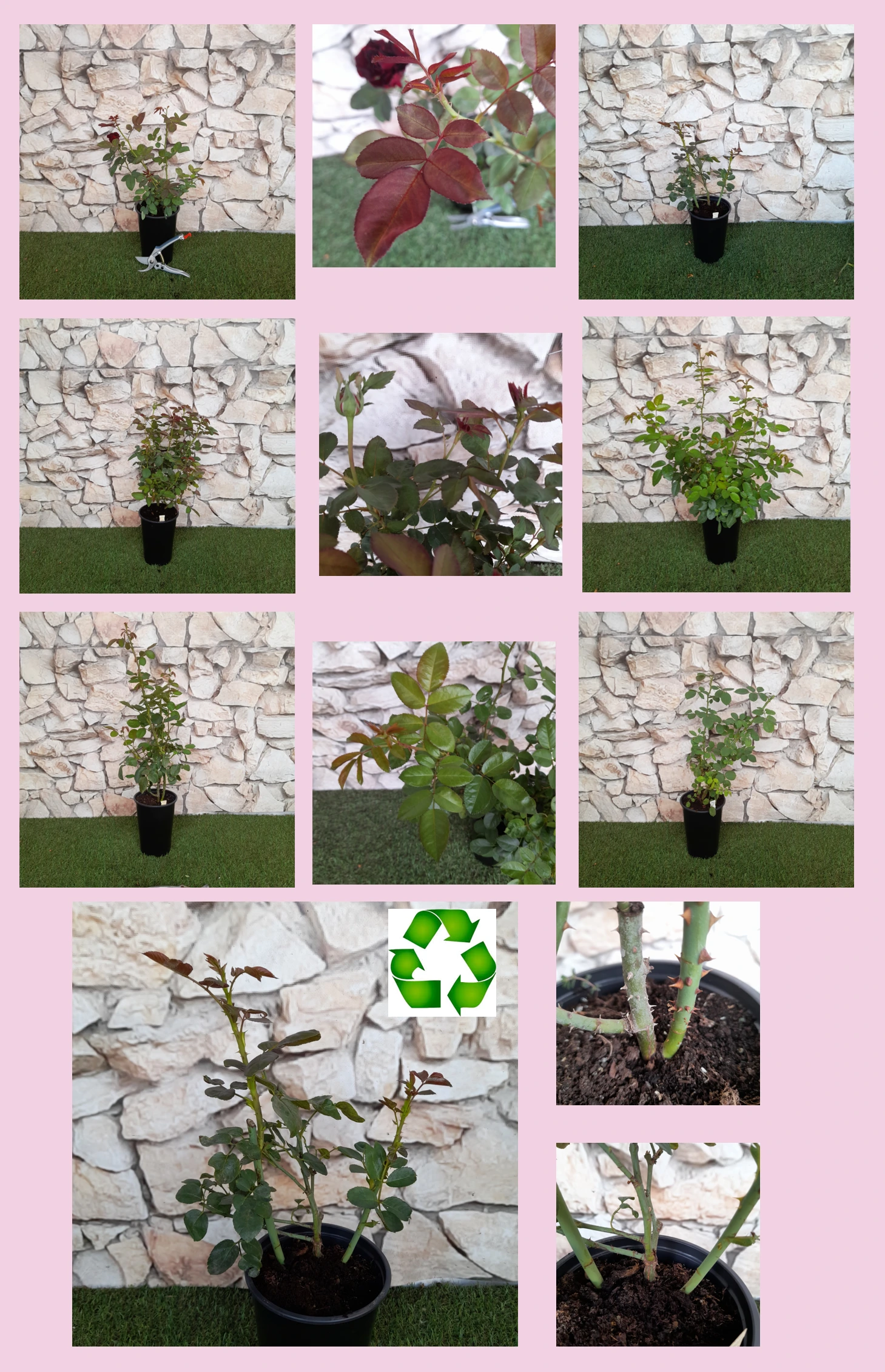
Upright, compact bush 120–160 cm high and 50–70 cm wide, with dense, matt, dark green foliage and comparatively few thorns, forming a vertical accent suitable for beds, borders and containers. |
| Flower morphology |
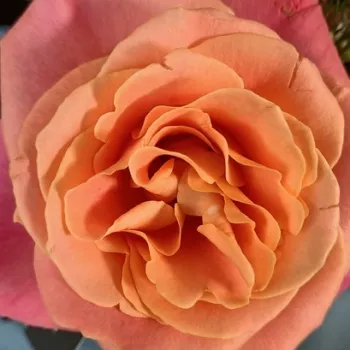
Large, high‑centred, pointed buds opening to semi‑double, cut‑rose style blooms with approximately 13–25 petals; predominantly solitary on stems, providing classic hybrid tea form suited to cutting. |
| Colour data and phenology |
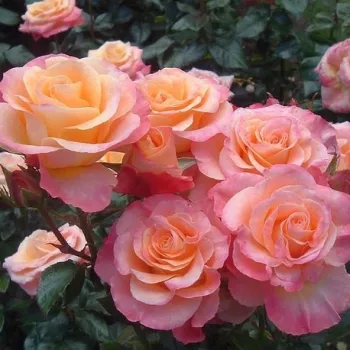
Warm peach‑yellow centres with pink outer petals; buds powder‑rose pink with peach blush, maturing through golden‑peach to powder‑pink–cream as blooms age, giving a gentle two‑tone effect over time. |
| Fragrance and aroma |
Strong, full, classic rose scent appreciated in both garden and vase; the fragrance is rich enough to be noticed at close range and around seating areas, enhancing sensory appeal during warm, still days. |
| Hip characteristics |
Hip set is usually sparse because of the semi‑double, cut‑rose type flowers; when formed, hips are small, ellipsoidal, about 10–14 mm across, and bright red, adding modest late‑season interest. |
| Resistance and winter hardiness |
Hardy to approximately –23 to –21 °C (RHS H7; Swedish zone 3; USDA 6a), with good resistance to black spot, powdery mildew and rust when sited in sun and given appropriate cultural care. |
| Horticultural recommendations |
Prefers full sun, fertile, well‑drained soil; space plants 50–90 cm apart depending on use, with 2.8–3.2 plants/m² for massing. Deadhead spent blooms and water regularly in dry spells to sustain flowering. |
MISS PIGGY offers fragrant, florist-style blooms, compact upright growth and dependable disease resistance on its own roots, making it a graceful, long-lived choice for those planning an easy-care yet elegant garden feature.