Historic Rose

52-551-1
52-551-2

Minnehaha

Historic rose

- – Michael Henry Walsh

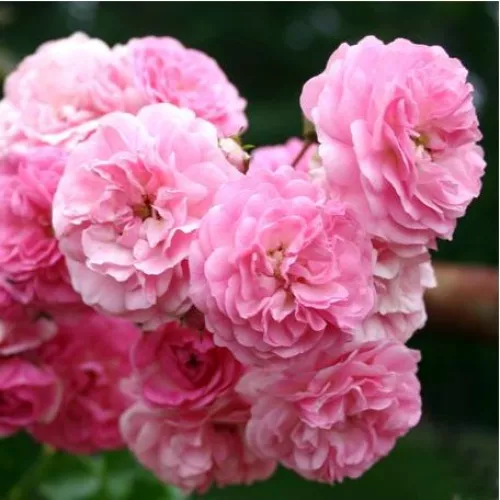
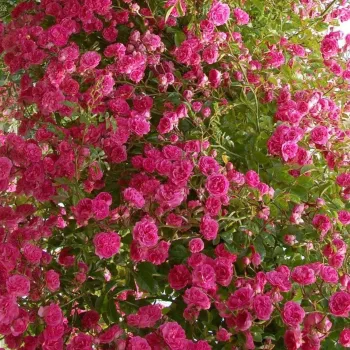
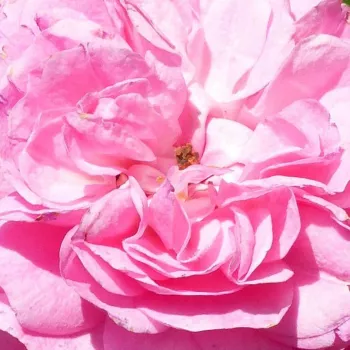
Even, rich pink tone that slightly lightens towards the centre of the petals. - historic - rambler, climbing - creeping rose - very weak, barely noticeable scented rose - rosy character

– Historic rambler with romantic garden charm.
– Masses of double pink pompon blooms.
– Vigorous climber for arches, walls, trees.
– Dense, glossy dark green foliage effect.
– Good resistance to mildew and black spot.
Special feature: Over a century-old 1904 Walsh rambler, ideal for traditional and period gardens.
Long-lasting presence – Familiar garden experience
Minnehaha
pharmaROSA® ORIGINAL 2-litre own-root potted rose
19,20 £
Unfortunately, we are currently unable to ship to the United Kingdom; we only deliver to countries within the European Union. For more information, please contact us!
5 (6967)
facebook   twitter

Minnehaha – pink historic rambler for arches, fences and pergolas

Historic charm meets modern reliability in Minnehaha, a vigorous rambler bred in 1904 that still earns its place in today’s family gardens. Masses of soft pink, pompon-like blooms create a romantic cascade effect over arches, fences and pergolas, offering a classic cottage-garden look with surprisingly low maintenance. Its strong disease resistance and hardy nature suit typical UK conditions, even where damp air and wind demand good fungal tolerance. As an own-root plant, it settles in steadily and builds a long-lived, stable framework that responds well to light pruning rather than complex regimes. Over time, you will see roots establish, then shoots extend, and by the third year the rose reaches its full impact in flower and foliage, giving you enduring, atmospheric coverage with little need for intervention.


Usage options

Target area Reasoning
Pergolas over seating or paths Minnehaha’s long, climbing canes and dense foliage are ideal for covering pergolas, forming a cool, green tunnel studded with soft pink clusters in early summer. Once trained, it asks little more than an annual tidy, while its own-root vigour ensures a durable framework that recovers well from pruning cuts or occasional weather damage – especially suited to those wanting a lasting feature with modest upkeep, such as the busy homeowner.
Garden arches and entrance walkways This rambler’s abundant clustered flowers create a charming, old-fashioned welcome when trained over arches at front-garden gates or path entries. Its reliable once-a-year display offers maximum visual reward for minimal routine care, and the historic, cottage-style character blends beautifully with classic British planting along front boundaries – especially appealing to lovers of period looks and cottage-garden ambience.
Fences and boundary lines With a height potential of 4,5–7 m and a 2–3,5 m spread, Minnehaha quickly clothes wire, timber or post-and-rail fencing, softening hard boundaries and improving privacy. Its dark, glossy foliage remains attractive after flowering, giving year-round structure, while disease resistance reduces the need for spraying or specialist care, making it suitable for long fence runs in family gardens for the time-pressed gardener.
Wall training on garages and outbuildings Trained on horizontal wires, Minnehaha forms sweeping, flowering garlands across walls, sheds and garages, turning functional structures into standout garden features. Its tolerance of typical British humidity and its generally healthy foliage reduce unsightly disease patches, while own-root stamina supports a long life, so you can invest in training once and enjoy the effect for years – ideal for practical, design-minded owners.
Large trees and mature shrubs as living supports The variety’s rambling, climbing habit allows it to be threaded into strong, established trees or large shrubs, where it can cascade through the canopy with curtains of pink in early summer. Its relatively low maintenance needs suit less accessible spots, and the own-root base provides long-term anchoring, important where wind exposure is higher and flexible, resilient growth is needed – a good choice for adventurous but time-limited gardeners.
Large-area ground covering on banks or slopes Minnehaha’s vigorous, creeping-climbing habit can be used on gentle banks or wide borders where it is allowed to sprawl over the ground, smothering the area with foliage and seasonal flower. Once established and lightly managed, it suppresses many weeds and provides a durable, low-maintenance green carpet with seasonal colour, fitting gardens where easy care and broad visual coverage are more important than frequent interventions for the relaxed beginner.
Historic and cottage-style mixed borders The romantic pink clusters and heritage background make Minnehaha particularly at home in cottage-style schemes with perennials and shrubs. Its flowering offers a strong early-summer highlight that complements foxgloves, hardy geraniums or old-fashioned perennials, while its hardy, disease-resistant nature supports long-term planting plans without constant replacement – reassuring for those building a classic border slowly over several seasons for the traditionalist enthusiast.
Park-style and large family gardens Designed historically for large spaces, this rambler excels in bigger family gardens and park-style layouts, where it can freely climb, drape and cover structures or trees with minimal fuss. Its robust health and frost-hardy constitution reduce worry about difficult winters, even in exposed sites, and its own-root resilience supports long-term plantings that become part of the garden’s permanent fabric – well suited to low-intervention, long-horizon planners.

Styling ideas

  • Romantic pergola avenue – Train Minnehaha along a series of pergola arches, underplant with soft Nepeta and hardy geraniums to echo the pastel pink flowers – ideal for homeowners seeking an easy-care, storybook entrance.
  • Cottage front-garden frame – Let Minnehaha climb a simple metal arch at the gate, with lavender and catmint at its feet to provide scent and bees beneath the once-flowering clouds – perfect for lovers of classic cottage kerb appeal.
  • Softened boundary fence – Use Minnehaha along a long fence run, interplanted with dwarf yew and St John’s wort for evergreen structure and golden contrast – suited to families wanting privacy and charm without complex maintenance.
  • Tree-draped canopy – Thread canes into a sturdy small tree, letting pink garlands hang among the branches while ground-level perennials fill in below – a good option for gardeners wanting vertical drama with limited ongoing work.
  • Bank and slope unifier – Allow Minnehaha to spill over a sunny bank, combined with low-growing herbs like Helichrysum italicum for silver foliage and fragrance – recommended for those needing broad coverage with a relaxed, natural look.

Technical cultivar profile
Parameter Data
Name and registration Rambler, Hybrid Wichurana historic rose; registered cultivar name Minnehaha, used in commerce as Minnehaha Historic rose Minnehaha; unregistered with the ARS beyond exhibition naming.
Origin and breeding Bred by Michael Henry Walsh in the United States, 1904, from Rosa wichurana × ‘Paul Neyron’; introduced by Walsh’s Hardy American Roses from the Joseph Story Fay Estate, Woods Hole, MA.
Growth and structural characteristics Strong, climbing rambler with 4,5–7 m height and 2–3,5 m spread; dense, glossy dark green foliage, moderately thorny canes, suited to arches, pergolas, walls and trained tree use.
Flower morphology Small, double, ball to pompon-shaped flowers (0,5–1,5 in) with 26–39 petals, borne in clusters; once-flowering in early season rather than remontant, providing a single strong floral display.
Colour data and phenology Rich mid-pink blooms (RHS 62C outer, 65D inner) softening towards the centre; colour fades over time to very pale pink or near white, giving a gentle, pastel effect as clusters age on the plant.
Fragrance and aroma Light rosy character with very weak scent, often barely noticeable; primarily grown for visual effect and architectural coverage rather than for strong fragrance or cutting for indoor display.
Hip characteristics Limited hip set expected due to double flowers; small, spherical red hips around 5–8 mm in diameter (RHS 44A) may appear sporadically, adding minor seasonal detail late in the year.
Resistance and winter hardiness Generally good disease resistance with noted resistance to powdery mildew and black spot; moderate susceptibility to rust. Hardy to around −21 to −18 °C (RHS H7, Swedish Zone 3, USDA 6b).
Horticultural recommendations Best on supports such as arches, pergolas, fences, walls or trees; low maintenance but check for spring frost damage and rust. Space 1,45–2,7 m depending on use; inspect periodically and prune after flowering.

Minnehaha combines vigorous coverage, low maintenance and hardy reliability in an own-root form that settles for decades, making it a thoughtful choice for gardeners planning a long-lived, romantic feature.

Detailed product attributes

Product Identification Data

Product Name: MINNEHAHA – pink historic rambler, rambling-climbing rose - Walsh
Product Type: pharmaROSA® ORIGINAL - 2-litre own-root potted rose
Cultivar Authenticity: Verified:17.09.2025
Item Number: [278] 52-551 (14.02.2026) pharmarosa.co.uk

Name and Registration

Meaning of Cultivar Name: The name is a Dakota Native American term meaning “laughing water” or “waterfall”, and refers to the female protagonist of Longfellow’s poem “The Song of Hiawatha”.
Original Trade Name: Minnehaha
Current Trade Name: Minnehaha Historic rose Minnehaha
Rose Group: Rambler, Historical roses, Hybrid Wichurana
Commercial Type: historic - rambler, climbing - creeping rose
Commercial Group: Historical rose
Exhibition Category: exhibition rambler; large-area covering ornamental plant
Collection: Historic rose

Origin and Breeding

Initial Distributor: Walsh’s Hardy American Roses (United States)
Introduction Year: 1904 (USA)
Registration Year: unregistered cultivar
Breeder: Michael Henry Walsh
Breeding Company / Institution: Walsh’s Hardy American Roses (Joseph Story Fay Estate, Woods Hole, MA)
Breeding Year: United States, 1904
Parentage: Rosa wichurana × ‘Paul Neyron’

Growth and Structural Characteristics

Height: 14.8-23ft (450-700 cm)
Spread: 6.6-11.5ft (200-350 cm)
Growth Habit: climbing
Foliage: The variety has dense foliage; the leaves have a glossy surface and a dark green colour (RHS 139A).
Prickliness: moderately thorny
Self-Cleaning Description: No information on self-cleaning.
Self-Cleaning Intensity: No data on self-cleaning strength.

Flower Morphology

Petal Count: 26-39
Flower Fullness: double flowered
Flower Shape: ball, pompon
Flower Size: S (0,5-1,5 in)
Inflorescence Type: clustered
Colour Code: ARS code: MP RHS code: 62C (outer), 65D (inner)
Repeat Flowering: Not remontant, blooms once.

Colour Data and Phenology

Colour: pink
Flower Colour Description: Even, rich pink tone that slightly lightens towards the centre of the petals.
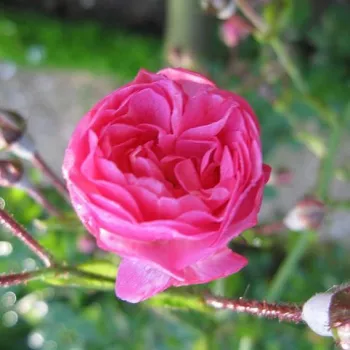
Closed Bud: Vibrant, deep pink surface with a slightly glossy sheen.
Newly Opened Flower: Mid-pink petals with a paler pink centre.
Full Bloom: Soft pastel pink with a delicate fading on the outer petals.
Before Fading: Pale, almost white-pink with a pronounced whitening edge.
Colour Fading Description: Over time the deep pink fades to almost white.

Fragrance and Aroma

Fragrance Strength: very weak, barely noticeable scented rose
Fragrance Character: rosy character
Pollinator Attraction: The heavily double flower form and largely inaccessible stamens of the small blooms make this variety only weakly attractive to pollinators.
Pollinator-Friendly Rating: Double flowers partially cover the stamens, attracting pollinators only to a limited extent; primarily an ornamental variety.

Hip Characteristics

Hip Shape: spherical
Hip Colour: red (RHS 44A)
Hip Comment: Rose hip formation is expected to be limited due to the double flowers; the rose hip is spherical, 5–8 mm in diameter, red (RHS 44A).

Resistance and Hardiness

Hardiness (°C): -21–-18 °C
Heat and Drought Tolerance Description: No data are available on heat–drought tolerance.
Disease Resistance: resistant
  • powdery mildew – resistant
  • black spot – resistant
  • rust – moderate

Horticultural Recommendations

Recommended Planting Distance: for mass planting: 170 cm, for hedging: 145 cm, as a specimen plant: 270 cm
Planting Density: in square planting 0,34 plants/m², in hexagonal arrangement 0,39 plants/m²
Maintenance Requirement: Maintenance requirement low; good disease resistance and generally requires little intervention, but has moderate susceptibility to rust, so occasional inspection/treatment may be advisable.
Primary Uses: pergola, arches, fence, wall, tree training, park

Comments

Strengths: Long-lasting presence – Familiar garden experience
Companion Plants: Hypericum Miracle - St John's wort Helichrysum italicum - Italian curry plant Taxus baccata (low-growing cultivars) - dwarf yew
Comment: Requires protection from spring frost.
MINNEHAHA – pink historic rambler, rambling-climbing rose - Walsh
Even, rich pink tone that slightly lightens towards the centre of the petals. - historic - rambler, climbing - creeping rose - very weak, barely noticeable scented rose - rosy character
Rose Shopping Online - pink - historic - rambler, climbing - creeping rose - Minnehaha - (14.8-23ft (450-700 cm))
Inflorescence: clustered Height: 14.8-23ft (450-700 cm) Flower shape: ball, pompon Winter hardiness: 6b pink - Walsh’s Hardy American Roses (United States) historic - rambler, climbing - creeping rose - Flower size: !- Flower size: !- - Height: 14.8-23ft (450-700 cm) Height: 14.8-23ft (450-700 cm) - Flower fullness: double flowered Minnehaha - Roses in the garden | pharmaROSA® Original - standard Michael Henry Walsh

We showcase the external appearance of the roses available for online purchase from our webshop.


Which product type is right for you?


Information

In what condition do we dispatch the rose from our online webshop?

Let us ask ourselves the question: What would I like to use the rose for?
Flower? – Location? – Screening? – Fragrance? – Height? – Breeder? – Rose hip?

Rose purchasing information
Methods of payment – Delivery charges – Delivery – Complaints handling

Care guide

Our product is a rose grown with pharmaROSA®’s unique cultivation technology!

2-litre, own-root, potted rose.
With a shoot system appropriate to the season.
With a root system that thoroughly permeates the growing medium.
Quality compliant with the requirements of the E.N.A. (European Nurserystock Association).
Supplied in unique packaging that prevents damage.
Can be planted during frost-free periods.
True-to-variety rose bush with a unique identifier.

The pharmaROSA® own-root potted rose is a well-rooted plant that supports reliable establishment when planted and cared for properly, so it can be planted whenever the soil is not frozen.


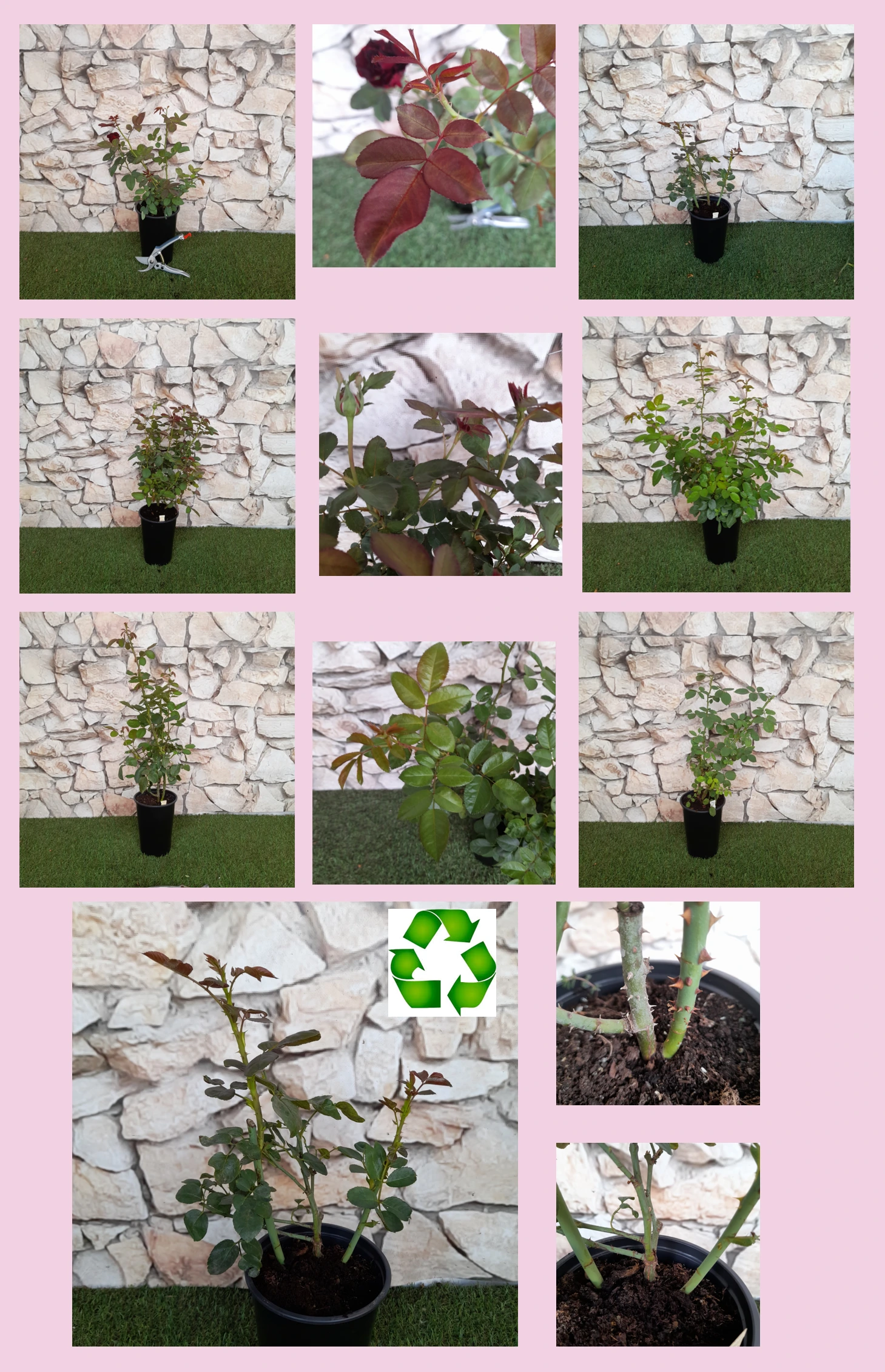
Crop overview: several varieties and growth stages in a short crop section.
Shoot system: intensive growth of fresh basal shoots on a young plant.
Root system: demonstration of a vigorous root system permeating the growing medium, by removing the pot.
Balance: mature plant with root system and shoots in harmony with each other.

Information about the videos
The video series is not a “seasonal showcase”; it illustrates the essence of pharmaROSA® own-root cultivation in a tangible way: how the plant is built up, what the root system is like and how the shoot system regenerates. The recordings were therefore made at different times and with plants at various stages of development, so mixed foliage levels and differing stages of growth may appear in the videos. They are not a ‘sample’ of the batch dispatched, but a visual explanation of how the technology works. The current condition of the rose available to order — typical for the given period and similar to what you can expect to receive in the parcel — is shown in the upper part of the product page.

pharmarosa.compharmarosa.ropharmarosa.skpharmarosa.co.ukpharmarosa.depharmarosa.sipharmarosa.czpharmarosa.atpharmarosa.frpharmarosa.plpharmarosa.hrpharmarosa.espharmarosa.bepharmarosa.nlpharmarosa.ptpharmarosa.lupharmarosa.iepharmarosa.grpharmarosa.bgpharmarosa.lvpharmarosa.ltpharmarosa.itpharmarosa.sepharmarosa.eepharmarosa.fipharmarosa.rupharmarosa.dk

Product types

Pages for private customers
Garden roses for the family garden, with minimal care  → ORIGINAL®
Premium garden roses – instant impact, a truly showpiece garden  → EXTRA®
Pages for professionals and private customers
Roses for public spaces – large areas, sustainable maintenance  → NATURAL®
Roses for projects – hedge and row planting, fast implementation  → RAPID®
For professional partners only
Production – propagation material for garden roses, wholesale  → NEONATAL®

Company details

PharmaRosa Ltd.
Company registration number: 01-09-717479
VAT number: 13075314-2-43
Plant health registration no.: HU130721
Bank account (IBAN):
HU85117631891388688400000000
BIC (SWIFT): OTPVHUHB
Bank name: OTP Bank Nyrt.