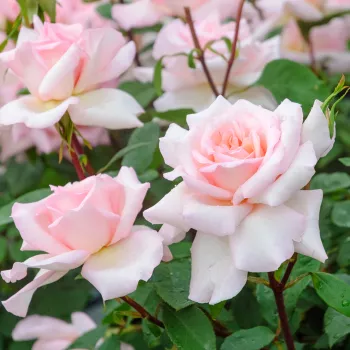
MICHÈLE MEILLAND – light pink hybrid tea rose – Meilland & Meilland
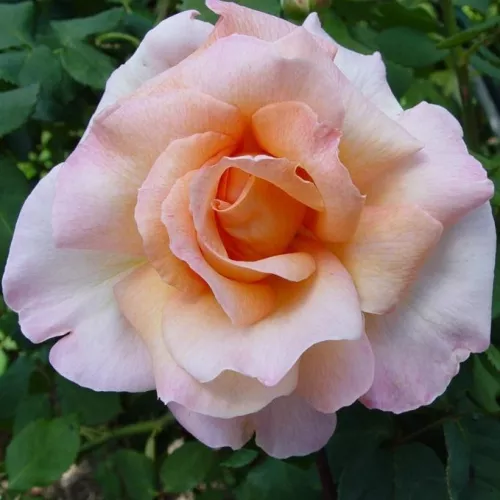
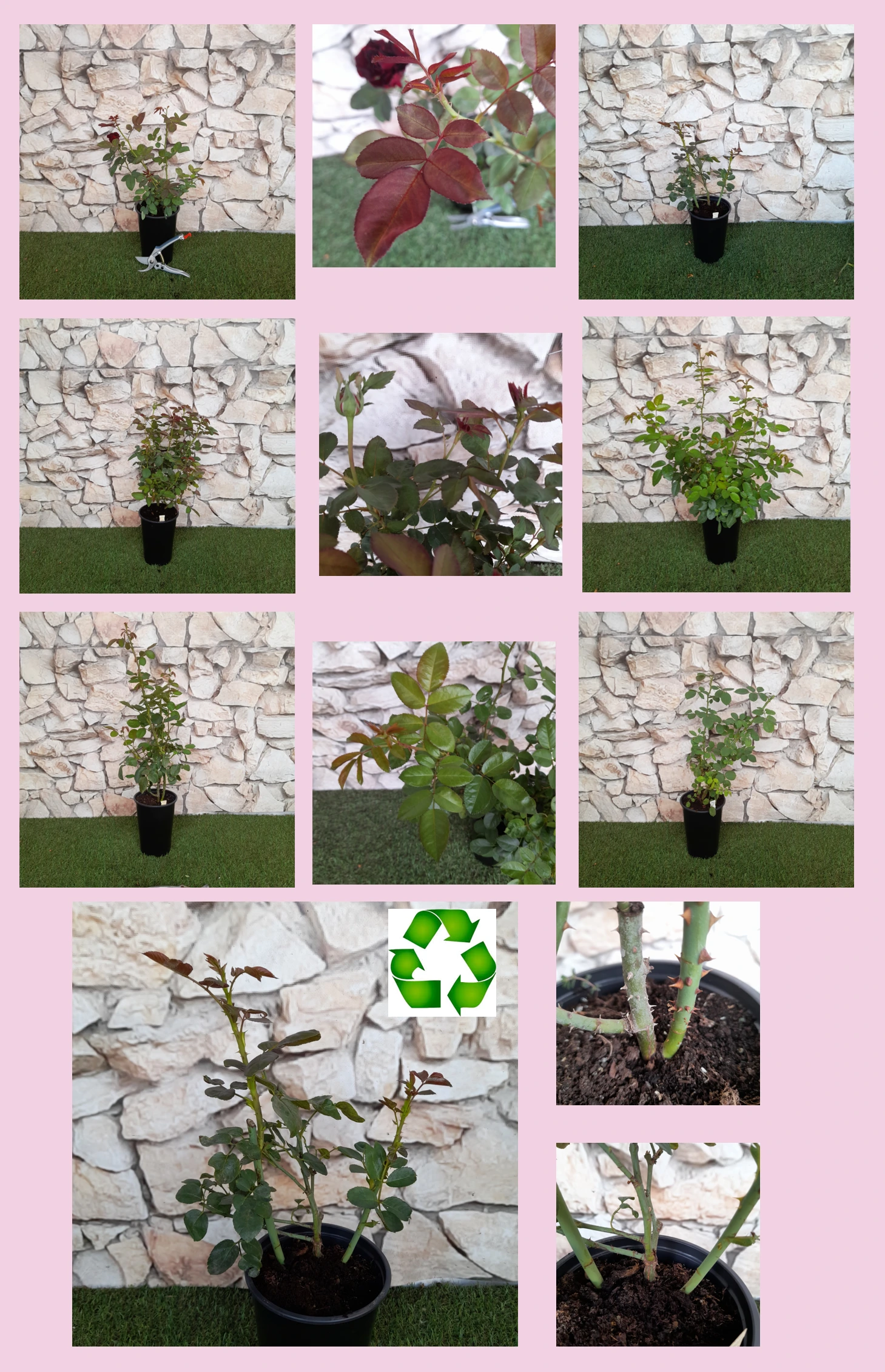
Elegant and classically high‑centred, MICHÈLE MEILLAND brings reliable flowering and soft, creamy‑pink blooms to family gardens with minimal fuss. This upright hybrid tea forms a tidy, medium‑sized shrub that fits effortlessly into small borders or front‑garden beds, coping well with typical British conditions and offering reassuring poise even in stronger winds. As an own‑root plant, it settles steadily and offers genuine longevity, regenerating from the base rather than relying on graft unions. Once planted and kept evenly watered, it rewards you with well‑shaped stems ideal for cutting, while its moderate fragrance adds a gentle perfume close to paths and seating. Expect a calm development rhythm – first establishing its roots, then building sturdy shoots, before reaching full ornamental presence over the following seasons.
Usage options
| Target area | Reasoning |
|---|
| Front‑garden focal point |
The upright, medium‑height habit and refined hybrid tea blooms create a neat, eye‑catching presence beside the front door or along a short path. The flower form reads clearly from the pavement, giving a composed, quality look without needing complex pruning schemes, which suits the time‑pressed homeowner. |
| Mixed border with perennials and shrubs |
Moderately dense, mid‑green foliage and pastel, light‑pink flowers blend calmly with cottage perennials and small shrubs, without visually dominating them. Its repeat flushes add structure and continuity between earlier and later flowering plants, ideal for layered borders managed by the style‑conscious beginner. |
| Small group planting in front gardens |
Planting 3–5 bushes at the recommended spacing forms a coherent, gently upright block of colour, easy to maintain as one unit. This works well along a low wall or railings, where soft, cream‑pink blooms offer a quietly elegant street frontage appreciated by the detail‑oriented gardener. |
| Cut‑flower corner in the family garden |
The long, straight stems and high‑centred flower shape are well suited to vases and simple arrangements, so you can cut without spoiling the overall shape of the bush. Regular picking encourages further flowering and makes practical use of a sunny corner for the enthusiastic flower‑lover. |
| Feature rose near seating or terrace |
A mild, pleasant scent and refined, pastel flowers create a calm mood near a bench or patio. The shrub’s tidy outline means it does not crowd outdoor furniture, yet still offers a classic rose presence at eye level, suiting the relaxation‑focused family. |
| Border in breezier or more exposed spots |
The upright framework and proven garden performance give a reassuringly stable look even where gardens are touched by stronger breezes, helping maintain a composed display without elaborate staking. This supports reliable structure for the practically minded planner. |
| Rose bed with moderate‑care routine |
Medium disease resistance, especially good black‑spot tolerance, means this variety can be kept attractive with a simple care routine and occasional checks, rather than intensive spraying. It suits those who want long‑term structure and flowers with limited fuss, particularly the busy urbanite. |
| Large container on patio or balcony |
In a 40–50 litre pot with good drainage and regular watering, the compact, upright growth fills the container neatly, bringing hybrid tea elegance to paved spaces. Consistent moisture and feeding support steady flowering over the season, ideal for the space‑conscious balcony‑owner. |
Styling ideas
- Cottage‑border focus – Combine with lavender, catmint and soft pink campanulas for a relaxed English cottage feel where its pastel blooms rise clearly above the haze – ideal for romantically minded front‑garden owners.
- Cream‑and‑green calm – Pair with white foxgloves, airy grasses and green hostas to create a tranquil, restrained palette that highlights the rose’s subtle colour transitions – suited to minimalist, design‑aware gardeners.
- Shrub partnership – Back it with cornus or mock orange to give seasonal structure and scented depth while the rose provides refined flowers in front – perfect for those who enjoy layered, shrub‑rich borders.
- Cutting‑row strip – Plant a straight line along a path or fence where access is easy, letting you harvest long‑stemmed flowers regularly without disturbing the rest of the garden – appealing to home florists and bouquet makers.
- Patio statement pot – Use a single plant in a generous terracotta container, underplanted with low thyme or creeping campanula, for a simple yet elegant feature beside steps or seating – great for small‑space patio gardeners.
Technical cultivar profile
| Parameter | Data |
|---|
| Name and registration |
Hybrid tea rose, registered as MEItroni, marketed as MICHÈLE MEILLAND; also exhibited as Michele Meilland in show schedules and cut‑flower classes. |
| Origin and breeding |
Bred in France from ‘Joanna Hill’ × ‘Peace’, with work by Francis and Alain Meilland; first introduced in 1948, later reintroduced in several key rose markets. |
| Awards and recognition |
Winner of Most Beautiful Rose in France at Bagatelle, ADR distinction in Germany, and All‑America Rose Selections and Biltmore Pauline Merrell awards in the United States. |
| Growth and structural characteristics |
Forms an upright bush 90–130 cm high and 55–80 cm across with moderately dense, mid‑green, slightly glossy foliage and moderate prickles on the stems. |
| Flower morphology |
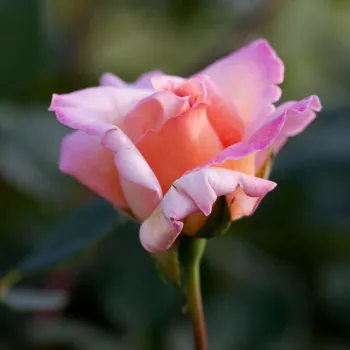
Semi‑double, high‑centred, pointed‑budded blooms on mainly solitary stems; 13–25 petals, large‑flowered, remontant with an abundant second flush under suitable garden conditions. |
| Colour data and phenology |
Soft beige‑cream flowers with a pink edge; peach tones stronger in cool weather, fading paler in strong sun, registered as light pink with ARS lp and RHS 65D, 56C references. |
| Fragrance and aroma |
Mild, pleasant scent of restrained strength, noticeable at close range but not overpowering; double flower form offers limited pollen access, so pollinator attraction is relatively low. |
| Hip characteristics |
Rose hips form only occasionally; when present they are small, red, egg‑shaped fruits around 10–14 mm in diameter, with little impact on overall ornamental effect. |
| Resistance and winter hardiness |
Hardy to around −21 to −18 °C (RHS H7, USDA 6b), with medium disease resistance: good black‑spot tolerance, moderate response to mildew and rust, and moderate heat resilience. |
| Horticultural recommendations |
Best in sunny positions with regular watering and simple pruning; recommended spacing 40–70 cm depending on use, with 4.8–5.6 plants/m² for massed beds or lower hedging schemes. |
MICHÈLE MEILLAND offers elegant pastel blooms, award‑backed garden performance and reliable repeat flowering on a long‑lived own‑root shrub, making it a thoughtful choice if you want classic roses without complex care.