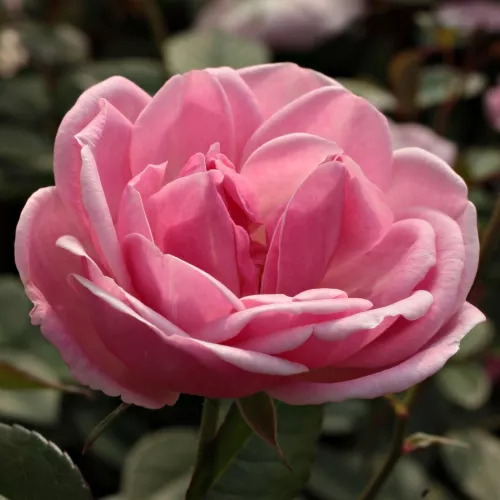
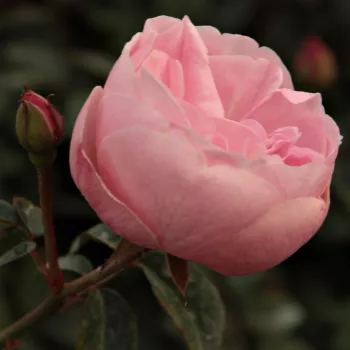
Uniform, soft pastel pink tone with a slightly more vivid shade towards the centre. - floribunda bedding rose - strong, noticeably fragrant rose - sweet, tea-like, fruity
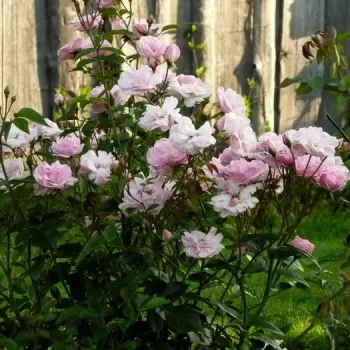
– Soft pastel pink clusters, continuously blooming.
– Bushy, spreading habit for neat, low beds.
– Strong sweet, tea-like, fruity fragrance.
– Reliable medium disease and winter hardiness.
– Supports biodiversity with hips and pollinators.
– Special feature: Historic 1919 rose with RHS Award of Garden Merit.
Guarantee of origin – Biodiversity
pharmaROSA® ORIGINAL 2-litre own-root potted rose
18,70 £
Unfortunately, we are currently unable to ship to the United Kingdom; we only deliver to countries within the European Union. For more information, please contact us!
3(4616)
MEVROUW NATHALIE NYPELS – pink bedding floribunda rose - Leenders
Pastel petals in softly cupped clusters give this classic floribunda a charming, front-garden presence that feels instantly at home in small beds and cottage-style borders. Its bushy, low, spreading habit stays neat, so you can enjoy a well-shaped rose without elaborate pruning routines. Strong, sweet, tea-like fragrance drifts along paths and under windows, while the semi-double flowers offer moderate interest for visiting pollinators in a family garden. The plant forms a dense, healthy bush of dark green foliage that shows off the blooms beautifully and copes reliably in typical British summers with changeable showers and breezes, even where improved drainage is needed in heavier soils. Good self-cleaning means most spent blooms drop away on their own, helping to keep beds looking tidy between light maintenance rounds. As an own-root rose it builds up naturally over time for a long-lived display, with roots establishing in the first year, stronger top growth in the second, and full ornamental value from around the third, giving you a dependable, easy-care investment for the front of your home.
Freshly opened flower of Mevrouw Nathalie Nypels, with vivid pink inner petals and pale outer margins.
Usage options
Target area
Reasoning
Small front garden beds by the path or drive
The compact, bushy, spreading habit stays within 50–70 cm, making it ideal for narrow beds along paths or drives where you want tidy structure without constant clipping, well suited to appearance‑conscious homeowners
Low flowering hedge along the front boundary
Regular, remontant flowering and even height allow you to line a low boundary or fence with a softly defined hedge that gives structure and colour through the season with only light annual pruning, reassuring for time‑pressed beginners
Mixed cottage-style border with perennials
The pastel pink clusters and dense foliage blend naturally with heuchera, ajuga and gypsophila, helping you create a classic cottage look in ordinary soil without complex design work, appealing to style‑focused gardeners
Near seating areas, doors and windows
Strong, sweet, tea‑like, fruity scent carries well in still evening air, so planting near benches, patios or front doors brings fragrance into everyday life with no specialist care, attractive for relaxed outdoor‑living families
Urban and suburban beds with moderate maintenance
Medium disease resistance and maintenance needs suit typical town gardens where you can manage occasional plant protection but prefer a rose that largely looks after itself between routine jobs, practical for busy commuters
Pollinator‑friendly family garden corners
Semi‑double blooms offer moderate access to pollen and nectar, adding useful foraging without transforming the space into a wild meadow, fitting for those who value biodiversity yet want a tidy setting, ideal for environmentally aware households
Containers and large pots on terraces
The tidy, low growth and self‑cleaning flowers adapt well to large pots of 40–50 litres or more, where regular watering and feeding are straightforward and the rose gradually forms a long‑lived own‑root clump, convenient for patio‑loving residents
Formal or informal mass planting in beds or parks
Even height, cluster flowering and proven RHS AGM performance make it reliable for repeated planting at 40 cm spacing, giving a unified look that copes with typical British rain and wind when sited with reasonable drainage, valuable for low‑input planners
Styling ideas
Front‑path ribbon – Plant a single curving line 40 cm apart along a front path, underplant with low ajuga to hide bare soil – for homeowners who want instant cottage charm from the pavement view
Pastel pocket – Group three to five plants near the front door with creeping gypsophila at the edges to create a soft pink welcome – for visitors who appreciate a gentle, romantic first impression
Perfumed corner – Position near a bench or small patio, surrounded by dwarf heuchera, so the strong fragrance collects in a sheltered nook – for evening sitters who linger outdoors after work
Family border – Mix with easy perennials in a shallow bed where the self‑cleaning habit keeps things neat between occasional deadheading – for families wanting colour without constant upkeep
Patio duo – Plant two specimens in 50‑litre tubs flanking steps or French doors, letting the bushy form frame the view indoors and out – for flat or townhouse dwellers making the most of limited space
Technical cultivar profile
Property
Data
Name and registration
Floribunda bed rose, exhibition shrub rose; current trade name Mevrouw Nathalie Nypels, an unregistered historical variety offered here as an own‑root, container‑grown garden rose.
Origin and breeding
Bred by Mathias Leenders in the Netherlands in 1919 from ‘Orléans Rose’ × Rosa foetida bicolor; first distributed by Hazlewood Bros. Pty. Ltd. in Australia from 1922.
Awards and recognition
Holds the RHS Award of Garden Merit (1993), indicating reliable garden performance, good ornamental value, and dependable behaviour in a wide range of typical UK garden conditions.
Growth and structural characteristics
Bushy, spreading plant 50–70 cm high and wide, with dense, slightly glossy dark green foliage and moderate prickles; forms a compact, low hedge or edging in beds and borders.
Flower morphology
Semi‑double, medium‑sized, cup‑shaped blooms with 13–25 petals, freely produced in clusters; remontant habit gives abundant first flowering with a plentiful second flush later in the season.
Colour data and phenology
Soft pastel pink, ARS lp; RHS 65C outer, 56C inner petals, with pearlescent touches; colour lightens in strong sun yet remains fresher and more vibrant in cooler conditions.
Fragrance and aroma
Notably strong, sweet fragrance with tea‑like and fruity notes; scent is appreciable at close range and around nearby seating, adding sensory value beyond the visual display of the blooms.
Hip characteristics
Produces moderate quantities of small, spherical hips, 7–11 mm across, coloured orange‑red (RHS 34A), adding subtle seasonal interest after flowering if spent blooms are not removed.
Resistance and winter hardiness
Hardy to around −21 to −18 °C (RHS H7, USDA 6b, Swedish zone 3); medium resistance to black spot, powdery mildew and rust; tolerates summer heat but benefits from watering in dry spells.
Horticultural recommendations
Best in fertile, well‑drained soil with regular moisture; spacing 35–65 cm depending on use; suitable for partial shade and for mass, hedge, edging or specimen planting in family gardens.
MEVROUW NATHALIE NYPELS offers compact pastel bedding colour, strong fragrance and neat self-cleaning clusters on a durable own-root bush, making it a thoughtful choice for long-lasting, low-fuss front gardens and cottage borders.
Pollinator Attraction:
Semi-double flowers (13–25 petals) are moderately attractive to pollinators because the semi-double form partially conceals the stamens, reducing access to pollen and nectar.
Our product is a rose grown with pharmaROSA®’s unique cultivation technology!
2-litre, own-root, potted rose.
With a shoot system appropriate to the season.
With a root system that thoroughly permeates the growing medium.
Quality compliant with the requirements of the E.N.A. (European Nurserystock Association).
Supplied in unique packaging that prevents damage.
Can be planted during frost-free periods.
True-to-variety rose bush with a unique identifier.
The pharmaROSA® own-root potted rose is a well-rooted plant that supports reliable establishment when planted and cared for properly, so it can be planted whenever the soil is not frozen.
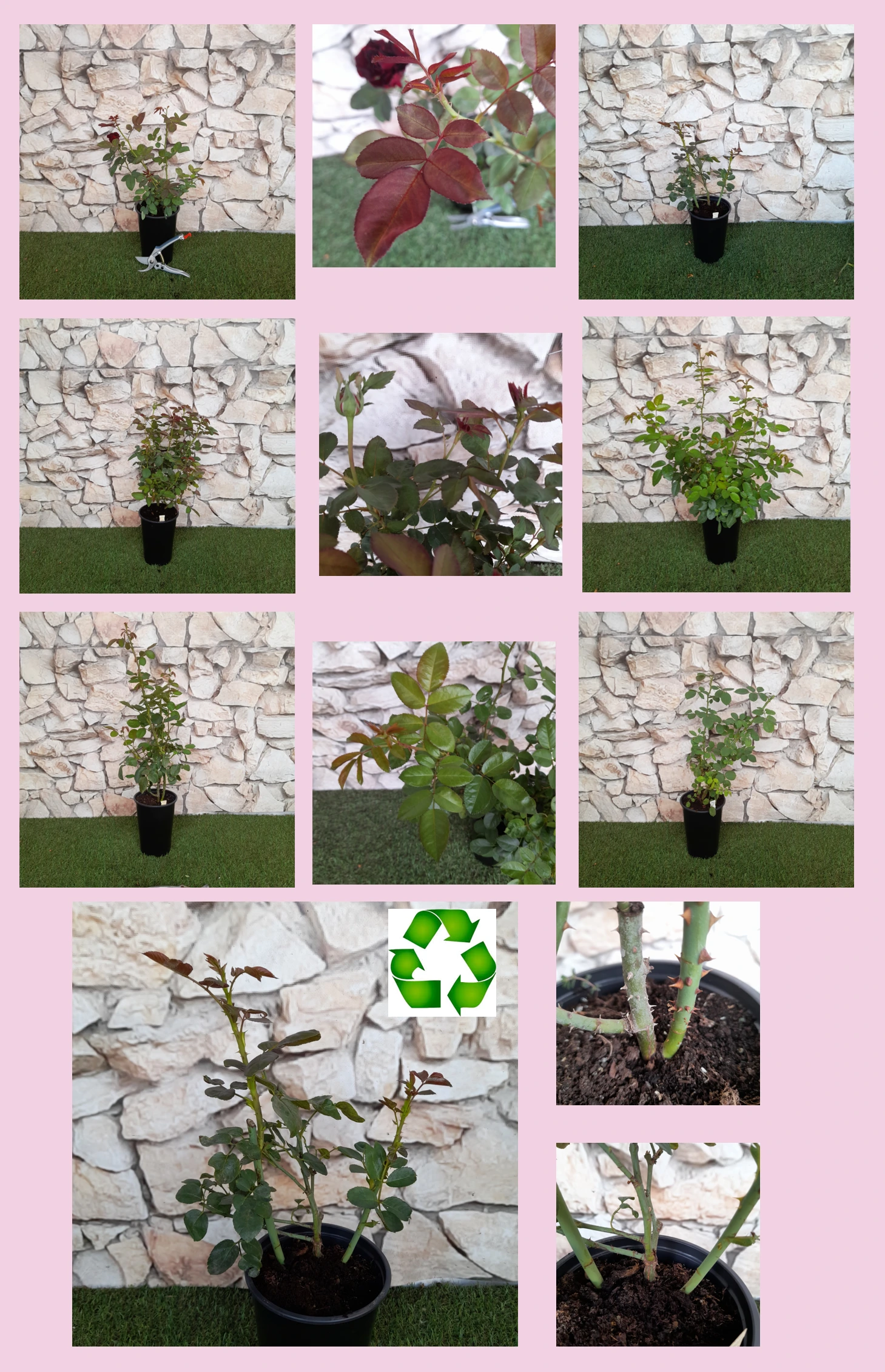
Crop overview: several varieties and growth stages in a short crop section.Shoot system: intensive growth of fresh basal shoots on a young plant.Root system: demonstration of a vigorous root system permeating the growing medium, by removing the pot.Balance: mature plant with root system and shoots in harmony with each other.
Information about the videos
The video series is not a “seasonal showcase”; it illustrates the essence of pharmaROSA® own-root cultivation in a tangible way: how the plant is built up, what the root system is like and how the shoot system regenerates. The recordings were therefore made at different times and with plants at various stages of development, so mixed foliage levels and differing stages of growth may appear in the videos. They are not a ‘sample’ of the batch dispatched, but a visual explanation of how the technology works. The current condition of the rose available to order — typical for the given period and similar to what you can expect to receive in the parcel — is shown in the upper part of the product page.
Pages for private customers Garden roses for the family garden, with minimal care → ORIGINAL® Premium garden roses – instant impact, a truly showpiece garden → EXTRA® Pages for professionals and private customers Roses for public spaces – large areas, sustainable maintenance → NATURAL® Roses for projects – hedge and row planting, fast implementation → RAPID® For professional partners only Production – propagation material for garden roses, wholesale → NEONATAL®
Company details
PharmaRosa Ltd. Company registration number: 01-09-717479 VAT number: 13075314-2-43 Plant health registration no.: HU130721 Bank account (IBAN): HU85117631891388688400000000 BIC (SWIFT): OTPVHUHB Bank name: OTP Bank Nyrt.