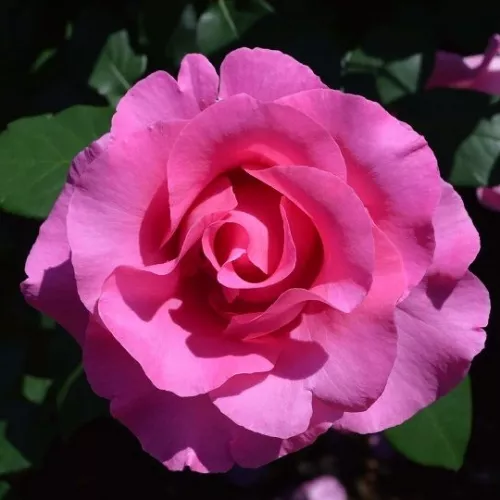
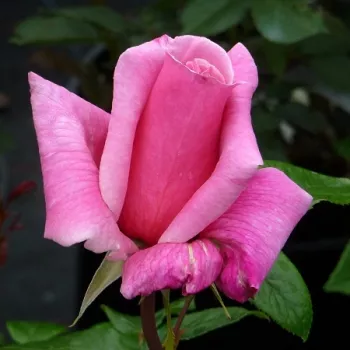
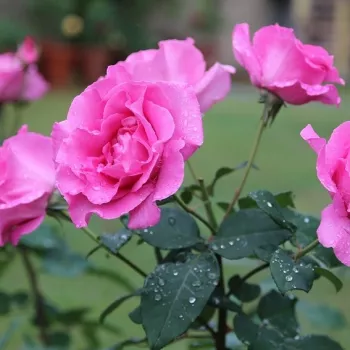
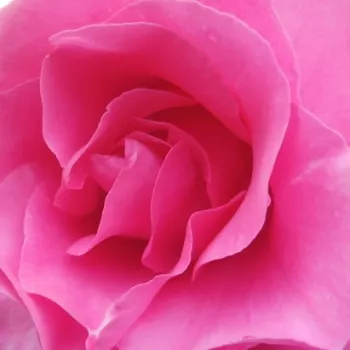
Meizeli – deep pink PERFUMELLA® hybrid tea rose
This celebrated hybrid tea brings colour, enduring perfume and a classic, high-centred flower shape to compact British gardens while remaining pleasantly manageable for everyday care. Its strong, rose-oil-and-citrus fragrance and exhibition-style blooms make it ideal when you wish to cut a few stems for the house without sacrificing impact outdoors. On its own roots it settles in reliably and forms a stable, long-lived bush, building a deeper root system year by year for steady, trustworthy growth. Planted with basic compost improvement and reasonable drainage, it copes well even in heavier soils and breezier aspects, offering reassuring reliability in typical UK family plots. Expect a natural development rhythm – first it concentrates on roots, then on structural shoots, and from the third season it reaches full ornamental value, so you can enjoy lasting structure and repeat-flowering blooms with only light, seasonal maintenance suited to busy beginners.
Usage options
| Target area |
Reasoning |
| Front-garden specimen by the path |
Plant as a single, upright focal point near the front door or along a path, where its tall habit and deep pink blooms can be appreciated at eye level. Low maintenance needs and own-root resilience mean you mainly water in dry spells and give a light annual prune, ideal for a tidy, fragrant welcome for beginners. |
| Small rose bed with 3–5 plants |
In a modest front or side bed, a group of three to five bushes at the recommended spacings creates a coherent, rose-garden effect without complex layout work. The regular, upright form and dense dark foliage fill the area steadily, while remontant flowering ensures colour through the season, rewarding those who prefer simple routines for busy-owners. |
| Mixed cottage-style border |
Combine with loose perennials and cottage favourites such as feverfew or airy annuals to soften the strong flower form. The intense deep-pink colour reads clearly among softer tones, and the classic cut-rose shape adds structure. Its dependable disease resistance limits spraying, fitting mixed borders where low-intervention care suits hobby-gardeners. |
| Cutting corner for home bouquets |
Place one or several plants where you can reach them easily from a path, allowing you to harvest long, straight stems with high-centred buds for vases. Because it repeat-flowers generously, the plant replenishes display in the garden after cutting. Own-root vigour supports regular cutting without weakening the plant, pleasing fragrance-lovers and home-stylists. |
| Feature rose near seating area |
Situate close to a bench or patio so you can enjoy the very strong rose-oil-and-citrus fragrance at rest. The large, exhibition-style blooms become a talking point, yet upkeep stays straightforward: regular watering in dry periods, deadheading and an annual prune. This suits those who want sensory richness with modest effort for relaxed-owners. |
| Formal pair flanking a path or entrance |
Use two plants at matching distances on either side of a path or step to create a simple, symmetrical feature reminiscent of classic rose gardens. The upright habit and glossy, dark foliage give a neat look, and consistent repeat flowering maintains formality without intricate clipping, appealing to symmetry-seeking design-conscious. |
| Large container on patio or terrace |
Grown in a stable, well-drained container of at least 40–50 litres, this hybrid tea can become a patio highlight where ground planting is limited. Reliable disease resistance supports healthy foliage in the closer confines of pots, while strong fragrance and bright flowers provide long-season interest with straightforward watering routines for balcony-gardeners. |
| Sheltered bed in breezier or heavier-soil gardens |
In gardens exposed to rain and wind or with heavier clay, plant into improved soil with good drainage in a slightly raised, sheltered bed to support anchoring and reduce waterlogging. Own-root establishment over successive years gives long-term stability and a durable framework, suiting those wanting a planted-once, lasting solution for family-gardeners. |
Styling ideas
- Classic-entrance – Position a single bush by the front door with low lavender or nepeta at its feet to echo traditional British entrances – for homeowners who like a quietly formal welcome.
- Cottage-trio – Group three plants in a triangle and underplant with feverfew and hare’s-ear for a relaxed, cottagey mix of pink, white and fresh green – for lovers of informal front gardens.
- Patio-centrepiece – Grow one plant in a 50-litre terracotta pot with trailing thyme around the rim, creating a fragrant, movable highlight – for terrace and courtyard gardeners.
- Cutting-strip – Line a narrow bed along a sunny fence with evenly spaced plants, leaving a path side clear so you can cut stems easily – for those who enjoy arranging flowers indoors.
- Evening-corner – Place near a small seating area with pale companion plants so the deep pink blooms and strong scent stand out at dusk – for people who unwind outdoors after work.
Technical cultivar profile
| Parameter |
Data |
| Name and registration |
Hybrid tea rose, registered as MEIzeli, traded as Meizeli PERFUMELLA® and widely known as ‘The McCartney Rose’; belongs to the PERFUMELLA® collection of strongly scented varieties. |
| Origin and breeding |
Bred by Alain Meilland in France from (Nirvana × Papa Meilland) × ‘First Prize’; introduced by Meilland International SA in 1992 in France and 1998 in the USA, registered in 1991. |
| Awards and recognition |
Highly decorated: multiple gold medals and fragrance awards at Genève, Monza, The Hague, Le Roeulx and Baden-Baden, and selected as the World’s Favourite Rose in 1992. |
| Growth and structural characteristics |
Strong, upright bush 130–170 cm tall with 85–115 cm spread; dense, glossy dark green foliage and moderate prickles; weak self-cleaning so spent blooms generally need manual removal. |
| Flower morphology |
Very large, high-centred, pointed buds opening to semi-double blooms with 13–25 petals; mainly single flowers per stem, ideal for cutting; remontant habit with an especially abundant second flush. |
| Colour data and phenology |
Intense deep pink, ARS code DP, RHS 57A outer and 53C inner petals; blooms open crimson-pink, brighten to deep pink then fade slightly towards raspberry-rose at the edges as they age. |
| Fragrance and aroma |
Very strong, distance-detectable scent with classic rose-oil character lifted by fresh citrus notes; bred as a perfume rose and particularly valued where fragrance is a primary selection criterion. |
| Hip characteristics |
Hip set is generally modest because of the full blooms; when produced, hips are small, red, ellipsoid, around 7–11 mm diameter, and of limited ornamental significance compared with the flowers. |
| Resistance and winter hardiness |
Rated resistant to black spot, powdery mildew and rust; winter hardy to approximately −26 to −23 °C (RHS H7, USDA 5b), but needs regular watering as it does not tolerate prolonged drought. |
| Horticultural recommendations |
Best in a sunny position in fertile, well-drained soil; suitable for beds, specimen planting and cutting. Space 55–110 cm depending on use; low general maintenance but benefits from regular deadheading. |
Meizeli offers richly scented deep pink blooms, reliable repeat flowering and a long-lived, own-root shrub form; a thoughtful choice if you would like a classic, fragrant rose that earns its place over many seasons.