MEDITERRANEA™ – salmon-pink-yellow hybrid tea rose – Dot
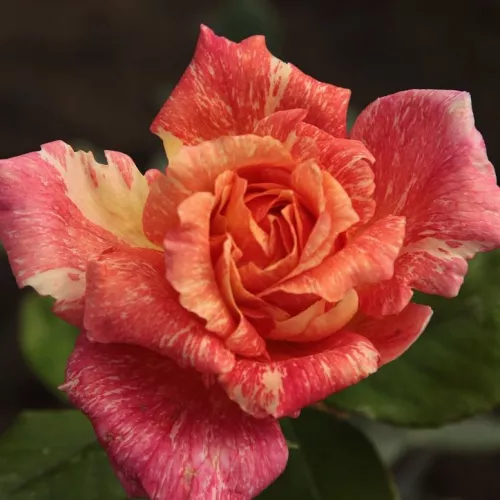
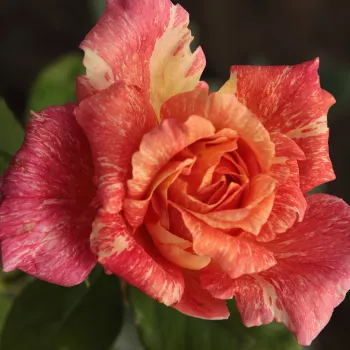
This classic hybrid tea brings elegance and colour to everyday gardens, combining reliable flowering with an easy-going character that suits busy lives and modest gardening skills. Its upright, well-spaced habit and mid-green, slightly glossy foliage create a refined structure that remains attractive even between flushes of bloom. Bred in sunny Spain, it is well adapted to British conditions, coping calmly with blustery days and wetter spells in exposed, rain-swept gardens. The strongly sweet, fruity fragrance and medium, cupped blooms in salmon-pink and creamy yellow tones offer a traditional cutting-rose look with modern, low-intervention maintenance, while the own-root form promises long-term garden stability as the plant matures.
Usage options
| Target area |
Reasoning |
| Front garden focal point by the path |
The upright, 110–150 cm habit forms a clear vertical accent without overwhelming a typical front garden, while the salmon-pink and creamy yellow blooms read well from the pavement. Its low maintenance and good disease resistance mean you can rely on clean foliage and regular flowering with only basic pruning and feeding, ideal where time is limited but you still want a welcoming entrance for beginners. |
| Small mixed border near the house |
Moderately dense, mid-green foliage and a tidy 60–80 cm spread allow this rose to slot easily into cottage-style borders with perennials such as asters and Mexican daisies, without becoming leggy or unruly. Repeat flowering through the season keeps colour coming back among other plants, while own-root growth lets the bush adapt gradually to clay or chalk soils, developing a balanced framework over several years for homeowners. |
| Cutting corner for home bouquets |
As a show-type hybrid tea with medium, goblet-shaped blooms borne mostly singly, it offers classic, long-stemmed flowers ideal for vases. The strong, fruity scent carries indoors, and the colour progression from vibrant salmon-pink to softer pastels gives interesting arrangements from just a few stems. Regular cutting doubles as light pruning, encouraging further flowering without specialist techniques for hobby-gardeners. |
| Easy-care rose bed with simple layout |
Recommended planting distances make it straightforward to create a neat, repeating pattern: around 65 cm for mass planting or 55 cm for a low hedge. Once watered and fed appropriately, this own-root plant settles in reliably, gradually building a durable, well-anchored stand that needs only annual trimming. Over the first three years roots establish, then shoots build, before the bush reaches full ornamental effect, suiting planners who like predictable results for planners. |
| Sunny cottage-style border with perennials |
The pastel salmon and creamy yellow tones sit comfortably with traditional cottage companions such as dwarf oregano and asters, softening harder edges like paths and low walls. Abundant repeat flowering adds movement and colour above lower perennials, while the rose’s generally low intervention needs help keep the whole border manageable. Disease resistance reduces the need for spraying, which suits relaxed, wildlife-aware gardeners. |
| Low-intervention family garden feature |
Designed to cope well with ordinary family-garden realities, this variety combines sturdy growth with resistance to common rose diseases, so it keeps its shape and leaf cover with minimal effort. Its own-root nature means that even if stems are damaged by children’s play or pets, regrowth comes from the true variety rather than a rootstock, supporting a long lifespan and stable appearance for families. |
| Exposed or breezy suburban plots |
The firm stems and moderately dense foliage hold flowers well in wind, keeping the plant tidy rather than ragged in blustery conditions. Bred in a warmer, sunnier climate, it copes soundly with British summers that combine heat, humidity and frequent showers, making it a reassuring choice where weather swings between hot spells and wet, wind-driven rain for coastal-gardeners. |
| Large decorative container on patio or terrace |
In a generously sized container of at least 40–50 litres, this upright hybrid tea forms a compact, vertical accent with scented flowers at a convenient viewing and seating height. Own-root development helps it fill the pot steadily without sudden, coarse growth, and regular watering and feeding are usually all that is required. The refined bloom form and colour suit paved spaces and small urban terraces for urban-owners. |
Styling ideas
- Cottage Duo – pair Mediterranea™ with Mexican daisy to soften path edges and echo its pastel tones – ideal for lovers of informal, romantic front gardens.
- Formal Accent – plant a single bush as a centred feature in a small gravel circle, underplanted with low thyme, for a simple yet classic entrance – suited to neat, low-maintenance front gardens.
- Pastel Border – repeat three plants along a narrow bed with dwarf asters and pale catmint for a long-season, easy-care colour ribbon – perfect for beginners wanting structure without complexity.
- Patio Scent – grow one bush in a 50-litre terracotta pot near seating, allowing the strong fruity fragrance to define summer evenings – appealing to balcony and terrace gardeners.
- Family-Friendly Strip – line a fence with evenly spaced plants and mulch well, creating a tidy, low-effort flowering screen – good for busy families who value neatness and resilience.
Technical cultivar profile
| Property |
Data |
| Name and registration |
Hybrid tea rose Mediterrànea, marketed as Mediterranea™ Hybrid tea rose Mediterrànea; ARS exhibition name Mediterranea. Belongs to the hybrid tea group and used both in gardens and as a show-type cut flower. |
| Origin and breeding |
Sport of ‘Signora’, bred by Pedro Dot in Spain in 1943 and introduced in 1951. Originating from Rosas Dot, with early distribution by Hazlewood Bros. Pty. Ltd. in Australia; unregistered variety in formal registers. |
| Growth and structural characteristics |
Upright hybrid tea with 110–150 cm height and 60–80 cm spread, carrying moderately dense, mid-green, slightly glossy foliage. Stems are moderately thorny and support solitary, exhibition-type flowers on a well-defined, vertical framework. |
| Flower morphology |
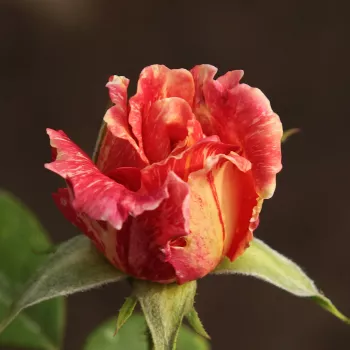
Medium-sized, double blooms with 26–39 petals, usually solitary on stems. Flowers are cupped to goblet-shaped, opening from full buds into refined, show-quality heads suited to cutting and garden display, with abundant repeat flowering in later flushes. |
| Colour data and phenology |
Flowers have a yellow base with salmon-pink to red striping and an orange-toned centre. Newly opened blooms show vibrant salmon-pink with apricot hints, fading to softer pink and creamy tones as they age, giving a gentle, pastel effect at full opening. |
| Fragrance and aroma |
Strong, long-lasting fragrance with a distinct sweet, fruity character. Scent is clearly noticeable on warm, still days and makes the variety particularly suitable for planting near paths, doorways, seating areas or for indoor enjoyment as a cut flower. |
| Hip characteristics |
Because of its double, 26–39 petal blooms, hips form only occasionally. When present they are ovoid, around 13–17 mm in diameter, and colour to an attractive orange-red, offering modest late-season interest without prolific seeding. |
| Resistance and winter hardiness |
Rated resistant to black spot, powdery mildew and rust, generally requiring few treatments in ordinary gardens. Winter hardiness to approximately –21 to –18 °C (RHS H7, Swedish zone 3, USDA 6b) makes it suitable for most temperate UK locations. |
| Horticultural recommendations |
Prefers a sunny position with well-drained, fertile soil; avoid waterlogging on heavy clay by improving drainage or using raised beds. Low maintenance once established, needing annual pruning, feeding and mulching; spacing 55–100 cm depending on hedge, mass or specimen use. |
MEDITERRANEA™ offers strongly scented, repeat-flowering blooms on a healthy, upright bush, and as an own-root rose it promises long-lived, dependable beauty, making it a thoughtful choice if you want a graceful rose that simply works.