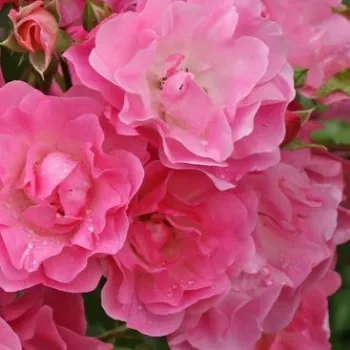
MAXI-VITA® – apricot-pink bedding floribunda rose – Kordes
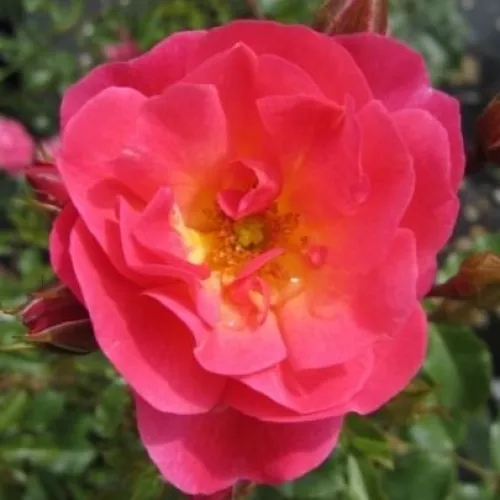
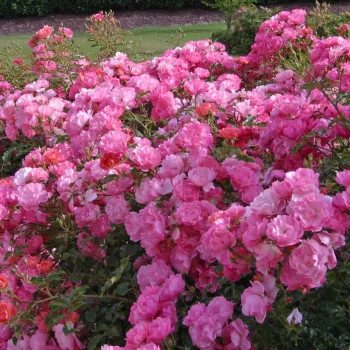
Easy-care MAXI-VITA® brings lively peach-pink colour to everyday gardens with minimal effort, ideal where you want reliable flowering despite unsettled weather and heavy soils that need thoughtful drainage. This compact, bushy floribunda settles quickly as a pharmaROSA® ORIGINAL own-root plant, building a long-lived, balanced shrub that fits naturally into classic British front gardens. Its excellent disease resistance keeps foliage healthy without complex spraying schedules, while strong vitality and heat tolerance support steady growth through typical UK summers. Clustered, semi-double flowers repeat generously across the season, creating tidy, low hedges and neat bedding. Over the first years the plant focuses on roots, then framework, then full ornamental display, offering dependable structure and colour for busy family gardens that favour straightforward maintenance.
Usage options
| Target area | Reasoning |
|---|
| Front garden bed beside the path |
The compact, bushy habit creates a neat, low edging that stays within bounds, ideal for narrow front gardens where space is limited but regular colour is desired; its tidy outline needs only light pruning to keep order, which suits style-conscious beginners. |
| Small mixed border with perennials |
Reliable repeat flowering in soft peach-pink brings continuity between perennial waves, so borders never feel empty; the semi-double clusters sit well among cottage-style partners and maintain a coherent colour story without needing complex succession planning for beginners. |
| Low, informal flowering hedge |
Regular clusters and dense branching make it suitable for short decorative hedges, providing a gentle boundary along drives or paths; light annual trimming is enough to keep a stable line, so you gain structure and colour without the discipline of formal box or yew for homeowners. |
| Containers on patio or terrace (40–50 L+) |
Its moderate height and bushy form adapt well to large containers of at least 40–50 litres, giving a stable root run and reducing watering stress; this makes it a practical choice for paved gardens and rented spaces where beds are limited but you still want a long-lived feature for urban-gardeners. |
| Sunny slope or bank in a family garden |
Good heat tolerance and a low-maintenance temperament suit sunny banks that can be awkward to reach; once established, its own-root system knits into the soil, helping to anchor the shrub and provide lasting ground coverage with minimal seasonal intervention for busy-families. |
| Small group planting in front of evergreen shrubs |
Planting three to five together creates a soft peach-pink drift in front of darker evergreens, the repeat flowering standing out against year-round foliage; this simple two-layer layout delivers a composed look using just one rose and one backdrop for style-conscious. |
| Partially shaded side garden |
Its suitability for partial shade allows planting where many roses underperform, such as east-facing side paths; although peak flowering comes in good light, it still provides dependable colour where fences or neighbouring houses limit sun, widening options for small-gardens. |
| Low-maintenance family lawn edge |
Strong disease resistance and generally low intervention needs fit well along lawn edges, where spray drift and frequent trimming are impractical; it keeps foliage clean and flowering steady even in changeable weather with coastal winds and heavier soils that need improved drainage for practical-gardeners. |
Styling ideas
- COTTAGE RIBBON – run a curving line of MAXI-VITA® along a front lawn and weave in campanulas for a soft peach-and-blue cottage look – ideal for time-poor romantics.
- FORMAL FRAME – use a low hedge of MAXI-VITA® to frame a small square bed, with a single feature shrub or obelisk in the centre – suited to neat, design-led homeowners.
- CONTAINER NOOK – plant one rose in a 50-litre terracotta pot with trailing bellflowers at the rim for colour that repeats all summer – perfect for balcony and patio gardeners.
- MID-BORDER GLOW – group three plants in front of darker evergreens, adding pale ornamental grasses to catch evening light – appealing to those wanting easy but refined borders.
- SLOPE SOFTENER – dot plants across a sunny bank and underplant with ground-cover perennials for a flowing, low-care tapestry – good for families taming awkward corners.
Technical cultivar profile
| Parameter | Data |
|---|
| Name and registration |
Floribunda shrub rose; registered as KORfeining, marketed as Maxi-Vita® / Maxi-Vita® RigoRosen®; exhibition name Maxi Vita; bedding floribunda bed rose for general garden use. |
| Origin and breeding |
Bred by W. Kordes & Sons, Germany (1991) with undisclosed parentage; introduced by W. Kordes’ Söhne in 2001; registered in 2000 as a robust, versatile bedding floribunda rose. |
| Awards and recognition |
Highly decorated: multiple Certificates of Merit at Bagatelle, Geneva and Australia, Silver Medal Monza, First Class Certificate The Hague, plus ADR status in 2000 for proven garden performance. |
| Growth and structural characteristics |
Compact, bushy shrub to around 50–70 cm high and 40–60 cm wide; moderately dense, slightly glossy mid-green foliage; moderately thorny stems, forming a rounded, balanced bedding plant. |
| Flower morphology |
Semi-double, cup-shaped blooms with 13–25 petals, carried in clusters; medium-sized flowers about 4–7 cm appear freely, with a strong first wave followed by abundant repeat flushes. |
| Colour data and phenology |
Peach-pink with a soft yellowish tint; buds medium apricot-pink, opening vibrant then fading to pastel; colour retention moderate, with an even mid-toned peach-pink at full bloom before softening. |
| Fragrance and aroma |
Very weak fragrance with a classic rose character; scent is generally only noticeable at close range, so the variety is chosen primarily for colour effect, health and reliability rather than perfume. |
| Hip characteristics |
Rose hip production is usually sparse; if present, hips are small, spherical, around 6–9 mm across, in an orange-red shade (RHS 34B), and have little ornamental impact in most garden settings. |
| Resistance and winter hardiness |
Rated resistant to black spot, powdery mildew and rust; hardy to around −21 to −18 °C (RHS H7, USDA 6b, Swedish zone 3), with good heat tolerance for reliable summer performance in beds. |
| Horticultural recommendations |
Suited to beds, low hedges, slopes, parks, urban planting and large containers; low maintenance with minimal spraying; prefers well-drained soil and regular moisture, tolerates partial shade. |
MAXI-VITA® offers healthy foliage, repeat peach-pink flowering and compact, easy-care growth on its own roots for a long-lived, dependable presence in your garden, making it a thoughtful choice when planning simple, lasting borders.