Marjorie Proops™ hybrid tea rose – HARproops
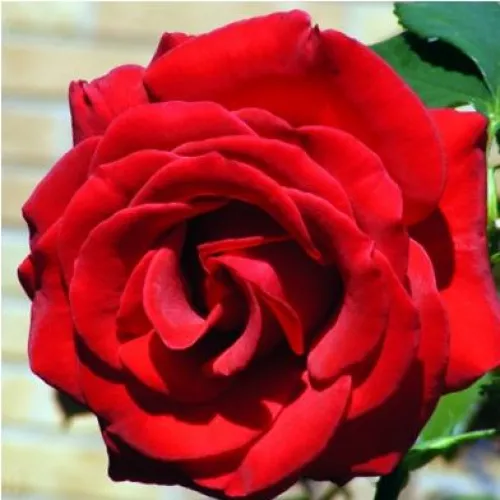
This classic hybrid tea brings vibrant colour and a reassuringly upright habit to small and medium gardens, giving you a neat, well-shaped bush that is easy to place in beds and borders. Large, double, cup-shaped blooms in an orange-red to peachy blend appear in generous flushes, with a fresh, fruity fragrance that is noticeable without overwhelming nearby seating areas. Bred by Harkness, its proven hardiness and medium disease resistance mean reliable performance in typical British conditions, even where strong winds and frequent rain call for sturdy stems and stable flower presentation. As an own-root plant it settles gradually, with the first year focusing on roots, the second on shoots, and the third delivering full ornamental value and long-term stability in your planting. Well-rooted in the 2‑litre pot, it is easy to establish with ordinary care, suiting both beginners and experienced gardeners who value durable structure, repeat flowering and a rose that will adapt and endure gracefully over many seasons.
Usage options
| Target area |
Reasoning |
| Front garden focal point near the entrance |
The upright, well-branched habit forms a tidy, vertical accent that reads clearly from the street, making a single plant or a pair ideal for framing a path or doorway. Large hybrid tea blooms lend a smart, “kept” look that matches classic British front gardens for the beginner homeowner |
| Small mixed border in a family garden |
Medium height and moderately dense dark green foliage allow this rose to slot comfortably among perennials and small shrubs without overwhelming the space. Its stable structure creates a dependable backbone so surrounding plants can change with the seasons for the time-poor gardener |
| Cutting patch for home bouquets |
Long, straight stems with solitary, large flowers are typical hybrid tea traits, giving you vase-worthy blooms in a vibrant palette. The medium, fruity fragrance enhances indoor arrangements without becoming cloying, ideal for regular cutting and casual displaying for the cottage-style enthusiast |
| Repeated planting in a narrow border or low hedge |
Uniform growth and clear planting distances make it straightforward to create a low, rose “picket” line along a drive or path. When spaced evenly, the plants knit into a consistent row, offering colour, privacy and structure with simple, repeatable maintenance tasks for the layout-conscious planner |
| Classic rose bed with repeat flowering interest |
Remontant flowering with an abundant second flush keeps the bed from looking tired after the first wave of blooms. A considered feeding and deadheading routine will reward you with colour over a long season, without specialised techniques or complex pruning styles for the colour-focused beginner |
| Near seating areas or patios |
The medium-strength, fresh fruity fragrance is pleasant at close quarters but not overpowering. Positioning one or two plants by a bench or terrace gives you scented enjoyment on still evenings, while the tidy form avoids a sprawling presence in tight spaces for the relaxation-seeking owner |
| Containers and large pots by the house |
The upright form and moderate spread adapt well to substantial containers of at least 40–50 litres, where regular watering and feeding are easier to control. In exposed drives or town plots, stable growth and sturdy stems cope well with frequent rain and gusty conditions for the urban balcony-gardener |
| Long-term planting in established family gardens |
As an own-root shrub, it can regenerate from its base if pruned hard or weather-damaged, supporting a long lifespan and consistent appearance. Medium disease resistance and solid cold hardiness up to around –20 °C provide reassuring resilience year after year for the future-minded gardener |
Styling ideas
- Entrance Elegance – flank a front path with two or three plants underplanted with low lavender or hardy geraniums for a smart yet welcoming arrival – ideal for style-conscious homeowners
- Cottage Glow – weave through a cottage border with foxgloves, nepeta and soft pink roses so the orange-red blooms add warm highlights – perfect for romantic cottage-garden fans
- Sunset Border – combine with bronze grasses and Cotinus ‘Royal Purple’ to echo its glowing tones and dark foliage contrast – suited to gardeners who enjoy dramatic, moody palettes
- Patio Perfume – grow in a 50‑litre terracotta pot with trailing thyme around the rim, placing it near seating for easy fragrance and colour – convenient for busy urban gardeners
- Cutting Corner – dedicate a small bed with rows of this rose backed by airy cosmos, making straight, long-stemmed blooms simple to gather – appealing to home florists and bouquet makers
Technical cultivar profile
| Characteristic |
Data |
| Name and registration |
Hybrid tea rose, registered as HARproops, traded as Marjorie Proops™ hybrid tea rose; ARS exhibition name Marjorie Proops, named in honour of journalist Marjorie Proops. |
| Origin and breeding |
Bred by John Harkness, R. Harkness & Co. Ltd., Hitchin, Hertfordshire, from ‘Red Dandy’ × ‘Ena Harkness’; bred and registered in 1969, introduced in the United Kingdom in 1971. |
| Growth and structural characteristics |
Upright, medium to tall bush, around 100–140 cm high and 60–85 cm wide, with moderately dense, slightly glossy dark green foliage and a moderately thorny framework suitable for structural planting. |
| Flower morphology |
Large, double, cup-shaped hybrid tea blooms with 26–39 petals, usually borne singly on stems; remontant, providing an abundant second flush with typical flower diameters of approximately 7–10 cm. |
| Colour data and phenology |
Vibrant orange-red base colour with golden-yellow inner tones; buds deep orange-red with pale golden tips, ageing through lighter orange-red to peach shades; ARS code OB, RHS 33A outer, 24B inner petals. |
| Fragrance and aroma |
Medium-strength, well-scented rose with a fresh, fruity character noticeable at close range; suitable for planting near paths or seating areas where a distinct yet not overpowering scent is appreciated. |
| Hip characteristics |
Occasional ovoid hips, approximately 12–18 mm in diameter, red RHS 43A; generally incidental in ornamental use but may contribute modestly to late-season interest if flowers are not deadheaded. |
| Resistance and winter hardiness |
Medium overall disease resistance; resistant to powdery mildew and black spot, medium against rust; hardy to about –21 to –18 °C (RHS H7), corresponding roughly to USDA zone 6b and Swedish zone 3. |
| Horticultural recommendations |
Best at 40–75 cm spacings depending on use, giving 4.1 plants/m² in square or 4.8 in hexagonal planting; medium maintenance with routine feeding, pruning and occasional pest management for sustained flowering. |
Marjorie Proops™ offers vibrant, fragrant blooms on a tidy, upright shrub that flowers repeatedly, with own-root strength supporting long-term resilience and making it a sound choice for dependable, easy-care garden colour.