MARIA CALLAS® – pink hybrid tea rose – Meilland
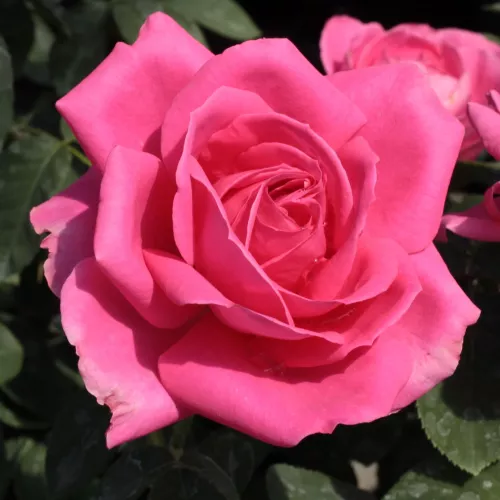
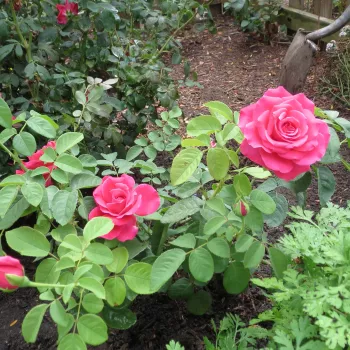
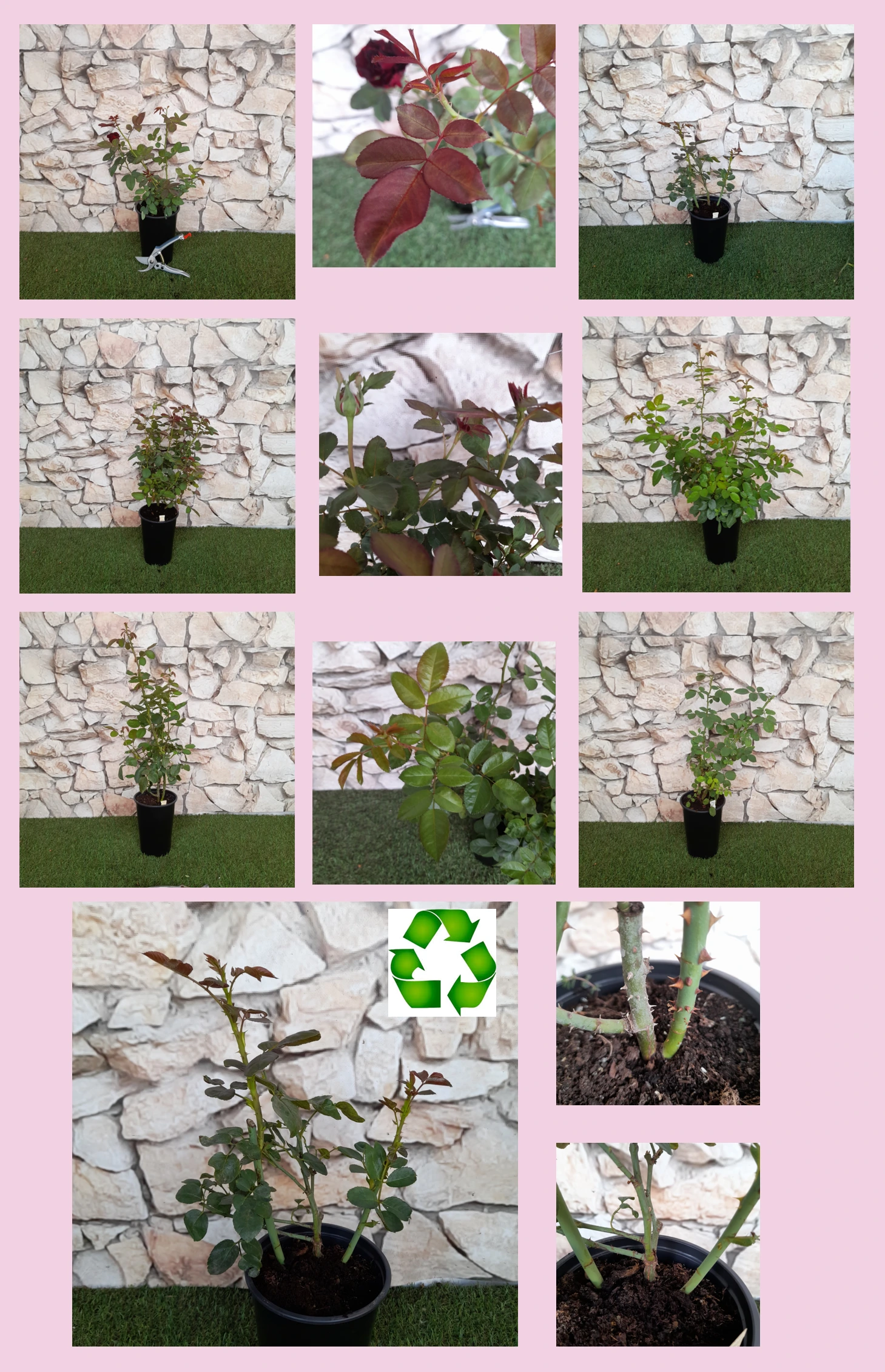
This classic hybrid tea brings tall, elegant stems and large, exhibition-quality blooms to the family garden, combining colour, form and impact with reassuringly straightforward care. Its rich, deep pink flowers are borne mainly singly on strong upright canes, perfect for cutting yet impressive in beds and borders around the home. The bush forms a dense, leafy structure over time, giving lasting ornamental structure in front gardens and along paths. As an own-root plant, it knits securely into your soil and climate, offering steady renewal and long service with only moderate pruning and deadheading. With regular watering it copes reliably in British summers, even where you need to think about drainage and soil moisture on heavier ground. Expect a satisfying development, from root-building in the first year through stronger shoots in the second to full garden presence by the third, when its repeat flowering and generous, long-lasting fragrance truly come into their own for everyday enjoyment.
Usage options
| Target area | Reasoning |
|---|
| Front-garden focal point near the entrance |
The tall, upright habit and very full, high-centred blooms give a formal, welcoming accent by a front door or gate, with rich deep pink flowers that remain presentable for days. Own-root vigour builds a long-lived, reliable feature for beginners. |
| Small mixed border in a family garden |
Dense, glossy dark green foliage and good height allow this rose to stand comfortably among perennials and grasses, providing vertical structure and repeated colour. The plant gradually forms its mature bush shape, reducing replanting needs for homeowners. |
| Cutting patch for indoor arrangements |
Single, long-stemmed, exhibition-type flowers make excellent cut roses, with strong, lasting scent and a classic hybrid tea form that suits vases. Regular picking encourages further flowering, rewarding simple cutting and watering routines for flower-lovers. |
| Specimen rose in a lawn or gravel circle |
The recommended wider spacing for solitary planting lets the plant reach its full 130–170 cm height and 70–95 cm spread, creating a sculptural, rose-show style specimen. Own-root growth underpins long-term stability and shape for style-conscious gardeners. |
| Informal hedge or row along a path |
When planted at hedging distance, the upright, evenly branching habit and dense foliage line a path or drive with repeat-flowering colour. Consistent form and reliable regrowth from the base help maintain a tidy edge with modest annual pruning for busy households. |
| Sunny cottage-style bed with perennials |
This rose pairs well with soft-textured companions, its deep pink flowers rising above lamb’s ear, bee balm or similar to give romantic cottage charm. Moderate care needs suit relaxed, informal borders where you still want dependable performance for cottage-garden fans. |
| Large container on a terrace or patio |
In a 40–50 litre container with regular watering, the upright, compact footprint and showy blooms give vertical colour close to seating areas. The own-root plant copes well with periodic rejuvenation pruning, supporting long-term pot culture for urban gardeners. |
| Weather-exposed, but reasonably sheltered, suburban plots |
Good colour retention and sturdy stems help the flowers stay attractive despite typical British breezes and showers, provided the site is open and sunny. Regular watering supports moderate heat tolerance, even where soil moisture and drainage need attention for practical growers. |
Styling ideas
- Classic entrance pair – Plant two specimens flanking a path or gate, underplanted with low evergreen edging for year-round structure and summer fragrance – ideal for homeowners wanting formal front-garden presence.
- Cottage tapestry – Combine with lavender, lamb’s ear and bee balm so the tall pink blooms rise from a soft, silvery and purple understorey – suited to cottage-garden fans seeking romantic, repeating colour.
- Cutting corner – Dedicate a sunny border strip to a short row of these roses interplanted with annuals, giving a steady supply of stems for the vase – perfect for flower-lovers who enjoy arranging indoors.
- Patio statement pot – Grow one plant in a 40–50 litre terracotta container, with trailing thyme or bacopa at the rim to soften the base – for urban gardeners wanting maximum effect from limited space.
- Lawn island feature – Place a single bush at the centre of a small circular bed, ringed with low catmint or hardy geraniums for a simple yet striking focal point – ideal for beginners wanting a clear, easy-care highlight.
Technical cultivar profile
| Parameter | Data |
|---|
| Name and registration |
Hybrid tea rose, registered as MEIdaud, marketed as Maria Callas® and also known in exhibition circles as ‘Miss All-American Beauty’; a pink hybrid tea for garden and cutting use. |
| Origin and breeding |
Bred by Marie-Louise Meilland (Meilland International) in France from ‘Chrysler Imperial’ × ‘Karl Herbst’; introduced and registered in 1965 and distributed internationally since. |
| Awards and recognition |
Recognised with the Portland Gold Medal in 1966 and selected as an All-America Rose Selections winner in 1968, reflecting its enduring ornamental and exhibition qualities. |
| Growth and structural characteristics |
Upright, vigorous bush reaching about 130–170 cm high and 70–95 cm wide, with dense, dark green glossy foliage and strong, thorny canes forming a solid, vertical garden presence. |
| Flower morphology |
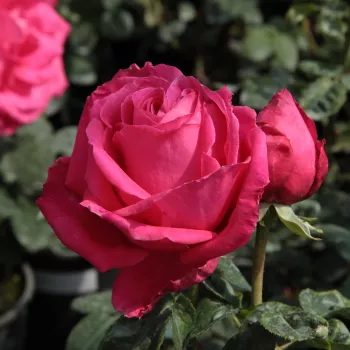
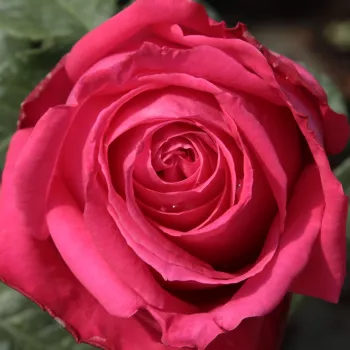
Large, very full, high-centred flowers with more than 40 petals, produced mainly singly on long stems; classic pointed buds and exhibition hybrid tea form, repeating well after the main flush. |
| Colour data and phenology |
Vivid, rich deep pink blooms with RHS 57B–57C tones, opening from dark, glossy buds; colour holds well, only gently softening in strong sun, with a notable second flowering later in the season. |
| Fragrance and aroma |
Strong, long-lasting scent typical of classic scented hybrid teas; the exact fragrance character is not specified, but it is clearly noticeable both in the garden and when used as a cut flower. |
| Hip characteristics |
Very double flowers limit hip set, though occasional small, egg-shaped orange-red hips of about 10–14 mm may form; hips are a minor feature compared with the ornamental flowering display. |
| Resistance and winter hardiness |
Rated to approximately –15 to –12 °C (RHS H6, USDA 7b, Swedish Zone 2) with moderate resistance to black spot, powdery mildew and rust, and moderate heat tolerance if watered regularly. |
| Horticultural recommendations |
Prefers an open, sunny position with well-drained soil and regular watering; medium maintenance with deadheading and pruning, spaced 50–90 cm depending on use for hedging, groups or solitary planting. |
Maria Callas® offers tall, scented, exhibition-quality blooms, reliable repeat flowering and long-lived own-root strength; a considered choice when you want a standout yet manageable garden rose.