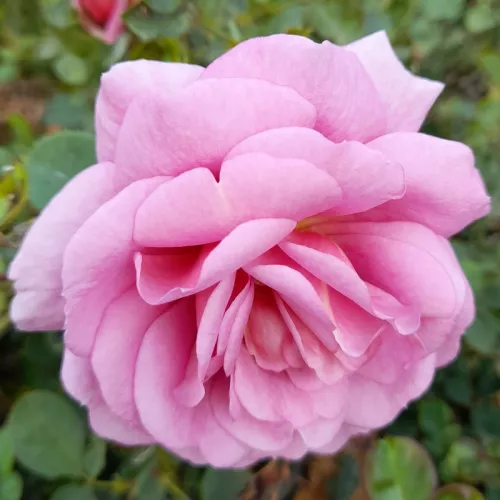
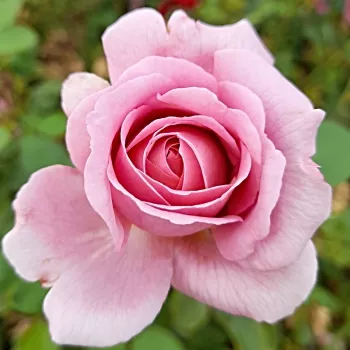
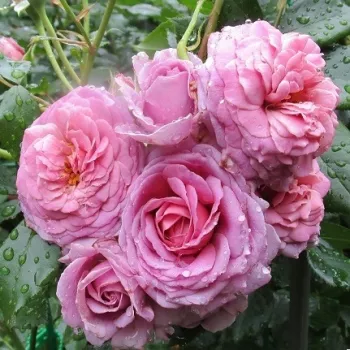
Mamiethalène Les Provençelles® MASmatha – lilac flower-bed shrub rose
For classic front gardens and relaxed cottage borders, Mamiethalène offers reliable colour without demanding complex care. This bushy shrub builds a rounded, compact shape, ideal for small beds and pathways, and its semi-double, cluster-flowered blooms repeat generously all summer for continuous impact. The unusual violet‑lilac tones blend effortlessly with other perennials for harmonious planting schemes and soft transitions in mixed borders. Grown as a pharmaROSA® ORIGINAL own‑root rose, it settles securely, forming a long‑lived, stable plant that regenerates well if pruned harder after winter. In typical British gardens it copes well when you ensure good drainage on heavier soils in wetter spells, supporting confident, beginner‑friendly planting in smaller spaces. Its medium maintenance needs suit busy households seeking practical beauty with only occasional plant protection. Expect roots to establish in the first year, stronger shoots and shape in the second, and full ornamental presence from year three onwards.
Usage options
| Target area | Reasoning |
|---|
| Front garden focal shrub |
The bushy, rounded habit and 75–105 cm height give a tidy but substantial presence beside paths or near the front door. Continuous clusters of semi-double blooms provide a clear focal point without becoming overpowering – ideal for the style-conscious homeowner. |
| Small flower bed in family gardens |
Recommended spacings of 50–80 cm make planning simple in modest beds, while repeat flowering ensures colour through the main season with only occasional deadheading and basic feeding – reassuring for the time-pressed beginner. |
| Low cottage-style hedge |
Planting at around 40 cm apart creates an informal, low hedge with dense mid-green foliage and lilac-purple clusters softening boundaries or edging drives, suiting those wanting gentle structure in a traditional setting gardener. |
| Mixed border with perennials |
The violet-fuchsia blooms blend beautifully with soft blues and silvers, and its mid-height, bushy form slots neatly among herbaceous plants to give long-season structure and colour for lovers of relaxed cottage schemes stylist. |
| Own-root long-term rose area |
As an own-root shrub it adapts naturally to local soil and climate, building a durable framework that regrows well from the base if ever cut back hard, supporting long-lived, low-fuss plantings for planning-ahead owners. |
| Containers and large pots (40–50 L+) |
Its moderate height and bushy spread fit well in substantial containers of at least 40–50 litres, where regular watering and feeding bring out abundant flowering but day-to-day care remains straightforward for balcony or patio users. |
| Group planting of 3–5 shrubs |
Square or hexagonal spacing (around 4–5 plants/m²) quickly knits into a full, flower-filled block of colour, giving impact from a compact area while remaining easy to prune and maintain for impact-seeking families. |
| Beds on heavier or clay-based soils |
Its shrub habit and own-root resilience suit British gardens where attention to drainage or light mounding helps manage wetter periods on clay, supporting stable growth and dependable flowering for weather-aware gardeners. |
Styling ideas
- Cottage-edge trio – Plant three Mamiethalène in a shallow curve by a path, underplant with Brunnera and low campanulas for a hazy lilac-blue edge – for front-garden romantics.
- Patio statement pot – One shrub in a 50–60 L terracotta container with trailing thyme and white lobelia softens paving and offers easy pruning access – for balcony and terrace owners.
- Soft lilac drift – Create a small drift of 5 bushes in a narrow bed, backed with airy grasses to move in the wind for relaxed movement – for those seeking low-fuss structure.
- Provençale corner – Combine Mamiethalène with lavender, silvery foliage and gravel mulch to echo southern French planting with modest upkeep – for lovers of Mediterranean touches.
- Family-friendly mix – Weave between hardy geraniums and dwarf clematis for colour from spring to autumn in one simple bed – for busy families wanting long-season interest.
Technical cultivar profile
| Parameter | Data |
|---|
| Name and registration |
Shrub rose, commercial type flowerbed shrub rose; registered as MASmatha, marketed as Mamiethalène Les Provençelles® MASmatha for garden use. |
| Origin and breeding |
Bred by Dominique Massad, Pétales de Roses, France, with unknown parentage; introduced and registered in 2015 for ornamental shrub and bedding plantings. |
| Growth and structural characteristics |
Bushy, compact shrub reaching about 75–105 cm tall and 60–85 cm wide, with dense, slightly glossy mid-green foliage and moderate prickliness for balanced garden presence. |
| Flower morphology |
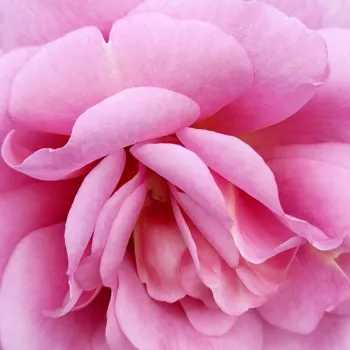
Semi-double, large cup-shaped blooms (around 7–10 cm) in clusters, with 13–25 petals and good repeat flowering; the second flush is reported as particularly abundant in season. |
| Colour data and phenology |
Vivid fuchsia, violet and purple tones, darkly budded then softening to pastel lilac; colour lightens in strong sun, remains deeper in cooler weather for varied seasonal effects. |
| Fragrance and aroma |
Mild, pleasant fragrance with a subtle background character; detectable at close range without dominating nearby seating areas, suiting mixed plantings and smaller gardens. |
| Hip characteristics |
Limited hip set due to semi-double form; occasionally produces small, spherical orange-red hips around 8–12 mm that offer modest late-season ornamental interest. |
| Resistance and winter hardiness |
Rated to approximately −21 to −18 °C (RHS H7, USDA 6b, Swedish zone 3) with medium resistance to black spot, powdery mildew and rust; regular care improves overall health. |
| Horticultural recommendations |
Best in sunny positions with reasonable drainage; space 40–80 cm depending on use, water during dry spells, and apply occasional plant protection where disease pressure is higher. |
Mamiethalène Les Provençelles® MASmatha offers compact, repeat-flowering lilac-purple colour, reliable performance in modest beds or containers, and the long-term steadiness of an own-root shrub, making it a thoughtful choice for enduring garden structure.