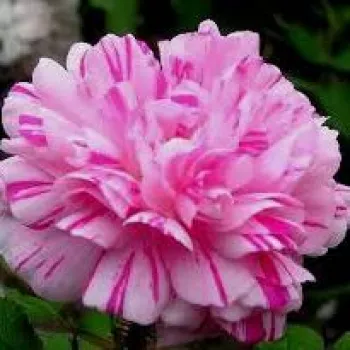
MADAME MOREAU – pink historic moss rose - Moreau-Robert
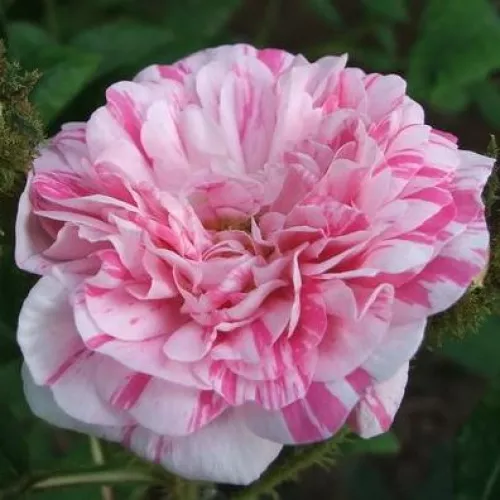
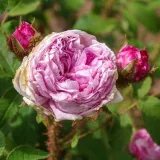
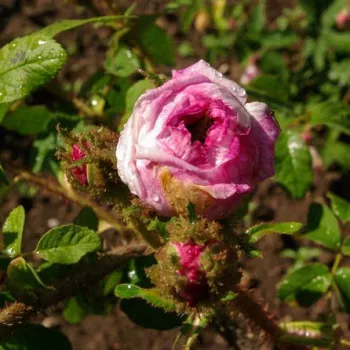
This romantic historic moss rose brings classic cottage charm to small British gardens with its richly mossed buds, deeply cupped blooms and strong, old-rose fragrance. Upright yet broadly bushy growth makes it ideal as a flowering accent near a path, doorway or front border, while its medium maintenance needs suit gardeners seeking character without complex tasks. Once-established roots support a long-lived, own-root shrub that copes reliably with windy, rain-prone conditions typical of many UK sites. Use it as a focal point in a nostalgic mixed planting, where its vibrant, veined pink colour and historic heritage enrich the garden scene year after year.
Usage options
| Target area | Reasoning |
|---|
| Front garden focal shrub |
Upright, broadly bushy growth and 120–190 cm height create a natural focal point near gates or front windows, giving structure without overwhelming a modest plot. Best for those who want an easily placed feature rose for front-gardens. |
| Cottage-style mixed border |
The vibrant, veined pink flowers and mossed buds read beautifully among perennials and herbs, echoing traditional cottage plantings and providing a nostalgic highlight in early summer. Ideal for gardeners inspired by classic cottage-borders. |
| Seasonal showpiece for once-a-year display |
As a once-flowering historic shrub, it delivers a concentrated flush of blooms that transforms the garden for several weeks, then settles into quiet greenery, suiting those happy with one impressive main show. Suited to planners who enjoy seasonal spectacle. |
| Low-intervention heritage rose corner |
Medium maintenance and average disease resistance mean it performs reliably with simple watering and a light annual tidy, especially in sunny spots with reasonable airflow. A good match for busy gardeners seeking reassuring simplicity. |
| Long-term structural planting in family gardens |
Own-root plants gradually form a stable, balanced shrub that can recover from harder pruning or weather damage, supporting a long lifespan and dependable presence in the same spot for many years. Best for owners planning a lasting framework. |
| Historical or period-style rose garden |
Introduced in 1876, this moss rose adds authentic period character, from its mossy buds to classic fragrance, fitting beautifully into Victorian-style schemes or collections of old shrub roses. Ideal for enthusiasts who value garden history. |
| Looser flowering screen or informal hedge |
At 130–140 cm spacing it builds a softly linked row that gives seasonal privacy and a dramatic flowering line, then holds a green, moderately dense backdrop for the rest of the year. Suitable for families wanting gentle garden screening. |
| Exposed, breeze-prone borders |
Sturdy shrub form and reliable anchoring make it comfortable in open, breezy gardens where flowers and foliage must withstand regular wind and rain without elaborate support or care. A sound option for coastal or open-site gardeners. |
Styling ideas
- Cottage-curve – Position Madame Moreau on the inside of a curved path with lavender and chives to frame the walk in scented pinks and mauves – ideal for homeowners creating a welcoming front approach.
- Heritage-duo – Pair this moss rose with dusky cranesbills and silver artemisia to emphasise its historic character and textured buds – for romantics who enjoy period details in a compact space.
- Summer-screen – Plant a loose row along a boundary with airy grasses to soften fences while providing a striking early-summer flower curtain – for families wanting gentle privacy without a hard hedge.
- Collector’s-nook – Group one or two bushes with other old shrub roses in a small side garden for a short, intense bloom season and rich fragrance – for enthusiasts building a small but distinctive collection.
- Entrance-accent – Flank a gate or front steps with single specimens underplanted with low catmint to highlight the doorway in flower during peak season – for busy urban gardeners seeking impact from minimal planting.
Technical cultivar profile
| Parameter | Data |
|---|
| Name and registration |
Madame Moreau (Mme. Moreau); historic moss shrub rose from the Heritage rose collection, commercial type historic moss rose; unregistered cultivar used under traditional trade names. |
| Origin and breeding |
Bred by Moreau-Robert in Angers, France, around 1872 and introduced in 1876, with early distribution through George Brunning, St. Kilda Nurseries, Australia; exact parentage unknown. |
| Growth and structural characteristics |
Upright, broadly bushy shrub 120–190 cm high and wide, moderately dense matt mid-green foliage, densely thorny stems, forming substantial structure in borders and traditional rose gardens. |
| Flower morphology |
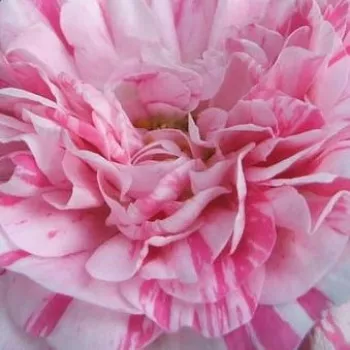
Large, very full, cup-shaped blooms (40+ petals) borne in clusters; non-remontant, flowering once in the season, with weak self-cleaning so spent blooms may need light deadheading. |
| Colour data and phenology |
Rich, vibrant pink with delicate crimson veining; buds dark pink and mossed, opening deep pink with slight purple edges, then softening and paling with a silvery tint in strong sun. |
| Fragrance and aroma |
Strong, classic old-rose scent that is easily noticeable on warm days; grown primarily for ornamental and sensory value rather than for cutting or cosmetic uses. |
| Hip characteristics |
Hip set is generally limited by very double flowers, though occasional small spherical hips 10–15 mm across may form, coloured reddish-orange and adding modest late-season interest. |
| Resistance and winter hardiness |
Hardy to approximately −21 to −18 °C (RHS H7, USDA 6b, Swedish zone 3); medium disease resistance with good tolerance to powdery mildew and black spot, rust occasionally observable. |
| Horticultural recommendations |
Best in sunny positions with 130–210 cm spacing; medium maintenance, preferring regular watering in prolonged dry spells and light pruning; suitable for borders, parks, specimens and rose gardens. |
MADAME MOREAU offers nostalgic cottage charm, strong old-rose fragrance and durable shrub structure on a resilient own-root plant; consider it if you want a long-lived, characterful rose that rewards simple, consistent care.