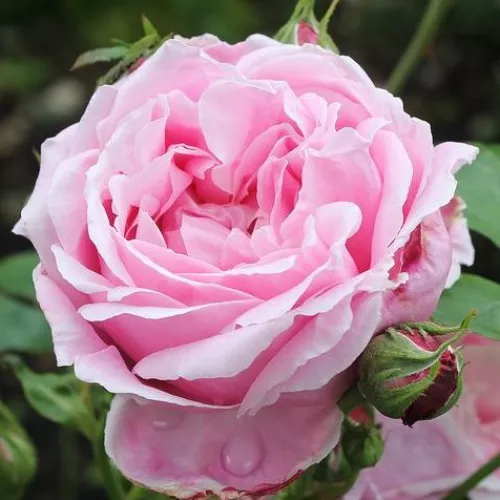
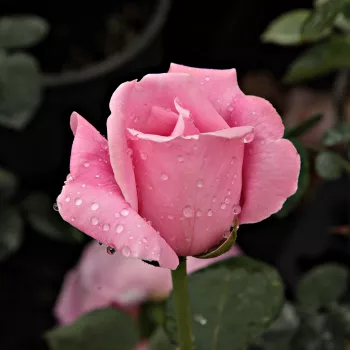
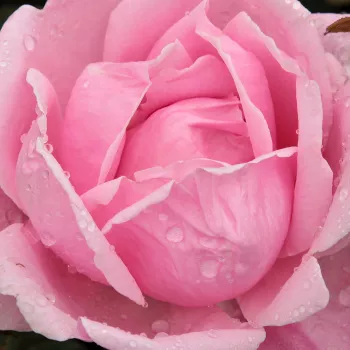
Medium pink with a silky sheen. - hybrid tea rose - strong, long-lasting scented rose - scent description not available
– Strong, long-lasting fragrance for cutting
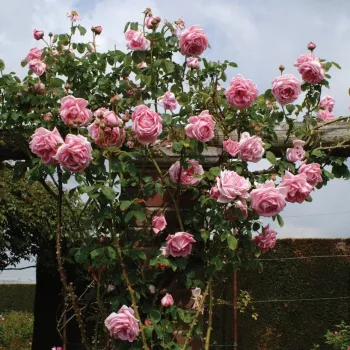
– Large, classic cup-shaped pink blooms
– Vigorous, upright shrubs with dense foliage
– Excellent disease resistance in gardens
– Very hardy, tolerates cold to RHS H7
– Special feature: Historic 1890 fashion-salon rose, ideal for romantic plantings.
Customer-centred focus – Year-round
pharmaROSA® ORIGINAL 2-litre own-root potted rose
18,20 £
Unfortunately, we are currently unable to ship to the United Kingdom; we only deliver to countries within the European Union. For more information, please contact us!
3(4954)
Madame Caroline Testout – pink hybrid tea rose
This classic hybrid tea brings a touch of heritage romance to small British gardens while remaining reassuringly reliable for everyday family use. Its medium-pink, silky blooms repeat through the season, offering generous flowering from a compact, upright bush that fits neatly into front borders and around-the-house beds. The strong, long-lasting fragrance makes it ideal for cutting, with long stems that slip easily into vases without complex pruning regimes. As an own-root plant it develops a durable, balanced structure, settling firmly even where wind and rain are common near exposed sites and coastal areas. Once planted and watered regularly in dry spells, it asks for little more than tip-pruning and deadheading to keep the display tidy. Over time the plant matures steadily – first deepening its root anchorage, then building bushy shoots, and by the third year presenting its full ornamental potential with dependable, season-long colour.
Madame Caroline Testout rose in full bloom, showing uniform pink double flowers.
Madame Caroline Testout with fully opened, mid-pink flowers.
Usage options
Target area
Reasoning
Front garden focal point by the path
Its upright, medium-sized habit and dense foliage create a refined, well-behaved bush that does not swamp a modest border yet still draws the eye with classic pink blooms, suiting neat, welcoming front gardens for the busy homeowner.
Small rose bed near the house
Reliable remontant flowering gives repeated waves of colour close to doors, patios or bay windows, with each flush holding well before fading to soft pastels, ideal for those wanting steady impact from a limited planting area for the urban gardener.
Cottage-style border with perennials
The heritage background and medium-pink tones pair easily with informal cottage companions, while the balanced, own-root shrub form keeps its place amongst perennials without becoming unruly, suiting relaxed yet orderly borders for the cottage-garden lover.
Cutting patch or cutting row
Long, straight hybrid tea stems and strong, long-lasting scent make it a practical choice for home-cut flowers, offering classic goblet-shaped blooms for vases without demanding specialist show-rose care, attractive to the home flower arranger.
Low-maintenance mixed shrub planting
Good disease resistance and modest maintenance needs allow it to sit comfortably among other shrubs and perennials, needing mainly watering in prolonged dry spells and occasional deadheading, fitting time-pressed gardeners and the beginner enthusiast.
Feature rose in a lawn island bed
The medium height and upright outline give enough presence to stand alone in a small island bed, while own-root growth supports long-lived structure and gradual thickening over the years, ideal for those planning stable plantings for the long-term owner.
Sheltered container on patio or terrace
When grown in a large container of at least 40–50 litres, it keeps a tidy, vertical habit and offers fragrant blooms close to seating areas, needing only regular watering and feeding to perform, convenient for the balcony or patio gardener.
Exposed, wind-prone garden corner
As the own-root plant slowly deepens its root system, it settles firmly into heavier or more challenging soils, providing a stable shrub that copes better with frequent wind and driving rain over time, reassuring for the coastal or open-site gardener.
Styling ideas
Cottage Row – Plant in a short line along a path with lavender and sweet alyssum for scent, soft colour and a classic cottage feel – ideal for lovers of traditional front gardens.
Pastel Island – Use three plants in a small lawn island with white Liatris and muted grasses to create a gently romantic focal point – suited to those wanting harmony without fuss.
Victorian Vase – Dedicate a narrow bed for cutting stems, edging with low alyssum so you can gather fragrant, long-stemmed blooms for the house – perfect for home florists.
Mixed Border – Thread individual plants between mid-height perennials where their upright form and repeat flowers punctuate the planting – good for gardeners seeking structure and softness together.
Patio Feature – Grow one specimen in a generous 50-litre pot by the seating area so the scent and colour can be enjoyed up close – tailored to small-garden and terrace owners.
Technical cultivar profile
Characteristic
Data
Name and registration
Madame Caroline Testout is a historic hybrid tea rose traded under this name; it is an unregistered variety in modern terms but widely recognised and authenticated in specialist rose collections and catalogues.
Origin and breeding
Bred by Joseph Pernet-Ducher in Lyon, France, and introduced in 1890 by Pernet-Ducher; the parentage is ‘Madame de Tartas’ crossed with ‘Lady Mary Fitzwilliam’, combining tea rose elegance with reliable garden performance.
Growth and structural characteristics
Forms an upright, medium-height bush about 100–140 cm tall and 70–110 cm wide, with dense, mid-green, slightly glossy foliage and moderate prickles; own-root plants develop a stable, long-lived shrub structure in garden settings.
Flower morphology
Produces large, double, cup to goblet-shaped flowers with 26–39 petals on mainly solitary stems; as a remontant hybrid tea it offers a generous second flush after the main bloom when properly deadheaded and lightly fed.
Colour data and phenology
Medium pink blooms with a silky sheen; buds open deep vivid pink, then soften to a uniform mid-pink and finally to pale pastel pink, with some quicker lightening in strong sun but better colour retention in cooler, overcast conditions.
Fragrance and aroma
Characterised by a strong, long-lasting scent typical of classic hybrid tea roses; flowers are suitable for cutting and bringing indoors, where the fragrance remains noticeable over time in vases and small rooms.
Hip characteristics
Limited hip set is expected because of the very double flowers; when produced, hips are bright red, spherical and around 8–12 mm in diameter, adding a subtle late-season accent but not a major ornamental feature.
Resistance and winter hardiness
Shows good general disease resistance, particularly to powdery mildew and black spot, with moderate susceptibility to rust; winter hardy to around −26 to −23 °C (RHS H7, USDA 5b), suitable for most UK garden conditions.
Horticultural recommendations
Performs best in full sun with fertile, well-drained soil; space 55–100 cm depending on use, water regularly in prolonged dry spells, and deadhead and lightly prune to maintain flowering and manageable height in family gardens.
Madame Caroline Testout offers reliable repeat flowering, strong scent and a stable own-root shrub that matures into long-lived garden structure; a thoughtful choice if you want a classic pink rose that quietly earns its place.
Colour Fading Description:
Fades from mid-pink to a pale pastel pink by the end of flowering; in strong sunlight it lightens more quickly, while in cool conditions the colour remains longer-lasting.
Pollinator Attraction:
Its very double flowers and reduced stamen accessibility make it unattractive to pollinators.
Pollinator-Friendly Rating:
Its double flowers partially cover the stamens, so it is of limited appeal to pollinators and is primarily an ornamental variety.
Our product is a rose grown with pharmaROSA®’s unique cultivation technology!
2-litre, own-root, potted rose.
With a shoot system appropriate to the season.
With a root system that thoroughly permeates the growing medium.
Quality compliant with the requirements of the E.N.A. (European Nurserystock Association).
Supplied in unique packaging that prevents damage.
Can be planted during frost-free periods.
True-to-variety rose bush with a unique identifier.
The pharmaROSA® own-root potted rose is a well-rooted plant that supports reliable establishment when planted and cared for properly, so it can be planted whenever the soil is not frozen.
Crop overview: several varieties and growth stages in a short crop section.Shoot system: intensive growth of fresh basal shoots on a young plant.Root system: demonstration of a vigorous root system permeating the growing medium, by removing the pot.Balance: mature plant with root system and shoots in harmony with each other.
Information about the videos
The video series is not a “seasonal showcase”; it illustrates the essence of pharmaROSA® own-root cultivation in a tangible way: how the plant is built up, what the root system is like and how the shoot system regenerates. The recordings were therefore made at different times and with plants at various stages of development, so mixed foliage levels and differing stages of growth may appear in the videos. They are not a ‘sample’ of the batch dispatched, but a visual explanation of how the technology works. The current condition of the rose available to order — typical for the given period and similar to what you can expect to receive in the parcel — is shown in the upper part of the product page.
Pages for private customers Garden roses for the family garden, with minimal care → ORIGINAL® Premium garden roses – instant impact, a truly showpiece garden → EXTRA® Pages for professionals and private customers Roses for public spaces – large areas, sustainable maintenance → NATURAL® Roses for projects – hedge and row planting, fast implementation → RAPID® For professional partners only Production – propagation material for garden roses, wholesale → NEONATAL®
Company details
PharmaRosa Ltd. Company registration number: 01-09-717479 VAT number: 13075314-2-43 Plant health registration no.: HU130721 Bank account (IBAN): HU85117631891388688400000000 BIC (SWIFT): OTPVHUHB Bank name: OTP Bank Nyrt.