Lykkefund – cream-white historic rambler climbing rose – Olsen
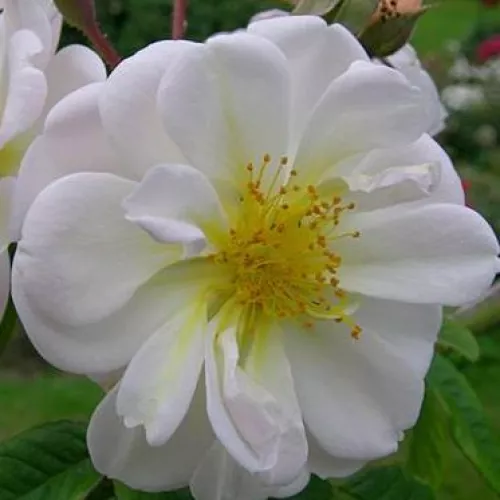
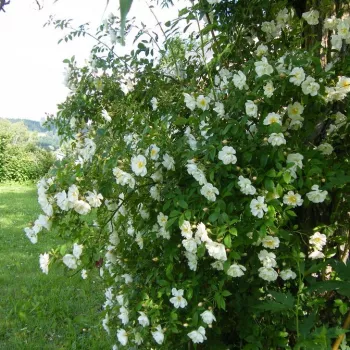
With its historic origin and graceful cream-white flowers, Lykkefund is an impressive rambler for arches, old walls and mature garden trees, bringing a wave of early-summer bloom and a strong, sweet, muscat-like fragrance. This large, vigorous climber forms dense mid-green foliage on long, flexible canes, yet is only sparsely thorned, making training and tying-in noticeably easier. Once established in suitable soil with simple winter hygiene pruning, it can offer a long-lived, characterful presence that copes well with summer heat and responds positively to watering in dry spells, even in more exposed gardens affected by persistent wind and rain near the coast. Its once-a-year flowering is concentrated and spectacular, followed by decorative orange hips that add seasonal interest and support wildlife, while the own-root form develops steadily into a stable, well-anchored framework that matures from rooting to full ornamental effect over three seasons, giving you a robust, enduring garden structure.
Usage options
| Target area | Reasoning |
|---|
| Pergola or arbour in a family garden |
Its vigorous climbing habit and profuse once-a-year flowering create a romantic canopy of cream-white blooms in early summer, ideal over seating areas where the strong muscat-like scent can be enjoyed at close quarters by cottage-garden lovers. |
| Training into a mature tree |
The long, flexible canes and sparse prickles make it easier to thread through the lower canopy of an established tree, giving a naturalistic cascade of blossom without excessive snagging, well suited to those who enjoy informal, woodland-edge effects as aesthetic beginners. |
| Covering a long fence or boundary |
With its substantial height and spread, Lykkefund clothes long runs of fencing or trellis, providing dense mid-green foliage for privacy and a dramatic early-summer display, appealing to time-pressed gardeners wanting maximum visual impact for busy homeowners. |
| Against a house wall or outbuilding |
Trained on wires, it softens brick or rendered walls with glossy foliage and scented creamy-white clusters, while good heat tolerance helps it manage warm south- or west-facing aspects, supporting those seeking reliable charm around the home as front-garden owners. |
| Pollinator-friendly wildlife corner |
The simple, open flowers with exposed stamens are highly attractive to bees and other beneficial insects at peak bloom, while the subsequent orange hips extend wildlife value into autumn, rewarding nature-focused planting choices by wildlife enthusiasts. |
| Feature rose in a larger cottage-style border |
Used as a focal climber with traditional companions, its historic character, soft colouring and concentrated flowering season fit seamlessly into classic cottage schemes, providing vertical structure and heritage atmosphere for traditionalists. |
| Large informal rose and shrub area |
In spacious gardens, its once-flowering rambler habit and substantial framework lend themselves to looser planting plans where a big seasonal show is desired, then foliage carries the structure through the year for park-style gardeners. |
| Wind-affected or semi-exposed sites with support |
Once properly established on a sturdy structure, the own-root plant forms a well-anchored, resilient framework that copes with seasonal wind and wet, particularly where basic drainage and regular monitoring are provided by committed rose enthusiasts. |
Styling ideas
- Cottage Arch – Train Lykkefund over a wooden arch with garden pinks and verbena at the base for a soft, romantic entrance – ideal for lovers of traditional cottage-style front gardens.
- Tree-Draped – Thread canes through a sturdy ornamental tree, underplanting with Persicaria and shade-tolerant perennials for a natural, woodland-edge look – suited to informal, characterful family gardens.
- Wall Cascade – Fan it along horizontal wires on a sunny wall, combining with upright perennials in creams and soft pinks to echo its bloom and fragrance – perfect for design-conscious urban homeowners.
- Wildlife Walk – Let it clothe a boundary near a path, with nectar-rich perennials to extend bee interest beyond its main flush – appealing to those prioritising pollinators and seasonal habitat.
- Pergola Retreat – Use Lykkefund as the main climber over a seating pergola, mixing in later-flowering climbers for succession, to create an immersive scented refuge – for gardeners who treasure peaceful outdoor corners.
Technical cultivar profile
| Parameter | Data |
|---|
| Name and registration |
Lykkefund historic rambler climbing rose from the Historic rose collection; unregistered cultivar used under its established trade name in gardens and collections. |
| Origin and breeding |
Bred by Aksel Olsen, Olsen Planteskole, Kolding, Denmark, from Rosa helenae × ‘Zéphirine Drouhin’; introduced in 1930 and widely grown as a classic northern European rambler. |
| Growth and structural characteristics |
Large, vigorous climber reaching about 4,8–7,2 m high and 3,6–5,4 m across, with dense, mid-green glossy foliage and a climbing, rambling habit suited to strong supports or large trees. |
| Flower morphology |
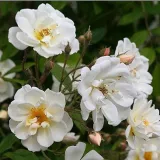
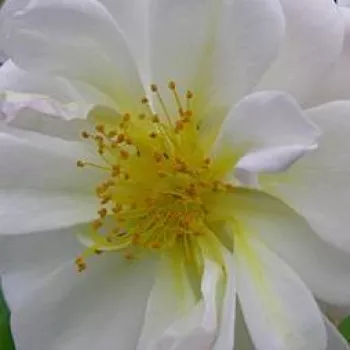
Small, flat, clustered flowers, typically 5–12 petals, single to semi-single; once-flowering rambler type producing a heavy early-summer flush rather than repeat blooms later in the season. |
| Colour data and phenology |
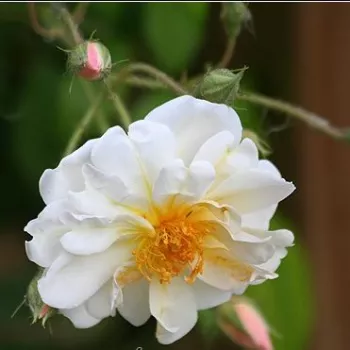
Pastel cream-white blooms, creamy in bud with faint pink tints, opening to near-white; colour lightens gently in sun but remains soft and clean through the flowering period. |
| Fragrance and aroma |
Strong, sweet, muscat-like scent with good persistence around seating areas and paths; open flowers with exposed stamens are notably attractive to bees and other pollinating insects. |
| Hip characteristics |
Forms small, spherical orange hips about 6–10 mm across; produced moderately after flowering, adding fine-textured late-season colour and some wildlife value in more naturalistic plantings. |
| Resistance and winter hardiness |
Hardy to approximately –26 to –23 °C (RHS H7, USDA 5b, Swedish zone 4); very disease-susceptible, so regular preventative care is essential in humid or high-pressure conditions. |
| Horticultural recommendations |
Best on strong supports in sun or light shade; needs regular pruning, tying-in and plant protection; allow space at 250–450 cm depending on use, and avoid overcrowded, poorly ventilated sites. |
Lykkefund offers a spectacular once-a-year cream-white display, strong muscat fragrance and wildlife-friendly hips on a long-lived own-root framework; consider it if you have the space and enthusiasm to care for a classic rambler.