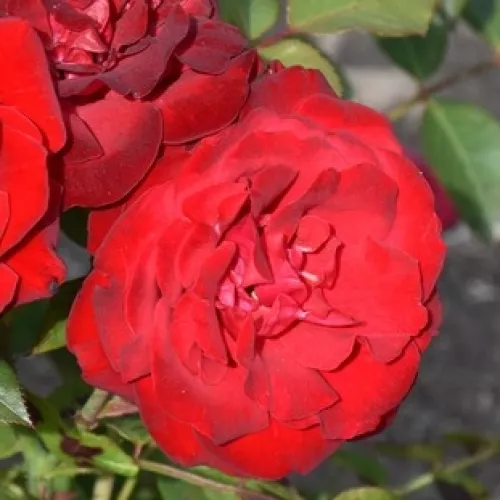
Deep, saturated burgundy-red shade with a velvety, silky sheen. - bedding floribunda rose - very weak, barely noticeable scented rose - slightly sweet aroma
– Deep burgundy-red blooms with velvety sheen.
– Reliable repeat flowering with rich second flush.
– Compact bushy habit for borders and hedges.
– Glossy dark green foliage for strong contrast.
– Proven garden performer with top UK award.
– Special feature: Forms decorative small red hips in late season.
Thinking about the garden's future – Nature-centred operation
pharmaROSA® ORIGINAL 2-litre own-root potted rose
18,20 £
Unfortunately, we are currently unable to ship to the United Kingdom; we only deliver to countries within the European Union. For more information, please contact us!
4.5(6913)
Lübecker Rotspon – dark red bedding floribunda rose – TANtide
For those who want reliable roses without complicated care, Lübecker Rotspon offers a bushy, compact habit that lends itself to neat, easy-to-manage front gardens and small borders. Its velvety, Bordeaux-toned blooms are carried in generous clusters, repeating steadily through the season to give a long display from a modest footprint, even in changeable British summers with frequent rain and wind off the coast. As an own-root plant in the pharmaROSA® ORIGINAL 2-litre pot, it settles quickly and builds a lasting framework, so you can enjoy consistent colour with minimal intervention once planted. With simple seasonal feeding, light pruning to suit your style, and thoughtful spacing, this rose forms dense, glossy foliage and abundant clusters of flowers that hold their colour well as they age. The moderate fragrance means it blends unobtrusively into busy family gardens, while its proven show awards underline its garden-worthiness. In a typical development arc, it prioritises roots in the first year, adds strong shoots in the second, and reaches full ornamental presence by the third.
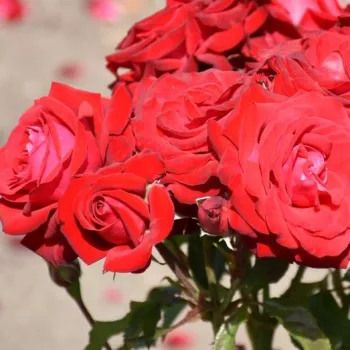
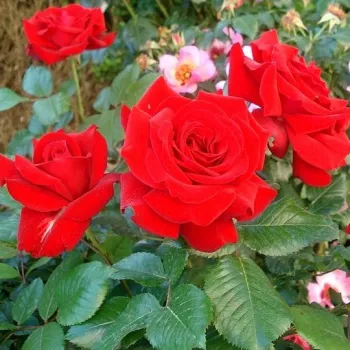
Double-flowered blooms of Lübecker Rotspon with a full, cupped form.
Double-flowered blooms with 26–39 petals and a cupped centre.
Lübecker Rotspon in a 2-litre pot
Freshly opened bloom of Lübecker Rotspon, showing rich burgundy-red petals.
Usage options
Target area
Reasoning
Front garden edging
The bushy, compact habit and recommended 35–40 cm spacing make Lübecker Rotspon ideal for smart, low front-garden lines that stay within bounds without constant clipping. Reliable repeat flowering in deep burgundy red gives definition against paving and brickwork, helping you keep a tidy, welcoming frontage with straightforward seasonal pruning only, well suited to the busy urban homeowner.
Small mixed border
Its steady remontant flowering and medium height allow it to sit comfortably among perennials such as Liatris, Verbena bonariensis and low grasses, adding a strong dark-red accent without overshadowing neighbours. The own-root form builds a stable shrub structure over time, so it copes well as surrounding plants fill out, providing long-term balance in a modest space for the cottage-garden enthusiast.
Statement group of 3–5 plants
Planting three to five bushes at 40 cm centres creates a dense, rounded mass of glossy foliage and velvety blooms that reads as one rich, wine-red cushion from the street. This layout makes a real feature in small front gardens or near an entrance, using limited space efficiently while remaining easy to weed and feed, perfect for the design-conscious beginner.
Low flowering hedge
At 65–95 cm high and 50–75 cm spread, Lübecker Rotspon forms a coherent, low hedge when planted at about 35 cm intervals. The dense, dark green foliage provides privacy at seated height, while the long-flowering clusters give colour from early summer onwards. With resilient hardiness to H7 and USDA 5b, it offers a durable boundary solution for the practical family gardener.
Specimen in a large container
Placed in a 40–50 litre pot with good drainage, this variety’s bushy form and repeat-flowering clusters create a strong focal point on patios or beside steps. The moderate heat and drought tolerance respond well to regular watering, and own-root growth recovers reliably if a container dries out occasionally, making it forgiving for the time-pressed balcony owner.
Classic cottage-style rose bed
The rich, stable burgundy-red colour and cupped, double blooms read beautifully with traditional cottage plants and soft pastels, yet do not fade quickly in sun. Its moderate disease resistance, especially to black spot, and straightforward deadheading support an informal but well-kept look without intensive spraying, suited to the romantic weekend gardener.
Family play-area backdrop
Moderate prickliness and a bushy, predictable outline mean it works well at the back of small beds edging lawns, giving a colourful backdrop that children can enjoy at a distance without dense thorns at ground level. Its own-root resilience supports long life and recovery from the odd knock, reassuring for the young family household.
Weather-resilient coastal border
The sturdy floribunda build and very good colour retention mean flowers remain attractive after showers and brisk winds, so borders stay presentable between weekend visits. In well-drained soil or a slightly raised bed, it anchors reliably and copes with blustery conditions common to many coastal gardens, giving confidence to the seaside property owner.
Styling ideas
Wine-border focus – Combine Lübecker Rotspon with silver foliage and dusky mauve perennials for a sophisticated, wine-toned ribbon along a path – ideal for homeowners seeking an elegant yet easy-care front edge.
Cottage cluster – Plant a tight group of three roses with Verbena bonariensis drifting through to create a relaxed, cottage feel that still looks tidy – perfect for beginners wanting charm without fuss.
Patio anchor – Use a single plant in a 50 litre terracotta container framed by low herbs to give a stable, long-lived focal point – suited to small patios where every pot must earn its place.
Family-friendly frame – Create a low arc of bushes behind a seating area, keeping blooms at eye level and thorns away from small hands – good for families wanting colour near play spaces.
Season-long ribbon – Run a line of plants along a drive at recommended spacing for a continuous band of deep red through summer – attractive for those who prioritise simple maintenance and reliable impact.
Technical cultivar profile
Parameter
Data
Name and registration
Floribunda bedding rose, registered as TANtide, marketed as Lübecker Rotspon Bedding rose TANtide; ARS exhibition name Glad Tidings, in the bedding floribunda commercial group.
Origin and breeding
Bred by Hans Jürgen Evers at Rosen Tantau, Germany, from Seedling × Seedling; bred around 1986, registered in 1988 and introduced to the market in 1990.
Awards and recognition
Recognised as UK Rose of the Year in 1989 and awarded the Durbanville Gold Medal in South Africa in 1992, confirming strong ornamental and garden performance.
Growth and structural characteristics
Bushy, shrub-like habit reaching about 65–95 cm in height and 50–75 cm spread, with dense, glossy dark green foliage and moderate prickles; faded blooms may require manual removal.
Flower morphology
Large, cupped clusters of double blooms, 2.75–3.95 inches across, with 26–39 petals; floribunda style floral trusses and remontant behaviour with a notably abundant second flush.
Colour data and phenology
Deep, saturated burgundy-red flowers with silky, velvety sheen; dark buds open to rich red, then soften to ruby with brownish-burgundy edges, maintaining very good colour stability before fading.
Fragrance and aroma
Very weak, slightly sweet scent that is barely noticeable in the garden, making it suitable where strong fragrance is not desired or where other perfumed plants take the lead.
Hip characteristics
Produces moderate quantities of small, 6–10 mm, ellipsoidal red hips, developing after flowering if spent blooms are not removed, offering subtle late-season interest to observant gardeners.
Resistance and winter hardiness
Hardy to approximately −26 to −23 °C (RHS H7, Swedish zone 4, USDA 5b); moderate overall disease resistance with good black spot resistance but some susceptibility to mildew and rust.
Horticultural recommendations
Best in sunny positions with well-drained soil; moderate maintenance, occasional fungicide where mildew or rust pressure is high; plant 35–65 cm apart depending on hedge, border, or specimen use.
Lübecker Rotspon offers compact, floriferous clusters, enduring deep-red colour and a stable own-root habit that matures gracefully over years, making it a considered choice for those planning a long-lived, easy-care garden feature.
Detailed product attributes
Product Identification Data
Product Name:
LÜBECKER ROTSPON – dark red bedding floribunda rose - Evers
Product Type:
pharmaROSA® ORIGINAL - 2-litre own-root potted rose
Meaning of Cultivar Name:
The name 'Lübecker Rotspon' refers to a Bordeaux red wine traditionally matured in oak casks in the Hanseatic city of Lübeck.
Cultivar Synonym:
Glad Tidings; Peter Wessel; Victoria; Viiniruusu
Closed Bud:
Dark, almost black-toned burgundy red with a metallic sheen at the tip.
Newly Opened Flower:
Rich burgundy-red petals with a silky, velvety texture.
Full Bloom:
Uniform deep red, with slightly darker shading on the petal edges.
Before Fading:
The centres of the petals fade to ruby red, with a brownish-burgundy shade appearing at the edges.
Colour Fading Description:
During opening, the deep burgundy-red tone moderately fades to a ruby red, and a brownish-burgundy hue appears on the margin before the flower fades.
Pollinator Attraction:
Flowers moderately attract pollinators; single or semi-double blooms with accessible stamens increase attractiveness, while fully double forms with concealed stamens reduce it.
Maintenance Requirement:
Maintenance requirement moderate; resistant to black spot, but occasional treatment against powdery mildew and rust is required.
Our product is a rose grown with pharmaROSA®’s unique cultivation technology!
2-litre, own-root, potted rose.
With a shoot system appropriate to the season.
With a root system that thoroughly permeates the growing medium.
Quality compliant with the requirements of the E.N.A. (European Nurserystock Association).
Supplied in unique packaging that prevents damage.
Can be planted during frost-free periods.
True-to-variety rose bush with a unique identifier.
The pharmaROSA® own-root potted rose is a well-rooted plant that supports reliable establishment when planted and cared for properly, so it can be planted whenever the soil is not frozen.
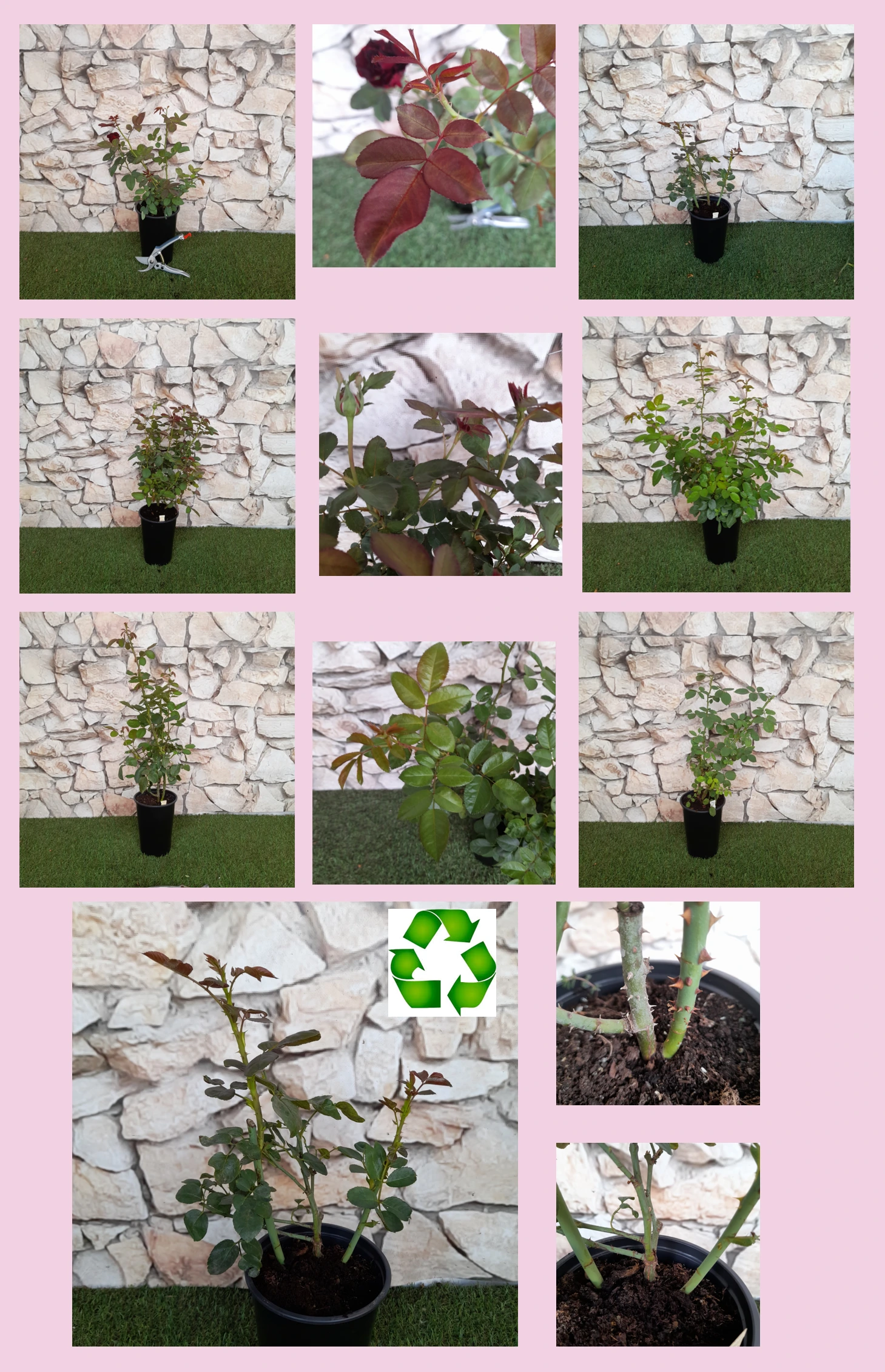
Crop overview: several varieties and growth stages in a short crop section.Shoot system: intensive growth of fresh basal shoots on a young plant.Root system: demonstration of a vigorous root system permeating the growing medium, by removing the pot.Balance: mature plant with root system and shoots in harmony with each other.
Information about the videos
The video series is not a “seasonal showcase”; it illustrates the essence of pharmaROSA® own-root cultivation in a tangible way: how the plant is built up, what the root system is like and how the shoot system regenerates. The recordings were therefore made at different times and with plants at various stages of development, so mixed foliage levels and differing stages of growth may appear in the videos. They are not a ‘sample’ of the batch dispatched, but a visual explanation of how the technology works. The current condition of the rose available to order — typical for the given period and similar to what you can expect to receive in the parcel — is shown in the upper part of the product page.
Pages for private customers Garden roses for the family garden, with minimal care → ORIGINAL® Premium garden roses – instant impact, a truly showpiece garden → EXTRA® Pages for professionals and private customers Roses for public spaces – large areas, sustainable maintenance → NATURAL® Roses for projects – hedge and row planting, fast implementation → RAPID® For professional partners only Production – propagation material for garden roses, wholesale → NEONATAL®
Company details
PharmaRosa Ltd. Company registration number: 01-09-717479 VAT number: 13075314-2-43 Plant health registration no.: HU130721 Bank account (IBAN): HU85117631891388688400000000 BIC (SWIFT): OTPVHUHB Bank name: OTP Bank Nyrt.