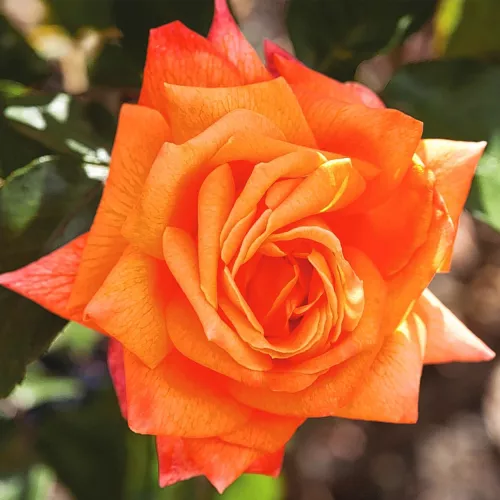
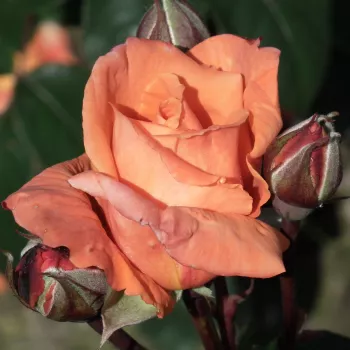
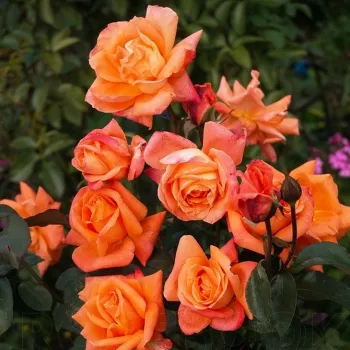
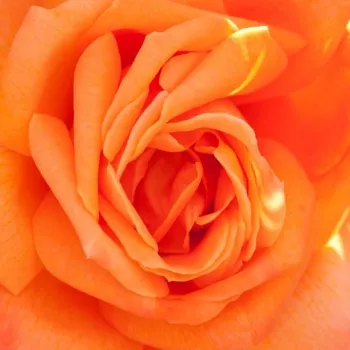
Clear, intense orange tone with a slight reddish hue. - hybrid tea rose - mild, restrained-scented rose - soft character
– Premium orange hybrid tea for beds
– Upright, elegant habit with glossy foliage
– Abundant remontant flowering through the season
– Reliable winter hardiness to RHS H7 rating
– Good resistance to powdery mildew and black spot
– Special feature: Mild, refined fragrance suits cut flowers indoors.
Water-wise – Neat composition
pharmaROSA® ORIGINAL 2-litre own-root potted rose
18,70 £
Unfortunately, we are currently unable to ship to the United Kingdom; we only deliver to countries within the European Union. For more information, please contact us!
4.5(6898)
LOVERS' MEETING – orange hybrid tea rose – Gandy
Effortless to live with yet generous in bloom, LOVERS' MEETING brings upright, elegant structure and well-shaped buds in a reliably neat bush that suits the average British family garden. Its medium-sized, high-centred flowers open in a rich, fire-orange that softens through peachy tones, giving continuous visual interest from first opening to the last petal. The plant is bred for resilience, coping well with typical UK summers where good soil preparation helps manage heavier ground and wetter spells by improving drainage in challenging conditions. As an own-root rose it settles steadily, building a balanced, long-lived shrub that recovers well from pruning and everyday knocks. You can expect a simple development: roots and establishment in the first year, strong shoots and shape in the second, and full garden impact by the third – an easy-going, reliable choice when you want to plant it and enjoy.
Freshly opened Lovers' Meeting flower with vivid orange petals.
Lovers' Meeting in freshly opened bloom, showing vibrant fire-orange petals.
Usage options
Target area
Reasoning
Front garden feature by the path or doorway
The upright, moderately tall habit and high-centred blooms give a classic hybrid tea look that reads clearly from the pavement without overpowering a small space. The moderately dense, glossy foliage keeps the plant looking tidy between flushes, ideal where you want a welcoming, orderly entrance for busy homeowners
Small mixed border in a family garden
LOVERS' MEETING slots neatly into narrow borders, bringing structured stems that weave easily between perennials without sprawling. Its medium maintenance rating suits gardeners happy to deadhead at weekends but not to fuss daily, while the remontant flowering keeps colour appearing through summer for casual gardeners
Cutting corner for home arrangements
The pointed, exhibition-style buds and straight stems make it well suited to cutting for vases, offering that traditional hybrid tea form with a refined, soft fragrance indoors. Regular cutting doubles as pruning, encouraging repeat flowering while giving you reliable stems of consistent quality for flower enthusiasts
Urban courtyard or terrace in a large container
Its upright shape and moderate spread adapt well to a substantial pot of at least 40–50 litres, where roots can anchor properly and moisture levels stay more stable. Provided you water and feed regularly, it will give structured, season-long colour without requiring complex training, perfect for city gardeners
Small group planting in a front bed
Planting three to five bushes at the recommended spacing creates a compact, formal block of vivid orange that reads as one coherent display from the street. The uniform height and consistent bloom form bring a composed look with simple pruning and straightforward seasonal care for orderly planners
Low, structured hedge or garden divider
At closer spacing, its upright habit and moderately thorny stems make an effective low partition between lawn and border or along a drive. While spent blooms need occasional removal, the even growth pattern and resilient foliage give a long-lived, clearly defined line for practical organisers
Cottage-style mix with perennials and grasses
The warm orange and peach tones blend well with blues, purples and soft grasses, while the reasonably compact outline prevents it from overpowering looser planting. With sound planting in improved soil, it copes reliably with typical British rain and wind, especially where heavier ground is helped by better drainage for style-conscious beginners
Family garden focal point near seating
Positioned close to a terrace or bench, the soft, restrained fragrance and changing petal colours reward regular use of the space without becoming overwhelming. As an own-root shrub it builds strength year by year, giving a stable, long-term feature with simple pruning and feeding for long-term planners
Styling ideas
Pathway – Line a short front path with evenly spaced bushes for a formal, welcoming orange ribbon that looks tidy from the street – ideal for those wanting classic kerb appeal with minimal complexity
Cottage – Combine with blue salvias, catmint and soft pink roses to soften the fiery orange into a romantic cottage palette – perfect for gardeners who enjoy a gentle, storybook look
Contrast – Pair with dwarf box and dark-leaved Phormium ‘Tom Thumb’ to emphasise the glossy foliage and upright stems – suited to design-minded owners who like crisp outlines and structure
Terrace – Grow one plant in a 40–50 litre container beside outdoor seating to enjoy close-up colour and fragrance – a good option for flat-dwellers or those with only a patio
Feature – Plant three in a triangle in the lawn or at a border corner to create a compact, glowing focal point – attractive for families wanting an easy landmark without complex planting plans
Technical cultivar profile
Property
Data
Name and registration
Hybrid tea rose, exhibition type for garden and cutting; commercial name LOVERS' MEETING hybrid tea rose Gandy; ARS exhibition name Lovers’ Meeting; registration year 1980.
Origin and breeding
Bred by Douglas Leonard Gandy in the United Kingdom in 1980 from an unnamed seedling crossed with ‘Egyptian Treasure’; later introduced to the market by subsequent distributors.
Growth and structural characteristics
Upright, hybrid tea bush reaching about 100–140 cm in height and 65–95 cm spread, with moderately dense, glossy dark green foliage and a moderately thorny framework.
Flower morphology
Medium-sized, double, high-centred blooms on mostly solitary stems; classic pointed hybrid tea buds suited for cutting; remontant, with a strong second flush and further repeat flowering.
Colour data and phenology
Clear, intense orange with a slight reddish hue; ARS colour OR; opens fire-orange, then vivid orange, fading to peach-orange tones before petal fall, giving a dynamic colour progression.
Fragrance and aroma
Soft, restrained fragrance of classic rose character, noticeable at close range without dominating nearby seating areas; primarily grown for colour and form rather than strong scent impact.
Hip characteristics
Occasionally bears small, spherical hips around 10–14 mm in diameter, orange-red at maturity; hips are incidental rather than a primary ornamental feature on this variety.
Resistance and winter hardiness
Hardy to around −21 to −18 °C (RHS H7, USDA 6b, Swedish zone 3); good resistance to powdery mildew and black spot, moderate rust sensitivity; prefers consistent moisture without prolonged drought.
Horticultural recommendations
Best in full sun with well-drained, fertile soil; medium maintenance with some deadheading; spacing 50–100 cm depending on use, at 2.8–3.2 plants/m² for mass or hedge planting.
LOVERS' MEETING offers tidy structure, vivid repeat flowering and dependable resilience in a long-lived own-root form that gradually settles into your garden; a thoughtful choice if you would like reliable colour with straightforward care.
Pollinator Attraction:
The flowers are very double (40+ petals) and, due to reduced stamen accessibility, attract pollinators only to a limited extent.
Pollinator-Friendly Rating:
Its double flowers partially cover the stamens, so it has limited pollinator-friendliness and is primarily an ornamental variety.
Our product is a rose grown with pharmaROSA®’s unique cultivation technology!
2-litre, own-root, potted rose.
With a shoot system appropriate to the season.
With a root system that thoroughly permeates the growing medium.
Quality compliant with the requirements of the E.N.A. (European Nurserystock Association).
Supplied in unique packaging that prevents damage.
Can be planted during frost-free periods.
True-to-variety rose bush with a unique identifier.
The pharmaROSA® own-root potted rose is a well-rooted plant that supports reliable establishment when planted and cared for properly, so it can be planted whenever the soil is not frozen.
Crop overview: several varieties and growth stages in a short crop section.Shoot system: intensive growth of fresh basal shoots on a young plant.Root system: demonstration of a vigorous root system permeating the growing medium, by removing the pot.Balance: mature plant with root system and shoots in harmony with each other.
Information about the videos
The video series is not a “seasonal showcase”; it illustrates the essence of pharmaROSA® own-root cultivation in a tangible way: how the plant is built up, what the root system is like and how the shoot system regenerates. The recordings were therefore made at different times and with plants at various stages of development, so mixed foliage levels and differing stages of growth may appear in the videos. They are not a ‘sample’ of the batch dispatched, but a visual explanation of how the technology works. The current condition of the rose available to order — typical for the given period and similar to what you can expect to receive in the parcel — is shown in the upper part of the product page.
Pages for private customers Garden roses for the family garden, with minimal care → ORIGINAL® Premium garden roses – instant impact, a truly showpiece garden → EXTRA® Pages for professionals and private customers Roses for public spaces – large areas, sustainable maintenance → NATURAL® Roses for projects – hedge and row planting, fast implementation → RAPID® For professional partners only Production – propagation material for garden roses, wholesale → NEONATAL®
Company details
PharmaRosa Ltd. Company registration number: 01-09-717479 VAT number: 13075314-2-43 Plant health registration no.: HU130721 Bank account (IBAN): HU85117631891388688400000000 BIC (SWIFT): OTPVHUHB Bank name: OTP Bank Nyrt.