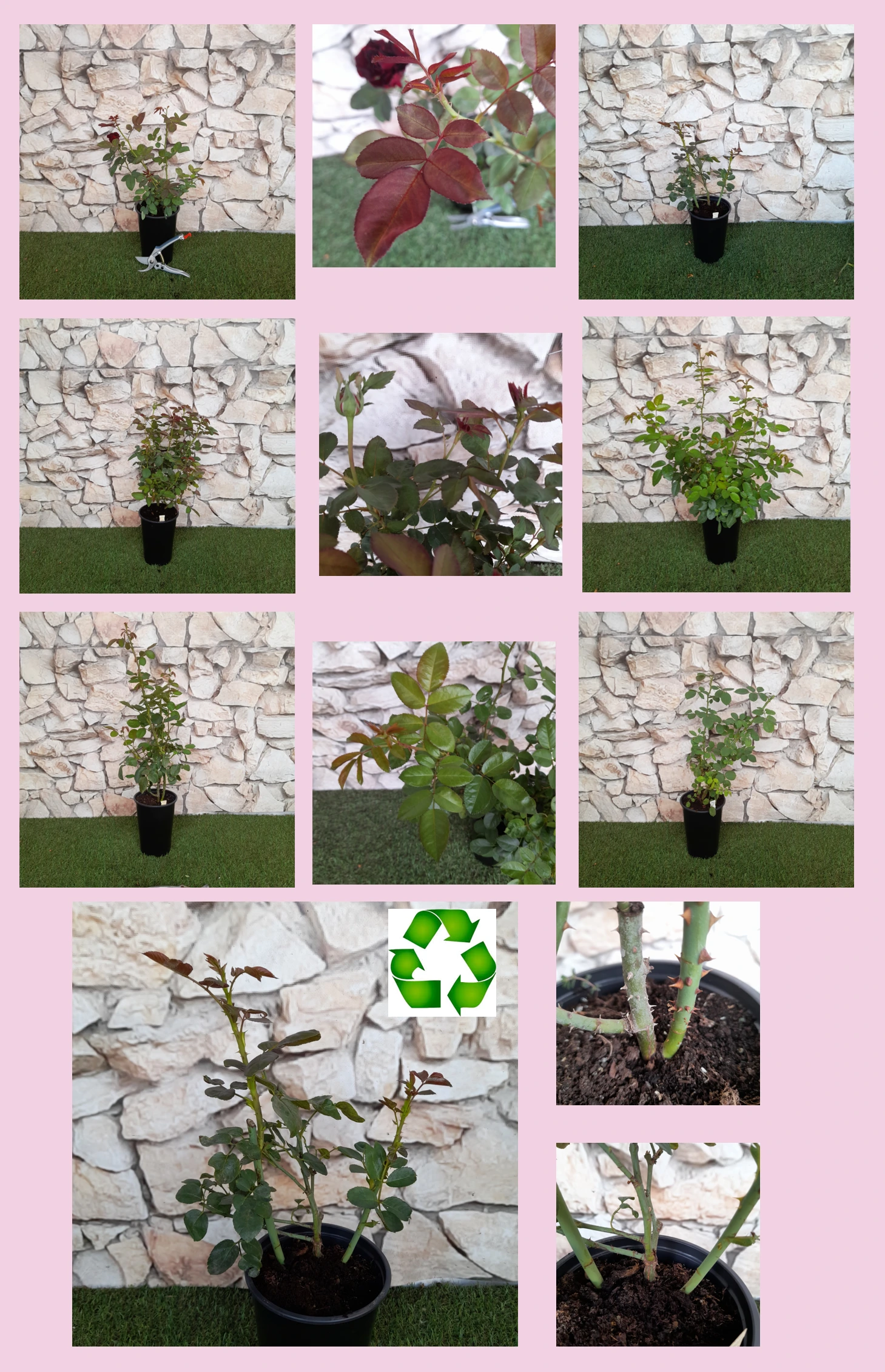
LOVE LETTER – cream-white bedding floribunda rose – Lens
Easy-care floribunda rose for compact, upright planting in classic British beds and borders, offering season-long flowering with soft cream-white blooms flushed pale lemon. Its naturally resistant foliage stays attractive in typical UK humidity, coping well where wind and rain can test front-garden planting. This premium, own-root shrub builds a long-lived, stable bush that recovers well from winter and light pruning. In the first year it focuses on roots, the second brings more shoots, and by the third year it reaches full ornamental impact with generous clusters ideal for cutting into the house. Low general maintenance needs and reliable rebloom make it a confident choice for busy family gardens.
Usage options
| Target area |
Reasoning |
| Small front garden bed by the entrance |
The compact, upright habit keeps LOVE LETTER neat beside paths and drives, giving a tidy first impression without overwhelming a modest space. Its low maintenance requirement and good disease resistance help you avoid constant spraying or complex care, ideal where you just want reliable colour and order by the front door, particularly for the busy homeowner. |
| Cottage-style border in a family back garden |
Season-long repeat flowering delivers regular flushes of cream-white clusters that mix beautifully with perennials and herbs, echoing traditional cottage schemes. The remontant character means a good second display after the first wave, keeping the border lively through summer without replanting, which suits the classic-style gardener. |
| Low rose edging along a path or lawn |
The moderate height and planting distances allow LOVE LETTER to form a low, coherent edging that visually frames lawns and paths. Its structured, upright growth and dense foliage give a defined line while still looking soft and romantic, an approach that appeals to the orderly garden lover. |
| Small group planting in a feature bed |
Planted in groups of three to five, the uniform habit creates a cohesive block of cream-white flowers with a pale lemon centre, drawing the eye without harsh colour clashes. As an own-root plant, the group matures steadily into a balanced stand, giving long-term structure prized by the long-view planner. |
| Containers on patios, terraces or balconies |
LOVE LETTER adapts well to large containers of at least 40–50 litres, where its upright growth and moderate spread fit comfortably in confined spaces. Regular watering and feeding are straightforward tasks, and the clusters can be enjoyed at close range, making it attractive for the space-conscious gardener. |
| Mixed ornamental bed with shrubs and evergreens |
The calm cream-white and pastel lemon tones sit easily beside dark green foliage plants and small shrubs, softening harsher structural elements. Its gentle colour fading in heat maintains a refined look, while the long-lived own-root framework ensures the composition remains balanced, suiting the design-focused owner. |
| Cutting patch for informal indoor arrangements |
The large, cup-shaped, semi-double flowers are carried in clusters, providing multiple stems for informal vases. Although fragrance is very weak, the delicate cream-white petals bring light and elegance indoors over much of the season, rewarding the home-decor enthusiast. |
| Low-input rose bed in cooler, wetter regions |
Strong resistance to powdery mildew, black spot and rust supports healthy foliage even in humid, showery British weather, reducing the need for spraying. This reliability, combined with winter hardiness to typical UK minima, underpins a robust, low-intervention planting that reassures the practical beginner. |
Styling ideas
- Cottage Harmony – Combine LOVE LETTER with Carpathian bellflower and soft pink perennials for a light, romantic border that flowers from early summer into autumn – ideal for the traditionalist who values gentle continuity.
- Front-Door Welcome – Plant a short row along the path, underplanted with low lavender or rosemary, to create a structured yet inviting entrance that stays tidy with little effort – perfect for busy professionals.
- Patio Feature – Grow one shrub in a 50-litre terracotta pot with trailing white lobelia to underline the rose’s upright form and repeat bloom – suited to balcony and terrace gardeners.
- Calm Contrast – Set against dark-leaved shrubs such as cherry laurel to make the cream-white clusters stand out without harsh colour clashes – attractive for those seeking a composed, modern look.
- Soft Hedge – Use closer spacing to form a low, flowering boundary between lawn and bed, relying on the upright habit and good disease resistance for a clean line – good for families wanting structure without fuss.
Technical cultivar profile
| Parameter |
Data |
| Name and registration |
Floribunda bedding rose, registered as LENpiro; marketed as LOVE LETTER flower bed rose LENpiro, with Love Letter® as the approved exhibition name for floribunda cut flower classes. |
| Origin and breeding |
Bred by Louis Lens in Belgium in 1977 from ‘Pink Parfait’ × ‘Rosenelfe’; introduced by Lens Roses in 1980, combining reliable floribunda flowering with refined cream-white colouring. |
| Growth and structural characteristics |
Compact, upright floribunda rose reaching about 60–85 cm in height with a 40–55 cm spread; moderately thorny, densely foliated, with slightly glossy dark green leaves that support a tidy, bushy habit. |
| Flower morphology |
Semi-double, cup-shaped blooms with 17–25 petals, borne in cluster-flowered inflorescences; large flower size around 2.75–3.95 inches, with remontant, abundant repeat flowering through the season. |
| Colour data and phenology |
Cream-white blooms with a pastel lemon-yellow flush in the centre; newly opened flowers show stronger lemon tones, which fade to near-uniform cream-white, with cooler weather intensifying the yellowish centre. |
| Fragrance and aroma |
Very weak, barely perceptible rosy fragrance; primarily valued for visual effect rather than scent, so best partnered with aromatic companions if fragrance is important in the planting scheme. |
| Hip characteristics |
Produces sparse crops of small spherical hips about 6–9 mm in diameter; hips are orange-red when formed and have limited ornamental impact compared with the primary floral display. |
| Resistance and winter hardiness |
Good overall disease resistance, with stated resistance to powdery mildew, black spot and rust; winter-hardy to approximately −21 to −18 °C, aligning with RHS H7, Swedish Zone 3 and USDA Zone 6b conditions. |
| Horticultural recommendations |
Best in a sunny position for beds, borders, containers and cutting; plant about 30 cm apart for mass displays, closer for hedging, and around 50 cm as specimens, keeping soil well-drained and reasonably fertile. |
LOVE LETTER offers compact, upright growth, season-long cream-white flowering and dependable disease resistance on a durable own-root framework, making it a reassuring choice for those planning an easy-care, long-lived rose feature.