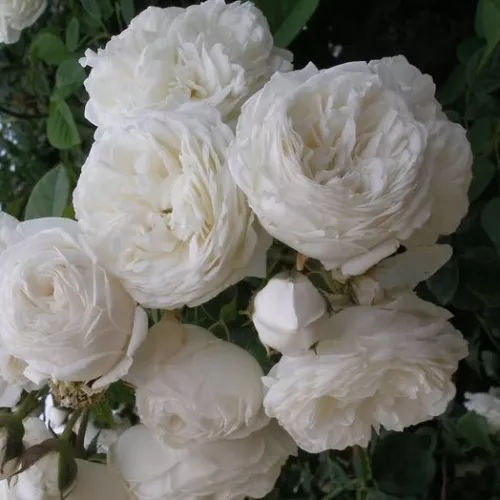
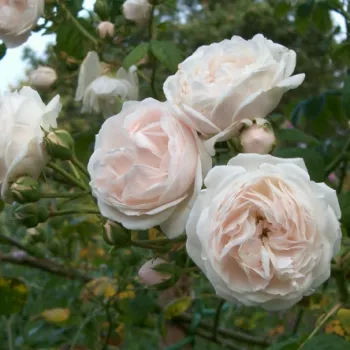
Long John Silver – white rambler climbing rose – Horvath
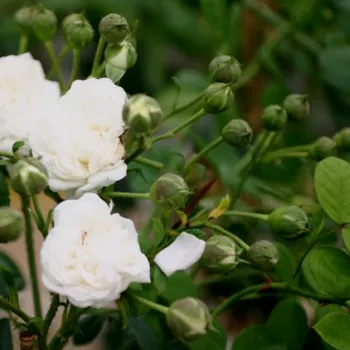
This historic rambler brings a sweep of white bloom to pergolas, arches and house walls with masses of very double, snow-white clusters and a gentle, rosy fragrance that feels quietly romantic. Its vigorous climbing growth quickly creates height and cover, yet its medium maintenance needs suit busy, style-conscious gardeners who want reliable flowering rather than complicated routines. On its own roots it settles in steadily, building a long-lived, well-anchored framework that copes confidently with strong winds in more exposed British gardens. Over the first seasons it concentrates on roots, then structural canes, and by the third year delivers its full ornamental display. The pure colour holds well with minimal fading, giving a clean, classic look that pairs beautifully with traditional brickwork and cottage-style planting. Long John Silver also accepts partial shade, retaining dense dark foliage that keeps trained structures looking consistently green and well covered, even when space is tight and your gardening time is limited.
Usage options
| Target area | Reasoning |
|---|
| House wall or garage facade |
Use as a tall, trained climber to soften brick or render with curtains of pure white blooms. The vigorous habit quickly clothes large vertical spaces, while own-root resilience supports a long-lived, low-fuss framework – ideal for the busy homeowner. |
| Garden arch or arbour |
Train over an entrance arch or seating arbour for a romantic tunnel of white clusters and mild fragrance. The strong climbing growth gives good overhead cover, and the refined flower form suits cottage-style front gardens, perfect for the aesthetic-focused beginner. |
| Pergola or walkway structure |
Long canes span pergola beams, creating shade and seasonal drama along paths or terraces. The stable, own-root base develops into a durable framework over the years, supporting dependable displays for families planning a long-term garden. |
| Fence or boundary screening |
Ideal where you need height and soft screening without complex maintenance; medium care needs and own-root regrowth make it forgiving if pruning is occasional, suiting time-pressed urban and suburban gardeners. |
| Training into a small tree or large shrub |
The rambler habit allows it to be threaded through a sturdy tree or large shrub for a natural, woodland-edge effect. Its adaptable root system anchors well even in heavier soils that need thoughtful drainage, helpful for more challenging-site owners. |
| Part-shaded side return or narrow passage |
Performs reliably in partial shade, maintaining dense dark foliage and flower clusters where sun is limited. This makes side alleys and narrow city plots feel lush and finished without demanding daily care from busy Londoners. |
| Cut-flower use from established plants |
From a mature plant, medium-sized, full-petalled clusters can be cut for jugs and vases, giving a classic white accent indoors. The remontant habit offers repeated picking periods for those who enjoy decorating their homes. |
| Large containers on patios or terraces |
When grown in a substantial container of at least 40–50 litres with a strong support, this climber can frame doors or seating areas. Own-root growth adapts well to pot conditions, suiting design-led but space-limited balcony and patio users. |
Styling ideas
- COTTAGE ARCH – Train over a metal or wooden arch with lavender and catmint at the base for a soft, romantic entrance – ideal for lovers of classic cottage gardens.
- WHITE-ON-GREEN FACADE – Combine against dark green-painted doors and window frames with box or yew edging for a crisp, traditional frontage – appealing to owners of period or character homes.
- EVENING PERGOLA – Let the white flowers catch dusk light above seating, underplanted with hostas and ferns for texture – perfect for households who mainly enjoy the garden after work.
- RELAXED BOUNDARY – Soften fences by pairing with lesser periwinkle and low catmint for a low-maintenance, flowering strip – suited to families wanting structure without formal hedging.
- ROMANTIC TREE VEIL – Thread through a sturdy small tree to create a curtain of white among branches – a good choice for creative gardeners seeking a naturalistic, storybook feel.
Technical cultivar profile
| Characteristic | Data |
|---|
| Name and registration |
Long John Silver is a historic rambler climbing rose, introduced by Jackson & Perkins in 1934; it is unregistered but traded under this established, widely recognised name. |
| Origin and breeding |
Bred in the United States by Michael Henry Horvath from Rosa setigera seedling × ‘Sunburst’ and first introduced in 1934, combining wild-species vigour with refined garden rose bloom qualities. |
| Growth and structural characteristics |
Very vigorous climbing rambler, reaching around 430–700 cm in height with a 220–420 cm spread; carries dense, slightly glossy dark green foliage and is moderately thorny along its long canes. |
| Flower morphology |
Produces medium-sized, cup-shaped clusters of very double blooms with over 40 petals, borne in trusses; flowers are remontant, giving an abundant main display with a generous second flush later. |
| Colour data and phenology |
Flowers open snow white with a pearlescent sheen, sometimes with creamy hints at petal edges; colour holds well with little fading, maintaining a clear white appearance throughout the flowering period. |
| Fragrance and aroma |
The scent is mild with a restrained rosy character, noticeable at close range rather than across the garden, adding a gentle traditional rose note without overwhelming smaller outdoor spaces. |
| Hip characteristics |
Rosehip production is generally low due to the very double flowers and long blooming; occasionally small, ellipsoid red hips of about 11–17 mm may form, giving modest late-season interest. |
| Resistance and winter hardiness |
Hardy to approximately −40 to −43 °C (RHS H7, USDA 2b), with medium resistance to black spot, powdery mildew and rust; benefits from good air circulation and timely watering in prolonged drought. |
| Horticultural recommendations |
Best used on pergolas, walls, fences or trained into trees; plant 180–330 cm apart depending on effect, allow strong support, and prune after flowering to manage size and encourage new flowering wood. |
Long John Silver offers pure white clustered blooms, impressive climbing height and adaptable, own-root durability for long-term structures, making it a thoughtful choice when planning a lasting feature in your garden.