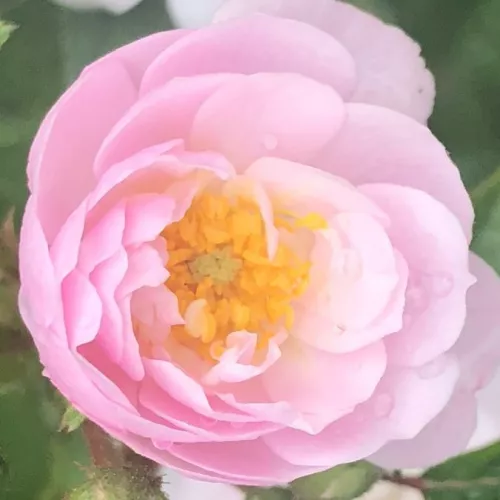
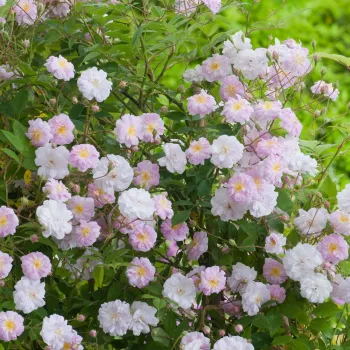
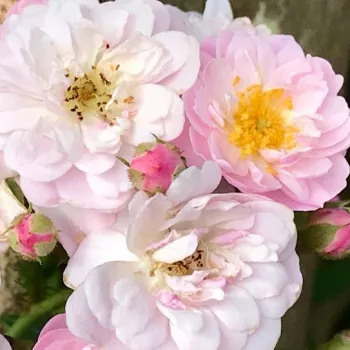
A pale, delicate pastel pink shade that lightens towards the edges of the petals. - climber, climbing rose - mild, subtly scented rose - soft, floral character
– Soft sugar-pink clusters on compact climber
– Reliable repeat flowering through the season
– Dense, glossy dark foliage, sparsely thorned
– Mild, soft floral fragrance for close seating
– Suitable for pergolas, fences and containers
– Special feature: Decorative red hips extend autumn interest.
Customer-centric – Tranquil garden experience
pharmaROSA® ORIGINAL 2-litre own-root potted rose
18,70 £
Unfortunately, we are currently unable to ship to the United Kingdom; we only deliver to countries within the European Union. For more information, please contact us!
3(4947)
Little Rambler – pink climbing miniature rambler rose
Pastel clusters of small, cupped blooms soften fences, arches and obelisks, creating a romantic cottage-garden feel in even the smallest front garden. The miniature flowers repeat generously through summer, so your pergola or trellis stays floriferous with only light seasonal maintenance. Its compact climbing habit and dense, glossy foliage give a naturally tidy outline that suits busy households who want a graceful vertical accent rather than a high-work specimen, while the own-root plant gradually forms a long-lived, resilient framework. In British gardens where damp weather and breezes are common, it copes reliably with everyday coastal conditions when drainage is reasonable. Bees are drawn to the lightly scented, open-centred blooms, adding gentle wildlife interest to family spaces. Planted once, it matures steadily into a stable feature, the first year focusing on roots, the second on new shoots, and by the third gifting its full ornamental display.
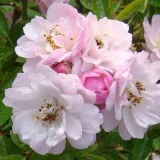
Little Rambler in different opening stages, from mid-pink bud to pale pink bloom.
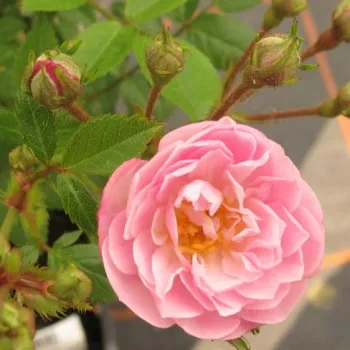
Little Rambler shows small, double pink blooms in a size comparison.
Usage options
Target area
Reasoning
Front-garden cottage trellis
Ideal where you want a soft, pastel welcome by the front door without a dominating, oversized climber. The compact height and moderate spread suit typical British front gardens, while repeat flowering keeps the entry neat and pretty for beginners.
Small pergola or archway
The relatively light framework and sparse thorns make it easier to train over a modest pergola or arch than many vigorous ramblers, creating a romantic tunnel of blossom that does not overwhelm narrow paths or need constant tying for families.
Low fence or railing screen
Dense, glossy foliage and regular clusters of small blooms provide a soft privacy veil along garden boundaries, with moderate maintenance limited mainly to annual shaping, perfect where you want order and charm together for busy-owners.
Large container on patio or balcony
Suited to a 40–50 litre container with support, where its controlled vigour and miniature flowers give vertical colour without outgrowing the pot; watering and feeding are straightforward for space-conscious urban gardeners.
Mixed cottage border backdrop
The pastel pink clusters blend beautifully with catmint, lamb’s ear and daisies, lending height at the back of a small border without casting excessive shade, perfect for informal, nostalgic schemes loved by cottage-style enthusiasts.
Family play garden corner
Its manageable size, moderate thorniness and tidy habit make it easier to place near seating or play areas than larger, bristly climbers, giving gentle colour and seasonal hips with simple, occasional pruning for safety-conscious parents.
Partially shaded side passage
Tolerates partial shade, so it performs reliably on side alleys or north-east aspects where many roses struggle, still offering clusters of bloom as long as soil drains well in breezy, occasionally wet, coastal-type conditions for practical homeowners.
Pollinator-friendly ornamental feature
The double yet open-centred flowers show accessible stamens that attract bees and other beneficial insects, so a trained Little Rambler can serve as both a pretty vertical accent and a small wildlife resource in lived-in gardens for nature-loving beginners.
Styling ideas
Doorway-arch – Train Little Rambler over a slim metal arch, underplant with catmint and lamb’s ear for a soft blue-silver base – for cottage-front romantics seeking a gentle welcome.
Pastel-fence – Cover a low picket fence with its pale pink clusters, mixing oxeye daisy and hardy geraniums in front – for those wanting a tidy yet relaxed boundary.
Patio-obelisk – Plant in a 40–50 litre container with a wooden obelisk, surrounding the base with trailing lobelia – for balcony and courtyard gardeners short on ground space.
Family-nook – Place behind a bench in a quiet corner, combining with catmint and small ornamental grasses – for families creating a calm, low-effort seating area.
Side-passage – Run it along a wire-trained wall in partial shade, with ferns and hostas below – for homeowners turning awkward side strips into graceful green corridors.
Technical cultivar profile
Parameter
Data
Name and registration
Miniature climbing rose, registered as CHEWramb, marketed as Little Rambler – pink rambler rose, climber – Warner; exhibition name Little Rambler, ARS approved.
Origin and breeding
Bred by Christopher H. Warner in the United Kingdom (1989), from (‘Cécile Brunner’ × ‘Baby Faurax’) × (‘Marjorie Fair’ × ‘Nozomi’); introduced and first distributed by Warner’s Roses in 1994.
Awards and recognition
Certificate of Merit awarded in Great Britain in 1991, confirming ornamental and garden performance worthy of recognition among miniature climbing roses in trial and show conditions.
Growth and structural characteristics
Climbing habit with dense, glossy dark green foliage; sparsely thorned stems; height about 180–260 cm and spread 160–240 cm, forming a compact, trainable framework suitable for small structures.
Flower morphology
Small, double, cup-shaped flowers, around 0.5–1.5 inches across, borne in cluster-flowered sprays; 20–30 petals; remontant with a notably abundant second flush in suitable seasons.
Colour data and phenology
Pale pastel pink, ARS code LP, RHS 65C–65D; buds open soft sugar-pink, fading to creamy, almost white edges, so the plant shows a delicate, blended pastel effect through the flowering period.
Fragrance and aroma
Mild, soft floral scent rather than a strong perfume, noticeable close to the plant without overwhelming nearby seating areas; complements the visual effect rather than defining the cultivar.
Hip characteristics
Produces small spherical red hips, around 4–7 mm in diameter, in moderate numbers after flowering, adding a light decorative touch and seasonal interest into autumn and early winter.
Resistance and winter hardiness
Hardy to around −18 to −15 °C (RHS H6, Swedish zone 2, USDA 7a); moderate resistance to black spot, powdery mildew and rust; average heat and drought tolerance, needing watering in prolonged dry spells.
Horticultural recommendations
Best on pergolas, fences, obelisks or large containers; plant about 200 cm apart in mass, 185 cm for hedging, 320 cm as solitary; moderate maintenance including occasional pest control and deadheading.
Little Rambler offers compact climbing height, repeat pastel flowering and manageable care on a long-lived own-root framework, making it a thoughtful choice for quietly elegant, easygoing British gardens.
Detailed product attributes
Product Identification Data
Product Name:
LITTLE RAMBLER – pink rambler rose, climber - Warner
Product Type:
pharmaROSA® ORIGINAL - 2-litre own-root potted rose
Pollinator Attraction:
With an open (simple to semi‑double) flower form and visible, easily accessible stamens, it attracts bees and other pollinators.
Pollinator-Friendly Rating:
Double, open‑centred flowers with visible stamens attract pollinators well, and are therefore moderately pollinator‑friendly.
Our product is a rose grown with pharmaROSA®’s unique cultivation technology!
2-litre, own-root, potted rose.
With a shoot system appropriate to the season.
With a root system that thoroughly permeates the growing medium.
Quality compliant with the requirements of the E.N.A. (European Nurserystock Association).
Supplied in unique packaging that prevents damage.
Can be planted during frost-free periods.
True-to-variety rose bush with a unique identifier.
The pharmaROSA® own-root potted rose is a well-rooted plant that supports reliable establishment when planted and cared for properly, so it can be planted whenever the soil is not frozen.
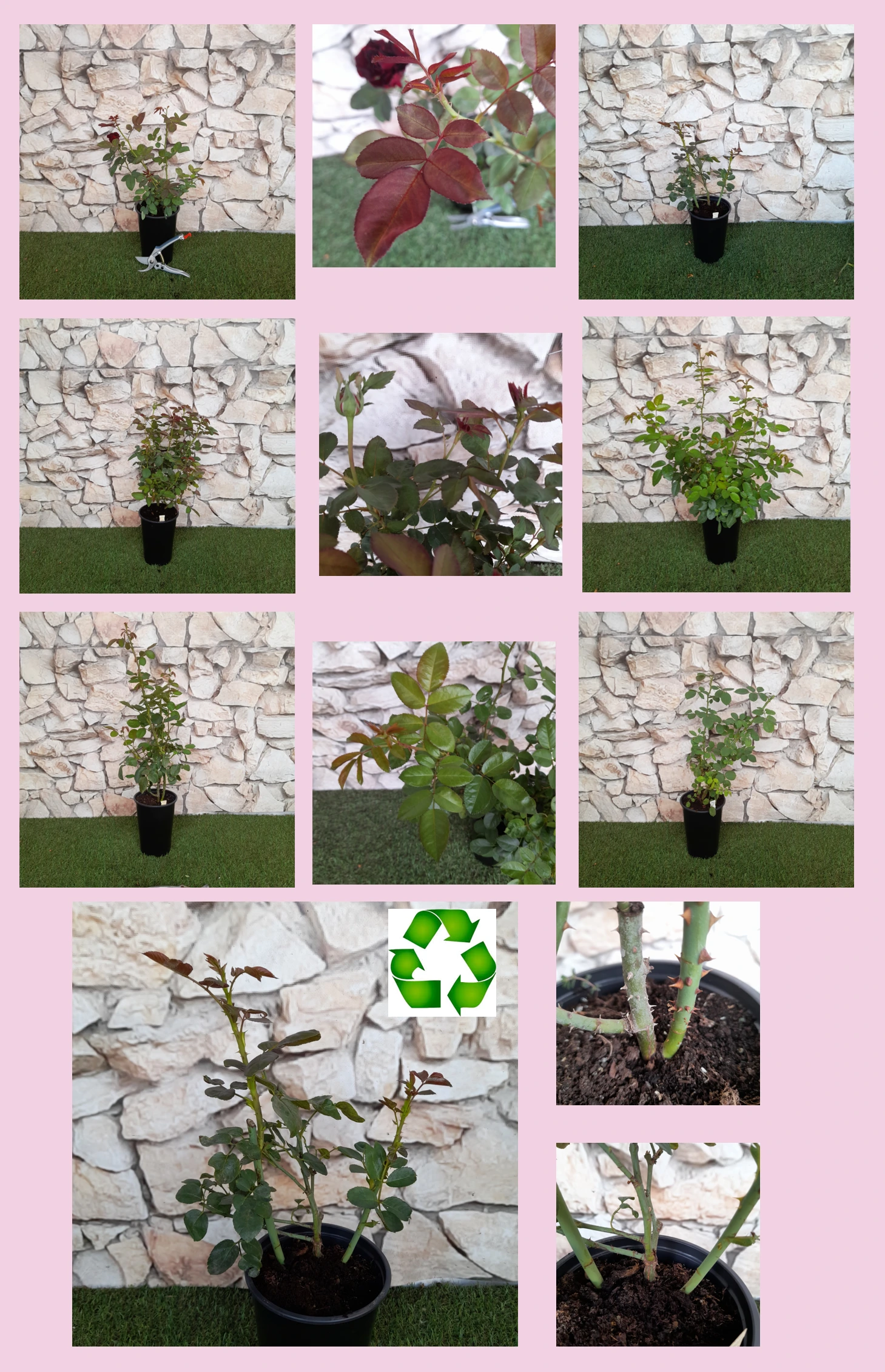
Crop overview: several varieties and growth stages in a short crop section.Shoot system: intensive growth of fresh basal shoots on a young plant.Root system: demonstration of a vigorous root system permeating the growing medium, by removing the pot.Balance: mature plant with root system and shoots in harmony with each other.
Information about the videos
The video series is not a “seasonal showcase”; it illustrates the essence of pharmaROSA® own-root cultivation in a tangible way: how the plant is built up, what the root system is like and how the shoot system regenerates. The recordings were therefore made at different times and with plants at various stages of development, so mixed foliage levels and differing stages of growth may appear in the videos. They are not a ‘sample’ of the batch dispatched, but a visual explanation of how the technology works. The current condition of the rose available to order — typical for the given period and similar to what you can expect to receive in the parcel — is shown in the upper part of the product page.
Pages for private customers Garden roses for the family garden, with minimal care → ORIGINAL® Premium garden roses – instant impact, a truly showpiece garden → EXTRA® Pages for professionals and private customers Roses for public spaces – large areas, sustainable maintenance → NATURAL® Roses for projects – hedge and row planting, fast implementation → RAPID® For professional partners only Production – propagation material for garden roses, wholesale → NEONATAL®
Company details
PharmaRosa Ltd. Company registration number: 01-09-717479 VAT number: 13075314-2-43 Plant health registration no.: HU130721 Bank account (IBAN): HU85117631891388688400000000 BIC (SWIFT): OTPVHUHB Bank name: OTP Bank Nyrt.