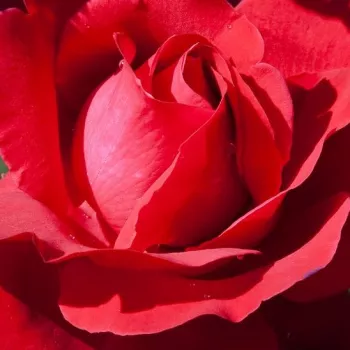
LIEBESZAUBER 91® – dark red hybrid tea rose - Kordes
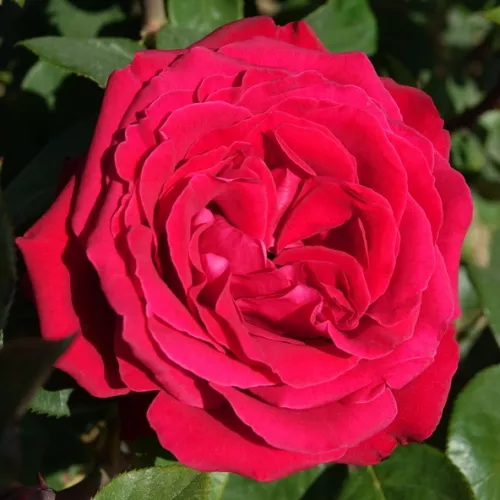
This velvety dark-red hybrid tea rose offers a truly romantic focal point for modest British front gardens, combining long-stemmed blooms with a rich, classic fragrance that feels effortlessly luxurious. Bred by Kordes and supplied as a well-rooted own-root plant, it settles gradually yet reliably, forming a stable, upright bush that becomes more enduring with every season. Large, high-centred flowers open in flushes on strong stems, providing excellent cutting material for the house as well as elegant structure in the border. With only moderate maintenance needs and straightforward seasonal pruning, it suits busy gardeners who still want a smart, orderly look around the home. Its generous repeat flowering keeps beds and small groups colourful through summer, even in typical UK conditions of variable sun and showers, while good colour retention preserves the deep red intensity. Designed for long-term schemes, it rewards simple care and regular watering in dry spells, developing first its roots, then strong shoots, and by the third year its full ornamental character emerges as a lasting feature. The dense, glossy foliage provides a handsome, structured backdrop that copes well with exposed, breezy sites where wind is a regular garden factor.
Usage options
| Target area |
Reasoning |
| Front garden feature rose |
Its upright habit and large, high-centred blooms create an immediate sense of formality beside paths, doors or driveways, giving a tidy, well-kept look without complex planting plans. Ideal for those who want an elegant entrance with minimal learning curve for the beginner. |
| Classic cottage-style bed |
Deep velvety red flowers pair beautifully with softer perennials, adding romantic depth and structure within an informal mix while still being straightforward to prune and feed once or twice a year. Suits gardeners who like a relaxed cottage feel but need simple, manageable care for the hobbyist. |
| Small group planting (1–3 roses) |
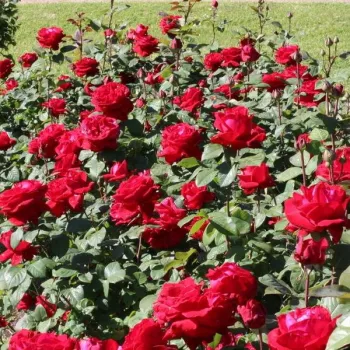
Planted in a group, the uniform upright growth and repeat flowering build a compact, coherent clump that fills a modest border section over a few seasons, offering reliable impact from a limited number of plants. Perfect for smaller plots where every plant must earn its place for the homeowner. |
| Cutting patch near the patio |
Long, strong stems with exhibition-type, high-centred blooms and a rich scent make this rose ideal for cutting, providing regular vases of dark-red flowers without needing a dedicated rose garden layout. Best for those who enjoy bringing garden flowers indoors but prefer straightforward, unfussy cultivation for the urbanite. |
| Specimen in a mixed border |
Used as a single specimen, it offers a clear vertical accent and long seasonal interest, with dark foliage and repeated flushes of large blooms standing out against shrubs, grasses or perennials. A good choice for gardeners wanting one dependable, eye-catching rose that anchors the planting design for the stylist. |
| Low-maintenance family border |
Moderate disease resistance and only occasional pest checks mean it fits well into busy family gardens where there is limited time for detailed rose care, yet a desire for strong colour and fragrance close to seating areas. Suited to those needing fuss-free structure and seasonal colour for the family. |
| Large container on terrace (40–60 L) |
In a generous container with good drainage, its upright framework and dense foliage give height and privacy on terraces or paved front gardens, while the repeat-flowering habit ensures colour where soil area is limited and breezy spots are common. Ideal for space-conscious gardeners seeking portable, long-lived structure for the balcony-owner. |
| Long-term rose focal point |
As an own-root rose it builds strength year by year, recovering well from harder pruning and gradually forming a durable framework that continues to flower reliably, making it suitable for permanent schemes that need to stay attractive with modest, regular care. Well suited to planners of settled, future-proof borders for the planner. |
Styling ideas
- Formal-entrance trio – Plant three in a gentle arc by the front path, edged with low box or dwarf lavender for a composed, classic welcome – for homeowners who like a smart, traditional frontage.
- Cottage-contrast strip – Combine with pale foxgloves, soft pink geraniums and airy grasses to let the dark red blooms punctuate a looser cottage mix – for gardeners who enjoy romantic colour contrasts without strict formality.
- Evening-scent corner – Place near a bench with white Liatris spicata 'Alba' and silver Artemisia for fragrance and shimmering contrasts at dusk – for those who value scented seating areas after work.
- Cutting-and-display row – Line a sunny fence with evenly spaced plants for an easy-to-manage cutting row supplying long-stemmed, exhibition-style blooms for the house – for flower enthusiasts who like arranging home-grown stems.
- Warm-toned border – Mix with burgundy heucheras and dusky salvias, using Sedum spurium at the front to echo the rich tones while keeping maintenance modest – for design-conscious gardeners seeking coordinated, contemporary planting.
Technical cultivar profile
| Property |
Data |
| Name and registration |
Hybrid tea rose; registered as KORmiach, marketed as Liebeszauber 91® hybrid tea rose KORmiach; ARS exhibition name Liebeszauber, dark-red, high-centred cut-flower type. |
| Origin and breeding |
Bred by Reimer Kordes (W. Kordes’ Söhne, Germany); parentage unknown seedling × ‘Pink Panther’; introduced and registered in Germany in 1991 as a garden and cut flower variety. |
| Awards and recognition |
Fragrance Award, The Hague 1994, recognising its notably strong, classic rose scent in comparison with other exhibition-type hybrid teas in international rose trials. |
| Growth and structural characteristics |
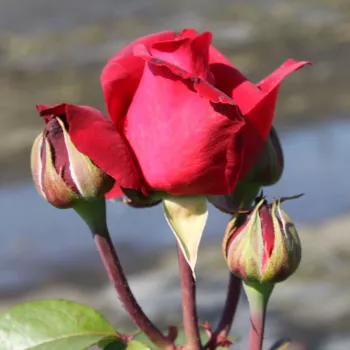
Upright hybrid tea, around 100–140 cm high and 70–110 cm wide, with dense, dark green glossy foliage and moderate prickliness; spent blooms usually need deadheading to maintain a neat appearance. |
| Flower morphology |
Very double, high-centred blooms with 40+ petals, borne mainly singly on long stems; large flower size (approximately 2.75–3.95 inches), strongly remontant with generous second and later flushes. |
| Colour data and phenology |
Deep velvety dark red (RHS 53A outer, 53B inner), sometimes wine-red tones; opens ruby red with near-black edges, colour lightens slightly in strong sun but retains good depth in cooler conditions. |
| Fragrance and aroma |
Strong, rich, classic rose fragrance suitable for close planting near paths or seating; bloom form limits pollen access, so it is mainly ornamental rather than a pollinator-supporting garden rose. |
| Hip characteristics |
Hip set generally low due to very double flowers; when present, hips are small spherical orange-red fruits around 8–12 mm across, with modest ornamental effect in late season. |
| Resistance and winter hardiness |
Hardy to about −21 to −18 °C (RHS H7, USDA 6b, Swedish zone 3); moderate resistance to black spot, powdery mildew and rust; benefits from basic hygiene and occasional preventive care in humid summers. |
| Horticultural recommendations |
Best in full sun, in well-drained but moisture-retentive soil; plant 55–65 cm apart or 1 m as a specimen; moderate feeding, regular deadheading and watering during prolonged drought support optimum flowering. |
Liebeszauber 91® offers velvety dark-red, fragrant blooms on an upright, easy-to-manage bush that repeats well and, as an own-root rose, develops into a long-lived, dependable feature; a thoughtful choice if you want lasting colour with simple care.