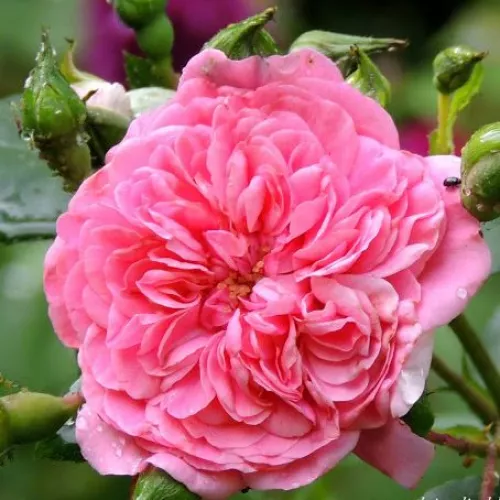
Pastel, pure pink with a soft tone and an even shade. - landscape shrub rose - very weak, barely noticeable scented rose - soft, delicate character
– Pastel pink, very double rosette blooms.
– Spreading, dense shrub ideal for landscaping.
– Low-maintenance habit, needs minimal pruning.
– Excellent disease resistance, ADR certified.
– Proven medal-winner in major rose trials.
– Special feature: Handles urban sites, heat and moderate drought with stable performance.
Expertise – Long-lasting plant
pharmaROSA® ORIGINAL 2-litre own-root potted rose
19,10 £
Unfortunately, we are currently unable to ship to the United Kingdom; we only deliver to countries within the European Union. For more information, please contact us!
3.5(5337)
LES QUATRE SAISONS® – pink landscape shrub rose – Meilland
Romantica charm meets practical reliability in this compact landscape shrub, bred by Meilland for abundant, pastel pink flowering with low ongoing maintenance. Densely clothed in glossy, dark green foliage, it forms a neat, spreading bush that suits front gardens, cottage-style borders and small beds where you want structure without constant intervention. Its proven health and ADR-level disease resistance mean that, even in wetter or more humid summers, you can expect clean leaves and steady performance. Own-root growth gives it long-term stability and the ability to regenerate from the base, supporting a long garden life with minimal replanting. Over time it settles firmly, coping well with exposed spots where strong winds and driving rain are a consideration, yet still flowering generously through the season. With a generous remontant habit and very double, rosette blooms, colour returns repeatedly from late spring into autumn as the bush matures. Think of its development as a gentle arc – roots establishing first, then strong shoots, then full ornamental value by about the third year – helping you plan a calm, attractive, easy-care garden. Its low pruning needs and forgiving nature make it especially suitable for busy households and newer gardeners aiming for reliable success.
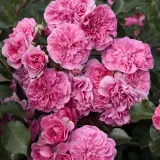
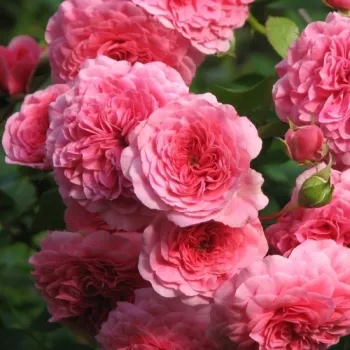
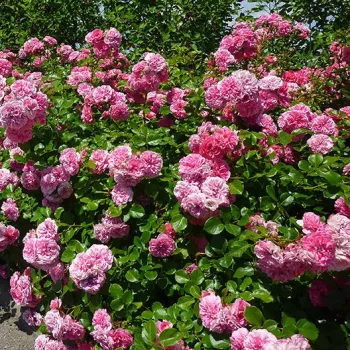
Les Quatre Saisons® landscape rose in full bloom.
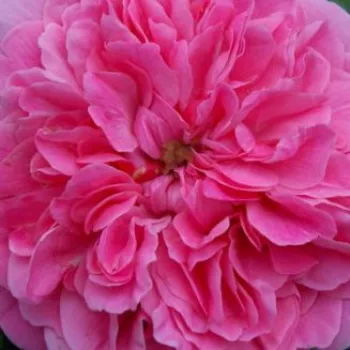
Les Quatre Saisons® bloom showing a very double rosette form.
Closed bud of Les Quatre Saisons® in soft pink.
Usage options
Target area
Reasoning
Front garden focal shrub
This variety’s compact, spreading habit and dense, glossy foliage create an immediate, tidy presence at the front of the house, while the soft pink, very double blooms lend a classic, welcoming look near paths or doorways without overwhelming the space. Its low pruning requirement means shaping once a year is usually sufficient, giving a composed effect without frequent clipping or specialist knowledge, ideal where an attractive frontage must fit into a busy routine. This suits beginners.
Small bed or border groups
Planted in groups of three to five, the even height and width allow you to form a soft-edged, pink cushion along mixed borders, with the clustered, repeat-flowering heads carrying colour from early summer onwards. Spacing at around 85 cm in beds encourages each plant to fill out into a broad, interlocking mass, reducing visible bare soil and therefore cutting down on weeding and underplanting demands. This works well for homeowners.
Low-maintenance landscape strip
Its proven disease resistance (including ADR recognition) and moderate heat tolerance make it particularly useful along driveways, pavement edges and boundary strips where plant care tends to be occasional rather than meticulous. Once established at the recommended distances, routine watering during extended dry spells and a light annual tidy are generally enough to keep the planting looking composed, making it a reliable choice where long-term stability is more important than intensive display changes. Recommended for busy.
Cottage-style mixed border
The pastel pink rosette flowers blend seamlessly with perennials, ornamental grasses and traditional cottage plants, giving a soft, layered effect that stays charming even as the blooms fade to near-whitish tones. Its relatively modest height allows it to sit comfortably mid-border, weaving through companions like blue-flowering shrubs or airy grasses, while the dark foliage anchors lighter, frothier planting without demanding complex staking or seasonal restructuring. Best enjoyed by stylists.
Urban and street-facing gardens
Good tolerance of heat and moderate drought, combined with strong general robustness, makes this shrub well suited to front gardens in towns where reflected heat from walls and pavements can stress more delicate roses. Once rooted in, it copes with sporadic attention and varying weekend-only watering patterns, holding its form and leaf quality so the frontage stays respectable and welcoming even if your gardening time is squeezed between work and family commitments. Ideal for urbanites.
Informal low hedge
Planted at about 75 cm centres, the branching, spreading habit knits into a low, flowering hedge that lightly defines paths, drive edges or vegetable plots without forming a heavy, opaque barrier. Annual trimming after the main flush maintains a rounded outline while preserving plenty of flowering wood for the next season, providing continuity of structure and colour with considerably less effort than many formal alternatives. Suitable for families.
Long-term rose feature bed
Being supplied on its own roots, this rose gradually builds a balanced, multi-stemmed bush that can regenerate from the base if cut back hard after damage, reducing the risk of losing the planting over time. It is therefore well suited to central rose beds that you expect to keep for many years, where the focus is on lasting framework and dependable flowering rather than frequent plant replacement or graft management. A reassuring option for planners.
Exposed, wind-prone positions
The relatively low, spreading framework and good anchoring as it matures help it stand up to gusty, rain-lashed sites where taller roses might rock or break, an advantage in many British coastal or open-suburban gardens. Once established following the typical pattern of roots first, then stronger top growth, it offers a steady, resilient mass of foliage and bloom that stays in place without elaborate staking or protective screening. Especially helpful for coast-dwellers.
Styling ideas
Cottage-Duo – Combine with blue-flowering shrubs and white perennials in a small front border for a soft, romantic look that remains easy to keep tidy – suited to aesthetically minded homeowners.
Pastel-Ribbon – Use as a low, continuous line along a path with airy grasses behind to emphasise its spreading habit and long-season flowering – ideal for narrow, street-facing gardens.
Four-Season-Frame – Plant in a loose rectangle around a lawn or seating area so its stable, own-root framework quietly anchors the space year after year – good for long-term planners.
Urban-Accent – Place a short row beside driveways or parking bays where its disease resistance and modest water needs keep the area smart with little maintenance – made for busy households.
Mix-and-Mingle – Interplant in a mixed border with ornamental grasses and compact shrubs, letting the pastel blooms weave through for relaxed structure without complex pruning – perfect for new gardeners.
Technical cultivar profile
Aspect
Data
Name and registration
Les Quatre Saisons® Romantica® (MEIfafio), a Meilland shrub / landscape rose marketed as a bed rose; pink, very double blooms on a compact, spreading plant for garden and landscape use.
Origin and breeding
Bred by Alain Meilland, Meilland International, France; bred 2002, introduced and registered 2003, with Meilland Richardier and Meilland International as primary distributors across European markets.
Awards and recognition
Holder of ADR certification (Germany, 2003) for garden performance; awarded Gold Medal at Baden-Baden (2003), Silver Medal at Paris Bagatelle (2004), and a Certificate of Merit at The Hague (2006).
Growth and structural characteristics
Low, spreading shrub reaching about 70–95 cm in height and 85–115 cm in spread, with dense, glossy dark green foliage and moderate prickliness, forming a broad, ground-hugging framework over time.
Flower morphology
Large, very double rosette flowers (2.75–3.95 in) carried in clusters; more than 40 petals per bloom, with a remontant habit producing a generous second flush and further flowering through the season.
Colour data and phenology
Pastel pure pink (RHS 65C outer, 65D inner) opening softly and gradually fading to a near-whitish pink with a pearly pale edge, giving a gentle, romantic effect despite relatively poor ultimate colour retention.
Fragrance and aroma
Fragrance is very weak, with only a soft, delicate character detectable at close range; the emphasis is on visual effect and garden performance rather than pronounced scent or aromatic garden use.
Hip characteristics
Occasionally bears small, spherical orange-red hips about 8–12 mm across; hips are incidental to display but can add discreet seasonal interest in late season if not all spent blooms are removed.
Resistance and winter hardiness
Noted for strong resistance to black spot, powdery mildew and rust; hardy to approximately –21 to –18 °C (RHS H7, Swedish Zone 3, USDA 6b), with moderate heat and drought tolerance given regular watering.
Horticultural recommendations
Best in sunny sites with reasonable drainage; low maintenance, needing minimal pruning and routine care. Recommended spacings: 85 cm for mass plantings, 75 cm for hedging, 130 cm for solitary specimens or features.
LES QUATRE SAISONS® Romantica® offers softly romantic colour, dependable disease resistance and a compact, easy-care habit on long-lived own roots, making it a thoughtful choice for relaxed yet enduring garden planting.
Detailed product attributes
Product Identification Data
Product Name:
LES QUATRE SAISONS® – pink landscape shrub rose - Meilland
Product Type:
pharmaROSA® ORIGINAL - 2-litre own-root potted rose
Competition and Show Awards:
Baden-Baden – Gold Medal (2003); Paris Bagatelle – Silver Medal (landscape-rose category) (2004); The Hague – Certificate of Merit (2006)
Closed Bud:
Soft pink outer surface with a slightly darker pink shade at the tip.
Newly Opened Flower:
Delicate, pale pink petals with a slightly deeper pink at the centre.
Full Bloom:
Uniform pastel pink with a subtly lightening shade at the petal edges.
Before Fading:
Fading, almost whitish pink with a pearly pale edge.
Colour Fading Description:
During opening the pastel pink gradually fades; before the end of flowering it lightens to an almost whitish pink with a pearlescent pale edge.
Pollinator Attraction:
Double (40+ petals) blooms attract pollinators only poorly because the densely double form conceals the stamens, limiting their accessibility.
Our product is a rose grown with pharmaROSA®’s unique cultivation technology!
2-litre, own-root, potted rose.
With a shoot system appropriate to the season.
With a root system that thoroughly permeates the growing medium.
Quality compliant with the requirements of the E.N.A. (European Nurserystock Association).
Supplied in unique packaging that prevents damage.
Can be planted during frost-free periods.
True-to-variety rose bush with a unique identifier.
The pharmaROSA® own-root potted rose is a well-rooted plant that supports reliable establishment when planted and cared for properly, so it can be planted whenever the soil is not frozen.
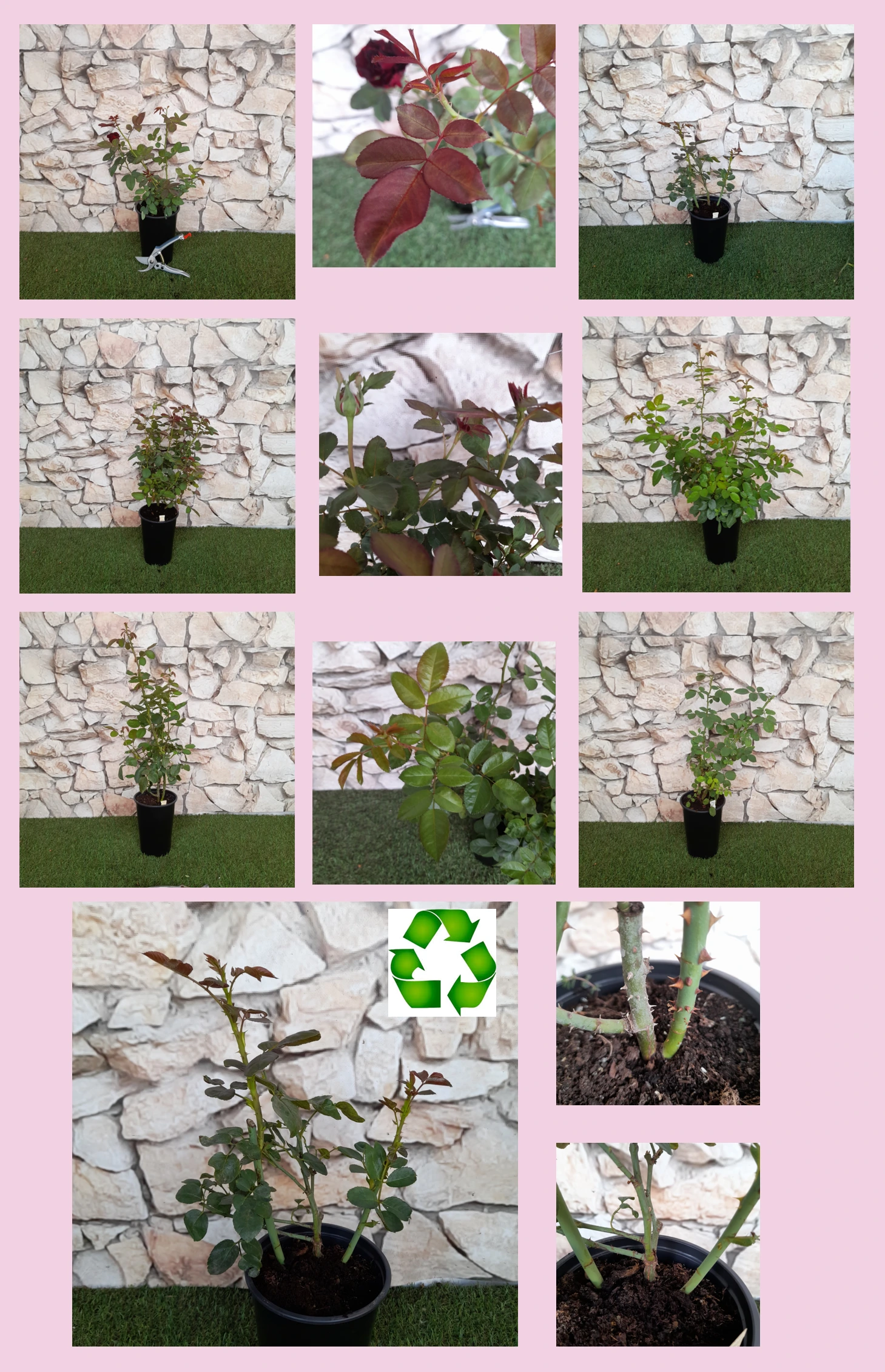
Crop overview: several varieties and growth stages in a short crop section.Shoot system: intensive growth of fresh basal shoots on a young plant.Root system: demonstration of a vigorous root system permeating the growing medium, by removing the pot.Balance: mature plant with root system and shoots in harmony with each other.
Information about the videos
The video series is not a “seasonal showcase”; it illustrates the essence of pharmaROSA® own-root cultivation in a tangible way: how the plant is built up, what the root system is like and how the shoot system regenerates. The recordings were therefore made at different times and with plants at various stages of development, so mixed foliage levels and differing stages of growth may appear in the videos. They are not a ‘sample’ of the batch dispatched, but a visual explanation of how the technology works. The current condition of the rose available to order — typical for the given period and similar to what you can expect to receive in the parcel — is shown in the upper part of the product page.
Pages for private customers Garden roses for the family garden, with minimal care → ORIGINAL® Premium garden roses – instant impact, a truly showpiece garden → EXTRA® Pages for professionals and private customers Roses for public spaces – large areas, sustainable maintenance → NATURAL® Roses for projects – hedge and row planting, fast implementation → RAPID® For professional partners only Production – propagation material for garden roses, wholesale → NEONATAL®
Company details
PharmaRosa Ltd. Company registration number: 01-09-717479 VAT number: 13075314-2-43 Plant health registration no.: HU130721 Bank account (IBAN): HU85117631891388688400000000 BIC (SWIFT): OTPVHUHB Bank name: OTP Bank Nyrt.