Bedding rose

53-325-1
53-325-2

Léonie Lamesch

Bedding rose

- – Peter Lambert

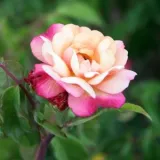
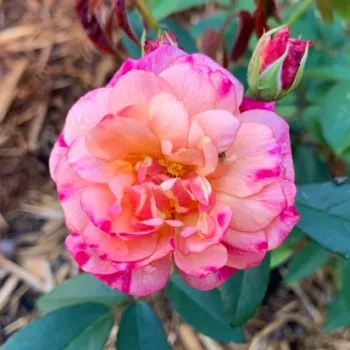
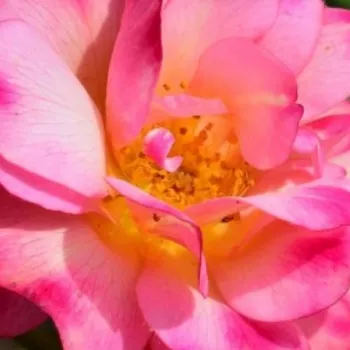
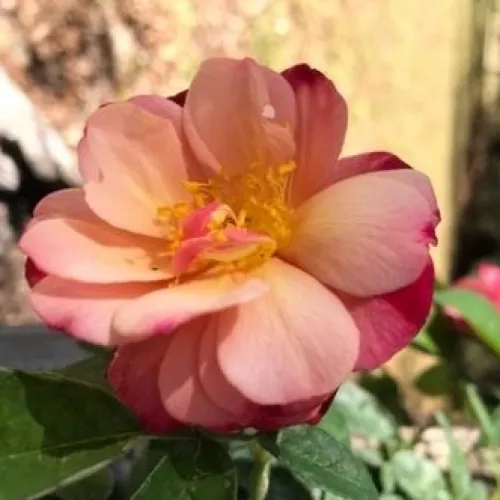
Light copper‑orange base colour with a golden‑yellow centre and a fine carmine‑red edge, which slowly fades to a pale creamy tone. - polyantha bedding rose - medium-strength, noticeably fragrant rose - pleasantly spicy, fruity aroma

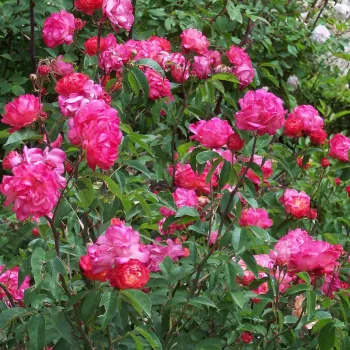
– Abundant remontant flowering in large clusters.
– Distinctive copper‑orange blooms with red edges.
– Medium, pleasantly spicy‑fruity fragrance.
– Upright, bushy habit for beds and borders.
– Good winter hardiness to RHS H7.
Special feature: Historic 1899 Lambert polyantha, ideal for nostalgic plantings.
Soil-conserving approach – Mindful planning
Léonie Lamesch
pharmaROSA® ORIGINAL 2-litre own-root potted rose
22,90 £
Unfortunately, we are currently unable to ship to the United Kingdom; we only deliver to countries within the European Union. For more information, please contact us!
4.5 (6687)
facebook   twitter

LÉONIE LAMESCH – orange-yellow flower-bed polyantha rose - Lambert

For a classic, low-fuss front garden look, Léonie Lamesch offers a compact, bushy habit that stays naturally tidy and fits beautifully into small beds and borders. This historic polyantha carries generous clusters of semi-double blooms, giving repeatedly colourful display from early summer onwards with minimal shaping or complex care. Its medium self-cleaning habit keeps the plant presentable between dead-heading rounds, while its own-root form supports a long-lived, reliable shrub that regrows evenly after harsher winters. The pleasantly spicy, fruity fragrance adds interest along paths and near seating, and the moderate prickliness makes it more family-friendly around narrow front paths. In typical British conditions it copes steadily with humidity and changeable summers, provided you give it reasonably drained soil in heavier clay and avoid deep shade. Over the first three years it quietly builds roots, then framework, then full ornamental effect, so you can simply plant, water, and watch it settle into your garden picture. Well suited to low-maintenance borders, cottage-style mixes and even larger containers of 40–50 litres or more near the house.


Usage options

Target areaReasoning
Small front-garden bed by the house The compact, bushy habit and modest height keep the plant in proportion with low windows and narrow front strips, giving an ordered look without regular clipping; ideal for those who want easy structure in a small, visible space – busy beginners
Mixed cottage-style border with perennials Clustered, repeat-flowering blooms in warm copper-orange and creamy yellow tones weave naturally among perennials such as feverfew and showy coneflower, giving a soft, traditional cottage feel that looks considered without intricate planning – cottage-lovers
Informal flowering hedge along a path The upright, branching structure and planting distances around 1 m allow you to create a low, semi-transparent hedge that flowers in waves, marking boundaries gently while still letting light through and avoiding heavy pruning regimes – family homeowners
Feature group of 3–5 shrubs in a small lawn Planted as a loose group, the rounded shrubs knit together into a single, colourful island, giving impact from a distance with simple mowing maintenance around them and no need for elaborate underplanting or edging – practical gardeners
Large container near a doorway or terrace In a 40–50 litre or larger pot, the modest root system and medium height remain manageable, while the fragrant, semi-double clusters provide welcoming colour and scent close to eye and nose level, with tasks mostly limited to watering and light feeding – urban balcony-owners
Park-style or shared courtyard planting Steady, remontant flowering and medium maintenance needs suit communal spaces where individual attention is limited; the shrubs form a coherent, tidy mass over a few seasons, giving reliable display without constant reshaping or replacement – community planners
Borders on heavier clay soils The own-root plants establish a balanced shrub shape in their final position, coping reliably in typical British clay when set into well-prepared, drained beds so rainwater does not sit around the roots after downpours, reducing long-term stress – clay-soil gardeners
Roses for long-term, low-intervention borders As an own-root shrub with moderate disease resistance, the plant matures gradually, with roots and framework building first and ornamental effect increasing year by year, resulting in a stable, easily refreshed presence without complex renovation pruning – time-poor owners

Styling ideas

  • Front-door welcome – Place one large container each side of a front door, underplanted with trailing ivy, to create a fragrant, symmetrical entrance – ideal for homeowners wanting instant kerb appeal.
  • Cottage ribbon – Line a low front fence with a loose row of shrubs, interspersed with feverfew and catmint, for a soft, traditional cottage ribbon of colour – suited to lovers of romantic, informal planting.
  • Warm-toned island – Combine a group of roses in a lawn with clumps of showy coneflower and ornamental grasses for a glowing island bed that needs only seasonal tidying – perfect for those seeking impact with little fuss.
  • Family walkway – Plant along a main garden path where the sparse prickles and moderate height keep access comfortable, letting children pass without snagging clothes – good for family-focused gardens.
  • Courtyard blend – Mix Léonie Lamesch with feather reed grass and low-growing herbs in raised beds to give structure and gentle movement with simple pruning and feeding – aimed at busy urban gardeners.

Technical cultivar profile
ParameterData
Name and registration Léonie Lamesch, shrub/polyantha bed rose, ARS exhibition name as given; historic, unregistered cultivar offered here as a verified own-root selection in the pharmaROSA® ORIGINAL 2-litre range.
Origin and breeding Bred by Peter Lambert, Germany, 1899, from ‘Aglaia’ × (‘Mignonette’ × ‘Shirley Hibberd’); introduced by Lambert & Söhne (Trier) as a compact, cluster-flowering garden shrub.
Growth and structural characteristics Bushy, upright shrub reaching about 80–120 cm high and 100–140 cm across, with moderately dense, mid-green, slightly glossy foliage and relatively sparse prickles for easier handling in family gardens.
Flower morphology Semi-double, small cup-shaped blooms (around 0.5–1.5 inches) carried in clusters; roughly 13–25 petals per flower, showing abundant remontant flowering with notably strong second flushes in suitable conditions.
Colour data and phenology Light copper-orange with golden-yellow centres and fine carmine-red edges; buds open deep orange-copper, then fade through creamy yellow tones, leaving a soft purplish veil towards the petal margins.
Fragrance and aroma Noticeable medium-strength scent with a pleasantly spicy, fruity character; suitable for positions near seats, entrances or paths where the fragrance can be appreciated at close quarters on still days.
Hip characteristics Sparse hip set; when present, produces small spherical orange-red hips around 5–8 mm across, generally of minor ornamental effect and not a primary feature of the cultivar in typical plantings.
Resistance and winter hardiness Hardy to approximately -21 to -18 °C (RHS H7, USDA 6b), with moderate resistance to black spot, powdery mildew and rust, benefiting from sensible siting, air movement and routine garden hygiene.
Horticultural recommendations Best in full sun with reasonable drainage; medium maintenance, with occasional pest and disease checks, light dead-heading and formative pruning; suitable for beds, borders, hedging and larger containers.

Léonie Lamesch offers compact structure, generous repeat flowering and a pleasantly spicy, fruity scent on a durable own-root shrub, making it a thoughtful choice when you want a long-lived rose that simply settles into place.
Detailed product attributes

Product Identification Data

Product Name: LÉONIE LAMESCH – orange-yellow flower-bed polyantha rose - Lambert
Product Type: pharmaROSA® ORIGINAL - 2-litre own-root potted rose
Cultivar Authenticity: Verified:17.07.2025
Cultivar Quality Rating: premium silver
Item Number: [1382] 53-325 (14.02.2026) pharmarosa.co.uk

Name and Registration

Meaning of Cultivar Name: The name is a female given name.

Original Trade Name: Léonie Lamesch
Current Trade Name: Léonie Lamesch Bedding rose Lambert
Rose Group: Shrub, Polyantha
Commercial Type: polyantha bedding rose
Commercial Group: Bed rose
Exhibition Category: shrub rose
Collection: Bedding rose

Origin and Breeding

Initial Distributor: Lambert & Söhne (Germany)
Registration Year: unregistered variety
Breeder: Peter Lambert
Breeding Company / Institution: Lambert & Söhne (Trier)
Breeding Year: Germany, 1899
Parentage: ‘Aglaia’ × (‘Mignonette’ × ‘Shirley Hibberd’)

Growth and Structural Characteristics

Height: 2.6-3.9ft (80-120 cm)
Spread: 3.3-4.6ft (100-140 cm)
Growth Habit: bushy, upright
Foliage: The variety's foliage is moderately dense, with leaves that have a slightly glossy surface and a mid-green shade (RHS 137A).

Prickliness: sparsely thorned
Self-Cleaning Description: Some of the spent flowers fall off naturally, while others remain on the plant.
Self-Cleaning Intensity: Self-cleaning: medium.

Flower Morphology

Petal Count: 13-25
Flower Fullness: semi-double
Flower Shape: cup-shaped
Flower Size: S (0,5-1,5 in)
Inflorescence Type: cluster-flowered
Colour Code: ARS code: ob RHS code: 24B (outer), 14B (inner)
Repeat Flowering: Remontant, its second flowering is also abundant.

Colour Data and Phenology

Colour: orange-yellow
Flower Colour Description: Light copper‑orange base colour with a golden‑yellow centre and a fine carmine‑red edge, which slowly fades to a pale creamy tone.
Closed Bud: Deep orange-copper shade with a slightly reddish tip.
Newly Opened Flower: Copper‑orange petal surface with a golden‑yellow base, bright orange inside.
Full Bloom: Orange-based, with carmine-red shades on the petal edges, yellowish in the centre.
Before Fading: The orange hue fades to creamy yellow, with a purplish‑red veil remaining at the edges.
Colour Fading Description: As the bloom opens, the copper‑orange tone gradually fades to a creamy yellow, leaving a fine carmine‑purple veil at the petal edges.

Fragrance and Aroma

Fragrance Strength: medium-strength, noticeably fragrant rose
Fragrance Character: pleasantly spicy, fruity aroma
Pollinator Attraction: Its semi-double flowers and partially obscured stamens make it moderately attractive to pollinators.
Pollinator-Friendly Rating: Semi-double; a variety that moderately attracts pollinators. Pollinator-friendly: limited, mainly ornamental.

Hip Characteristics

Hip Shape: spherical
Hip Colour: orange-red
Hip Comment: Rose-hip formation is expected to be sparse; occasionally producing spherical, orange-red hips 5–8 mm in diameter.

Resistance and Hardiness

Hardiness (°C): -21–-18 °C
Heat and Drought Tolerance Description: Has average heat tolerance; requires supplementary watering during prolonged dry periods.
Disease Resistance: moderate
  • powdery mildew – moderate
  • black spot – moderate
  • rust – moderate

Horticultural Recommendations

Recommended Planting Distance: for mass planting: 110 cm, for hedging: 100 cm, as a specimen: 180 cm
Planting Density: in square planting 0,8 plants/m², in hexagonal arrangement 1,0 plants/m²
Partial Shade Tolerance: Prefers a sunny position
Maintenance Requirement: Maintenance requirement medium; occasionally requires pest and disease control.
Primary Uses: bed, border, park, container

Comments

Strengths: Soil-conserving approach – Mindful planning
Companion Plants: Calamagrostis x acutiflora - feather reed grass
Tanacetum parthenium - feverfew
Rudbeckia fulgida - showy coneflower
Comment: -
LÉONIE LAMESCH – orange-yellow flower-bed polyantha rose - Lambert
Light copper‑orange base colour with a golden‑yellow centre and a fine carmine‑red edge, which slowly fades to a pale creamy tone. - polyantha bedding rose - medium-strength, noticeably fragrant rose - pleasantly spicy, fruity aroma
Rose Shopping Online - orange-yellow - polyantha bedding rose - Léonie Lamesch - (2.6-3.9ft (80-120 cm))
Inflorescence: cluster-flowered Height: 2.6-3.9ft (80-120 cm) Flower shape: cup-shaped Winter hardiness: 6b orange-yellow - Lambert & Söhne (Germany) polyantha bedding rose - Flower size: !- Flower size: !- - Height: 2.6-3.9ft (80-120 cm) Height: 2.6-3.9ft (80-120 cm) - Flower fullness: semi-double Léonie Lamesch - Roses in the garden | pharmaROSA® Original - premium silver Peter Lambert

We showcase the external appearance of the roses available for online purchase from our webshop.


Which product type is right for you?


Information

In what condition do we dispatch the rose from our online webshop?

Let us ask ourselves the question: What would I like to use the rose for?
Flower? – Location? – Screening? – Fragrance? – Height? – Breeder? – Rose hip?

Rose purchasing information
Methods of payment – Delivery charges – Delivery – Complaints handling

Care guide

Our product is a rose grown with pharmaROSA®’s unique cultivation technology!

2-litre, own-root, potted rose.
With a shoot system appropriate to the season.
With a root system that thoroughly permeates the growing medium.
Quality compliant with the requirements of the E.N.A. (European Nurserystock Association).
Supplied in unique packaging that prevents damage.
Can be planted during frost-free periods.
True-to-variety rose bush with a unique identifier.

The pharmaROSA® own-root potted rose is a well-rooted plant that supports reliable establishment when planted and cared for properly, so it can be planted whenever the soil is not frozen.


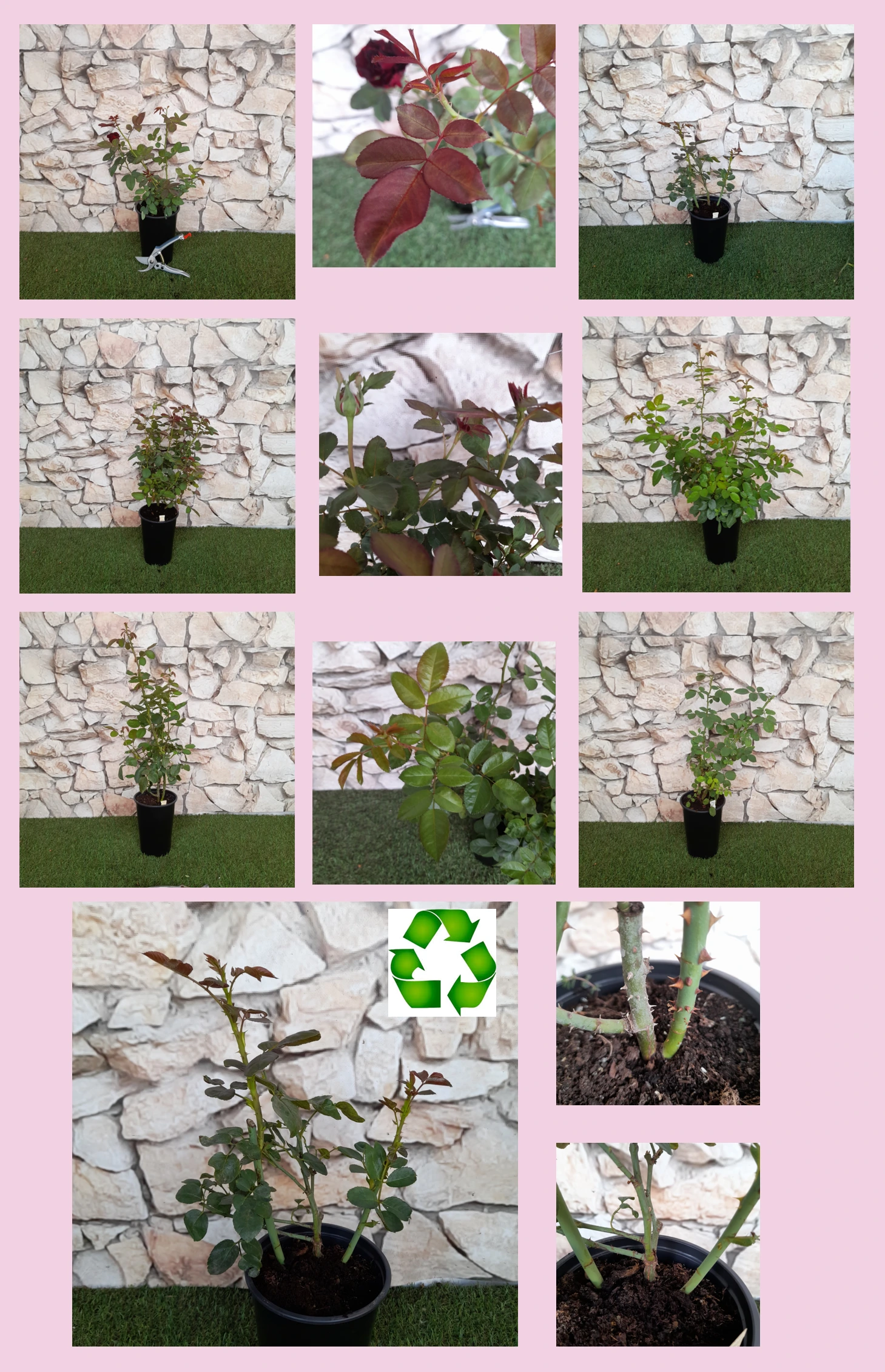
Crop overview: several varieties and growth stages in a short crop section.
Shoot system: intensive growth of fresh basal shoots on a young plant.
Root system: demonstration of a vigorous root system permeating the growing medium, by removing the pot.
Balance: mature plant with root system and shoots in harmony with each other.

Information about the videos
The video series is not a “seasonal showcase”; it illustrates the essence of pharmaROSA® own-root cultivation in a tangible way: how the plant is built up, what the root system is like and how the shoot system regenerates. The recordings were therefore made at different times and with plants at various stages of development, so mixed foliage levels and differing stages of growth may appear in the videos. They are not a ‘sample’ of the batch dispatched, but a visual explanation of how the technology works. The current condition of the rose available to order — typical for the given period and similar to what you can expect to receive in the parcel — is shown in the upper part of the product page.

pharmarosa.compharmarosa.atpharmarosa.czpharmarosa.depharmarosa.ropharmarosa.sipharmarosa.skpharmarosa.hrpharmarosa.itpharmarosa.frpharmarosa.grpharmarosa.bepharmarosa.dkpharmarosa.nlpharmarosa.iepharmarosa.plpharmarosa.lupharmarosa.ptpharmarosa.espharmarosa.bgpharmarosa.ltpharmarosa.sepharmarosa.lvpharmarosa.eepharmarosa.fipharmarosa.rudarinarose.co.uk

Product types

Pages for private customers
Garden roses for the family garden, with minimal care  → ORIGINAL®
Premium garden roses – instant impact, a truly showpiece garden  → EXTRA®
Pages for professionals and private customers
Roses for public spaces – large areas, sustainable maintenance  → NATURAL®
Roses for projects – hedge and row planting, fast implementation  → RAPID®
For professional partners only
Production – propagation material for garden roses, wholesale  → NEONATAL®

Company details

PharmaRosa Ltd.
Company registration number: 01-09-717479
VAT number: 13075314-2-43
Plant health registration no.: HU130721
Bank account (IBAN):
HU85117631891388688400000000
BIC (SWIFT): OTPVHUHB
Bank name: OTP Bank Nyrt.