LÉONIE LAMESCH – orange-yellow flower-bed polyantha rose - Lambert
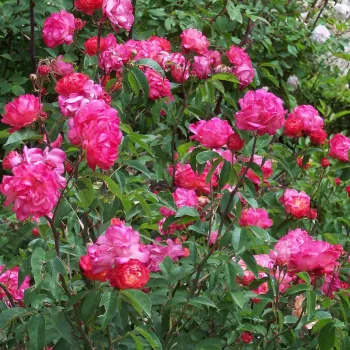
For a classic, low-fuss front garden look, Léonie Lamesch offers a compact, bushy habit that stays naturally tidy and fits beautifully into small beds and borders. This historic polyantha carries generous clusters of semi-double blooms, giving repeatedly colourful display from early summer onwards with minimal shaping or complex care. Its medium self-cleaning habit keeps the plant presentable between dead-heading rounds, while its own-root form supports a long-lived, reliable shrub that regrows evenly after harsher winters. The pleasantly spicy, fruity fragrance adds interest along paths and near seating, and the moderate prickliness makes it more family-friendly around narrow front paths. In typical British conditions it copes steadily with humidity and changeable summers, provided you give it reasonably drained soil in heavier clay and avoid deep shade. Over the first three years it quietly builds roots, then framework, then full ornamental effect, so you can simply plant, water, and watch it settle into your garden picture. Well suited to low-maintenance borders, cottage-style mixes and even larger containers of 40–50 litres or more near the house.
Usage options
| Target area | Reasoning |
|---|
| Small front-garden bed by the house |
The compact, bushy habit and modest height keep the plant in proportion with low windows and narrow front strips, giving an ordered look without regular clipping; ideal for those who want easy structure in a small, visible space – busy beginners |
| Mixed cottage-style border with perennials |
Clustered, repeat-flowering blooms in warm copper-orange and creamy yellow tones weave naturally among perennials such as feverfew and showy coneflower, giving a soft, traditional cottage feel that looks considered without intricate planning – cottage-lovers |
| Informal flowering hedge along a path |
The upright, branching structure and planting distances around 1 m allow you to create a low, semi-transparent hedge that flowers in waves, marking boundaries gently while still letting light through and avoiding heavy pruning regimes – family homeowners |
| Feature group of 3–5 shrubs in a small lawn |
Planted as a loose group, the rounded shrubs knit together into a single, colourful island, giving impact from a distance with simple mowing maintenance around them and no need for elaborate underplanting or edging – practical gardeners |
| Large container near a doorway or terrace |
In a 40–50 litre or larger pot, the modest root system and medium height remain manageable, while the fragrant, semi-double clusters provide welcoming colour and scent close to eye and nose level, with tasks mostly limited to watering and light feeding – urban balcony-owners |
| Park-style or shared courtyard planting |
Steady, remontant flowering and medium maintenance needs suit communal spaces where individual attention is limited; the shrubs form a coherent, tidy mass over a few seasons, giving reliable display without constant reshaping or replacement – community planners |
| Borders on heavier clay soils |
The own-root plants establish a balanced shrub shape in their final position, coping reliably in typical British clay when set into well-prepared, drained beds so rainwater does not sit around the roots after downpours, reducing long-term stress – clay-soil gardeners |
| Roses for long-term, low-intervention borders |
As an own-root shrub with moderate disease resistance, the plant matures gradually, with roots and framework building first and ornamental effect increasing year by year, resulting in a stable, easily refreshed presence without complex renovation pruning – time-poor owners |
Styling ideas
- Front-door welcome – Place one large container each side of a front door, underplanted with trailing ivy, to create a fragrant, symmetrical entrance – ideal for homeowners wanting instant kerb appeal.
- Cottage ribbon – Line a low front fence with a loose row of shrubs, interspersed with feverfew and catmint, for a soft, traditional cottage ribbon of colour – suited to lovers of romantic, informal planting.
- Warm-toned island – Combine a group of roses in a lawn with clumps of showy coneflower and ornamental grasses for a glowing island bed that needs only seasonal tidying – perfect for those seeking impact with little fuss.
- Family walkway – Plant along a main garden path where the sparse prickles and moderate height keep access comfortable, letting children pass without snagging clothes – good for family-focused gardens.
- Courtyard blend – Mix Léonie Lamesch with feather reed grass and low-growing herbs in raised beds to give structure and gentle movement with simple pruning and feeding – aimed at busy urban gardeners.
Technical cultivar profile
| Parameter | Data |
|---|
| Name and registration |
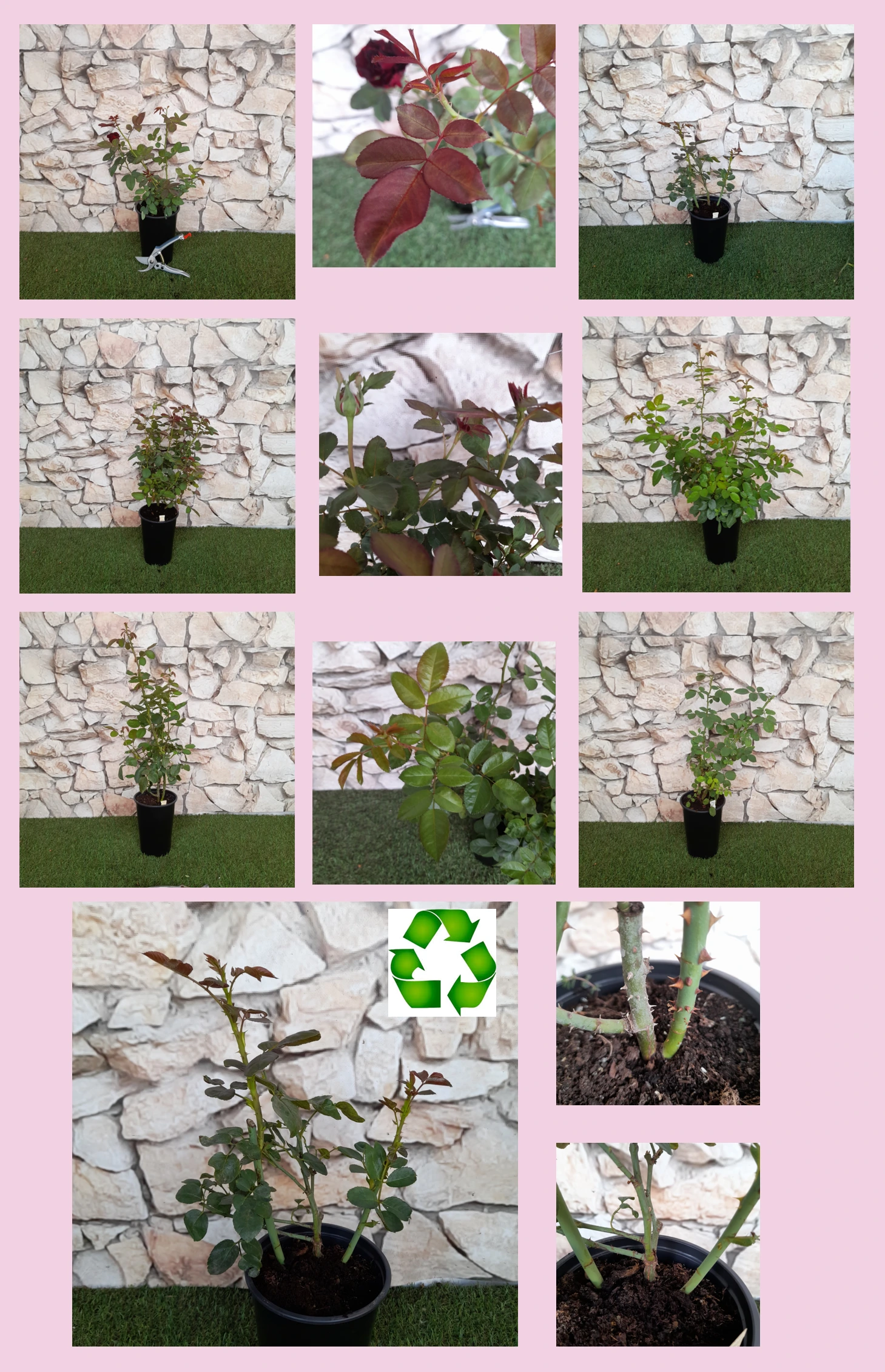
Léonie Lamesch, shrub/polyantha bed rose, ARS exhibition name as given; historic, unregistered cultivar offered here as a verified own-root selection in the pharmaROSA® ORIGINAL 2-litre range. |
| Origin and breeding |
Bred by Peter Lambert, Germany, 1899, from ‘Aglaia’ × (‘Mignonette’ × ‘Shirley Hibberd’); introduced by Lambert & Söhne (Trier) as a compact, cluster-flowering garden shrub. |
| Growth and structural characteristics |
Bushy, upright shrub reaching about 80–120 cm high and 100–140 cm across, with moderately dense, mid-green, slightly glossy foliage and relatively sparse prickles for easier handling in family gardens. |
| Flower morphology |
Semi-double, small cup-shaped blooms (around 0.5–1.5 inches) carried in clusters; roughly 13–25 petals per flower, showing abundant remontant flowering with notably strong second flushes in suitable conditions. |
| Colour data and phenology |
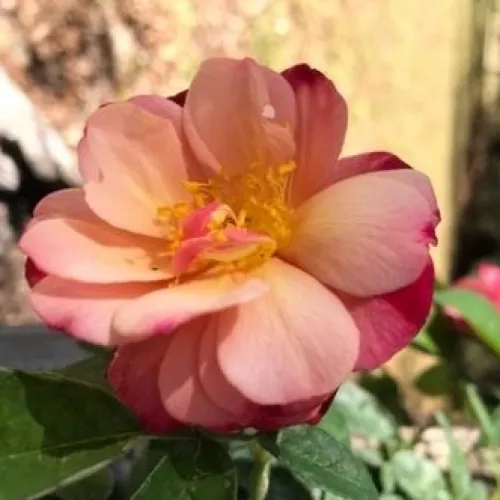
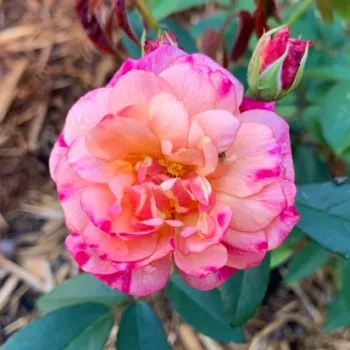
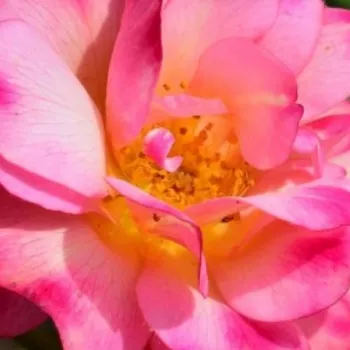
Light copper-orange with golden-yellow centres and fine carmine-red edges; buds open deep orange-copper, then fade through creamy yellow tones, leaving a soft purplish veil towards the petal margins. |
| Fragrance and aroma |
Noticeable medium-strength scent with a pleasantly spicy, fruity character; suitable for positions near seats, entrances or paths where the fragrance can be appreciated at close quarters on still days. |
| Hip characteristics |
Sparse hip set; when present, produces small spherical orange-red hips around 5–8 mm across, generally of minor ornamental effect and not a primary feature of the cultivar in typical plantings. |
| Resistance and winter hardiness |
Hardy to approximately -21 to -18 °C (RHS H7, USDA 6b), with moderate resistance to black spot, powdery mildew and rust, benefiting from sensible siting, air movement and routine garden hygiene. |
| Horticultural recommendations |
Best in full sun with reasonable drainage; medium maintenance, with occasional pest and disease checks, light dead-heading and formative pruning; suitable for beds, borders, hedging and larger containers. |
Léonie Lamesch offers compact structure, generous repeat flowering and a pleasantly spicy, fruity scent on a durable own-root shrub, making it a thoughtful choice when you want a long-lived rose that simply settles into place.