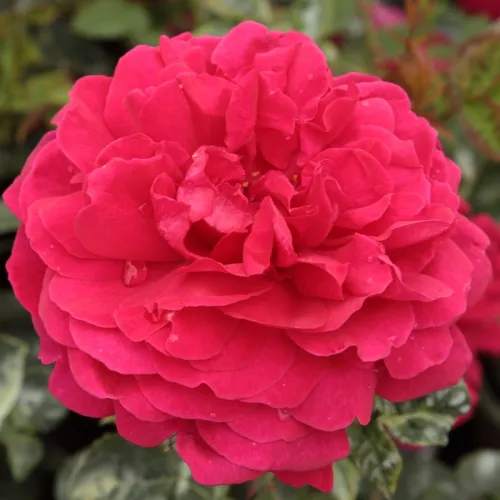
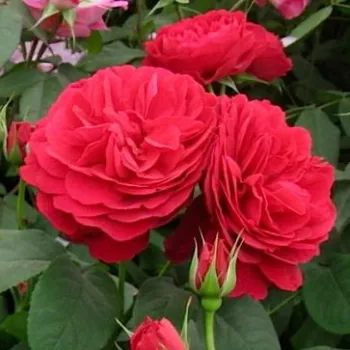
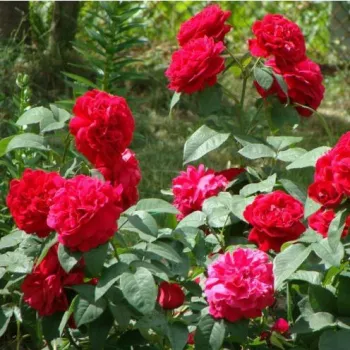
Leonard Dudley Braithwaite – crimson-red English rose – Austin
This English Shrub rose brings together crimson romance, classic rosette blooms and a rich, very strong fragrance in a bushy, dark green shrub that suits the scale of typical British front gardens. Its repeat-flowering habit gives reliable colour from early summer onwards, while good black-spot resistance helps keep foliage tidy even in damper seasons with higher fungal pressure. As an own-root plant it settles deeply, building a long-lived, balanced structure that copes well with breezier, rain-exposed gardens near the coast. Over the first few seasons it shifts naturally from rooting to branching and finally to full ornamental impact, so you can enjoy generous clusters of large, very full flowers with relatively simple maintenance and confident, medium-height hedging or specimen use in small spaces.
Usage options
| Target area | Reasoning |
|---|
| Front garden focal point |
The large, velvety crimson rosettes and very strong scent create an immediate welcome beside a path or doorway, while the bushy habit keeps the overall outline compact and in scale with a typical suburban front garden, ideal for the style-conscious beginner homeowner |
| Small mixed border |
Reliable repeat flowering provides recurring bursts of deep red through the season, weaving easily between perennials and low shrubs so the border never looks bare, supporting a quietly colourful scheme without demanding complicated pruning from the casual gardener |
| Classic rose bed |
Medium height and generous bloom size make it a natural centrepiece in a traditional rose bed, where its full, cluster-flowered form quickly fills gaps and offers the “planted and it works” effect many people want in a modest family garden beginner |
| Cottage-style planting |
The romantic English rose character, dark foliage and saturated crimson colour combine beautifully with pastel cottage perennials, giving a deliberately old-fashioned feel that still behaves predictably and fits the easy-care expectations of busy urban cottage-plot owners |
| Informal flowering hedge |
The bushy, well-branched structure and recommended hedge spacing around 80 cm allow you to create a low, flowering screen that repeats well through summer, needing only basic annual trimming to stay neat for privacy-minded family garden users |
| Feature shrub in partial shade |
Its tolerance of partial shade lets you place it on the shadier side of a house or near taller shrubs, where many roses sulk, yet it continues to flower reliably, suiting narrow side gardens and overlooked spaces for time-pressed town-house residents |
| Cutting for perfumed indoor display |
Long-lasting, very strongly scented blooms on good stems provide richly coloured, fragrant cut flowers, so even a single bush can supply occasional house arrangements, offering good value and enjoyment to fragrance-focused but technique-light rose enthusiasts |
| Large container on terrace or patio |
In a generously sized pot of at least 40–50 litres, the balanced, medium-sized shrub form adapts well, provided moisture is managed so roots anchor and cope reliably with windy, rain-exposed patio conditions, suiting decorative container solutions for smaller-space gardeners |
Styling ideas
- Crimson welcome – Place by the front path with white lavender and low box to frame the doorway in classic colours – ideal for house-proud owners wanting elegance with minimal effort
- Cottage border – Mix with foxgloves, lady’s mantle and hardy geraniums for a relaxed country look – for those who like informal, romantic borders without complex maintenance
- Evening scent – Position near a bench or patio with nicotiana and pheasant’s tail grass to enjoy powerful fragrance at dusk – suited to small gardens where seating areas double as focal points
- Flowering screen – Use as a loose hedge with yew or privet behind for structure and depth of colour – for families wanting gentle screening and flowers rather than hard fencing
- Patio statement – Grow one plant in a 50-litre terracotta container with creeping thyme at the base – perfect for balcony or courtyard gardeners seeking a single, showy, easy-care feature
Technical cultivar profile
| Parameter | Data |
|---|
| Name and registration |
Leonard Dudley Braithwaite (AUScrim), English Shrub rose from the English Rose Collection; commercial type romantic English rose, ARS exhibition name identical to the current trade name. |
| Origin and breeding |
Bred by David C. H. Austin in 1988, United Kingdom; parentage ‘Mary Rose’ × ‘The Squire’; introduced after 1993 by David Austin Roses Ltd., registered in 1993 as AUScrim. |
| Awards and recognition |
Holds the RHS Award of Garden Merit (1994, reconfirmed 2012), confirming dependable performance under UK conditions; ARS garden rating 7.9 indicates solid, consistent garden value worldwide. |
| Growth and structural characteristics |
Bushy shrub 115–160 cm high and 100–155 cm wide, with dense, slightly glossy dark green foliage and many prickles; forms a well-filled, medium-sized garden rose suited to beds, borders and low hedging. |
| Flower morphology |
Large, very full, 40+ petal rosette blooms, usually in clusters; repeat-flowering with a notably abundant second flush; weak self-cleaning means deadheading is recommended to maintain a neat appearance. |
| Colour data and phenology |
Deep crimson-red with a purple tinge, velvety texture; buds dark maroon to purple; colour holds well, shifting towards raspberry or magenta in strong heat; blooms repeatedly through the main rose season. |
| Fragrance and aroma |
Very strongly scented with a long-lasting perfume typical of English roses; primarily an ornamental cultivar rather than a pollinator plant, as the many petals enclose stamens and limit access to nectar and pollen. |
| Hip characteristics |
Hip set is generally sparse due to the very double flowers; where formed, hips are small, 6–9 mm, bottle-shaped and red, adding only modest seasonal interest and not relied upon for ornamental effect. |
| Resistance and winter hardiness |
Medium overall disease resistance with good black-spot tolerance and moderate susceptibility to powdery mildew and rust; reliably hardy to about −26 to −23 °C (RHS H7, USDA 5b, Swedish Zone 4) in typical gardens. |
| Horticultural recommendations |
Best with regular watering in dry periods and basic deadheading; spacing 80–150 cm depending on hedge or specimen use; suitable for partial shade, and may need spring frost protection in colder pockets. |
Leonard Dudley Braithwaite offers repeat crimson flowering, a very strong scent and a stable, long-lived own-root shrub form, making it a thoughtful choice for those planning a lasting, characterful garden feature.