Lavender Lassie – park shrub rose in pink-lilac shades
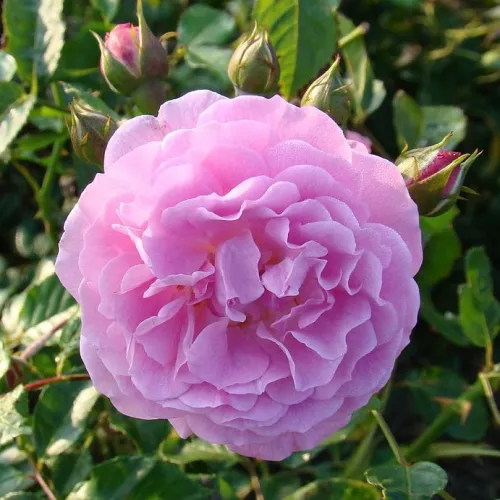
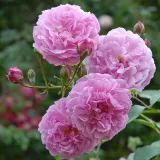
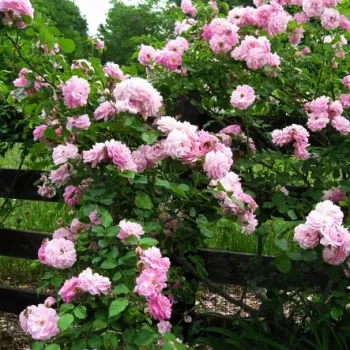
Pastel lovers appreciate Lavender Lassie’s generous lavender-pink clusters, creating a soft, romantic focus with surprisingly vigorous growth that fills space in average UK gardens without fussy shaping. Its remontant flowering habit gives flush after flush of blooms, while the strong, long-lasting fragrance drifts across front paths and seating areas. This own-root shrub builds a durable framework over time, adapting steadily to your soil and care so it keeps its ornamental value for years with only medium-level maintenance. It copes well in partial shade, where the colour holds best and flowers stay fresh, making it ideal near north- or east-facing walls. As it matures you see roots establishing first, then structural shoots, before full show-garden impact in the third year. In breezier plots it forms a bushy, well-anchored presence, offering relaxed charm without complicated maintenance.
Usage options
| Target area |
Reasoning |
| Front garden focal shrub |
Use as a single feature beside a path, gateway or bay window, where its pastel mauve-pink clusters and musky scent can be enjoyed up close. The bushy, upright habit fills vertical space without becoming unruly, ideal for smart yet romantic front gardens for the beginner. |
| Small cottage-style group planting |
Plant 3–5 shrubs at the recommended spacing to create an informal, billowing cottage effect that flowers reliably through the season. The good self-cleaning means fewer deadheading rounds, so you still get a full, traditional look without intensive upkeep for the time-poor. |
| Relaxed flowering hedge |
In a row at around 100 cm apart, Lavender Lassie makes a softly screening hedge with scented clusters along its length. The moderate maintenance level suits those happy to prune once a year for height and thickness, rather than constantly clipping, suiting the homeowner. |
| Pergola or pillar accent |
With its tall, bushy frame, this shrub can be lightly tied to a pergola post or pillar, clothing the structure with fragrant clusters without needing the strict training of a climber. Its moderate prickliness makes occasional tying-in manageable for the hobby-gardener. |
| Mixed border with classic perennials |
Combine with lady’s mantle, wallflowers or cottage perennials for a layered border where the dense dark green foliage gives structure, and pastel blooms add softness. The own-root habit supports a long-lived framework that anchors the whole planting for the planner. |
| Part-shade side garden |
Place on an east- or north-facing aspect where it receives morning or filtered light; here the mauve-pink colour holds best and heat stress is reduced. This helps keep flowering reliable even in side passages or overshadowed plots for the urbanite. |
| Large pot or courtyard container |
Grown in a 40–50 litre or larger container with good drainage, Lavender Lassie creates a mobile, scented feature for patios or paved front gardens. Regular watering and annual feeding are usually enough to keep the plant performing well for the balcony-owner. |
| Low-input family garden rose bed |
In a dedicated rose bed, its repeat flowering and good self-cleaning reduce the need for constant grooming; a simple annual prune and basic plant protection in wetter seasons are normally sufficient for dependable flowering, even under typical British humidity, for the busy. |
Styling ideas
- Cottage-border focus – Place Lavender Lassie mid-border, surrounded by lady’s mantle and traditional perennials to create a soft, pastel focal point – ideal for lovers of relaxed cottage style.
- Perfumed-entrance – Flank a front path or doorway with two shrubs in generous beds so the strong musky fragrance greets visitors – perfect for scent-focused homeowners.
- Informal-hedge – Run a loose, flowering hedge along a boundary, underplanted with low perennials to hide bare stems and frame the garden – suited to families seeking gentle privacy.
- Pergola-romance – Lightly train the shrub around a pergola post, letting clusters hang near seating for evening scent and atmosphere – best for small gardens wanting vertical interest.
- Container-showpiece – Grow one plant in a 50 litre terracotta pot on a sunny to lightly shaded patio, pairing with trailing herbs for texture – good for courtyard and townhouse gardeners.
Technical cultivar profile
| Property |
Data |
| Name and registration |
Lavender Lassie, a shrub Hybrid Musk park rose grown on its own roots; unregistered cultivar with ARS exhibition name Lavender Lassie, supplied here in the pharmaROSA ORIGINAL 2‑litre format. |
| Origin and breeding |
Bred by Reimer Kordes in Germany from ‘Hamburg’ × ‘Madame Norbert Levavasseur’; breeding completed 1956, introduced 1960, with early distribution in Australia through Roy H. Rumsey Pty. Ltd. |
| Awards and recognition |
Holder of a Trial Ground Certificate from the National Rose Society in the United Kingdom (1959), reflecting notable garden performance and ornamental value under independent test conditions. |
| Growth and structural characteristics |
Bushy shrub reaching about 150–230 cm in height and 90–150 cm spread, with dense, glossy, dark green foliage and moderate prickliness, forming a substantial, gently arching presence in borders. |
| Flower morphology |
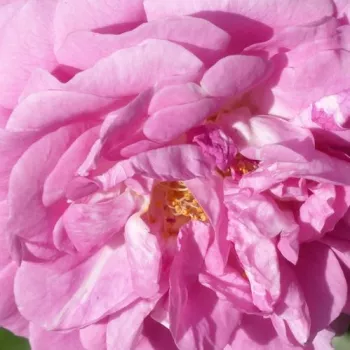
Semi-double, cupped blooms of medium size (approximately 1.5–2.75 inches), borne in clustered trusses, with good self-cleaning as most spent blooms fall naturally, encouraging a tidy overall appearance. |
| Colour data and phenology |
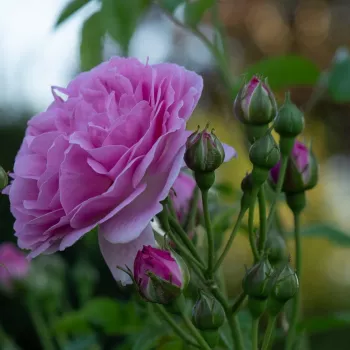
Delicate pastel mauve-pink with lilac undertones; buds open lavender-pink, then pale towards the petal edges, fading somewhat in strong sun but holding colour particularly well in partial shade. |
| Fragrance and aroma |
Sweet, musky fragrance of strong intensity, typically long-lasting around the plant, adding sensory value to paths, seating areas and entrances even when viewed from moderate distance in the garden. |
| Hip characteristics |
Occasional ellipsoidal hips, approximately 10–14 mm in diameter, developing an orange-red colour in season; generally incidental to the plant’s main ornamental role as a repeat-flowering shrub rose. |
| Resistance and winter hardiness |
Rated to about –26 to –23 °C (RHS H7, Swedish zone 4, USDA 5b), with moderate resistance to black spot, powdery mildew and rust; benefits from routine hygiene and timely treatments in damp regions. |
| Horticultural recommendations |
Suitable as specimen, in beds, hedges, pergola accents and for cutting; prefers fertile, well-drained soil, regular watering in dry spells, and medium-input maintenance including annual pruning and feeding. |
Lavender Lassie offers romantic mauve-pink clusters, strong fragrance and a long-lived own-root shrub form that settles in reliably over time, making it a thoughtful choice if you want enduring charm with manageable care.