LARISSA® – pink groundcover rose – Kordes
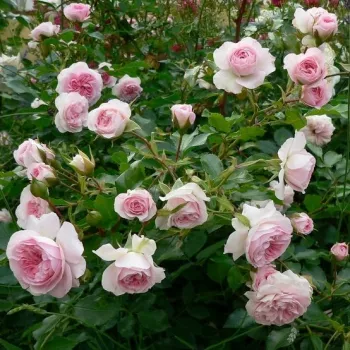
Soft pastel blooms and a naturally bushy habit make Larissa® an ideal low‑effort choice for family gardens where you want long seasons of colour without complex upkeep. Bred for resistant performance and ADR‑certified, it copes reliably with British humidity and fungal pressure, even in typical around‑the‑house borders. Its generous, cluster‑forming flowers repeat well through the summer, while dense foliage helps keep borders looking tidy and well covered. As an own‑root plant, Larissa® forms a durable, balanced shrub that regenerates well after pruning and supports a long garden life with minimal intervention. In a 2‑litre pharmaROSA® ORIGINAL pot it arrives already well rooted, so you simply plant and let it settle, appreciating how it handles heavier soils where drainage has been sensibly improved for secure anchoring in blustery, exposed spots. Over time you will see a natural progression as roots establish, top growth builds, and full ornamental impact develops, creating a quietly reliable presence in the front garden, whether used in cottage‑style mixes or as a low, flowering groundcover drift along paths and lawns. Its moderate size suits small plots and makes it easy to combine with perennials for soft, romantic planting that stays looking well kept with only light annual attention.
Usage options
| Target area | Reasoning |
|---|
| Front garden feature shrub |
Larissa® forms a compact, upright, bushy mound that stays within roughly 55–90 cm, ideal for neat front gardens where you want structure without blocking windows. The evenly clothed branches help it read as a “proper” shrub, giving visual weight to entrances, paths and driveways while remaining easy to reach for light pruning and deadheading – well suited to the aesthetics-focused beginner. |
| Low-maintenance groundcover in beds |
With its spreading 50–85 cm width and tight canopy, this rose knits together quickly, covering soil and softening edging stones or gravel strips. The dense foliage and clusters of pastel pink blooms combine to create a gentle ground-hugging layer that reduces the visual impact of weeds and makes small beds look thoughtfully planted, even if you only have room for a few shrubs – a reassuring option for busy urban garden owners. |
| Easy-care cottage-style border |
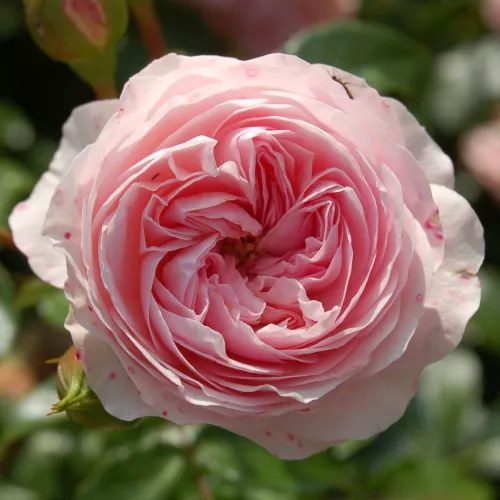
The soft pink, rosette-shaped, very double flowers blend naturally with traditional cottage companions such as low yarrows and hardy geraniums. Because Larissa® repeats well with minimal feeding and pruning, it gives that long-season, slightly informal cottage look without demanding constant attention, allowing you to enjoy the mix of textures and colours rather than worry about complex rose care – ideal for lovers of classic cottage style. |
| Reliable colour in small mixed beds |
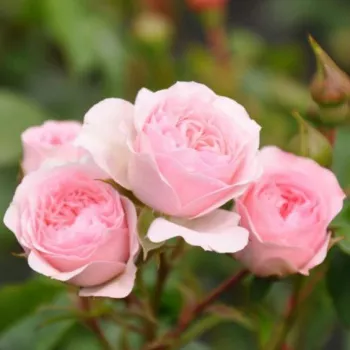
Medium-sized clusters of flowers appear in flushes, with a generous second bloom that keeps small beds lively through the main season. The pastel pink tones keep their charm as they lighten, so the plant remains attractive even between peak flushes. This makes it easy to plan simple, two- or three-plant combinations that still look composed and colourful most of the summer – a practical choice for design-conscious hobby gardeners. |
| Urban and roadside plantings |
Originally bred as a robust landscape rose, Larissa® tolerates urban conditions, including moderate soil compaction and reflected heat, without losing its shape or foliage quality. Its proven track record in public spaces means it stands up well in exposed front gardens near pavements and roads, delivering dependable flowering where other shrubs may struggle – particularly helpful for homeowners on busy streets. |
| Low-effort rose hedge or edging line |
Planted at around 70–80 cm, Larissa® creates a low, continuous line of foliage and flowers that works as a soft edging along paths or drives. Its moderate vigour and bushy habit mean you can keep it in shape with one light trim after the main flowering flush, avoiding the need for precise hedge-cutting gear or advanced techniques – well aligned with gardeners seeking simple, tidy structure. |
| Container planting on patios and terraces |
Larissa® adapts well to life in a generous container of at least 40–50 litres, where its upright, compact form and modest height sit comfortably beside seating areas. In a pot with good drainage it flowers steadily and is easy to water and feed, giving you rose-garden atmosphere on patios or balconies without needing open ground, and remaining manageable to look after – ideal for small-space urban gardeners. |
| Long-lived, beginner-friendly rose focal point |
As an own-root rose with ADR-level disease resistance, Larissa® offers a stable, long-term presence that copes well with British humidity and fungal pressure, provided basic watering and feeding are met. It responds forgivingly to different pruning approaches and gradually matures into a full, balanced shrub that gives worthwhile ornamental value over successive seasons – an excellent introduction to roses for cautious beginners. |
Styling ideas
- Cottage-edge drift – plant Larissa® in a loose line along a front path, interspersed with catmint and low yarrow for a pastel, billowing cottage feel – perfect for homeowners wanting classic charm with modest upkeep.
- Pastel island bed – group three to five shrubs in a small lawn island, underplant with hardy geraniums and spring bulbs to keep interest rolling from early spring to late summer – ideal for hobby gardeners seeking an easy focal point.
- Urban window approach – use Larissa® in a narrow strip beneath windows, paired with evergreen box balls for year-round form and summer flowers – suited to busy townhouses wanting structure and softness together.
- Patio container trio – place a single Larissa® in a large pot and flank it with two containers of lavender or dwarf grasses for contrast in texture and scent – a good fit for small patios and balcony terraces.
- Soft boundary ribbon – run a gentle curve of Larissa® along the front boundary, backed by taller perennials such as foxgloves and delphiniums for layered height – appealing to cottage-garden enthusiasts aiming for relaxed but orderly planting.
Technical cultivar profile
| Parameter | Data |
|---|
| Name and registration |
Groundcover shrub rose, registered as KORbaspro; marketed as Larissa® (RigoRosen® collection) and Powderpuff in some markets; verified premium gold cultivar quality for garden use. |
| Origin and breeding |
Bred in Germany by Tim-Hermann Kordes (W. Kordes’ Söhne) from ‘Bassino®’ × ‘Rosenprofessor Sieber®’; breeding completed 1998, introduced and registered internationally in 2008. |
| Awards and recognition |
Holds ADR (2008) plus multiple European trial honours, including gold medals at Kortrijk, Rose d’Or Orléans, Bagatelle and Le Roeulx, and RNRS Trial Ground Certificate in the United Kingdom. |
| Growth and structural characteristics |
Compact, upright, bushy groundcover shrub, typically 55–90 cm high and 50–85 cm wide, with dense mid-green, slightly glossy foliage and moderate prickliness, well suited to beds, borders and containers. |
| Flower morphology |
Medium-sized, very double rosette blooms with 40+ petals, borne in clusters; remontant with a generous second flush, giving a long flowering season under normal garden conditions. |
| Colour data and phenology |
Pastel soft pink blooms (RHS 65C outer, 65A inner) that can lighten towards cream at the edges in sun, while cooler weather deepens the pink; colour aging remains harmonious on the plant. |
| Fragrance and aroma |
Fragrance is very weak to virtually absent, prioritising visual effect and reliability over scent; densely filled blooms largely enclose stamens and offer limited value as a pollinator resource. |
| Hip characteristics |
Occasional small spherical hips, approximately 7–11 mm in diameter, orange-red around RHS 40A, providing a discreet late-season detail without dominating the plant’s overall appearance. |
| Resistance and winter hardiness |
Excellent resistance to black spot, powdery mildew and rust; reliably hardy to around −26 to −23 °C (RHS H7, USDA 5b, Swedish Zone 4), making it robust for most exposed UK garden sites. |
| Horticultural recommendations |
Best in fertile, well-drained soil with regular moisture; tolerates partial shade and urban exposure; minimal pruning required beyond shaping and deadheading; suitable spacing 70–140 cm depending on use. |
Larissa® offers soft pastel flowering, a compact bushy habit and high disease resistance in an own-root form that builds long-term reliability with little effort, making it a thoughtful choice if you want a dependable, easy rose.