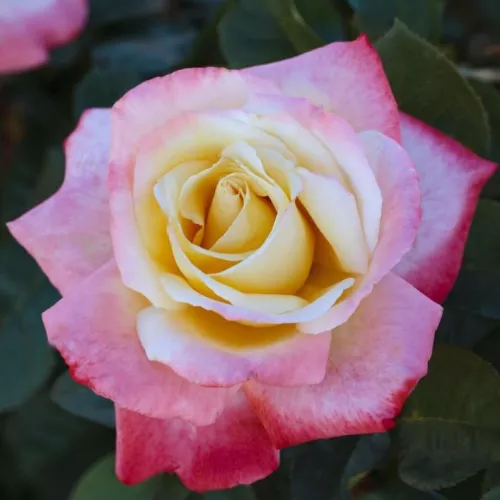
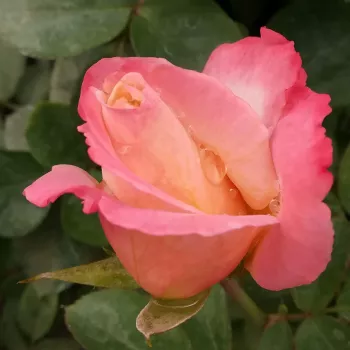
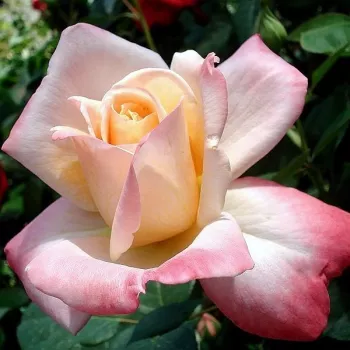
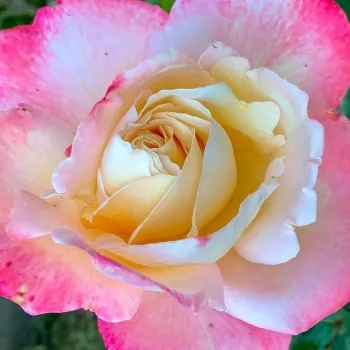
Cream base tone with a medium-pink band running along the petal margins. A subtle off‑white tint is visible within the cream. - hybrid tea rose - mild, restrained-scented rose - soft, tea-rose scented
– Large, elegant high-centred hybrid tea blooms.
– Refined cream-pink petals with pink edging.
– Reliable repeat flowering with abundant second flush.
– Dense, dark green foliage for strong visual contrast.
– Decorated with multiple international show awards.
– Special feature: Mild, refined tea-rose fragrance ideal for cut flowers and indoor enjoyment.
Horticultural experience – Streamlined forms
pharmaROSA® ORIGINAL 2-litre own-root potted rose
19,30 £
Unfortunately, we are currently unable to ship to the United Kingdom; we only deliver to countries within the European Union. For more information, please contact us!
4(6083)
LAETITIA CASTA® – cream-pink hybrid tea rose – Meilland
Elegant blooms of LAETITIA CASTA® bring a refined, exhibition-style presence to small British gardens, pairing large, high‑centred flowers with dense, bushy structure suited to compact beds and front borders. Grown on its own roots, it settles reliably and offers reassuring long‑term stability as it matures. In a sunny, well‑ventilated spot with simple, regular disease care it rewards you with repeat flushes of XL, cream‑pink flowers and neat, dark green foliage, even in areas where strong winds and driving rain can flatten less firmly built roses. Over the first seasons the plant focuses on roots, then framework, then a rounded, showpiece display, giving you a graceful, long‑lived focal point. Ideal for cut flowers from your own border, it slips naturally into cottage‑style borders and classic front‑garden schemes.
Freshly opened cream-pink bloom of Laetitia Casta®
Usage options
Target area
Reasoning
Front garden focal point
The tall, bushy habit and XL, high‑centred hybrid tea blooms give strong vertical presence in a small front garden, creating a smart, show-rose look near a doorway or path without needing complex training – ideal for design-conscious beginners.
Small rose bed with classic look
Planted in a group of 3–5 at the recommended spacing, its dense, shrub-like growth forms a tidy, cohesive block of foliage and flowers, easy to shape with light annual pruning into a compact, formal bed that still feels soft and romantic for family gardens.
Cutting corner for home bouquets
The long, straight stems and pointed, high‑centred form are bred for cutting, allowing you to harvest florist-style cream‑pink stems for vases while the plant rapidly remontants, keeping enough flower on the bush to maintain garden impact, suiting home florists.
Sunny border in disease-managed gardens
In a bright, open position where you are prepared to spray or use other rose-care routines, its susceptibility to mildew and black spot is balanced by strong repeat flowering and a well-filled framework, fitting gardeners who accept regular care for high visual reward.
Cottage-style mix with herbaceous companions
The refined cream-pink blooms combine beautifully with airy catmint, salvias or ornamental grasses, while its bushy habit anchors looser perennials, giving a structured focal point within relaxed planting schemes for cottage-style enthusiasts.
Own-root rose for long-term borders
As an own-root shrub, it rebuilds from its base if cut back hard or after winter damage, avoiding graft-related issues and helping your border mature steadily over years with consistent colour and shape, reassuring long‑term planners.
Large containers on patios (40–50 L+)
In a substantial, well-drained pot of at least 40–50 litres, it can be grown near seating areas where its large flowers and gentle scent are easily appreciated, provided you keep up watering, feeding and routine disease control, suiting balcony and patio owners.
Exhibition-style feature in sheltered spots
Where you can offer a sheltered, sunny position with attentive pruning and spraying, its medal-winning, show-quality flowers and precise form can be highlighted as a single specimen, especially in gardens that regularly experience strong winds and heavy rain yet value perfectionist gardeners.
Styling ideas
COTTAGE BORDER JEWEL – weave among catmint and low geraniums for a soft, romantic front border with a clear focal rose – for lovers of traditional cottage gardens.
FORMAL FRONT ISLAND – plant three in a triangle in a small lawn island to create a tidy, symmetrical focal point – for homeowners wanting a smart, low-complexity statement.
PATIO SHOWCASE POT – grow one plant in a 50‑litre container with trailing ivy and seasonal bedding at the base – for balcony and terrace gardeners seeking elegant height.
CUTTING-PATCH CORNER – align several plants in a sunny strip behind a border to supply long-stemmed blooms for vases – for home florists and keen arrangers.
STRUCTURED MIXED BED – use as a central anchor among lavender, helichrysum and low grasses to give backbone to looser perennials – for design-focused beginners planning balanced beds.
Technical cultivar profile
Trait
Data
Name and registration
Hybrid tea rose, registered as MEIlampario; marketed as Laetitia Casta® PERFUMELLA® MEIlampario, with ARS exhibition name Laetitia Casta for show and cut-flower use.
Origin and breeding
Bred by Alain Meilland, Meilland International, France; bred 2009 and introduced from 2010 as a hybrid tea suited both to garden display and high-quality cutting.
Awards and recognition
Multiple show honours including silver medals at Monza, Le Roeulx and Baden-Baden 2009, plus aesthetic award and breeders’ bronze at Baden-Baden and a gold award at St Albans.
Growth and structural characteristics
Bushy, shrub-like habit 90–120 cm high and 50–70 cm wide, moderately thorny, with dense, dark green, slightly glossy foliage giving a substantial framework suitable for specimen planting.
Flower morphology
Large, XL, high-centred, double blooms with 26–39 petals; typical exhibition hybrid tea form on mainly single stems, with strong remontant character and a generous second flush.
Colour data and phenology
Cream base with medium-pink petal margins, soft off-white inner tones; pink edging and cream base gradually fade lighter, moving from pastel buds to elegant, pale, fully open flowers.
Fragrance and aroma
Mild, restrained tea-rose scent; pleasant but not overpowering, adding a gentle fragrance close up rather than strong garden perfume, suited to seating areas and cut stems indoors.
Hip characteristics
Rose-hip set is generally light due to the double flowers; occasional small, 9–13 mm, spherical, bright red hips may develop, offering limited autumn interest without heavy seeding.
Resistance and winter hardiness
Hardy to around −21 to −18 °C (RHS H7, USDA zone 6b, Sweden zone 3) but very susceptible to powdery mildew, black spot and rust, so benefits from a regular protection programme.
Horticultural recommendations
Best in full sun with free-draining soil and routine feeding; use for flower beds, specimen planting and cutting. Maintain 45–90 cm spacing and apply consistent disease management for best results.
LAETITIA CASTA® offers exhibition-style, cream-pink blooms, a compact bushy habit and reliable repeat flowering on a durable own-root framework; a refined choice if you are ready to give a little extra care.
Detailed product attributes
Product Identification Data
Product Name:
LAETITIA CASTA® – cream-pink tea-hybrid rose - Meilland
Product Type:
pharmaROSA® ORIGINAL - 2-litre own-root potted rose
Competition and Show Awards:
Monza – silver medal (2009); Le Roeulx – silver medal (2009); Geneva – certificate of merit (2009); Baden-Baden – silver medal (2009); Baden-Baden – aesthetic award (2009); Baden-Baden – bronze medal in the breeders’ competition (2009); St Albans – gold m
Flower Colour Description:
Cream base tone with a medium-pink band running along the petal margins. A subtle off‑white tint is visible within the cream.
Closed Bud:
The bud is a pastel cream colour with a delicate pink blush at the tip.
Newly Opened Flower:
The outer petals are a pale cream colour, with a vivid pink band appearing along their edges.
Full Bloom:
A cream-coloured base dominates, and the edge is decorated with a distinct pink outline.
Before Fading:
The pink edging fades, and the cream tone lightens to a whitish colour.
Colour Fading Description:
During opening, the pink margin gradually fades and the cream tone lightens to an off‑white before the bloom fades.
Pollinator Attraction:
Its highly double, bud-opening flowers have limited stamen accessibility, so they attract pollinators poorly.
Pollinator-Friendly Rating:
Because of its double flowers, it is limited pollinator-friendly; it attracts pollinators poorly and is primarily an ornamental variety.
Hip Comment:
Rose-hip formation is expected to be slight due to the double flowers; occasionally forming 9–13 mm in diameter, globular, bright red (RHS 40A) hips.
Maintenance Requirement:
Maintenance requirement high; very susceptible to powdery mildew, black spot and rust, therefore regular disease control is necessary.
Our product is a rose grown with pharmaROSA®’s unique cultivation technology!
2-litre, own-root, potted rose.
With a shoot system appropriate to the season.
With a root system that thoroughly permeates the growing medium.
Quality compliant with the requirements of the E.N.A. (European Nurserystock Association).
Supplied in unique packaging that prevents damage.
Can be planted during frost-free periods.
True-to-variety rose bush with a unique identifier.
The pharmaROSA® own-root potted rose is a well-rooted plant that supports reliable establishment when planted and cared for properly, so it can be planted whenever the soil is not frozen.
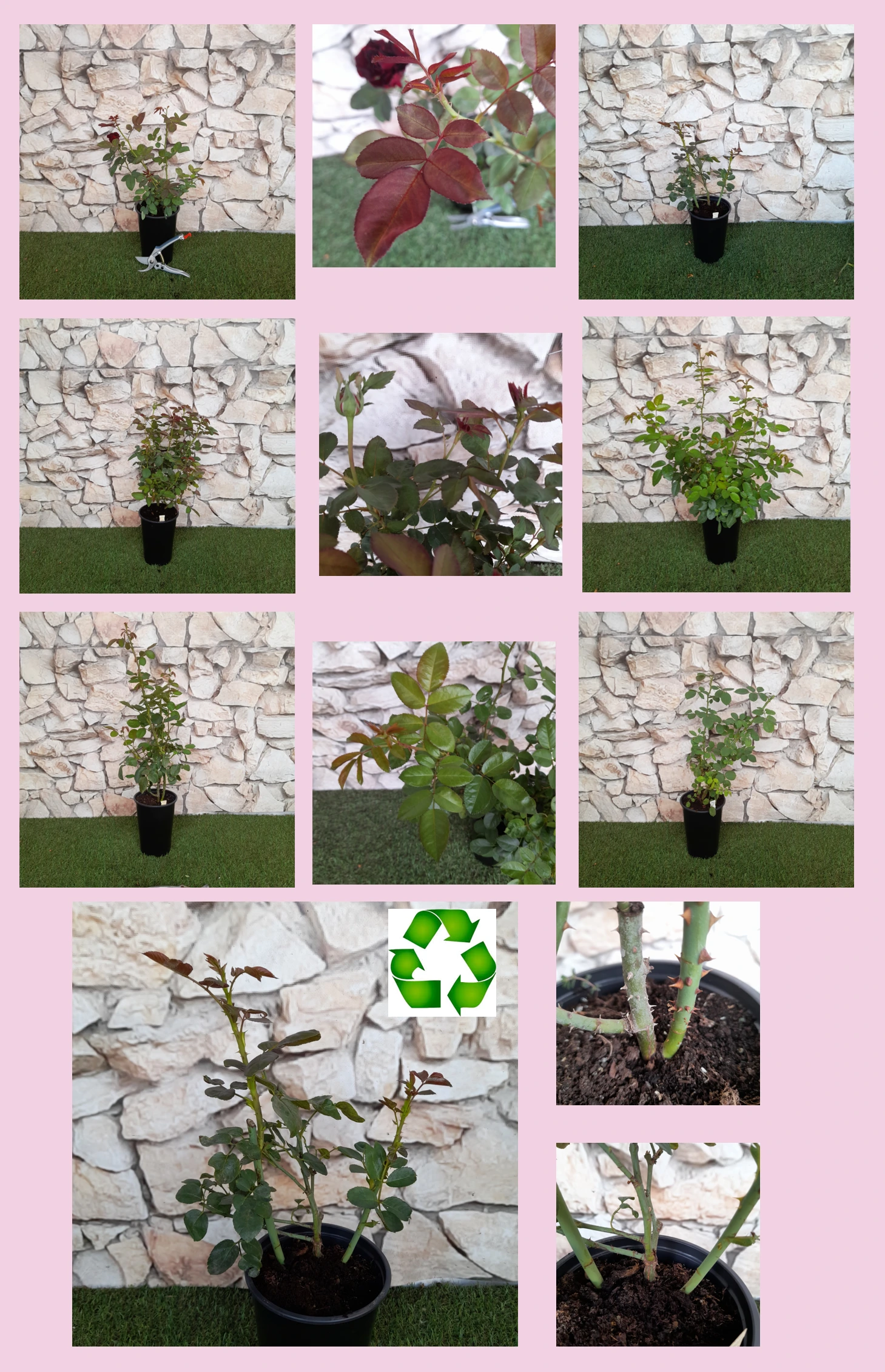
Crop overview: several varieties and growth stages in a short crop section.Shoot system: intensive growth of fresh basal shoots on a young plant.Root system: demonstration of a vigorous root system permeating the growing medium, by removing the pot.Balance: mature plant with root system and shoots in harmony with each other.
Information about the videos
The video series is not a “seasonal showcase”; it illustrates the essence of pharmaROSA® own-root cultivation in a tangible way: how the plant is built up, what the root system is like and how the shoot system regenerates. The recordings were therefore made at different times and with plants at various stages of development, so mixed foliage levels and differing stages of growth may appear in the videos. They are not a ‘sample’ of the batch dispatched, but a visual explanation of how the technology works. The current condition of the rose available to order — typical for the given period and similar to what you can expect to receive in the parcel — is shown in the upper part of the product page.
Pages for private customers Garden roses for the family garden, with minimal care → ORIGINAL® Premium garden roses – instant impact, a truly showpiece garden → EXTRA® Pages for professionals and private customers Roses for public spaces – large areas, sustainable maintenance → NATURAL® Roses for projects – hedge and row planting, fast implementation → RAPID® For professional partners only Production – propagation material for garden roses, wholesale → NEONATAL®
Company details
PharmaRosa Ltd. Company registration number: 01-09-717479 VAT number: 13075314-2-43 Plant health registration no.: HU130721 Bank account (IBAN): HU85117631891388688400000000 BIC (SWIFT): OTPVHUHB Bank name: OTP Bank Nyrt.