LADY HILLINGDON – yellow climbing rose - Hicks
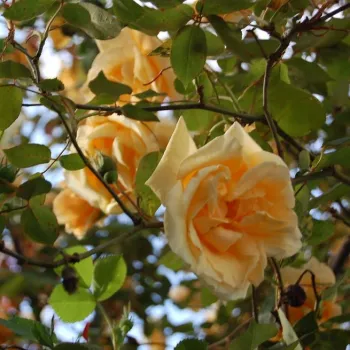
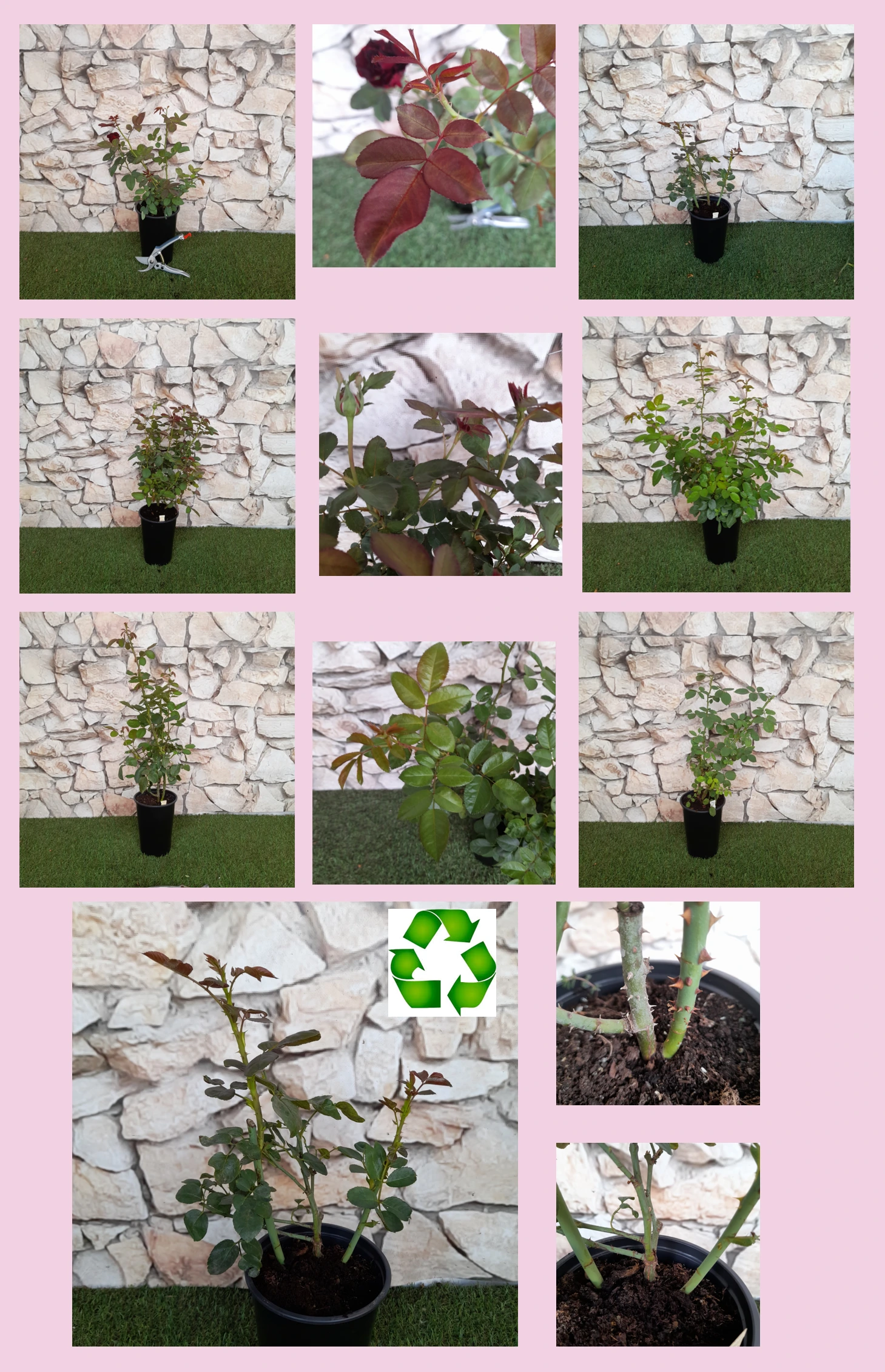
This classic climbing form of ‘Lady Hillingdon’ offers easy-care elegance for walls, pergolas and house fronts, bringing warm colour, strong tea fragrance and a reassuringly reliable repeat display through the season. Its upright yet supple canes clothe supports generously, while glossy mid-green foliage keeps the plant looking healthy and tidy even between flushes of bloom. Bred in Britain and honoured with the RHS Award of Garden Merit, it is well adapted to UK gardens, from sheltered town plots to breezier sites where improved drainage helps in coastal conditions. Own-root plants establish steadily, forming a durable framework that can be pruned lightly or trained more freely as space allows. With regular moisture and simple annual care, you can enjoy its long-lived character and adaptable planting options as it develops from strong roots, through building shoots, to full ornamental presence over its first three years in your garden, providing quietly confident performance for busy gardeners.
Usage options
| Target area |
Reasoning |
| House-front wall or warm courtyard |
Ideal for training against sunny, sheltered walls where its semi-double, tea-scented blooms can be enjoyed up close and maintenance remains straightforward thanks to low disease pressure and simple pruning – perfect for the beginner. |
| Pergola, arch or arbour in a family garden |
Its upright, manageable growth and moderate prickliness make it suitable for framing paths or seating areas, providing scented overhead colour without demanding complex training, ideal for those wanting structure with minimal fuss – suited to the homeowner. |
| Small rose border with classic companions |
Works well in modest borders with perennials and shrubs, where its warm peach-yellow flowers and glossy foliage add height and depth while resisting common fungal problems, keeping the whole bed looking cared-for with few interventions – reassuring for the hobby-gardener. |
| Feature pillar or obelisk near a seating area |
Remontant flowering ensures repeated waves of scented blooms on a compact footprint, so a single plant can become a striking vertical accent that rewards regular deadheading but does not rely on advanced techniques – attractive for the novice. |
| Cottage-style mix with informal shrubs |
The warm, soft yellow tones blend effortlessly with traditional cottage plants, and its own-root longevity allows it to mature gracefully among slower-growing shrubs, maintaining a stable presence year after year without replanting – reassuring to the planner. |
| Part-shaded side passage or alleyway |
Tolerant of partial shade, it still flowers generously where sun hours are limited, greening bare walls and lifting narrower spaces that many roses find challenging, all while keeping maintenance modest and predictable – a boon for the town-gardener. |
| Large container on terrace or patio (40–60 L) |
Can be grown in a substantial container with support, where controlled soil conditions and regular watering help it thrive, delivering fragrance and colour close to doors or seating without committing to hard landscaping changes – convenient for the urbanite. |
| Wind-sheltered coastal or exposed garden corner |
Good heat and drought tolerance combine with strong disease resistance, so once established and given free-draining soil it copes well in more challenging, breezy situations similar to many coastal gardens – giving confidence to the busy-owner. |
Styling ideas
- Edwardian-porch – Train along a traditional porch or veranda with white-painted woodwork, underplant with lavender and nepeta for a soft blue contrast – ideal for lovers of period house-fronts.
- Cottage-arch – Clothe a metal or wooden arch with this rose and interweave summer-flowering clematis in mauves or purples for a romantic entrance – perfect for cottage-garden enthusiasts.
- Golden-pillar – Grow as a free-standing pillar rose with a sturdy support, surrounded by low box or thyme edging to emphasise its vertical form – suited to structured but low-maintenance gardens.
- Warm-border – Combine with perennials in apricot, soft red and cream, such as geums and foxgloves, to create a harmonious warm-toned border – attractive for colour-conscious beginners.
- Courtyard-retreat – Place in a large container with an obelisk beside a bench, adding terracotta pots of herbs and grasses for texture – appealing to small-terrace and patio gardeners.
Technical cultivar profile
| Parameter |
Data |
| Name and registration |
Lady Hillingdon Climbing rose Hicks; large-flowered climbing rose for walls and supports, marketed as LADY HILLINGDON – yellow climbing rose - Hicks; ARS exhibition name: Lady Hillingdon, Cl. |
| Origin and breeding |
Sport of ‘Lady Hillingdon’ (Tea, 1910), bred by Elisha J. Hicks, E. J. Hicks Nursery, Hurst, Berkshire; breeding around 1917, introduced 1920, unregistered variety of reliable garden performance. |
| Awards and recognition |
Holds the RHS Award of Garden Merit (1993), indicating dependable garden worth, sound health and ornamental value under typical UK growing conditions when given basic appropriate care. |
| Growth and structural characteristics |
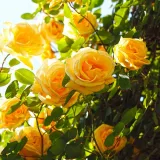
Upright climbing habit, 300–500 cm high and 100–170 cm spread, moderately thorny, with mid-green, moderately dense, glossy foliage; suitable for training on walls, pillars, arches and other supports. |
| Flower morphology |
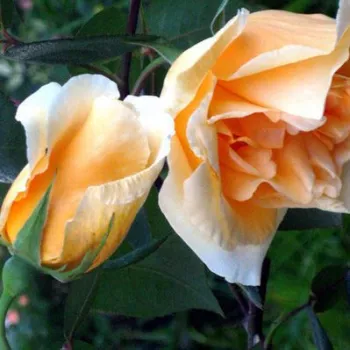
Semi-double, cupped flowers with 13–25 petals, medium-sized clusters (about 4–7 cm), remontant with a generous second flush; carried in clusters suitable for cutting or informal garden display. |
| Colour data and phenology |
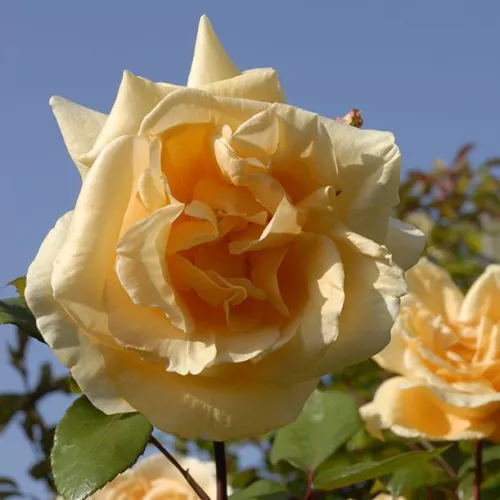
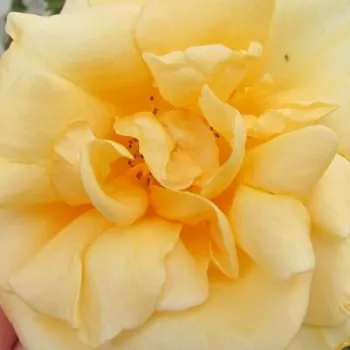
Warm peach-yellow to buttery yellow blooms; egg-yolk yellow buds, golden-yellow centres with orange tinge, fading to creamy yellow; ARS yellow blend, RHS 17B outer and 14B inner; colour fades faster in strong sun. |
| Fragrance and aroma |
Strong, richly scented tea fragrance with peachy nuances, noticeable both on the plant and as a cut flower; semi-double form offers moderate, not maximal, appeal to pollinators due to partial stamen access. |
| Hip characteristics |
Moderate production of small, spherical orange-red hips, about 10–14 mm in diameter, forming mainly after less deadheading; can provide additional late-season interest without overwhelming the plant. |
| Resistance and winter hardiness |
Good resistance to black spot, powdery mildew and rust; tolerant of heat with watering in dry spells; hardy to around -21 to -18 °C (RHS H7, USDA 6b), suiting much of the UK climate. |
| Horticultural recommendations |
Best in well-drained soil with sun or light shade; plant 150–300 cm apart depending on use; suitable for walls, pergolas, arbours, trellises, specimens and cut flowers; keep watered in containers or prolonged drought. |
LADY HILLINGDON – yellow climbing rose - Hicks offers richly scented repeat blooms, dependable disease resistance and a durable own-root framework, making it a thoughtful choice for long-lived, low-effort vertical colour in your garden.