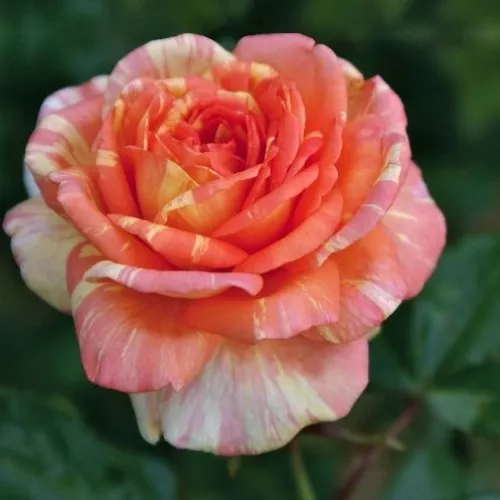
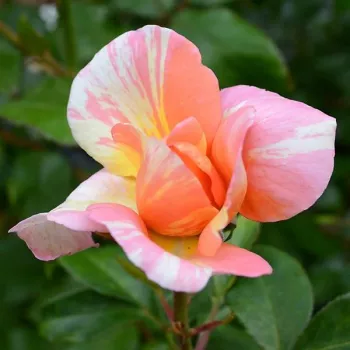
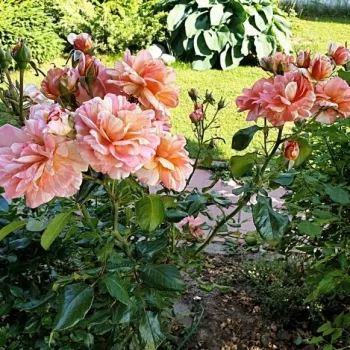
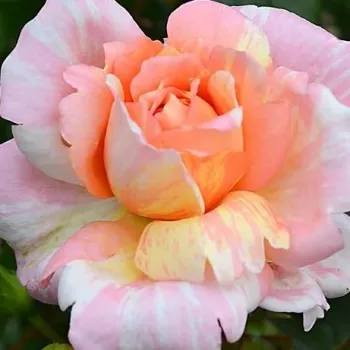
The petals have a vivid salmon‑orange base, dynamically streaked with golden‑yellow. - flower bed floribunda rose - mild, subtle-scented rose - fresh, fruity character
– Vivid salmon‑orange blooms with golden stripes.
– Compact, bushy habit for beds and borders.
– Abundant repeat flowering through the season.
– Glossy dark foliage enhances flower colours.
– Excellent resistance to major rose diseases.
– Special feature: painterly, brushstroke‑like petals inspired the name.
Secure delivery – Long-lasting garden experience
pharmaROSA® ORIGINAL 2-litre own-root potted rose
19,30 £
Unfortunately, we are currently unable to ship to the United Kingdom; we only deliver to countries within the European Union. For more information, please contact us!
4.5(6784)
LA ROSE DES IMPRESSIONNISTES – orange-yellow bedding floribunda rose – Adam
Colour takes centre stage with La Rose des Impressionnistes: painterly salmon-orange blooms brushed with golden-yellow stripes create a distinctive, long-lasting display in beds and borders. This compact, bushy plant forms a neat structure that suits typical British front gardens, coping reliably even where soils are heavy and raised beds help manage winter rainfall. Its low-intervention maintenance needs and good disease resistance support a consistently tidy look, while remontant flowering ensures generous second flushes for extended seasons. As an own-root rose, it settles securely and steadily, supporting a long garden life with dependable performance that suits beginners as much as enthusiasts planning future borders.
Cup-shaped, double blooms of La Rose des Impressionnistes.
Usage options
Target area
Reasoning
Small front-garden bed beneath windows
The compact, bushy habit fits narrow strips and stays within typical window height, while the distinctive striped flowers give strong street-side impact without demanding pruning finesse. Ideal for the time-pressed homeowner.
Mixed cottage-style border
Reliable repeat flowering and generous second flushes ensure there is colour threaded through a mixed planting, weaving between perennials and shrubs without leaving bare gaps. Well suited to the cottage-loving beginner.
Low, informal flowering hedge
Regular spacing creates a dense, glossy green line, with upright shoots carrying clusters of flowers that define paths or garden rooms while remaining easy to clip and shape when required. A good choice for family-oriented gardens.
Feature group of 3–5 plants in a focal bed
Planting several together builds a saturated block of colour where the salmon-orange and yellow striping reads strongly from a distance, forming a simple yet effective focal point without complex design work. Perfect for visually focused owners.
Raised bed or improved heavy-clay border
The tidy root system and compact structure adapt well where drainage has been improved, letting the plant anchor securely and flower reliably even in wetter regions with persistently moisture-retentive soil. Helpful for challenging-soil gardeners.
Large container on patio or terrace
The moderate height and bushy shape sit comfortably in a 40–50 litre pot, giving a long-season display on hard surfaces while remaining manageable to water and tidy, especially near doors and seating. A practical option for balcony-focused residents.
Family garden play-area borders
Moderate prickliness and compact size allow considered placement along fences or behind lower plants, providing colour and structure without dominating space that children use regularly. Suitable for safety-conscious parents.
Long-term rose bed with minimal intervention
Own-root growth underpins a stable, regenerating shrub that copes with basic pruning and routine feeding, building up year by year into a durable planting that maintains ornamental value with limited specialist care. Reassuring for low-maintenance gardeners.
Styling ideas
Painterly focus – Plant 3–5 together in a small bed by the front path so the striped blooms form a single “canvas” of colour – for design-conscious owners who want impact without complexity.
Cottage weave – Thread plants between soft perennials such as daylilies and catmint to let their brushstroke flowers punctuate looser planting – for cottage-garden enthusiasts seeking a relaxed but coherent look.
Glossy hedge – Use close spacing along a low front boundary, letting dark foliage and repeating flower clusters frame the house – for homeowners wanting a defined yet friendly edge to their plot.
Patio gallery – Grow one specimen in a 40–50 litre container with evergreen euonymus at the base to highlight both foliage and bloom – for balcony and terrace users aiming for all-season structure.
Family frame – Place a short row behind a lower, soft planting strip around lawns or play areas so colour forms a backdrop rather than a barrier – for families balancing beauty and practicality.
Technical cultivar profile
Parameter
Data
Name and registration
Floribunda bed rose registered as ADAreviday, marketed as La Rose des Impressionnistes (NIRPESPACE). Verified cultivar identity, suitable for use as a bedding and cut-flower shrub.
Origin and breeding
Bred by Michel Adam in France before 2015 and introduced through NIRP International. Parentage is undocumented, but selection emphasised colour effect, compact structure and reliable garden performance.
Growth and structural characteristics
Compact, bushy shrub 60–85 cm high and 40–60 cm wide with dense, dark green, glossy foliage and moderate prickles. Spent flowers may linger and benefit from occasional deadheading to keep plants presentable.
Flower morphology
Double, cupped blooms with 26–39 petals, borne mainly in corymbs of medium-sized flowers. Repeat-flowering habit with a marked second flush, suitable for consistent display in beds, borders and containers.
Colour data and phenology
Salmon-orange petals strongly streaked with golden-yellow, rich on opening and shifting towards peach and creamy yellow as they age. Colour tends to shift rather than bleach, maintaining interest throughout the season.
Fragrance and aroma
Fresh, fruity fragrance of mild intensity designed more for subtle enjoyment than for powerful scent. Dense, double flowers emphasise visual impact while providing a gentle, background aromatic presence in the garden.
Hip characteristics
Double blooms set hips only occasionally; small, spherical red hips around 7–10 mm may appear late season. Decorative value of hips is modest, with flowering display remaining the principal ornamental feature.
Resistance and winter hardiness
Good overall disease resistance, with strong performance against powdery mildew, black spot and rust. Winter-hardy down to around −21 °C (RHS H7, USDA 6b), suitable for most UK gardens with basic winter care.
Horticultural recommendations
Best in sunny positions with reasonably drained soil; irrigate in extended droughts. Space 30–55 cm depending on use, allow 8–16 plants/m². Occasional deadheading and light pruning maintain shape and flower production.
La Rose des Impressionnistes combines painterly striped blooms, compact habit and reliable repeat flowering with the long-term stability of an own-root rose, making it a thoughtful choice if you seek lasting colour from a manageable shrub.
Detailed product attributes
Product Identification Data
Product Name:
LA ROSE DES IMPRESSIONNISTES – orange-yellow bedding floribunda rose - Adam
Product Type:
pharmaROSA® ORIGINAL - 2-litre own-root potted rose
Meaning of Cultivar Name:
The name "The Rose of the Impressionists" refers to the flower's brushstroke-like, yellow‑striped salmon‑orange petals, evoking the painterly, impressionist use of colour.
Pollinator Attraction:
With a highly double flower form and reduced stamen accessibility, it is expected to be of low attractiveness to pollinators.
Pollinator-Friendly Rating:
Its double flowers partially conceal the stamens, making it less attractive to pollinators and primarily valued for ornamental purposes.
Our product is a rose grown with pharmaROSA®’s unique cultivation technology!
2-litre, own-root, potted rose.
With a shoot system appropriate to the season.
With a root system that thoroughly permeates the growing medium.
Quality compliant with the requirements of the E.N.A. (European Nurserystock Association).
Supplied in unique packaging that prevents damage.
Can be planted during frost-free periods.
True-to-variety rose bush with a unique identifier.
The pharmaROSA® own-root potted rose is a well-rooted plant that supports reliable establishment when planted and cared for properly, so it can be planted whenever the soil is not frozen.
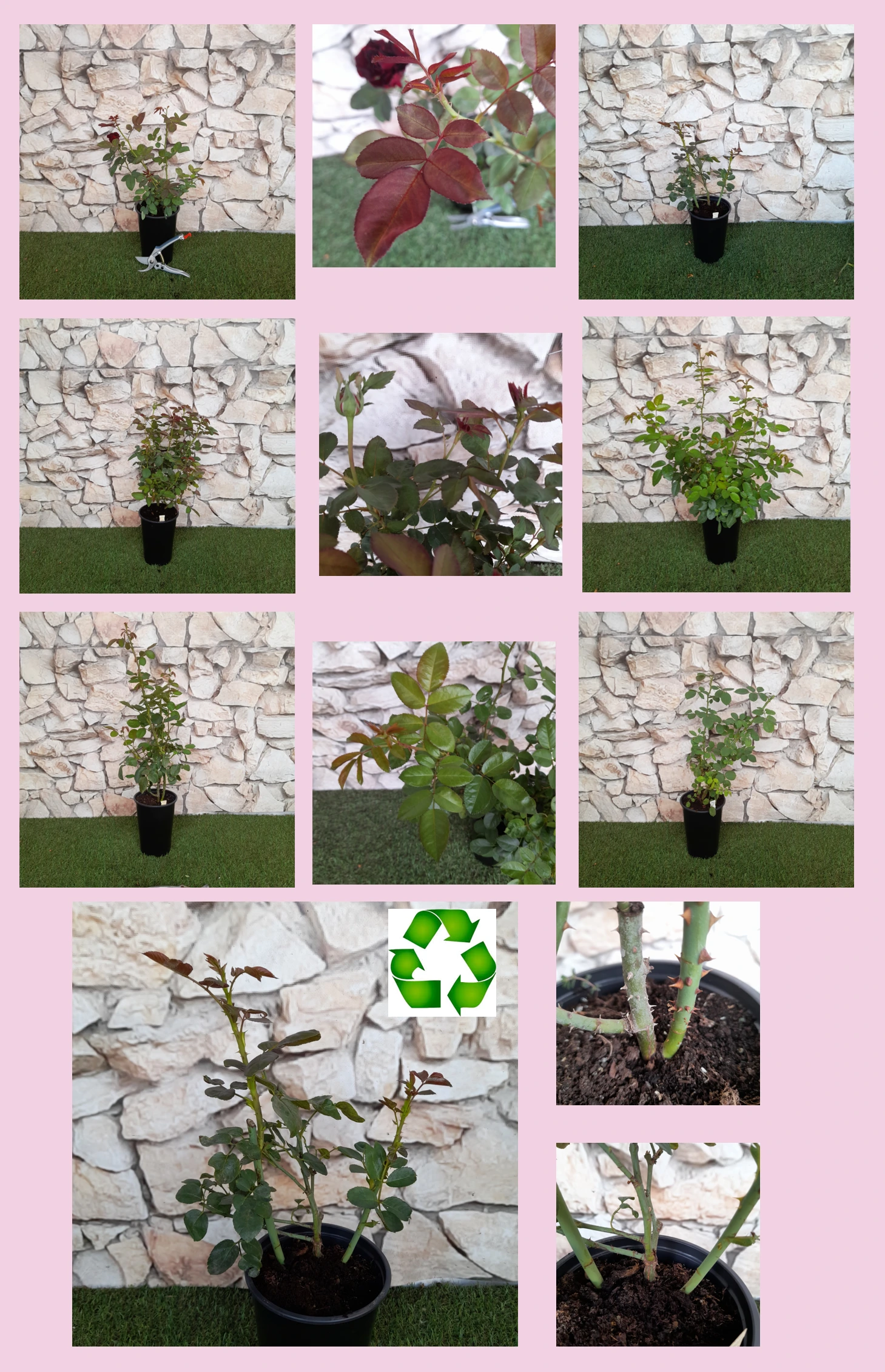
Crop overview: several varieties and growth stages in a short crop section.Shoot system: intensive growth of fresh basal shoots on a young plant.Root system: demonstration of a vigorous root system permeating the growing medium, by removing the pot.Balance: mature plant with root system and shoots in harmony with each other.
Information about the videos
The video series is not a “seasonal showcase”; it illustrates the essence of pharmaROSA® own-root cultivation in a tangible way: how the plant is built up, what the root system is like and how the shoot system regenerates. The recordings were therefore made at different times and with plants at various stages of development, so mixed foliage levels and differing stages of growth may appear in the videos. They are not a ‘sample’ of the batch dispatched, but a visual explanation of how the technology works. The current condition of the rose available to order — typical for the given period and similar to what you can expect to receive in the parcel — is shown in the upper part of the product page.
Pages for private customers Garden roses for the family garden, with minimal care → ORIGINAL® Premium garden roses – instant impact, a truly showpiece garden → EXTRA® Pages for professionals and private customers Roses for public spaces – large areas, sustainable maintenance → NATURAL® Roses for projects – hedge and row planting, fast implementation → RAPID® For professional partners only Production – propagation material for garden roses, wholesale → NEONATAL®
Company details
PharmaRosa Ltd. Company registration number: 01-09-717479 VAT number: 13075314-2-43 Plant health registration no.: HU130721 Bank account (IBAN): HU85117631891388688400000000 BIC (SWIFT): OTPVHUHB Bank name: OTP Bank Nyrt.