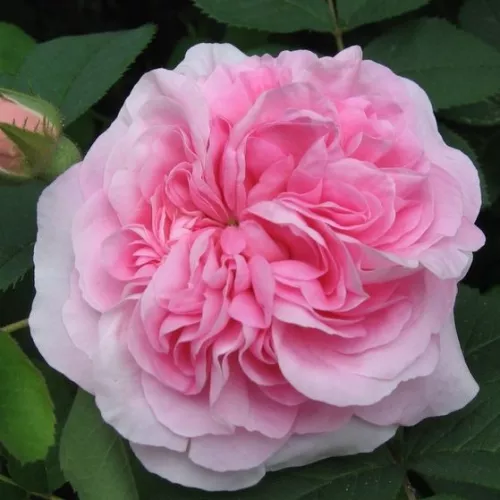
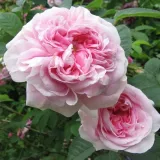
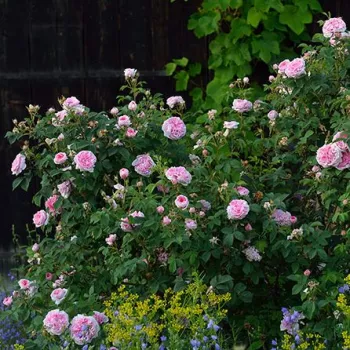
Pale, powder-pink in tone with a slightly deepening shade towards the centre. - historic, alba rose - very strongly scented, garden-filling rose - full-bodied, classic rose fragrance
– Very full, rosette blooms in soft powder pink
– Very strongly scented, classic rose fragrance
– Almost thornless, bushy shrub for easy handling
– Excellent winter hardiness to around –30 °C
– Historic alba rose with RHS Award of Garden Merit
– Special feature: Superb once-a-year floral display, ideal for specimen or hedge planting.
Reliable online shop – Low chemical use
pharmaROSA® ORIGINAL 2-litre own-root potted rose
19,30 £
Unfortunately, we are currently unable to ship to the United Kingdom; we only deliver to countries within the European Union. For more information, please contact us!
4(6401)
KÖNIGIN VON DÄNEMARK – pink historic Alba rose - Booth
This historically cherished Alba shrub brings romantic charm to classic British front gardens, with arching canes that create a quietly elegant presence and midsummer flushes of soft, powder-pink rosette blooms. Its very strongly scented, full-bodied old-rose perfume is wonderfully intense, making it a natural choice near paths, doors, or seating where you can pause and enjoy the fragrance. The almost thornless stems are reassuringly family‑friendly for busy gardens, yet still form a robust, medium-height bush that anchors beds and borders securely, even in exposed sites where you need reliable wind stability and good anchoring. As an own‑root plant it offers longevity, regenerating steadily from the base and holding its character for decades with sensible pruning. In its single, generous flowering season it is richly floriferous, especially when lightly fed and watered, and it accepts shade for part of the day, helping it perform in the variable light of around‑the‑house spaces. Plant it into well‑prepared soil, keep it moist in the first year, and expect a natural rhythm of first year root-building, second year framework growth, and by the third year the full, mature ornamental presence you envisaged.
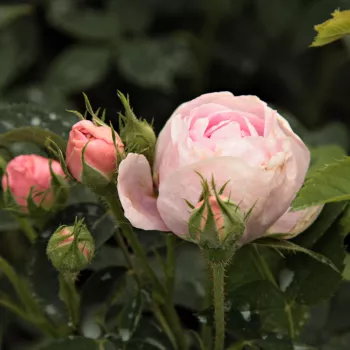
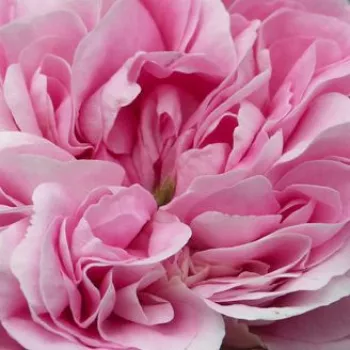
Closed bud of Königin von Dänemark, showing a soft pink surface with a delicate green-tinged veil.
Usage options
Target area
Reasoning
Traditional front garden focal shrub
Planted as a single specimen by the front gate or beside a path, this rose delivers a midsummer display of soft pink rosettes that reads beautifully against brick, gravel, or lawn. Its historic character fits cottage and period homes, while own-root planting promises decades of reliable structure with only moderate annual pruning for shape, suiting homeowners who want quiet, enduring impact without fuss, especially beginners.
Cottage-style mixed border
In a mixed border with perennials and grasses, the bushy, arching habit and floriferous midsummer flush provide a generous seasonal highlight that then recedes into a calm grey-green backdrop. The once-blooming habit works well in traditional cottage compositions that shift focus through the year, while own-root growth allows the shrub to adapt steadily to heavier or chalky soils common in many British gardens, reassuring hobby‑gardeners.
Lightly shaded side garden or boundary
This variety tolerates partial shade, so it can be sited where buildings or fences block some sun yet there is still reasonable light. Along side passages or north-east aspects it offers a welcome burst of romantic colour and scent once a year, while the robust root system gradually secures the plant in more challenging, moisture-holding soils and changeable exposure, helping urban‑owners.
Family garden seating or play area edge
With almost thornless growth, this rose is kinder to passing hands and arms than many historic shrubs, making it a thoughtful choice near benches, play lawns, or narrow paths. The strong, classic fragrance is best appreciated up close, creating a sensory corner without demanding high-maintenance care, provided you give basic feeding and deadheading, an advantage for families.
Period-style hedge or informal screen
Planted at hedge spacing, it forms a seasonally flowered, bushy line that softens boundaries around driveways or front gardens. Own-root plants thicken naturally from the base and can be rejuvenated by harder pruning if needed, supporting a long-lived green structure that copes with typical British winds and weather over time, giving confidence to planners.
Fragrance-focused rose bed
For gardeners who prize perfume, grouping several plants creates a concentrated, garden-filling scent at flowering time. The very strongly scented, full-bodied fragrance adds depth to collections of old roses, while the medium care needs remain manageable with simple annual pruning and feeding, letting you enjoy a sense of luxury without technical routines, ideal for fragrance‑lovers.
Low-chemical, traditional planting schemes
In borders where minimal spraying is preferred, this historic shrub’s moderate disease tolerance suits a simple regime of good spacing, airflow, and occasional tidy-up. Own-root resilience means that even if some top growth is affected in a difficult year, the plant can regenerate from a stable base, supporting a long-term, low-intervention approach valued by eco‑minded.
Large container on terrace or gravel area
Where soil is poor or space is limited, planting in a generously sized container of at least 40–50 litres lets you control drainage and nutrients while enjoying the historic character close to the house. Anchored in a substantial pot and placed in a reasonably sunny, sheltered spot, it will establish reliably with routine watering, suiting time-pressed owners.
Styling ideas
Cottage‑Border Duo – Combine with Heuchera and soft grasses for layered foliage and a romantic, once-a-year pink highlight – ideal for cottage‑style appreciators.
Fragrant‑Entrance – Flank a front path with one or two shrubs where their intense perfume greets visitors – suited to scent‑focused homeowners.
Soft‑Screen Hedge – Create an informal hedge underplanted with Calamintha ‘Blue Cloud Strain’ to echo the pastel tones and gently mask boundaries – perfect for privacy‑seeking families.
Historic‑Feature Bed – Centre this historic rose in a small round bed edged with low perennials to showcase its elegant, floriferous summer display – appealing to period‑garden enthusiasts.
Shaded‑Side Charm – Use in a light shade side garden with coral bells and ferns, letting its tolerant, own‑root shrub form bring structure where many roses struggle – helpful for tricky‑plot gardeners.
Technical cultivar profile
Parameter
Data
Name and registration
Königin von Dänemark, historic Alba shrub rose; commercial historic type, ARS exhibition name ‘Queen of Denmark’; unregistered cultivar used under long-established trade naming.
Origin and breeding
Selected by James Booth from a seedling of ‘Great Maiden’s Blush’ (R. × alba); bred in Flottbeck, then Denmark (now Hamburg, Germany), around 1816 and introduced in 1826.
Awards and recognition
Holds the Royal Horticultural Society Award of Garden Merit (1993), confirming consistent garden performance, reliability, and ornamental value under a range of UK growing conditions.
Growth and structural characteristics
Medium to tall shrub, about 120–180 cm high and 100–160 cm wide; bushy, moderately dense, arching habit with matt grey‑green foliage and very few prickles on the stems.
Flower morphology
Large, very full, rosette-shaped blooms with 40+ petals, typically borne singly; once-flowering in early summer, not remontant, with moderate self-cleaning so some deadheading is helpful.
Colour data and phenology
Pale powder-pink, deepening slightly towards the centre; ARS Lp, RHS 65D outer, 65C inner; flowers gradually fade to near white, with stronger colour and slower fading in cooler weather.
Fragrance and aroma
Very strong, classic old-rose perfume with a full-bodied, garden-filling character; best appreciated near paths, doors, or seating where the once-seasonal flowering can be enjoyed at close range.
Hip characteristics
Rose hip set is generally sparse due to very double flowers; when produced, hips are ovoid, 14–22 mm across, and coloured orange-red (RHS 40A), adding a light decorative note in autumn.
Resistance and winter hardiness
Hardy to approximately –32 to –29 °C (USDA 4b, RHS H7, Swedish zone 5); moderate resistance to powdery mildew, black spot, and rust, benefiting from good air circulation and hygiene.
Horticultural recommendations
Best with regular feeding and annual pruning to maintain bloom quality; plant 80–160 cm apart depending on use; tolerates partial shade and medium drought, with watering in long dry spells.
KÖNIGIN VON DÄNEMARK offers romantic, fragrant summer flowering, a family-friendlier almost thornless habit and long-lived own-root resilience, making it a thoughtful choice if you enjoy classic roses and prefer reliable, quietly rewarding plants.
Detailed product attributes
Product Identification Data
Product Name:
KÖNIGIN VON DÄNEMARK – pink historic Alba rose - Booth
Product Type:
pharmaROSA® ORIGINAL - 2-litre own-root potted rose
Cultivar Synonym:
Dronningen af Danmark; Koenigen van Danemark; Regina Daniae; New Maiden Blush; Queen of Denmark; Reine du Danemark; Reine de Denmarck; Belle Courtisanne
Flower Colour Description:
Pale, powder-pink in tone with a slightly deepening shade towards the centre.
Closed Bud:
Delicately green-tinged veil and a soft pink surface.
Newly Opened Flower:
Pastel pink, slightly paler at the edges of the outer petals.
Full Bloom:
Uniform mid-pink, lightening to a pale wash at the petal base.
Before Fading:
Gradually fading pink that leans almost to white.
Colour Fading Description:
During opening it gradually fades from mid‑pink, becoming almost white at the end; in strong sunlight it lightens more quickly, and in cooler weather its colour is more vivid.
Pollinator Attraction:
Its strongly double blooms, which hide the stamens and reduce their accessibility, make it only weakly attractive to pollinating insects.
Pollinator-Friendly Rating:
Its very double flowers enclose the stamens, making it more of an ornamental variety.
Hip Comment:
Rose hip production is likely poor because of the double flowers; occasionally it produces ovoid, orange‑red (RHS 40A) hips 14–22 mm in diameter.
Our product is a rose grown with pharmaROSA®’s unique cultivation technology!
2-litre, own-root, potted rose.
With a shoot system appropriate to the season.
With a root system that thoroughly permeates the growing medium.
Quality compliant with the requirements of the E.N.A. (European Nurserystock Association).
Supplied in unique packaging that prevents damage.
Can be planted during frost-free periods.
True-to-variety rose bush with a unique identifier.
The pharmaROSA® own-root potted rose is a well-rooted plant that supports reliable establishment when planted and cared for properly, so it can be planted whenever the soil is not frozen.
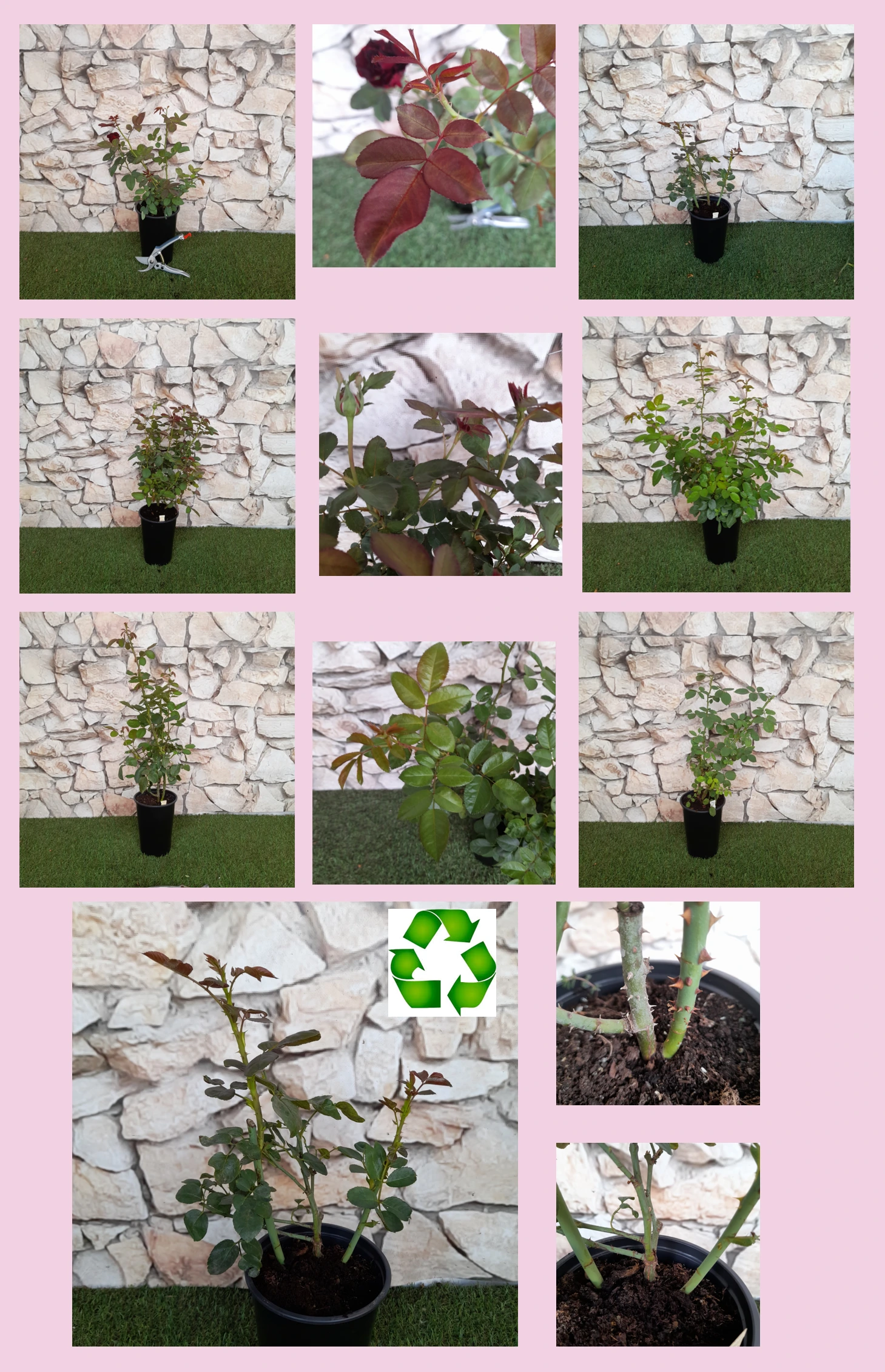
Crop overview: several varieties and growth stages in a short crop section.Shoot system: intensive growth of fresh basal shoots on a young plant.Root system: demonstration of a vigorous root system permeating the growing medium, by removing the pot.Balance: mature plant with root system and shoots in harmony with each other.
Information about the videos
The video series is not a “seasonal showcase”; it illustrates the essence of pharmaROSA® own-root cultivation in a tangible way: how the plant is built up, what the root system is like and how the shoot system regenerates. The recordings were therefore made at different times and with plants at various stages of development, so mixed foliage levels and differing stages of growth may appear in the videos. They are not a ‘sample’ of the batch dispatched, but a visual explanation of how the technology works. The current condition of the rose available to order — typical for the given period and similar to what you can expect to receive in the parcel — is shown in the upper part of the product page.
Pages for private customers Garden roses for the family garden, with minimal care → ORIGINAL® Premium garden roses – instant impact, a truly showpiece garden → EXTRA® Pages for professionals and private customers Roses for public spaces – large areas, sustainable maintenance → NATURAL® Roses for projects – hedge and row planting, fast implementation → RAPID® For professional partners only Production – propagation material for garden roses, wholesale → NEONATAL®
Company details
PharmaRosa Ltd. Company registration number: 01-09-717479 VAT number: 13075314-2-43 Plant health registration no.: HU130721 Bank account (IBAN): HU85117631891388688400000000 BIC (SWIFT): OTPVHUHB Bank name: OTP Bank Nyrt.