Deep, lilac-toned crimson-pink with a velvety lustre. - polyantha bedding rose - medium-strength, clearly scented rose - pleasant, floral-spicy aroma
– Rich, velvety purple-pink cluster blooms.
– Flowers abundantly, with strong repeat flushes.
– Compact, bushy habit for tidy bedding.
– Medium disease resistance and H7 hardiness.
– Medium-strength, pleasantly spicy fragrance.
– Special feature: Awarded Bronze medal in Gera (2007).
Thoughtfully curated range – Refined flower colours
pharmaROSA® ORIGINAL 2-litre own-root potted rose
18,20 £
Unfortunately, we are currently unable to ship to the United Kingdom; we only deliver to countries within the European Union. For more information, please contact us!
3.5(5391)
KODÁLY ZOLTÁN – purple‑pink bedding polyantha rose – Márk
This compact, bushy polyantha rose settles into small British gardens with reassuring ease, forming a low, rounded shrub that suits front beds and cottage‑style borders. Its clusters of many small, double blooms provide remarkably long‑lasting colour, with deep crimson‑pink tones that retain their richness instead of washing out in summer light. The consistently bushy habit and dense, glossy foliage create a neat, well‑furnished look that helps your planting feel finished even when other plants are between seasons. Medium, clearly noticeable fragrance adds a gentle floral‑spicy note along paths and near seating areas. As an own‑root shrub it matures steadily for a long garden lifespan, rebuilding naturally from the base after pruning or weather damage. In exposed or coastal sites it stands up well, providing reliable bedding structure even where wind and rain are frequent. Over the first three years it concentrates on roots, then framework, before reaching full impact with abundant clusters. Its medium disease tolerance responds well to basic care, keeping maintenance manageable for busy beginners who still want a smart, flowering front garden.
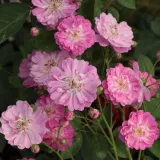
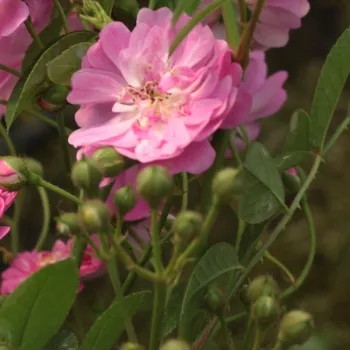
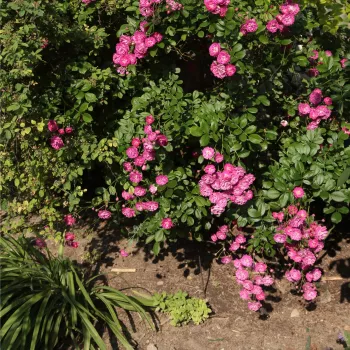
Kodály Zoltán bedding polyantha rose in full bloom
Kodály Zoltán rose with a pleasant, floral-spicy scent.
Usage options
Target area
Reasoning
Front garden bedding strip by the path
The low, bushy habit and dense foliage form a tidy, continuous line of structure along paths, ensuring your front garden looks cared‑for without intricate design work. Regular clusters of small double blooms keep the border lively through the season, even in a narrow strip. Ideal for style‑conscious beginners.
Small mixed cottage border
Its repeatedly flowering clusters of deep purple‑pink blooms weave easily among perennials, echoing traditional cottage borders without demanding specialist pruning. The plant remains compact yet full, so it slots neatly between cranesbills, scabious and bearded irises without overwhelming them. Suited to relaxed, cottage‑style homeowners.
Compact family back‑garden bed
The medium height and rounded shape give children‑friendly planting that is easy to see over yet substantial enough to anchor a small bed. Steady growth on its own roots builds a resilient shrub that recovers from the occasional knock or rough play, supporting long‑term structure. Practical for busy families.
Low flowering hedge or edging row
Planting at the recommended distances creates a continuous flowering edge with clear lines, helpful where you want definition between lawn and borders without high hedging. Its reliable cluster flowering and manageable prickliness make trimming straightforward, giving a smart look with modest effort. Perfect for order‑loving garden owners.
Urban front garden with wind and rain exposure
The sturdy, bushy framework and dense foliage cope well in exposed, showery streets, reducing the risk of gaps where plants fail. Once rooted in reasonably drained soil, it provides a stable, long‑term bedding shrub that stands up to frequent coastal‑style wind and rain without losing overall shape. Reassuring for weather‑aware gardeners.
Small group planting (3–5 plants) as a focal patch
Grouped in threes or fives, the profusion of small blooms merges into an intense block of colour, creating a simple yet striking focal point in modest‑sized gardens. The own‑root form builds up a lasting clump that can be rejuvenated with occasional harder pruning while retaining vigour. Ideal for low‑maintenance colour‑seeking beginners.
Large container or half‑barrel near the door
In a substantial container of at least 40–50 litres, its compact spread and repeated flowering offer a welcoming display by entrances without daily fuss. The medium fragrance is easily appreciated at close quarters, delivering a gentle floral‑spicy note when you pass by. Suitable for space‑limited urban residents.
Community, school or shared gardens
The medium maintenance level and good winter hardiness make it a sensible choice where several people share care, as it tolerates occasional lapses. Clear spacing guidelines and robust growth simplify planning of beds and small hedges, giving predictable results that build confidence for novice groups. Helpful for community‑project organisers.
Styling ideas
Crimson‑border – Mass‑plant along a front fence with garden cranesbills softening the edges, for a low, continuous ribbon of deep colour – for homeowners wanting simple but polished frontage.
Cottage‑trio – Combine three shrubs with bearded iris and blue‑toned perennials to echo traditional cottage borders in a small bed – for romantically inclined beginners seeking easy charm.
Doorway‑welcome – Grow one plant in a large half‑barrel beside the front step, underplanting with trailing lobelia for season‑long colour – for urban residents wanting impact in limited space.
Family‑corner – Use a curved row to edge a play‑lawn, backed by low grasses, giving soft structure that stays below eye level – for families needing robust, attractive planting.
Park‑patch – Plant a tight group of five in municipal or shared spaces for a dependable, colourful anchor that copes with shared care – for community groups planning simple rose beds.
Technical cultivar profile
Parameter
Data
Name and registration
KODÁLY ZOLTÁN is a polyantha bedding rose from the Bedding rose collection; a shrub‑type, cluster‑flowering polyantha grown on its own roots for garden use.
Origin and breeding
Bred by Márk Gergely in Hungary in 2006; detailed parentage is unknown. Introduced and initially distributed by PharmaRosa® Ltd., with no formal registration year recorded.
Awards and recognition
Received a bronze medal at the Gera rose trials in Germany in 2007, confirming garden performance and ornamental value under independent Central European trial conditions.
Growth and structural characteristics
Compact bushy shrub reaching about 55–75 cm in height and 65–95 cm spread, with dense, mid‑green glossy foliage and moderate prickliness on the shoots.
Flower morphology
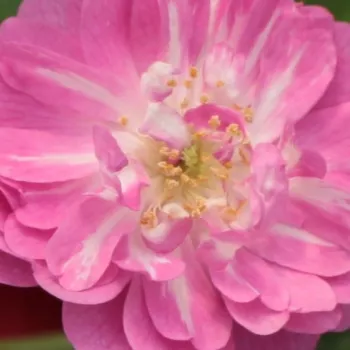
Produces small, cupped, double blooms with around 26–39 petals, carried in clusters. A remontant bedding rose, it repeats well and offers an abundant second flush of flowers.
Colour data and phenology
Flowers are deep lilac‑toned crimson‑pink with velvety lustre; colour holds very well, only moderately fading to rosy‑crimson with subtle mauve tones towards the end.
Fragrance and aroma
Offers a clearly noticeable, medium‑strength perfume with a pleasant floral‑spicy character, most evident when planted near paths, entrances, or in containers at nose height.
Hip characteristics
Sets relatively few hips; occasional small spherical red fruits about 7–10 mm across provide a discreet ornamental effect in late season without overwhelming the plant.
Resistance and winter hardiness
Classed as medium for black spot, powdery mildew and rust; benefits from basic protection in high‑pressure areas. Hardy to approximately −23 to −21 °C (RHS H7, Swedish zone 3, USDA 6a).
Horticultural recommendations
Well suited to beds, urban green spaces and parks. For mass planting allow about 55 cm between plants; hexagonal layouts use roughly 3.7 plants per square metre.
KODÁLY ZOLTÁN offers compact bushy growth, long‑lasting purple‑pink flowering and steady own‑root resilience that rewards patient gardeners who would like reliable colour with modest, manageable care.
Detailed product attributes
Product Identification Data
Product Name:
KODÁLY ZOLTÁN – purple-pink bedding polyantha rose - Márk
Product Type:
pharmaROSA® ORIGINAL - 2-litre own-root potted rose
Closed Bud:
Dark crimson-pink with a purplish hue and a matte finish.
Newly Opened Flower:
Vivid crimson‑pink with a subtle violet tinge at the edge.
Full Bloom:
Uniformly dark crimson‑pink, with a paler purplish hue visible on the inner petals.
Before Fading:
Slightly faded rose‑purple, with a subtle mauve tint at the edges.
Colour Fading Description:
The deep crimson-pink shade only moderately fades as the bloom opens; prior to the bloom fading it appears rosy-crimson with slightly mauve edges.
Our product is a rose grown with pharmaROSA®’s unique cultivation technology!
2-litre, own-root, potted rose.
With a shoot system appropriate to the season.
With a root system that thoroughly permeates the growing medium.
Quality compliant with the requirements of the E.N.A. (European Nurserystock Association).
Supplied in unique packaging that prevents damage.
Can be planted during frost-free periods.
True-to-variety rose bush with a unique identifier.
The pharmaROSA® own-root potted rose is a well-rooted plant that supports reliable establishment when planted and cared for properly, so it can be planted whenever the soil is not frozen.
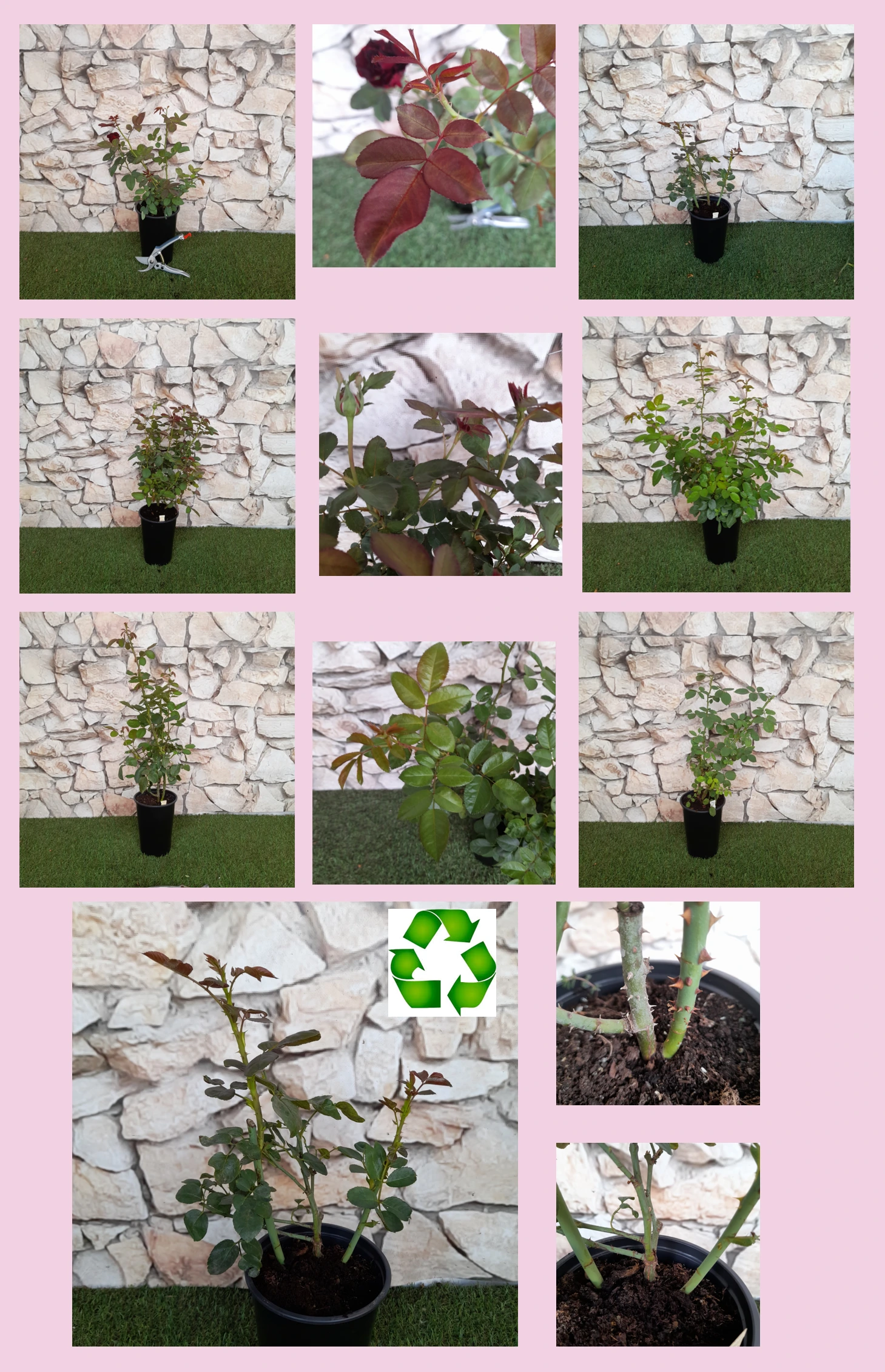
Crop overview: several varieties and growth stages in a short crop section.Shoot system: intensive growth of fresh basal shoots on a young plant.Root system: demonstration of a vigorous root system permeating the growing medium, by removing the pot.Balance: mature plant with root system and shoots in harmony with each other.
Information about the videos
The video series is not a “seasonal showcase”; it illustrates the essence of pharmaROSA® own-root cultivation in a tangible way: how the plant is built up, what the root system is like and how the shoot system regenerates. The recordings were therefore made at different times and with plants at various stages of development, so mixed foliage levels and differing stages of growth may appear in the videos. They are not a ‘sample’ of the batch dispatched, but a visual explanation of how the technology works. The current condition of the rose available to order — typical for the given period and similar to what you can expect to receive in the parcel — is shown in the upper part of the product page.
Pages for private customers Garden roses for the family garden, with minimal care → ORIGINAL® Premium garden roses – instant impact, a truly showpiece garden → EXTRA® Pages for professionals and private customers Roses for public spaces – large areas, sustainable maintenance → NATURAL® Roses for projects – hedge and row planting, fast implementation → RAPID® For professional partners only Production – propagation material for garden roses, wholesale → NEONATAL®
Company details
PharmaRosa Ltd. Company registration number: 01-09-717479 VAT number: 13075314-2-43 Plant health registration no.: HU130721 Bank account (IBAN): HU85117631891388688400000000 BIC (SWIFT): OTPVHUHB Bank name: OTP Bank Nyrt.