KIMONO – salmon-pink bedding floribunda rose - de Ruiter
Kimono brings reliable, salmon-pink colour and a bushy, upright habit to small family gardens, creating tidy front borders with very full, cluster-flowered blooms that repeat steadily through the season. Its almost thornless stems and low maintenance needs mean you can keep paths and play areas comfortable to use, while its good disease resistance suits British conditions, even where humidity and summer showers are frequent. As an own-root plant it establishes securely, building a long-lived, balanced shrub that matures from strong roots in the first year, to confident top growth in the second, and full ornamental value by the third. Ideal for modest beds, edging and cottage-style planting around the house, it settles in with straightforward care and offers a quietly dependable display for busy gardeners who want reassuring simplicity.
Usage options
| Target area |
Reasoning |
| Front garden border along a path or driveway |
The compact, bushy habit and moderate height form a neat, continuous edging that looks finished without fussy shaping, while repeat-flowering clusters keep colour at eye level for months, suiting busy front‑garden owners. |
| Small bedding groups in cottage-style gardens |
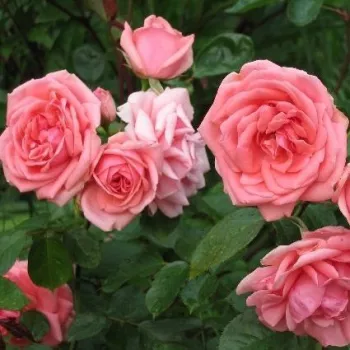
Planting 3–5 bushes together gives a generous drift of warm salmon-pink, with full, cup-shaped blooms holding their shape well, creating a classic cottage look in modest spaces for aesthetics‑focused beginners. |
| Low, informal flowering hedge |
Regular, upright growth and good foliage coverage allow a low hedge at around 75–90 cm that reads as a solid line of colour in summer, with simple spacing rules making planning straightforward for homeowner gardeners. |
| Mixed border with perennials and grasses |
The rounded form and medium-sized flowers sit comfortably among perennials, while its own-root resilience underpins a long-lived planting that will regenerate reliably after harder pruning for long‑term planners. |
| Rose beds in family gardens with limited time |
Low maintenance needs and good resistance to black spot and powdery mildew reduce spraying and remedial work, so with basic watering and feeding you can expect dependable flowering for time‑pressed gardeners. |
| Partially shaded side garden or near buildings |
Tolerating partial shade, Kimono flowers well where some roses struggle, helping you use side returns or north–east aspects effectively with steady colour, broadening options for urban plot owners. |
| Large containers on patios or terraces |
In a 40–50 litre or larger container the upright, moderately dense shrub keeps a tidy outline, and its medium self-cleaning habit is easy to manage by light deadheading, offering reliable summer interest for balcony and patio users. |
| Weather-exposed beds in typical British climates |
Stable, bushy growth and generally strong foliage cope well with rain and wind in open sites, and good disease resistance maintains leaf quality even in damp spells, reassuring coastal and clay‑soil gardeners. |
Styling ideas
- Soft‑Salmon Drift – mass Kimono in a small bed, underplant with Alchemilla mollis for frothy lime contrast and an easy, cloud-like effect – ideal for low-maintenance front gardens.
- Cottage Trio – group 3 Kimonos with Lupinus ‘Gallery Pink’ and dwarf asters for layered pink tones and late-season interest – perfect for classic cottage-style enthusiasts.
- Pathway Ribbon – line a garden path with evenly spaced shrubs, clipping only lightly, to create a relaxed yet orderly salmon-pink ribbon – suited to tidy but time-poor homeowners.
- Patio Focus – plant a single Kimono in a 50-litre terracotta pot, surround the base with low herbs for scent and texture – appealing to balcony and terrace gardeners.
- Family Hedge – form a low hedge around a lawn or play area, using its almost thornless stems for safer boundaries – designed for families with children and pets.
Technical cultivar profile
| Parameter |
Data |
| Name and registration |
Floribunda bed rose, registered cultivar name Kimono; current trade name Kimono Bedding rose Kimono; ARS exhibition name Kimono; group: floribunda, bush rose. |
| Origin and breeding |
Bred by Gerrit de Ruiter, Netherlands; cross of ‘Cocorico’ × ‘Frau Anny Beaufays’; introduced 1961 by Horstmann & Co., registered and bred in 1961. |
| Awards and recognition |
Royal National Rose Society Trial Ground Certificate (1961), confirming garden performance and ornamental value under formal UK trial conditions. |
| Growth and structural characteristics |
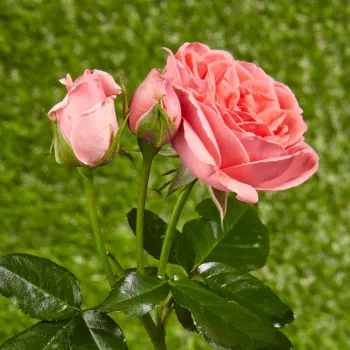
Bushy, upright shrub 75–105 cm high, 60–90 cm spread; moderately dense, glossy dark green foliage; almost thornless shoots for easier handling; medium self-cleaning, some deadheading needed. |
| Flower morphology |
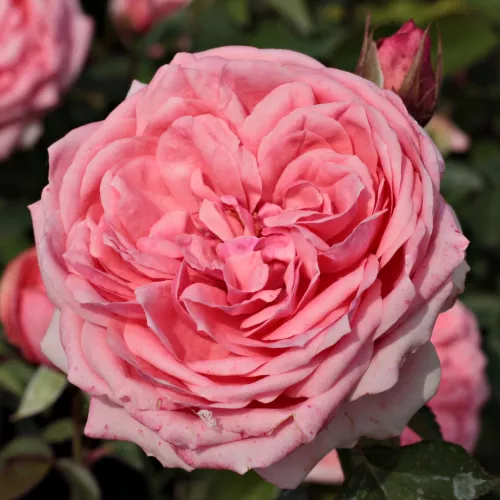
Very full, double, cup-shaped blooms with 40+ petals; medium size clusters on branching stems; repeat-flowering with a generous second flush; mainly ornamental rather than pollinator-focused. |
| Colour data and phenology |
Warm salmon-pink blend, ARS pb, RHS 48C outer, 48D inner; buds deep salmon, then vivid mid tones, softening to pastel salmon pink, sometimes near cream in strong sun. |
| Fragrance and aroma |
Medium-strength, classic rosy fragrance, noticeable on warm, still days; mainly appreciated at close range along paths, seating areas and regularly used garden routes. |
| Hip characteristics |
Occasional spherical hips, 8–12 mm diameter, orange-red when ripe; generally incidental to the display and not produced in large quantities on well-deadheaded plants. |
| Resistance and winter hardiness |
Good resistance to powdery mildew and black spot; medium rust sensitivity; hardy to about –21 to –18 °C (RHS H7, USDA 6b, Swedish zone 3), suitable for most UK regions. |
| Horticultural recommendations |
Best in fertile, well-drained soil; recommended spacing 55 cm for bedding, 45 cm for hedging, 85 cm as specimen; suitable for partial shade; low-maintenance with occasional deadheading and feeding. |
KIMONO offers warm salmon-pink clusters, a compact, low-maintenance habit and the steady resilience of an own-root rose, making it a thoughtful choice for long-lived, easy borders and family gardens.