KANIZSA – pink hybrid tea rose – Márk
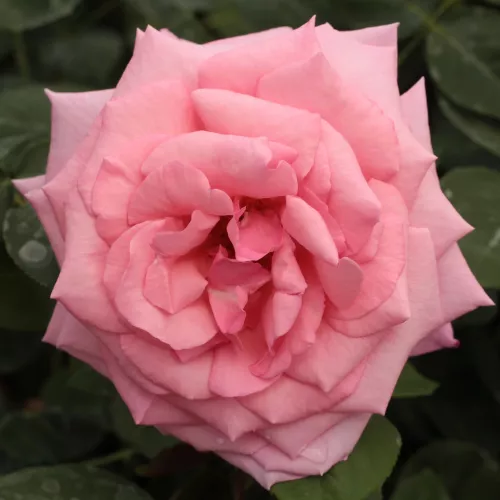
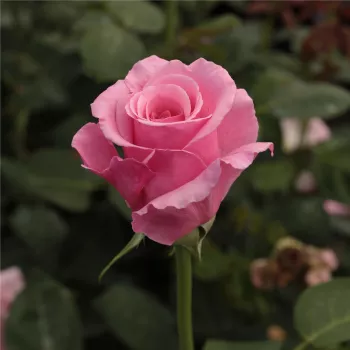
Elegant and restrained, KANIZSA is a classic hybrid tea for gardeners who enjoy a single, memorable flush of summer blooms rather than constant deadheading. Its bushy, moderately spreading habit and mid-pink, high‑centred flowers create a composed focal point in front gardens, where a brief, concentrated flowering can be planned like a seasonal highlight. On its own roots, it settles steadily and supports a genuinely long garden life, forming a reliable framework of stems and foliage that can be refreshed by hard pruning if ever needed. With good air movement and well‑drained soil that copes better with persistent rainfall and humidity, you can manage its known disease sensitivity more easily. In borders and cottage‑style mixes it partners well with long‑flowering perennials, while the sturdy blooms also lend themselves to occasional cutting for the vase. Over time, its own‑root character allows it to adapt to your garden’s soil and care regime, giving you a rose that matures into a settled, structural feature and a considered part of a long‑term planting plan.
Usage options
| Target area | Reasoning |
|---|
| Front garden focal bush |
The tidy, bushy, moderately spreading habit and 65–95 cm height make KANIZSA ideal as a single accent near an entrance path or bay window, giving a defined point of interest without overwhelming a small front space – appealing for the detail‑oriented homeowner. |
| Seasonal feature bed |
As a once‑blooming hybrid tea, it excels where you want one strong, mid‑summer show rather than continual maintenance; plant in a small group and frame it with perennials that flower earlier and later to extend the season – a rewarding approach for the planner. |
| Classic cutting corner |
The high‑centred, pointed buds and large, double blooms suit a small cutting patch, giving a short but intense spell of elegant, long‑stemmed roses for the vase while the medium fragrance is best appreciated indoors – ideal for the traditionalist collector. |
| Structured mixed border |
Its mid‑green, slightly glossy foliage and clear mid‑pink flowers provide a calm block of colour that works well between stronger shades, helping to knit together cottage mixes or more formal schemes – useful for the visually focused designer. |
| Wildlife‑minded family garden |
Although the full, double blooms are less attractive to pollinators, the occasional orange‑red hips add autumn interest and modest wildlife value, especially when combined with more nectar‑rich companion plants – a balanced choice for the nature‑aware gardener. |
| Own‑root long‑term planting |
As an own‑root shrub, KANIZSA rebuilds naturally from its base after hard pruning or weather damage, avoiding graft issues and supporting a longer planting life in one spot, which suits stable, low‑change garden layouts – reassuring for the long‑view planner. |
| Sunny, well‑aired rose bed |
Best performance comes in a sunny position with good air movement and drainage that copes well with frequent coastal rain and humidity, helping you manage its susceptibility to rust and other fungal diseases – a sound option for the informed beginner. |
| Formal row or low hedge |
With recommended spacings of 50–60 cm, KANIZSA can form a measured row or low hedge, giving a neat line of uniform pink blooms in season and a consistent framework of stems and foliage outside flowering – attractive for the symmetry‑loving householder. |
Styling ideas
- Entrance focus – Plant one KANIZSA by a front path with clipped Lonicera nitida ‘Maigrün’ at its feet to frame the mid‑pink blooms – for homeowners who like a composed but welcoming approach.
- Cottage ribbon – Repeat KANIZSA at intervals through a narrow border with Bupleurum and airy grasses softening its structure – for those who prefer relaxed, cottage‑style planting with a clear backbone.
- Summer showcase – Group 3–5 plants in a small bed, underplanted with low perennials that flower before and after the main flush – for gardeners who enjoy one concentrated, dramatic summer display.
- Cutting corner – Dedicate a sunny border section to KANIZSA in front of taller perennials, using the long, high‑centred blooms for indoor arrangements – for rose lovers who like bringing flowers into the home.
- Structured mix – Combine KANIZSA with white Physostegia and blue perennials to create a calm, mid‑height layer that ties bolder accents together – for design‑conscious gardeners seeking balance and continuity.
Technical cultivar profile
| Parameter | Data |
|---|
| Name and registration |
Hybrid tea rose KANIZSA – current trade name; group and commercial type hybrid tea. Named after the town of Nagykanizsa in Zala County; no separate registered exhibition name recorded. |
| Origin and breeding |
Bred in Hungary in 1993 by Márk Gergely at the Budatétény Horticultural Research Institute; introduced to the market by PharmaRosa Ltd., with later dissemination as an own‑root garden rose. |
| Growth and structural characteristics |
Bushy, moderately spreading shrub 65–95 cm tall and 50–70 cm wide, with moderately dense, mid‑green, slightly glossy foliage and moderate prickliness; suitable for low hedges, rows or small feature groups. |
| Flower morphology |
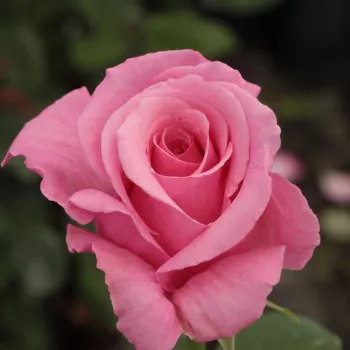
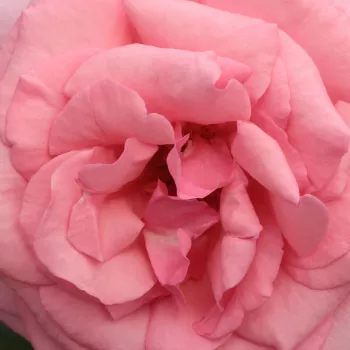
Large, double, high‑centred blooms with 26–39 petals on mostly solitary stems; classic cut‑rose form ideal for exhibition‑style displays and home cutting, produced in a single main flowering period. |
| Colour data and phenology |
Uniform mid‑pink flowers, RHS 65C outer and 65D inner; vivid fresh colour in buds, gently fading to a delicate silvery pink as blooms age, with good overall colour retention under normal garden conditions. |
| Fragrance and aroma |
Medium strength fragrance noticeable in sunny weather; specific scent notes are not documented, but the perfume is sufficient to enjoy at close quarters on still, warm days in a sheltered position. |
| Hip characteristics |
Occasional ellipsoidal hips 10–14 mm across, orange‑red when ripe; add modest seasonal interest and potential wildlife value in late season where spent flowers are not removed after blooming. |
| Resistance and winter hardiness |
Hardy to approximately −26 to −23 °C (RHS H7, USDA 5b, Swedish zone 4); average heat tolerance, appreciates irrigation in drought; moderate susceptibility to powdery mildew and black spot, very sensitive to rust. |
| Horticultural recommendations |
Prefers a sunny, open position with freely draining soil; recommended spacing 50–90 cm depending on hedge, mass or solitary use, using 2.8–3.2 plants/m²; requires regular monitoring and treatment in high disease pressure sites. |
KANIZSA offers classic mid-pink hybrid tea blooms, a tidy bushy structure and own-root resilience for long-term planting, making it a thoughtful choice if you enjoy planning your garden’s seasonal highlights.