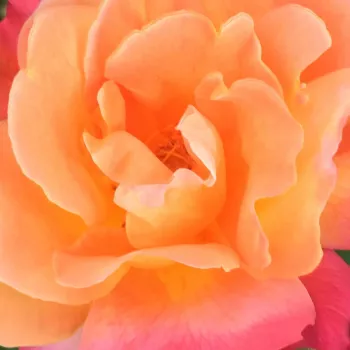
JOSEPH'S COAT – yellow-red climbing rose - Armstrong & Swim
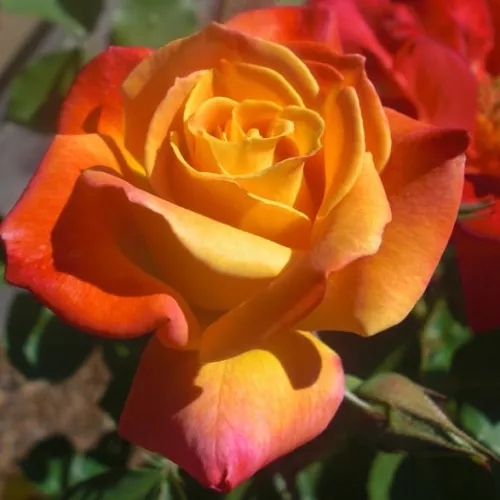
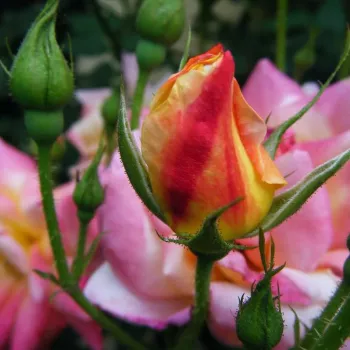
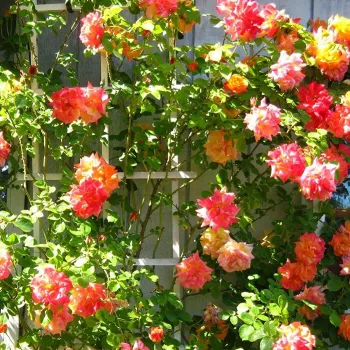
Colour-changing blooms make JOSEPH'S COAT an eye-catching choice for front or back gardens, with yellow, orange and red tones shifting as each flower matures. Its climbing habit clothes fences, arches and walls over time, giving vertical structure without complicated pruning regimes. As a pharmaROSA ORIGINAL own-root rose, it settles in steadily, building longevity and reliable structure in the same spot for many years. With repeat flowering through the season and a moderate, easy-to-live-with fragrance, it suits busy households who still want a classic cottage feel. In typical British gardens it copes well if you give it decent drainage where soils are heavy or slow to dry after rain. Its medium vigour is straightforward to manage on pergolas or wires, and the dense foliage provides a handsome backdrop even between flushes. Plant in sun or light shade, water during prolonged dry spells, and expect a gentle progression from rooting in the first year, to stronger shoots in the second, and full ornamental impact by the third.
Usage options
| Target area |
Reasoning |
| Front-garden statement climber on a house wall |
Ideal where you want a compact yet eye-catching climber that clothes a typical two-storey wall with warm, shifting colour. Repeat blooms through summer give reliable curb appeal with only moderate pruning and tying-in – a reassuring choice for beginners. |
| Pergola or arch for family seating areas |
The controllable height and medium spread make it well suited to arches and small pergolas where you want shade without overwhelming the structure. Its mild scent and changing colours create interest close to a bench or patio – perfect for relaxation-focused homeowners. |
| Fence and boundary softening in small gardens |
Trains neatly along wires or panels, turning plain boundaries into a colourful feature. Own-root growth builds a solid, long-lived framework that regenerates well if cut back, reducing the need for frequent replacement – attractive to long-term planning gardeners. |
| Cottage-style mixed border backdrop |
The shifting yellow, orange and red flowers mix beautifully with traditional cottage perennials, giving a soft, ever-changing backdrop. Moderate maintenance and self-cleaning help keep borders tidy without constant deadheading – reassuring for time-poor families. |
| Specimen rose near patios and windows |
As a stand-out specimen on an obelisk or narrow structure, its medium-sized clusters and fresh, understated scent offer interest without being overpowering. Repeat flowering means you enjoy colour and scent in key view lines – ideal for aesthetics-focused newcomers. |
| Part-shade side passage or north–south wall |
Performs reliably in locations with sun for part of the day, such as side returns or between houses. It still produces good flowering with simple feeding and watering during dry spells – helpful where light is limited for busy urban residents. |
| Large container on terrace or balcony |
In a minimum 40–50 litre container with support, its moderate vigour is easy to manage. Own-root growth adapts to pot conditions over time, giving a stable, lasting feature without specialist techniques – well suited to low-maintenance-focused balcony-owners. |
| Small rose grouping for long-term vertical interest |
Planting a short run of plants at the recommended spacing creates a continuous ribbon of colour that matures steadily from strong root establishment to full framework in the third year, even on heavier ground if drainage is improved – ideal for forward-planning planners. |
Styling ideas
- COTTAGE FACADE – Train along the front of the house with foxgloves, campanulas and Irish moss at the base for a layered, cottage look – for lovers of classic village-front charm.
- WARM ARCH – Cover a metal or timber arch and underplant with lavender and groundcover honeysuckle to echo the copper and red tones – for those wanting a welcoming garden entrance.
- COLOUR GRADIENT – Combine with soft yellow roses and peach perennials to emphasise its colour-shifting blooms – for design-conscious gardeners building harmonious palettes.
- FAMILY SEATING – Place over a pergola by a patio set, with low evergreen edging and barren strawberry as groundcover – for families seeking a pretty but undemanding retreat.
- URBAN SCREEN – Use in large containers against balcony railings or terrace fences with simple green companions to soften hard lines – for busy city dwellers needing easy privacy.
Technical cultivar profile
| Parameter |
Data |
| Name and registration |
Large-flowered climbing rose marketed as JOSEPH'S COAT, a yellow-red climber from Armstrong & Swim; ARS exhibition name Joseph's Coat; no separate registered cultivar name stated. |
| Origin and breeding |
Bred in the United States by Dr David L. Armstrong and Herbert C. Swim from cross ‘Buccaneer’ × ‘Circus’; introduced and distributed by Armstrong Roses in 1964. |
| Awards and recognition |
Recognised in early trials with a National Rose Society Trial Ground Certificate in 1963 and a prestigious Bagatelle Gold Medal in Paris in 1964, confirming strong ornamental value. |
| Growth and structural characteristics |
Climbing habit reaching about 240–400 cm high with a 100–180 cm spread; moderately dense, glossy dark green foliage and densely thorned stems; medium self-cleaning, some deadheading useful. |
| Flower morphology |
Medium-sized, double flowers with 26–39 petals, usually borne in clusters; cup-shaped blooms repeat well through the season, with a notably abundant second flowering flush in suitable conditions. |
| Colour data and phenology |
Multi-tonal blooms from vivid yellow, orange and carmine red to peach, golden and copper as they age; ARS rb, RHS 46A outer and 14B inner; colour softens gradually but remains warm and decorative. |
| Fragrance and aroma |
Fresh, crisp character with a mild, understated scent; primarily grown for its colour and display rather than perfume; double flowers limit stamen access so pollinator value is relatively modest. |
| Hip characteristics |
Forms small, spherical orange-red hips only occasionally; typically 8–13 mm in diameter and mainly of incidental visual interest rather than a primary ornamental or wildlife feature. |
| Resistance and winter hardiness |
Hardy to around −32 to −29 °C (USDA 4b, RHS H7, Swedish zone 5); medium disease resistance to black spot, mildew and rust; appreciates watering in prolonged heat or drought. |
| Horticultural recommendations |
Best on walls, fences, pergolas or as a specimen climber at 150–250 cm spacing; suitable for partial shade; moderate maintenance with occasional protection treatments and basic pruning and tying-in. |
JOSEPH'S COAT offers colour-changing blooms, reliable repeat flowering and long-lived own-root growth in an easy-to-manage climbing form, making it a sound choice if you would like a dependable feature rose.