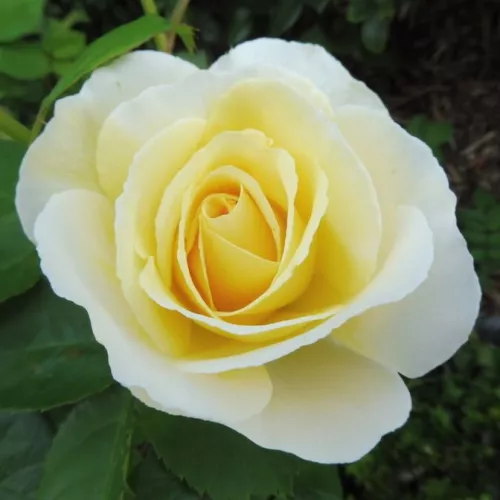
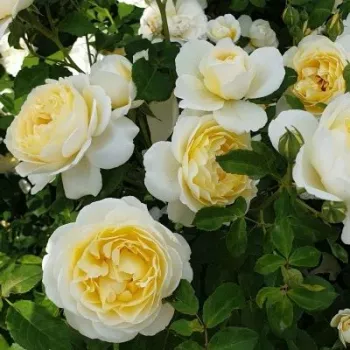
Warm amber-yellow base colour with a subtle golden tint. - bedding floribunda rose - strong, distinctly scented rose - rich, sweet, fruity
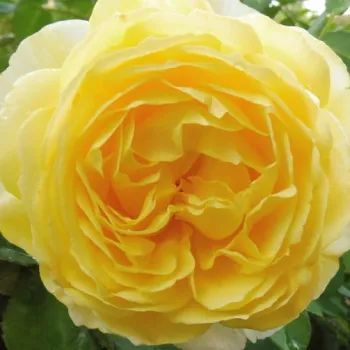
– Warm amber-yellow blooms with golden tones.
– Strong, rich, sweet fruity fragrance.
– Compact, bushy habit for beds and borders.
– Reliable repeat flowering through the season.
– Hardy shrub, tolerates cold to RHS H7.
– Special feature: Ideal for borders, hedges and containers, giving a timeless garden look.
Unfortunately, we are currently unable to ship to the United Kingdom; we only deliver to countries within the European Union. For more information, please contact us!
5(7007)
JEAN ROBIE – amber-yellow floribunda bedding rose - Vissers
Amber clusters of richly scented blooms make Jean Robie an inviting choice if you want an easy, reliable rose that suits typical British family gardens with changeable rain and wind near the coast; its compact habit forms a tidy, bushy shrub that slots neatly into small beds, front gardens and low mixed borders without overwhelming the space, while the floribunda flowering style means repeated flushes of medium-sized, cup-shaped blooms rather than occasional isolated flowers. The warm yellow tones hold their colour well even in strong summer light, softening gently as the flowers age so the bed never looks patchy or tired, and the strong fragrant character brings a sweet, fruity note you notice every time you pass the path or front door. As an own-root plant it develops steadily from root-building in the first year to fuller top growth in the second and an established ornamental presence by the third, giving you a long-lived, regenerating hedge or border subject that copes well with normal household care routines. Its medium maintenance needs suit gardeners who want attractive, repeat-flowering structure without constant intervention, making it ideal for beginners who prefer clear, simple tasks and for experienced gardeners who value dependable, well-shaped borders that fit effortlessly into a classic cottage-style scheme.
Jean Robie showing its rich amber-yellow flowers in full bloom.
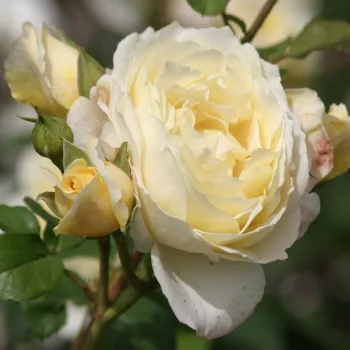
Jean Robie in closed bud, showing a deep amber-yellow tone.
Dense, matt mid-green foliage of Jean Robie.
Usage options
Target area
Reasoning
Front garden focal group (1–3 plants)
Plant Jean Robie near the entrance or along a main path to take advantage of its warm amber-yellow colour and compact, bushy habit, creating a clean, well-defined feature without dominating a modest space; the rich, sweet, fruity fragrance is easy to enjoy at close quarters, and the steady own-root growth gives a long-lived highlight for style-conscious new homeowners
Low flowering hedge along paths or drives
Use at 50 cm spacing to form a low, uniform hedge, where the consistent height and dense foliage produce a tidy line that reads as a finished feature even in smaller gardens; remontant, cluster-flowered blooms ensure colour along the length of the hedge through the season, while the own-root structure means any frost or pruning damage is followed by reliable regeneration that suits time-pressed families
Mixed cottage-style border with perennials and grasses
Combine with plants such as lady’s mantle and ornamental grasses to echo traditional cottage borders, using Jean Robie’s floribunda habit to thread repeated yellow clusters through the planting; its mid-green, matt foliage gives a calm backdrop, and medium maintenance needs fit gardeners who want charm and seasonal change without intricate care, especially visually driven cottage-garden beginners
Edging and bed definition in small gardens
Place along the edge of beds or to frame a seating area, where the compact spread and controlled height keep views open while still marking out the garden’s structure; repeated flowering means the edging remains attractive for much of the season, and the manageable pruning response lets you keep clear lines without technical skills, appealing to design-conscious urban gardeners
Decorative container on patio or terrace (40–60 L)
Grow one plant in a 40–60 litre container with good drainage to enjoy close-up fragrance and colour on patios, balconies or roof terraces; the bushy shape fills a pot neatly, and reliable repeat flowering gives interest from a single container, while own-root resilience supports long-term pot culture if watering and feeding are consistent, suiting busy but quality-focused owners
Small bed or island planting (3–5 plants)
Plant in a tight group in lawn openings or small beds, allowing the cluster-flowered, remontant habit to build a block of harmonious colour that stays legible from a distance; the good colour retention prevents the planting from looking faded between flushes, while gradual own-root development creates a stable, enduring feature with modest care, ideal for low-effort front-garden users
Partially shaded spots around the house
Use in positions with morning or filtered light, such as east-facing walls or between taller shrubs, where its suitability for partial shade helps maintain flowering and foliage quality; the good colour retention prevents dull, washed-out tones, and the plant’s moderate disease resistance remains manageable with occasional protection, which reassures cautious but style-aware new gardeners
Seasonal cut flowers from the family garden
Grow a small group where stems are easy to reach so you can cut clusters of medium, cup-shaped blooms for vases, enjoying the strong, fruity fragrance indoors as well; the remontant nature means the shrub replaces picked stems with new growth during the season, and own-root vigour supports repeated cutting without weakening the plant, attractive to home-focused flower-loving beginners
Styling ideas
Cottage Path Border – line a narrow path with Jean Robie and soft perennials like Alchemilla mollis to create a traditional, romantic walkway of repeated yellow clusters – ideal for lovers of classic cottage looks.
Sunny Patio Focus – place one plant in a 50–60 litre terracotta pot beside seating, where its compact shape and strong fragrance can be enjoyed on summer evenings – perfect for busy patio and balcony users.
Neat Driveway Hedge – run a low hedge along the drive, using its dense foliage and repeat flowering to give a smart, long-lived edge without formal topiary – suited to homeowners wanting tidy structure with little fuss.
Warm-Toned Island Bed – group several plants in a lawn island and underplant with low grasses for a glowing amber-yellow dome that stays effective all season – appealing to those seeking clear impact from simple layouts.
Part-Shade Courtyard Mix – combine Jean Robie with shade-tolerant foliage plants in an east- or north-facing courtyard, relying on its part-shade tolerance and good colour retention – ideal for urban gardeners with limited light.
Technical cultivar profile
Parameter
Data
Name and registration
Floribunda bedding rose, registered as VISmarok, traded as Jean Robie; park and shrub rose exhibition categories, named to honour painter Jean‑Baptiste Robie.
Origin and breeding
Bred by Martin Vissers in Belgium, 2014, from Echo × Sourire Rose × Charlotte, introduced 2014 by Viva International for bedding and garden use.
Growth and structural characteristics
Compact, bushy shrub 70–90 cm high and 60–80 cm wide, with dense, mid-green matt foliage and moderate prickles, giving a solid, balanced garden presence.
Flower morphology
Semi-double, medium-sized, cup-shaped blooms with 13–25 petals, carried in clusters; remontant with a notably abundant second flush for continuous seasonal effect.
Colour data and phenology
Warm amber-yellow base with golden tint, buds deep amber with peach tone; very good colour retention, only slight lightening in strong sun and on outer petals.
Fragrance and aroma
Strong, rich, sweet, fruity fragrance clearly noticeable in the garden and suitable for cutting, enhancing paths, terraces and seating areas with scented presence.
Hip characteristics
Produces moderately abundant spherical hips, 8–12 mm across, in an attractive orange-red shade, adding discreet seasonal interest after the main flowering period.
Resistance and winter hardiness
Hardy to approximately −21 to −18 °C (RHS H7; USDA 6b; Swedish zone 3); moderate resistance to black spot, powdery mildew and rust under typical garden conditions.
Horticultural recommendations
Suited to borders, containers, edging, low hedges and cutting; medium maintenance with occasional plant protection, performs in partial shade with standard feeding and pruning.
Jean Robie offers compact, repeat-flowering amber-yellow clusters with strong fragrance, developing into a long-lived, resilient own-root shrub that suits straightforward, family-friendly planting; consider it if you want dependable colour and scent.
Detailed product attributes
Product Identification Data
Product Name:
JEAN ROBIE – amber-yellow floribunda bedding rose - Vissers
Product Type:
pharmaROSA® ORIGINAL - 2-litre own-root potted rose
Pollinator Attraction:
Semi-double flowers with 13–25 petals moderately attract pollinators, as bloom form (single/semi-double/double) and the accessibility of the stamens affect attractiveness.
Pollinator-Friendly Rating:
Semi-double (13–25-petalled) flowers partially cover the stamens, so they only moderately attract pollinators and are therefore considered only partially pollinator-friendly.
Our product is a rose grown with pharmaROSA®’s unique cultivation technology!
2-litre, own-root, potted rose.
With a shoot system appropriate to the season.
With a root system that thoroughly permeates the growing medium.
Quality compliant with the requirements of the E.N.A. (European Nurserystock Association).
Supplied in unique packaging that prevents damage.
Can be planted during frost-free periods.
True-to-variety rose bush with a unique identifier.
The pharmaROSA® own-root potted rose is a well-rooted plant that supports reliable establishment when planted and cared for properly, so it can be planted whenever the soil is not frozen.
Crop overview: several varieties and growth stages in a short crop section.Shoot system: intensive growth of fresh basal shoots on a young plant.Root system: demonstration of a vigorous root system permeating the growing medium, by removing the pot.Balance: mature plant with root system and shoots in harmony with each other.
Information about the videos
The video series is not a “seasonal showcase”; it illustrates the essence of pharmaROSA® own-root cultivation in a tangible way: how the plant is built up, what the root system is like and how the shoot system regenerates. The recordings were therefore made at different times and with plants at various stages of development, so mixed foliage levels and differing stages of growth may appear in the videos. They are not a ‘sample’ of the batch dispatched, but a visual explanation of how the technology works. The current condition of the rose available to order — typical for the given period and similar to what you can expect to receive in the parcel — is shown in the upper part of the product page.
Pages for private customers Garden roses for the family garden, with minimal care → ORIGINAL® Premium garden roses – instant impact, a truly showpiece garden → EXTRA® Pages for professionals and private customers Roses for public spaces – large areas, sustainable maintenance → NATURAL® Roses for projects – hedge and row planting, fast implementation → RAPID® For professional partners only Production – propagation material for garden roses, wholesale → NEONATAL®
Company details
PharmaRosa Ltd. Company registration number: 01-09-717479 VAT number: 13075314-2-43 Plant health registration no.: HU130721 Bank account (IBAN): HU85117631891388688400000000 BIC (SWIFT): OTPVHUHB Bank name: OTP Bank Nyrt.