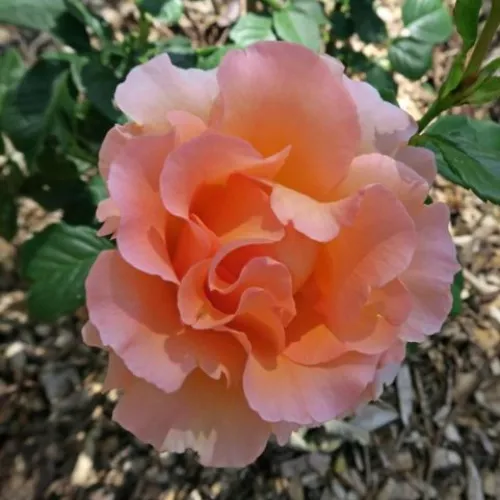
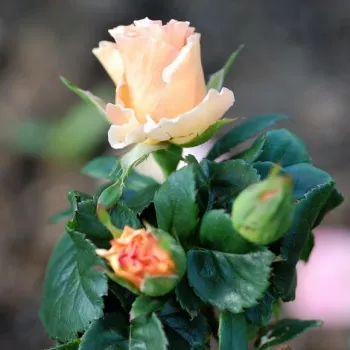
Jean de Luxembourg, roi de Bohême – park shrub rose
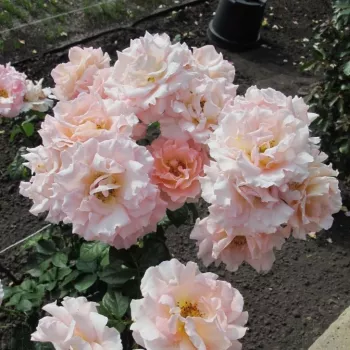
This upright park shrub rose settles into a natural, well-shaped habit with dense, glossy foliage and strongly scented, old-rose style blooms that repeat generously from summer onwards. Its soft colour range of peach, pink and cream blends beautifully into classic British front gardens and cottage-inspired borders, working well even where you must manage heavier soils and improve drainage in small, weather-exposed plots. As an own-root shrub it develops a stable framework and regenerates reliably after pruning, supporting a long, dependable garden lifespan with only medium maintenance needs. In a typical family garden it can be used as a flowering hedge, a single specimen or in loose groups, adapting to mixed plantings and informal layouts. The 2-litre container size is easy to handle and plant, giving beginners confidence while the bush quietly builds strong roots in the first season, more structural growth in the second, and full ornamental presence by about the third year.
Usage options
| Target area |
Reasoning |
| Front garden specimen near entrance |
The upright, well-branched shrub form and dense, glossy foliage create a smart vertical accent by a path or doorway, while the strong old-rose fragrance greets you at close range without demanding complicated care routines – ideal for the busy homeowner |
| Flowering hedge along boundaries |
Its 120–190 cm height and dense, thorny framework lend themselves to an informal, flowering hedge that offers privacy and discourages unwanted access, with repeat-flowering peachy-pink clusters softening fences or front boundaries – perfect for the family garden |
| Small shrub group in mixed border |
Planted in groups of three or five, the rounded shrub shape knits neatly into mixed borders, the soft peach and cream tones weaving naturally among perennials such as hyssop and California lilac for a classic cottage feel – suited to the style-conscious beginner |
| Long-season colour focal point |
The remontant flowering, with an especially abundant second flush, ensures continuing colour after the first summer peak, so a single plant can carry a small bed or narrow border from early bloom to late season with minimal intervention – reassuring for the time-poor gardener |
| Scented seating-area planting |
The strong, long-lasting old-rose perfume and medium-sized double flowers work best where you pass or sit close by, bringing a traditional rose aroma to patios, garden benches or small terraces without needing specialist pruning – perfect for the scent lover |
| Own-root long-term framework shrub |
As an own-root plant it forms its permanent framework in situ, recovering well from harder pruning, with the root system and top growth maturing steadily into a stable, long-lived shrub that remains ornamental for many years – attractive for the long-term planner |
| Raised bed or improved heavy soil site |
In British gardens with heavier clays, planting in raised or well-improved beds allows the shrub’s deep, fibrous roots to anchor securely and support reliable flowering even in exposed spots, provided you pay some attention to soil structure and drainage – useful for the challenging-plot owner |
| Large container on terrace or courtyard |
In a 40–50 litre or larger container, this upright shrub provides height, fragrance and season-long bloom on patios or balconies, while the own-root system gradually fills the pot and responds well to simple, periodic pruning and feeding – ideal for the urban balcony-gardener |
Styling ideas
- Cottage-focus – Combine with blue Agastache and soft grasses in a small border for a hazy cottage look with fragrant, peach-toned blooms – for romantic, informally minded gardeners
- Frontage-frame – Flank a front path with two shrubs underplanted with low lavender to frame the entrance in scent and soft colour – for homeowners improving kerb appeal
- Hedgerow-charm – Run a loose hedge mixed with hawthorn or field maple to echo traditional country hedgerows while adding long-season rose colour – for rural and edge-of-village gardens
- Patio-centre – Grow one plant in a 50-litre terracotta pot with trailing thyme at the rim to create a scented focal point on a terrace – for terrace and courtyard users
- Contrast-duet – Pair with deep blue California lilac behind and pale foxgloves in front to highlight the peach and cream flower tones – for colour-focused planting enthusiasts
Technical cultivar profile
| Parameter |
Data |
| Name and registration |
Shrub, Hybrid rugosa park rose; registered as DUCjdl, traded as Jean de Luxembourg, roi de Bohême; ARS exhibition name Jean de Bohême for show and catalogue use. |
| Origin and breeding |
Bred by Fabien Ducher at Roseraie Ducher, France, with parentage undocumented; introduced and registered in 2010 as a modern park shrub for ornamental landscape use. |
| Growth and structural characteristics |
Vigorous upright shrub, 120–190 cm high and 100–150 cm wide, densely thorned with dark, glossy foliage; forms a full, bushy outline suitable for hedging or specimen planting. |
| Flower morphology |
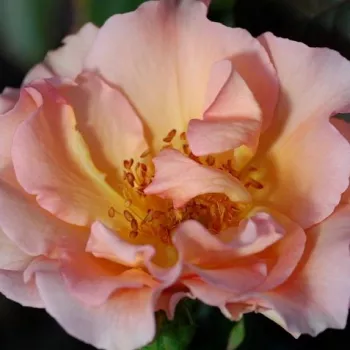
Medium-sized, double, cup-shaped flowers with 26–30 petals, borne in clusters; remontant with an especially rich second flush, maintaining decorative effect over an extended season. |
| Colour data and phenology |
Soft peach with pink-orange tones; buds deep peach-pink, opening to peach-orange, then fading through peach-pink to rosy cream with creamy outer petals; good colour retention in typical garden conditions. |
| Fragrance and aroma |
Strong, long-lasting old-rose fragrance, best appreciated at close range; suitable for planting near paths, entrances or seating areas where air movement carries the scent. |
| Hip characteristics |
Rosehip set generally sparse due to double flowers; where formed, hips are globular, orange-red, around 18–26 mm across, offering occasional late-season interest for wildlife-friendly gardens. |
| Resistance and winter hardiness |
Hardy to approximately −26 to −23 °C (H7, USDA 5b, Swedish zone 4); moderate resistance to black spot, powdery mildew and rust, requiring standard garden monitoring and occasional protection. |
| Horticultural recommendations |
Best at 110–120 cm spacing for hedges and mass plantings or 180 cm as a specimen; medium maintenance level, favouring sunny, well-drained sites with regular watering and balanced feeding. |
Jean de Luxembourg, roi de Bohême offers scented repeat flowering, a strong shrub framework and dependable own-root longevity, making it a thoughtful choice for relaxed yet characterful British garden planting.