Simple, five-petalled flowers in deep or clear pink shades, with yellow stamens, creating a classic wild‑rose pink effect. - Landscape shrub rose. - Lightly scented, restrained fragrance. - Apple‑fruity, slightly wild. - landscape shrub rose - mild, restr
– Single, open blooms for pollinators and bees.
– Medium drought tolerance for easier care.
– Dense, upright shrub for natural hedging.
– Hardy to about −20 °C winter cold.
– Large edible hips for tea and jams.
– Special feature: Mild apple‑fruity wild‑rose scent.
Ongoing garden development – Future-proof garden choice
pharmaROSA® ORIGINAL 2-litre own-root potted rose
18,70 £
Unfortunately, we are currently unable to ship to the United Kingdom; we only deliver to countries within the European Union. For more information, please contact us!
4.5(6831)
ROSA POMIFERA – pink landscape shrub rose
Natural hedging, pollinators and edible hips come together in this botanical rose that suits low‑input, family gardens. Its once‑a‑year mass of soft pink, single flowers offers classic wild‑rose charm, followed by large, red, vitamin‑rich hips that extend the season well into autumn. Bushy, upright growth and dense, bluish‑green foliage create a quietly structured backdrop for perennials, while the hardy, disease‑resistant shrub copes well with periods of heat and dry weather, needing extra watering only during prolonged, severe drought in exposed UK sites. Own‑root plants settle steadily, giving you a long‑lived, regenerating hedge or specimen that is easy to manage with straightforward winter pruning. Over time you see a calm development: first strong roots, then confident shoots, and by the third year full ornamental impact with reliable flowering and hip display. In mixed cottage borders or wilder corners it supports local wildlife and offers a future‑proof choice for resilient gardens on typical British soils, including heavier ground improved for better drainage.
Single pink flowers with 5–12 petals and a yellow stamen centre.
Close view of the golden-yellow stamens in Rosa pomifera.
Close-up of the red, spherical rose hips of Rosa pomifera.
Usage options
Target area
Reasoning
Front-garden hedge along boundaries or paths
The bushy, upright habit and dense foliage form a natural, moderately thorny barrier that defines a plot without formal clipping. Once‑flowering pink blooms in early summer are followed by decorative red hips, giving a long season of interest with minimal ongoing work for the busy front‑garden owner beginner
Wildlife-friendly cottage or family border
Single, open flowers with exposed yellow stamens are highly attractive to bees and other pollinators, while the hips provide late food and cover for birds. Planted in small groups, it weaves a gentle, informal structure through perennials and grasses, suiting relaxed family gardens that want visible ecological value without complex planting schemes nature‑lover
Naturalistic mixed shrub and perennial beds
As a botanical shrub rose, it integrates well with ornamental grasses, yarrows and salvias, adding a soft pink, wild‑rose note above bluish‑green foliage. The once‑a‑year flower show is balanced by long‑lasting hips, so the bed looks composed most of the year with little intervention, ideal for gardeners preferring stable, low‑input plantings time‑pressed
Orchard edge and food‑forest planting
The large, apple‑like, vitamin C–rich hips can be harvested for jams, syrups and teas while still providing ornamental value on the plant. Its tolerant, long‑lived shrub framework fits into orchard margins and edible landscapes, giving both habitat and harvest without needing specialist rose‑growing knowledge from the household home‑preserver
Rural or semi‑wild boundary planting
Good winter hardiness and generally strong disease resistance make it suited to less‑cosseted positions such as field edges or informal boundaries. Over the years, the own‑root structure thickens into a resilient, regenerating thicket that copes with typical UK weather, reducing replacement costs and replanting work for large plots landowner
Low‑maintenance landscape and housing‑estate schemes
Medium maintenance needs, non‑remontant flowering and sound health mean fewer pruning and spraying rounds than many modern bedding roses. With correct initial spacing it quickly knits together, suppressing weeds and offering a reliable pink and hip display that remains attractive even when only periodically maintained by grounds teams manager
Pollinator corridors in urban gardens
The bee‑friendly, single flowers open freely in early summer, ensuring a strong nectar and pollen source in compact city gardens. Once established, watering is usually only needed during long, intense dry spells, so even busy owners can support urban biodiversity consistently without frequent intervention or specialist irrigation systems city‑gardener
Large containers on patios or terraces (50–70 litres)
In a generously sized container with good drainage, this upright shrub creates a robust seasonal focal point of pink flowers and hips. Own‑root growth responds well to periodic renewal pruning, keeping the plant productive and attractive in its pot while staying manageable for those who prefer contained, easy‑to‑reach roses on hard landscaping balcony‑owner
Styling ideas
Cottage‑hedge – run a loose line of plants along the front boundary, interspersed with lavender and catmint for a soft, scented, wildlife‑friendly edge – ideal for lovers of traditional British cottage frontage.
Wildlife‑border – combine with yarrow, verbena and ornamental grasses to create a long, airy pollinator strip that looks natural yet deliberate – for gardeners prioritising habitat and movement over formality.
Orchard‑edge – plant in a staggered row under or beside fruit trees so hips echo the apple crop and provide foraging birds with shelter – perfect for smallholders and food‑forest experimenters.
Country‑drive – use in repeated groups along a driveway, underplanted with hardy geraniums, to frame the approach with relaxed structure and seasonal colour – suited to those wanting impact without intricate maintenance.
Patio‑feature – grow one shrub in a 50–70 litre terracotta or half‑barrel container with trailing thyme at the rim for a restrained, textural focal point – for design‑conscious owners of terraces and small urban spaces.
Technical cultivar profile
Characteristic
Data
Name and registration
Rosa pomifera is a botanical shrub rose used as a landscape rose; an unregistered cultivar grown under its species name, valued for hips and naturalistic hedging.
Origin and breeding
Species‑type shrub of unknown origin, introduced to commerce in 1897 via George Brunning of St. Kilda Nurseries, Australia; widely used in European gardens as a robust botanical rose.
Growth and structural characteristics
Bushy, upright shrub with dense, bluish‑ to grey‑green matte foliage and moderate prickles; forms a sizeable, long‑lived framework suited to hedging, mixed borders and informal screens.
Flower morphology
Medium, 4–5 cm diameter, single flowers with 5–12 petals, typically borne singly; a once‑flowering (non‑remontant) shrub that produces a generous early‑summer display on established plants.
Colour data and phenology
Soft to deep clear pink petals (RHS 65C–65D) with golden‑yellow stamens; colour holds well as blooms age, then gently dulls before petal drop, giving a classic wild‑rose pink effect.
Fragrance and aroma
Mild, restrained scent with apple‑fruity, slightly wild‑rose notes; not overpowering, but noticeable at close range, contributing to the natural, species‑rose character without dominating seating areas.
Hip characteristics
Conspicuous, spherical, red hips, around 15–30 mm across, rich in vitamin C; highly ornamental in autumn and suitable for culinary use in jams, syrups, teas and decorative winter arrangements.
Resistance and winter hardiness
Generally resistant to powdery mildew, black spot and rust; hardy to about −20 to −15 °C (RHS H6, USDA 4a, Swedish Zone 3), tolerating typical UK winters and moderate summer heat and drought.
Horticultural recommendations
Best for natural hedging, wildflower and wildlife gardens, orchards and mixed shrub borders; plant 0.6–0.7 plants/m² in masses, or 75–190 cm apart, in sun or light shade with reasonable soil preparation.
ROSA POMIFERA offers soft pink wild‑rose flowers, pollinator value and decorative, usable hips on a long‑lived, own‑root shrub that gradually matures into a stable, easy‑care presence in your garden, well worth considering for future seasons.
Detailed product attributes
Product Identification Data
Product Name:
ROSA POMIFERA – pink landscape shrub rose
Product Type:
pharmaROSA® ORIGINAL - 2-litre own-root potted rose
Horticultural Ratings and Recommendations:
RHS Plants for Pollinators – garden plants list (Royal Horticultural Society, United Kingdom) (2025); recommended species in the Green Cities for a Sustainable Europe selection Rosor är torktåliga och insektsvänliga as a drought-tolerant, insect-friendly
Flower Colour Description:
Simple, five-petalled flowers in deep or clear pink shades, with yellow stamens, creating a classic wild‑rose pink effect. - Landscape shrub rose. - Lightly scented, restrained fragrance. - Apple‑fruity, slightly wild.
Closed Bud:
The flowers develop from dark carmine-red buds borne on a short, glandular-hairy peduncle and hip rudiment, the buds being surrounded by blue-green leaves that are hairy on both sides.
Newly Opened Flower:
Fragrant carmine-red buds open to reveal single, pure or soft pink petals in one whorl, with bright yellow stamens exposed in the centre, giving a pronounced pink–yellow contrast.
Full Bloom:
The single, five-petalled flowers are approximately 4–5 cm in diameter, uniformly clear–soft pink in shade, with a striking golden‑yellow ring of stamens at the centre; the literature does not mention stripes or spots.
Before Fading:
The pink tone dulls, the stamens turn ochre-yellow and then brown.
Colour Fading Description:
It retains the depth of its pink colour, with the sheen becoming slightly subdued.
Pollinator Attraction:
Single, five-petalled, 4–5 cm open flowers with easily accessible stamens attract pollinators effectively, so this variety is particularly pollinator-friendly.
Pollinator-Friendly Rating:
Specifically pollinator-friendly variety, as its single, open flowers and 'bee plant' designation make it particularly suitable for feeding bees and other pollinators.
Heat and Drought Tolerance Description:
Tolerates summer heat and prolonged dry periods well; irrigation is generally only necessary during extreme, sustained drought.
Maintenance Requirement:
Maintenance requirement medium; hardy, generally not particularly demanding garden rose, but — like most roses — it can be susceptible to powdery mildew, black spot, cane diseases and various pests, so regular monitoring, pruning and plant protection when
Primary Uses:
natural, thorny hedging, mixed shrub beds and borders, park rose / landscape planting, wildflower, bird and butterfly garden, orchard or food-forest for rose-hip production
Comments
Strengths:
Ongoing garden development – Future-proof garden choice
Our product is a rose grown with pharmaROSA®’s unique cultivation technology!
2-litre, own-root, potted rose.
With a shoot system appropriate to the season.
With a root system that thoroughly permeates the growing medium.
Quality compliant with the requirements of the E.N.A. (European Nurserystock Association).
Supplied in unique packaging that prevents damage.
Can be planted during frost-free periods.
True-to-variety rose bush with a unique identifier.
The pharmaROSA® own-root potted rose is a well-rooted plant that supports reliable establishment when planted and cared for properly, so it can be planted whenever the soil is not frozen.
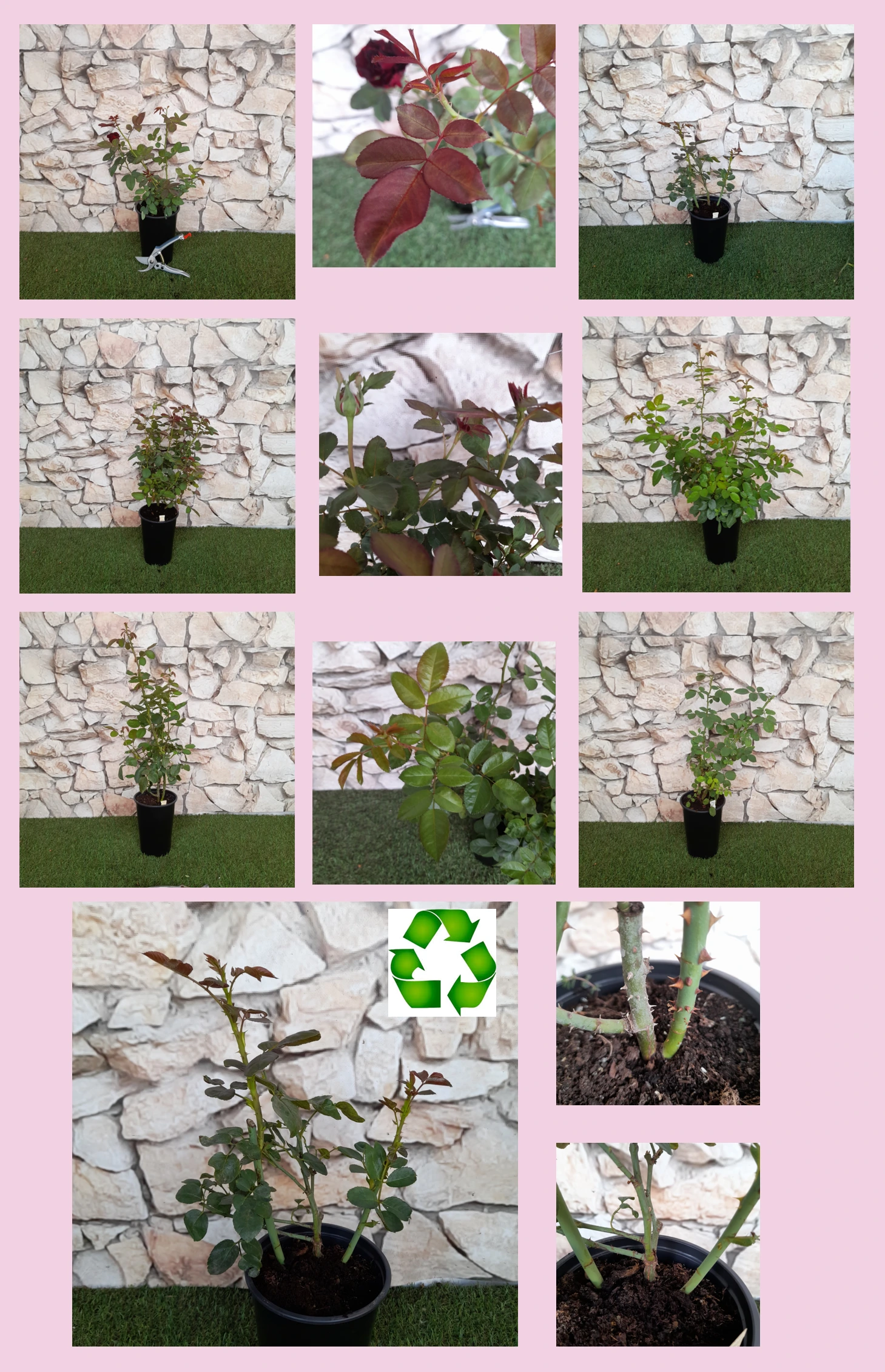
Crop overview: several varieties and growth stages in a short crop section.Shoot system: intensive growth of fresh basal shoots on a young plant.Root system: demonstration of a vigorous root system permeating the growing medium, by removing the pot.Balance: mature plant with root system and shoots in harmony with each other.
Information about the videos
The video series is not a “seasonal showcase”; it illustrates the essence of pharmaROSA® own-root cultivation in a tangible way: how the plant is built up, what the root system is like and how the shoot system regenerates. The recordings were therefore made at different times and with plants at various stages of development, so mixed foliage levels and differing stages of growth may appear in the videos. They are not a ‘sample’ of the batch dispatched, but a visual explanation of how the technology works. The current condition of the rose available to order — typical for the given period and similar to what you can expect to receive in the parcel — is shown in the upper part of the product page.
Pages for private customers Garden roses for the family garden, with minimal care → ORIGINAL® Premium garden roses – instant impact, a truly showpiece garden → EXTRA® Pages for professionals and private customers Roses for public spaces – large areas, sustainable maintenance → NATURAL® Roses for projects – hedge and row planting, fast implementation → RAPID® For professional partners only Production – propagation material for garden roses, wholesale → NEONATAL®
Company details
PharmaRosa Ltd. Company registration number: 01-09-717479 VAT number: 13075314-2-43 Plant health registration no.: HU130721 Bank account (IBAN): HU85117631891388688400000000 BIC (SWIFT): OTPVHUHB Bank name: OTP Bank Nyrt.